Recycled Architecture: Beyond the Rubble Aesthetic
Beyond the Rubble Aesthetic: What Does Recycled Architecture Really Save?
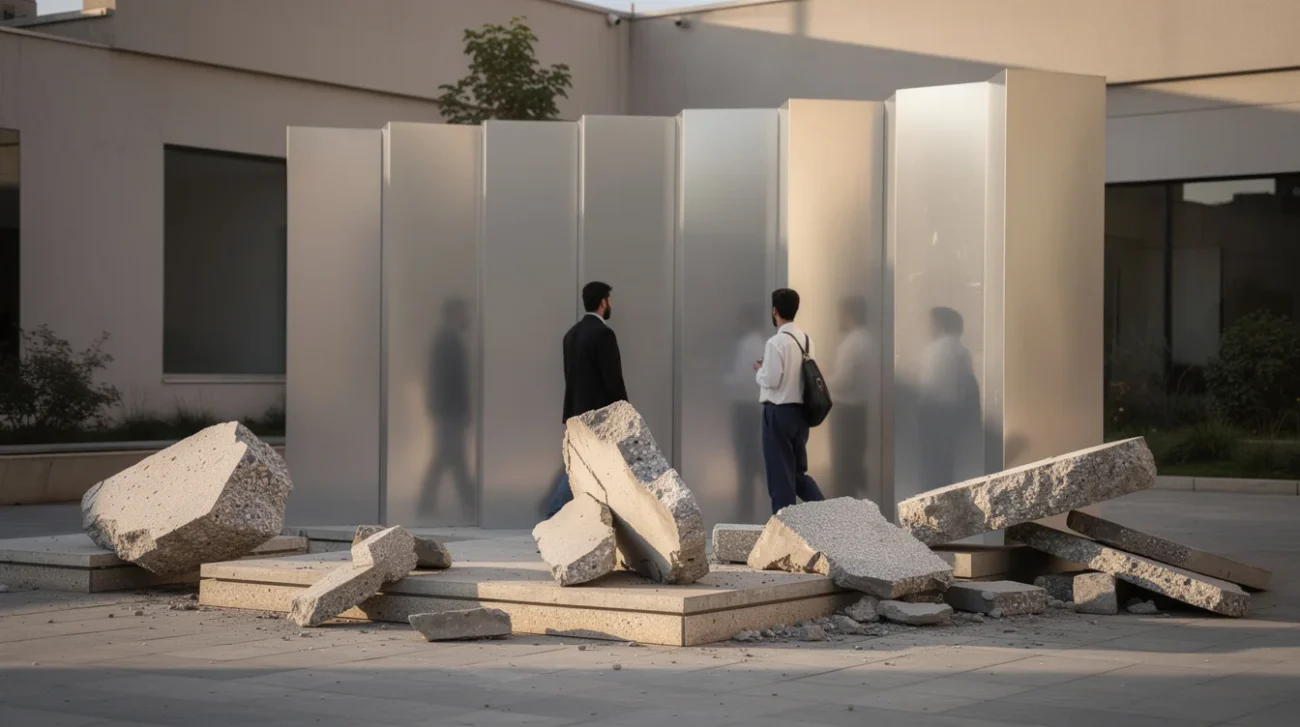
Waste has become architecture’s most photogenic raw material. Broken concrete supplies instant geological drama; reflective metal gives yesterday’s demolition a futuristic finish. In Tehran, DAP Studio’s Debris Pavilion brings salvaged concrete and recycled aluminum into precisely this charged relationship. As described by designboom, reflections blur the boundaries between architecture, debris and bodies. The visitor does not simply look at discarded matter: their image becomes entangled with it.
That is a compelling cultural proposition. It is not, by itself, an environmental result. The source description establishes a material and visual strategy, not a complete resource ledger. The pavilion therefore offers a useful test for recycled architecture: can making waste desirable help change construction, or does the spectacle risk substituting for the savings? Both arguments deserve their strongest hearing. Neither deserves an exemption from evidence.
PRO: Making Waste Visible Can Change What Architects Value
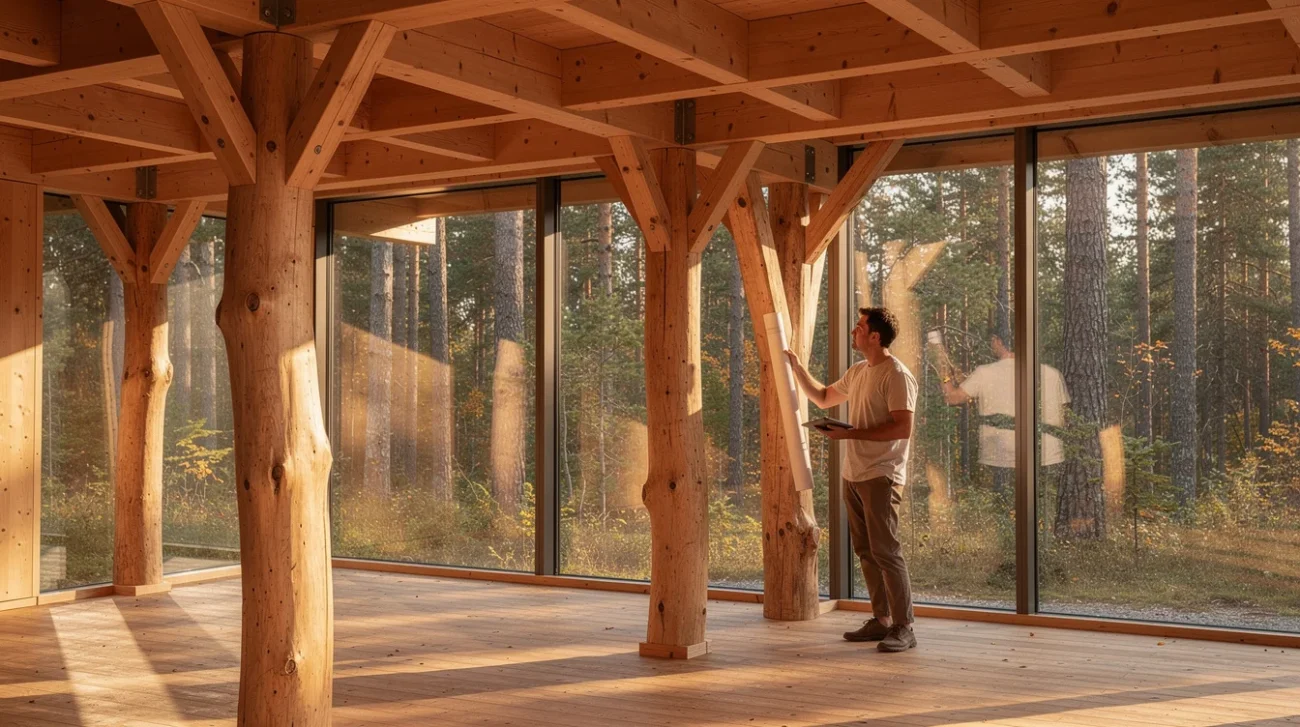
The first defense of the Debris Pavilion is that construction waste has an image problem before it has a specification problem. Newness still signals reliability, wealth and professional control. Salvaged material signals uncertainty. An installation that turns rubble into something people actively want to approach challenges this hierarchy at the level where many commissions begin: desire.
The pairing matters. Concrete debris retains associations with damage and demolition, while reflective aluminum destabilizes the viewer’s sense of what is solid, fragmented or present. Instead of disguising the material’s past, the pavilion makes that past part of its attraction. Visibility becomes useful when it changes what clients will accept, not merely what audiences will photograph.
Assemble’s work around Granby Four Streets in Liverpool offers a related lesson. Granby Workshop’s cast products, including Granby Rock made with waste materials such as crushed brick, brought the language of reconstruction into desirable domestic objects. The significance was not that a mantelpiece could solve demolition waste. It was that residual material could carry craft, local identity and market appeal rather than the stigma of a compromised substitute.
Architecture needs these shifts in taste. Specifications are written by people whose judgments are shaped by precedent. A persuasive encounter with reclaimed matter can make the next conversation about a reused surface, component or structure less defensive. The image is not the saving, but it can help authorize it.
PRO: The Spectacle Can Become a Supply-Chain Prototype
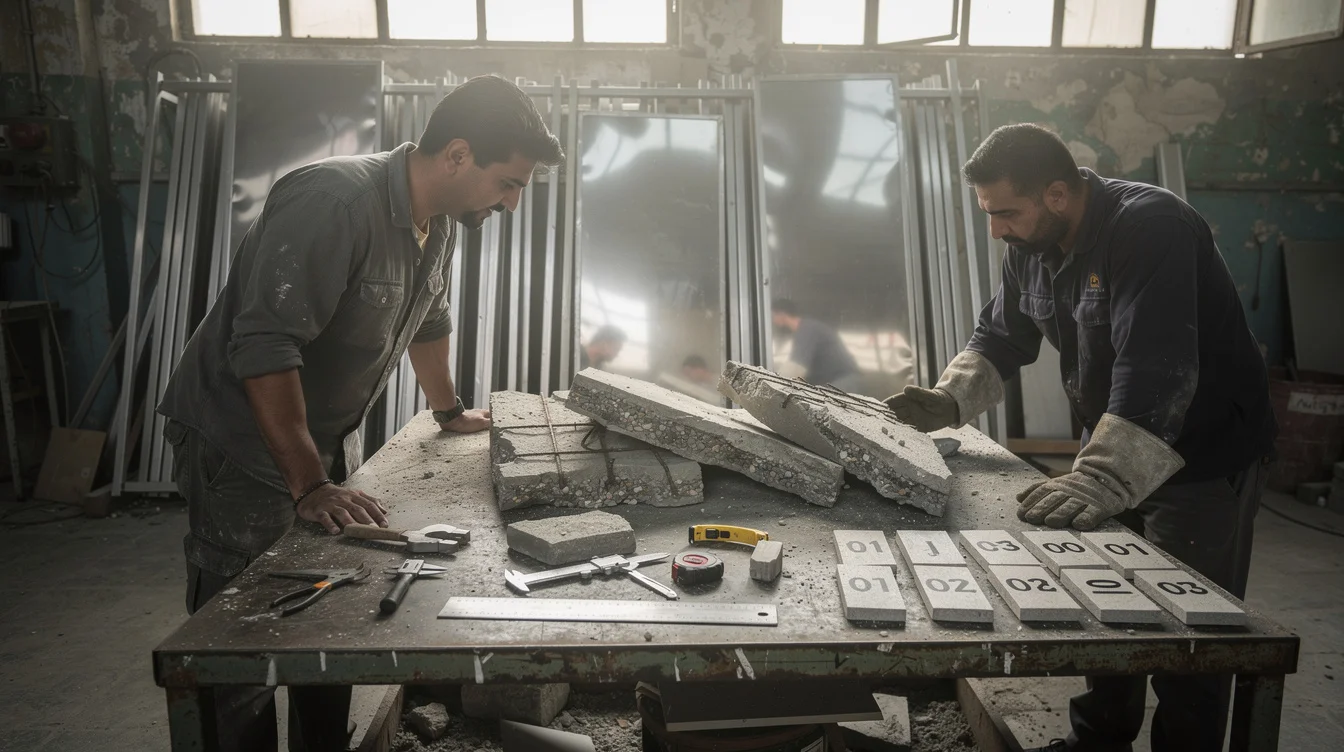
A pavilion can also be useful as a small arena for testing awkward practical questions. Who supplies the rubble? How is it sorted? Which pieces can be handled safely? How do irregular components meet standardized construction? The supplied account does not establish how the Tehran project answered these questions. Nevertheless, they identify where an experimental installation could produce knowledge beyond its footprint.
Rotor Deconstruction in Brussels demonstrates what happens when reuse becomes an operating system rather than a visual theme. Its recovery and resale activities connect dismantled building elements with new buyers. Cleaning, cataloguing and commercial availability are crucial: an architect cannot specify an inspiring pile of waste with the same confidence as an identifiable product with dimensions, condition information and a delivery route.
Lendager’s Resource Rows in Copenhagen addresses another practical barrier. Its use of reclaimed brickwork in larger cut-out sections responds to the difficulty of separating bricks bonded with strong mortar. The design decision begins with the actual condition of the recovered material, rather than demanding that waste imitate a pristine new product.
The strongest case for the Debris Pavilion is therefore catalytic. If its spectacle generates repeatable sorting methods, viable fabrication techniques or demand for local salvage, its influence could exceed the material it contains. But those outcomes should be documented as outcomes, not automatically credited to an arresting photograph. Cultural experimentation earns environmental relevance when someone can repeat the useful part.
CONTRA: Recycled Content Is Not a Resource Balance
Now the objection: recycled architecture too often treats the presence of waste as proof that something has been saved. It is only the beginning of the calculation. For Tehran’s pavilion, a serious assessment of its climate impact would need material quantities, processing routes, transport distances and a clear account of what its construction displaced. Those figures cannot be inferred from the visual description.
Concrete makes the distinction especially sharp. Reusing an intact element may preserve much of the work and material already invested in it. Crushing concrete into aggregate changes the equation: the recovered aggregate may replace newly quarried stone, but it does not automatically replace the cement needed in a new concrete mix. Cement production remains a major emissions source. Arranging fragments in an installation is a third pathway, with benefits dependent on its supports, binders and alternative design.
Recycled aluminum generally requires far less production energy than primary aluminum, yet the finished component still has a history. Scrap collection, sorting, remelting, fabrication and finishing all matter. Reflectivity is an optical effect, not an environmental credential. The recycled fraction and production route need verification; neither can be read from a polished surface.
The decisive question is substitution: what new extraction or manufacturing actually did not happen? Recovering heavy material nearby may compare favorably with buying new. Shipping it through several processing sites may erode that advantage. There is no universal transport-distance cutoff: material type, vehicle loading, processing intensity and the displaced product determine the balance.
CONTRA: A Second Life Can Still End in a Skip
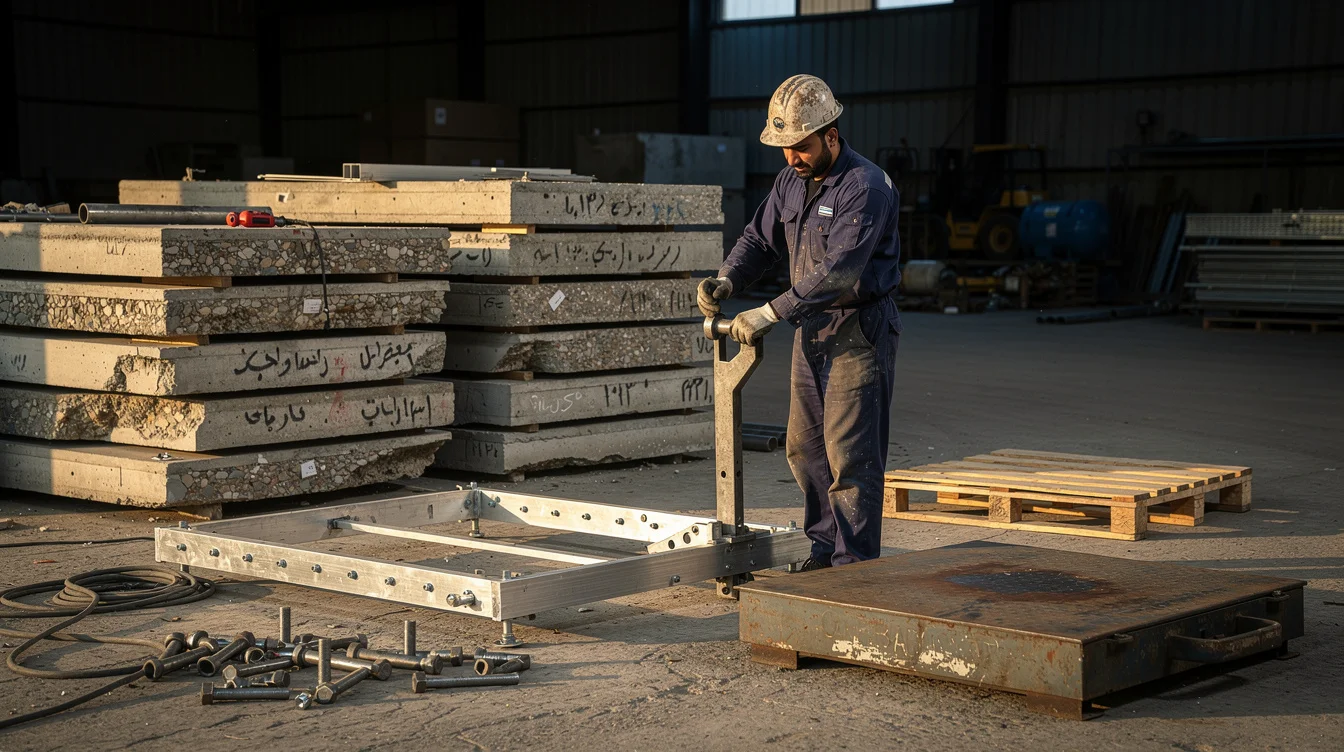
The harder test comes after the exhibition photograph. Can concrete and aluminum leave the pavilion as usable, separable materials, or will their union create a new disposal problem? Without connection details and an afterlife plan, circularity remains a promise. Mechanical fasteners can support recovery; adhesives, inaccessible fixings and inseparable composites can obstruct it. Even a bolted connection is insufficient if dismantling requires destructive access or uneconomic labor.
The K.118 building extension in Winterthur, designed by baubüro in situ, provides a more demanding reference point. Reused steel and other recovered components serve an occupied building, making reuse answer to structure, regulation and everyday performance. The lesson is not that pavilions are frivolous. It is that material ingenuity becomes more consequential when it delivers a required service over time.
A fair comparison must also ask whether demolition was necessary. Lacaton & Vassal’s transformation projects, including Bordeaux’s Grand Parc housing with Frédéric Druot and Christophe Hutin, show another hierarchy of action: keep the building, extend its usefulness and avoid producing much of the rubble in the first place. Celebrating demolition waste must not quietly normalize demolition.
Debris Pavilion’s cultural achievement and its environmental performance should therefore remain separate claims until evidence connects them. Record the incoming masses, the new materials added, the processing energy and the transport. Then name the next destination and the party responsible for dismantling. A proposed second life is weaker evidence than a contracted one. Waste made beautiful deserves attention; waste demonstrably prevented deserves priority.
FAQ: How Should We Judge Recycled Architecture?
What is the difference between material reuse and recycling?
Reuse keeps an existing component or material in service with relatively limited transformation. Recycling reprocesses waste into feedstock or a new product. Neither label guarantees a better outcome: preparation, performance, transport and replacement of new production determine the benefit.
Does recycled aluminum make a project low-carbon?
Not automatically. Recycled aluminum generally has a substantial production-energy advantage over primary aluminum, but a project’s footprint also includes fabrication, finishes, supporting materials and logistics. Verified recycled content and product-specific environmental data are more useful than the material label alone.
What evidence should accompany a recycled pavilion?
At minimum, publish material quantities and origins, recovered and newly purchased fractions, processing steps, transport assumptions and an end-of-use plan. An environmental comparison should explain its baseline and distinguish measured results from estimates, especially credits dependent on future reuse.
Why does disassembly matter if the materials are already recycled?
Recycled inputs can still become unrecoverable waste. Accessible connections, separable materials and an identified next user help preserve value after dismantling. Disassembly also needs a budget, responsibility and somewhere for components to go; technical reversibility alone does not create a functioning reuse chain.
If a rubble pavilion changes public taste but cannot demonstrate avoided extraction, should we celebrate it as circular architecture—or insist on calling it an exhibition about the possibility?
Watch the Mainifesto Short
Get the Mainifesto weekly — curated design debates, speculative ideas and the week's best articles every Saturday.
Editorial Perspectives
Questions and counterpoints developed by the Mainifesto editorial desk to extend the discussion.
Perspective 1
Architecture has made cultural value from discarded matter since Roman spolia; this is hardly a novelty awaiting certification by spreadsheet. I would celebrate the pavilion as circular architecture, even while its material savings remain unproven: changing what a public considers worthy of building with is part of the project, not merely its publicity.
Perspective 2
Call it an exhibition about circularity until someone can show what virgin material it actually displaced. Across the region, cheap hauling or poorly paid sorting can make reuse look efficient while pushing the costs onto workers and neighbouring districts. Show the processing energy, transport routes and next destination for the rubble; spectacle is not a material recovery system.
Perspective 3
I'd want a comparison with a pavilion serving the same purpose, including processing, transport and what happens after dismantling. If this changes public taste, credit that achievement—but don't use it as evidence of avoided extraction.
Perspective 4
In restoration, we often save more by leaving a wall standing than by finding an ingenious use for its fragments. The pavilion can teach people to value rubble, but I'd also ask why the buildings became rubble in the first place—and whether celebrating their afterlife makes demolition and displacement easier to sell.