
Who Gets a Say Before a Luxury Resort Gets Built?
Who Gets a Say Before a Luxury Resort Gets Built?
A luxury resort begins taking shape long before an architect draws its first swimming pool. It starts when a government decides which land is available, which investors deserve priority and which objections can be accommodated without disturbing the deal. By the time the rendering arrives, some of the most consequential design decisions may already be beyond public reach.
The controversy surrounding a proposed Trump-linked resort on Albania’s Sazan island makes that sequence impossible to ignore. In an October 22, 2026 report, Dezeen relayed accusations that prime minister Edi Rama was fast-tracking the contentious development amid protests. Dutch MEP Tineke Strik, speaking to The Guardian, described his practices as “sneaky and disloyal.” These are attributed allegations, not findings established by the source summary available here; it does not provide the complete approval record or the government’s detailed response.
But the architectural question does not depend on treating an accusation as a verdict. Who possesses the power to change the proposal before investment commitments turn its footprint into a fait accompli? If the answer excludes everyone outside government and the development consortium, the problem is already embedded in the design—even if the eventual buildings are beautiful.
The Approval Process Is the First Masterplan
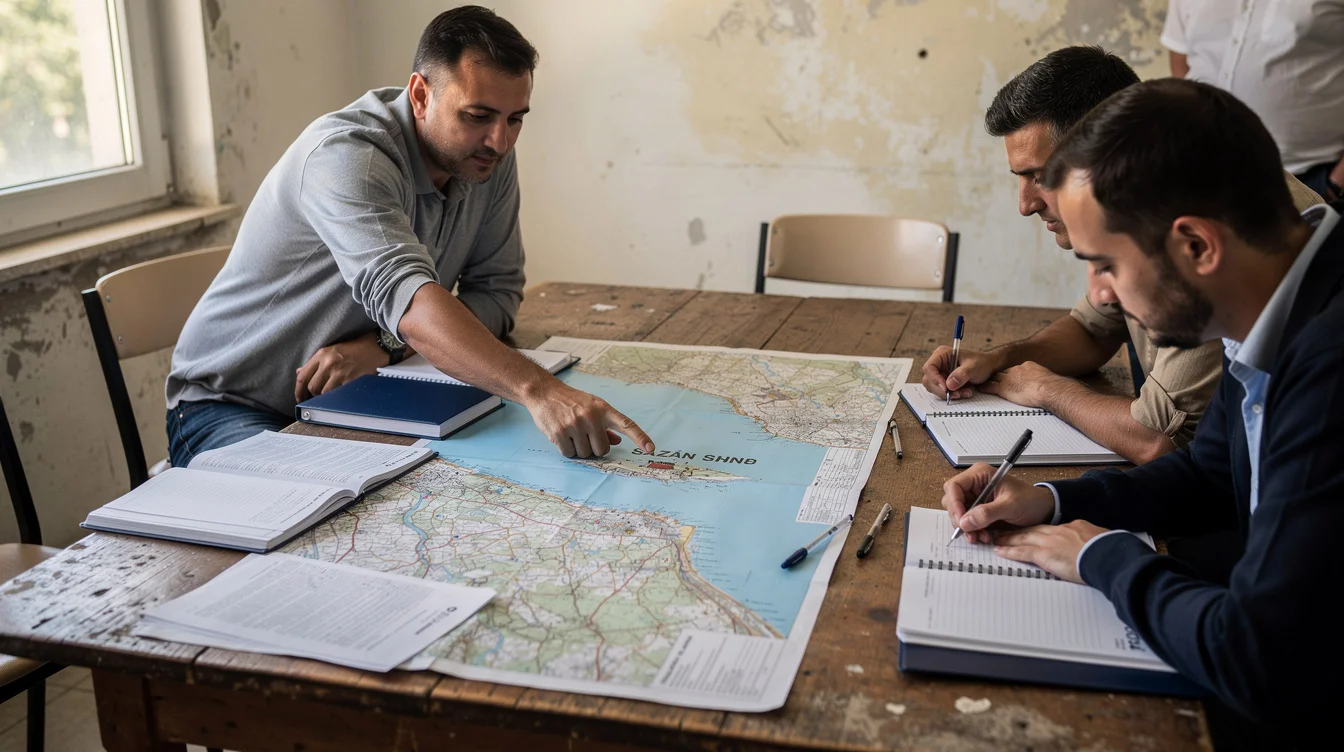
Planning procedures are usually presented as the administrative wrapping around architecture. That is backwards. A development agreement can determine the intensity of use, the extent of exclusive occupation and the infrastructure the public must provide. Those decisions organise space as decisively as a masterplan. They establish who will move freely, who will pay and who will encounter a boundary.
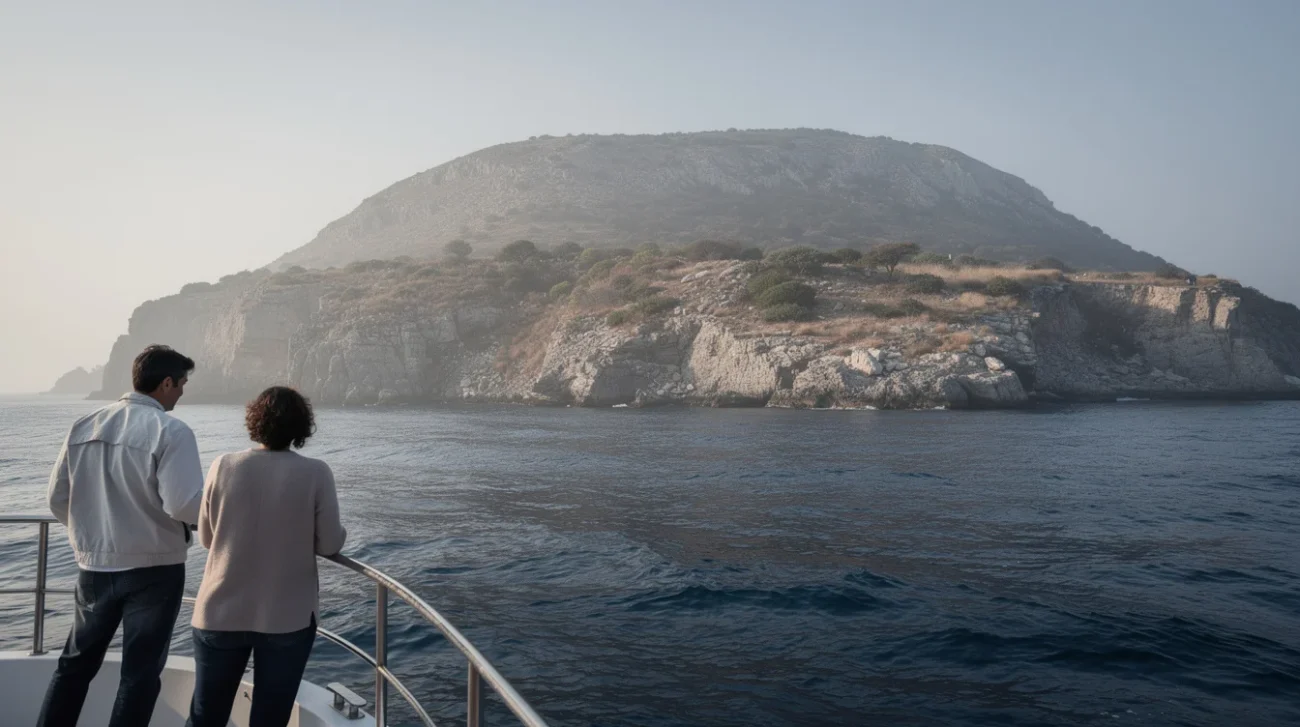
Sazan’s history as a former military island gives this question particular force. Opening a formerly restricted landscape to development is not automatically the same as opening it to the public. Military exclusion and luxury exclusivity have different purposes, but an architectural assessment should still ask how access changes, for whom and under what conditions. A boat landing, a security checkpoint or an operating rule can matter more than a welcoming entrance pavilion.
Berlin’s Tempelhofer Feld offers a useful counterexample, not a directly transferable solution. In a 2014 referendum, voters rejected development plans for the former airport’s open field. Public intervention changed the permissible future of the site rather than merely adjusting proposed buildings. That is the difference between participation in a project and power over whether a project proceeds. Any meaningful Sazan process must make that distinction visible.
Investment Is a Proposal, Not an Answer
The case for tourism investment deserves to be tested seriously. Resorts can generate construction work, hospitality employment, visitor spending and infrastructure improvements. Albania has legitimate reasons to seek economic opportunity. Dismissing that ambition from the comfortable distance of an established tourist economy would be condescending. Yet acknowledging potential benefits does not require accepting whatever development package promises them.
The relevant questions are specific. How many jobs would be permanent rather than seasonal? What employment and training commitments would be enforceable? Who would finance water supply, energy connections, waste treatment and emergency services? Would public access be guaranteed through binding conditions or left to an operator’s discretion? These are tests to apply, not claims about provisions already established for Sazan.
Barcelona’s special planning framework for tourist accommodation, known as PEUAT, demonstrates a different premise: tourism capacity can be treated as a planning question rather than an unlimited public good. Its approach to controlling accommodation growth is not a template for an Albanian island. It does, however, challenge the idea that visitor demand should dictate spatial policy.
“Investment” describes a flow of capital; it does not settle the distribution of value. An approval process that cannot interrogate that distribution is less a public assessment than a sales funnel.
Consultation Must Be Able to Damage the Original Idea
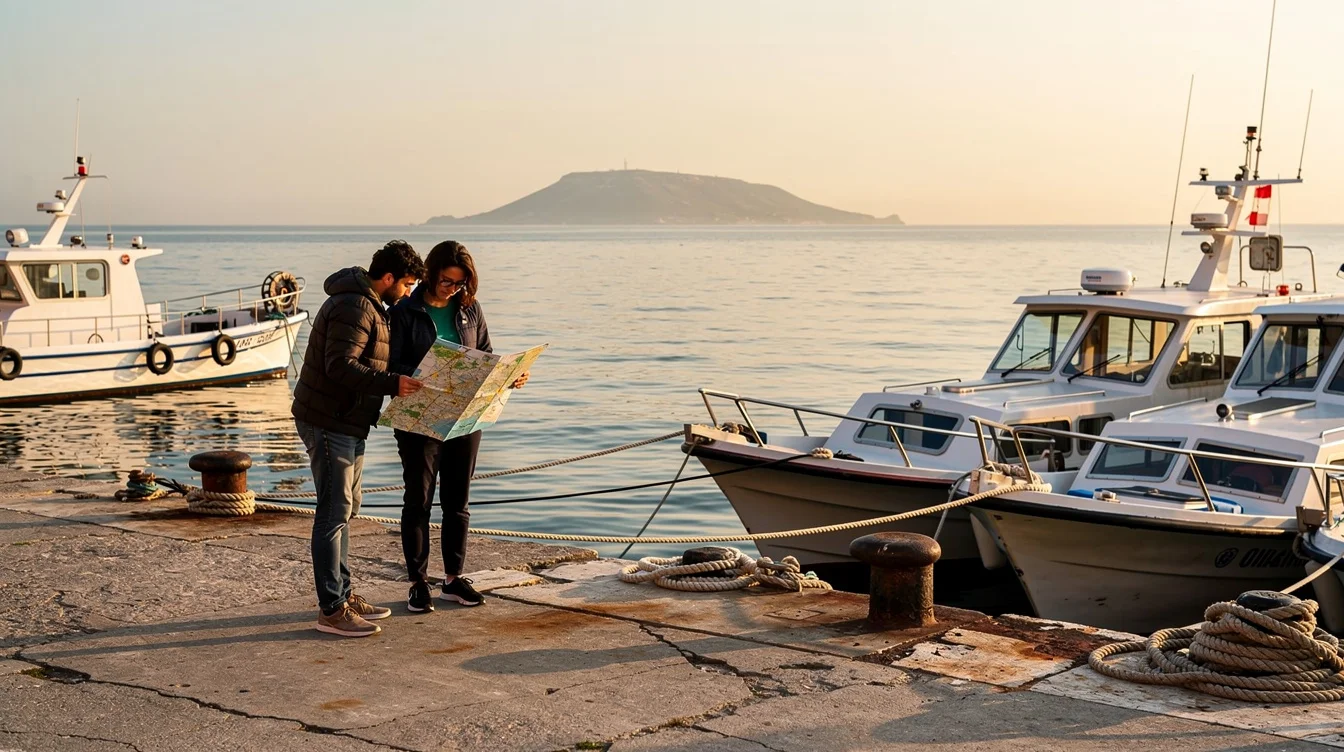
There is a simple test for meaningful consultation: can it produce an outcome the developer did not want? That might mean fewer rooms, a smaller development envelope, different landing arrangements, protected areas or no resort at all. If every objection must fit inside a predetermined commercial proposition, consultation becomes an exercise in managing disappointment.
Architect Giancarlo De Carlo’s participatory work at the Villaggio Matteotti housing project in Terni offers a disciplinary reference. His engagement with residents challenged the assumption that professional expertise alone could define how people should live. A luxury resort is a different programme, but the lesson survives: participation matters when knowledge from outside the design team enters the brief, not merely the presentation of the finished answer.
For Sazan, that would require accessible proposal documents, sufficient time for independent review and clearly identified decision points. Residents, environmental organisations, local businesses and other affected groups should not need identical interests to deserve a hearing. Nor should attendance at a meeting be confused with endorsement.
A credible process would publish how substantive objections were handled: accepted, rejected or translated into enforceable changes, with reasons. The public needs a traceable chain between an objection and a decision. Without it, the consultation photograph becomes more persuasive than the consultation itself.
Design the Alternatives Before Choosing the Winner
Architecture can make a contested project look inevitable simply by giving only one future a convincing image. A polished resort rendering competes against an undeveloped landscape represented as blank space. The comparison is rigged before anyone discusses ecological limits, access or economic returns.
The remedy is not another reassuring visualisation. It is a genuine alternatives study: compare different scales of development, different access arrangements and a no-build scenario. The underlying question is how much building a project actually needs. For an island proposal, assess transport, water demand, sewage, energy, habitat disturbance and cumulative effects together. These are required lines of inquiry, not conclusions that Sazan necessarily faces any particular impact. Independent evidence must establish what is at stake.
Anne Lacaton and Jean-Philippe Vassal have repeatedly demonstrated, through housing transformations such as Grand Parc Bordeaux with Frédéric Druot and Christophe Hutin, that changing the starting brief can be more consequential than perfecting the expected replacement. Their work is not a resort precedent. It is an argument against treating the client’s initial development logic as architectural destiny.
That is the provocation Albania’s controversy should trigger across the profession. Architects should ask which alternatives were eliminated before their appointment and who authorised their elimination. A project cannot claim to be publicly responsive if the public was allowed to influence only what remained after the decisive choices.
FAQ: Who Can Actually Change a Resort?
What is being alleged about the Sazan resort?
Dezeen’s October 22, 2026 report relayed accusations that Albania’s prime minister Edi Rama was fast-tracking a controversial Trump-linked resort amid protests. It cited Dutch MEP Tineke Strik’s criticism to The Guardian. The supplied summary does not establish a legal violation or provide the complete approval record.
Why treat approval as part of architectural design?
Approval decisions establish development rights, access conditions, infrastructure obligations and the boundaries within which architects work. They shape a project’s spatial and social consequences before its appearance is resolved. Reviewing only the finished design misses those earlier choices.
What makes public consultation meaningful?
People need timely information, realistic opportunities to challenge assumptions and a decision-maker able to require substantial changes or refuse permission. Published responses should explain how objections affected the outcome. Consultation without the possibility of changing the proposal is publicity, not shared influence.
Does stronger scrutiny necessarily stop investment?
No. Clear rules and credible assessment can make obligations more predictable and expose problems before construction. Scrutiny may also reduce or stop an unsuitable proposal. Its purpose is not to guarantee either development or refusal, but to make the decision defensible.
If public objections cannot change a resort’s location, scale or right to proceed, should we call the process consultation—or simply the choreography of consent?
Get the Mainifesto weekly — curated design debates, speculative ideas and the week's best articles every Saturday.
Editorial Perspectives
Questions and counterpoints developed by the Mainifesto editorial desk to extend the discussion.
Perspective 1
Lefebvre’s right to the city was not a right to comment on a finished plan. If the resort’s location and scale are already untouchable, consultation is merely another architectural commission: designing the appearance of public consent.
Perspective 2
Show me which alternatives were assessed, what changed after objections, and who had the authority to require those changes. Consultation need not give every objector a veto, but if relocation, a smaller footprint or refusal were never credible outcomes, the public was invited too late.
Perspective 3
The key question is where the binding decision actually happens: in the planning process, a land deal or a political agreement. If a Trump-linked investment is effectively secured before residents enter the room, planners are managing objections, not weighing them.