

Limoges Town Hall: Rebuild Without Building a Fortress
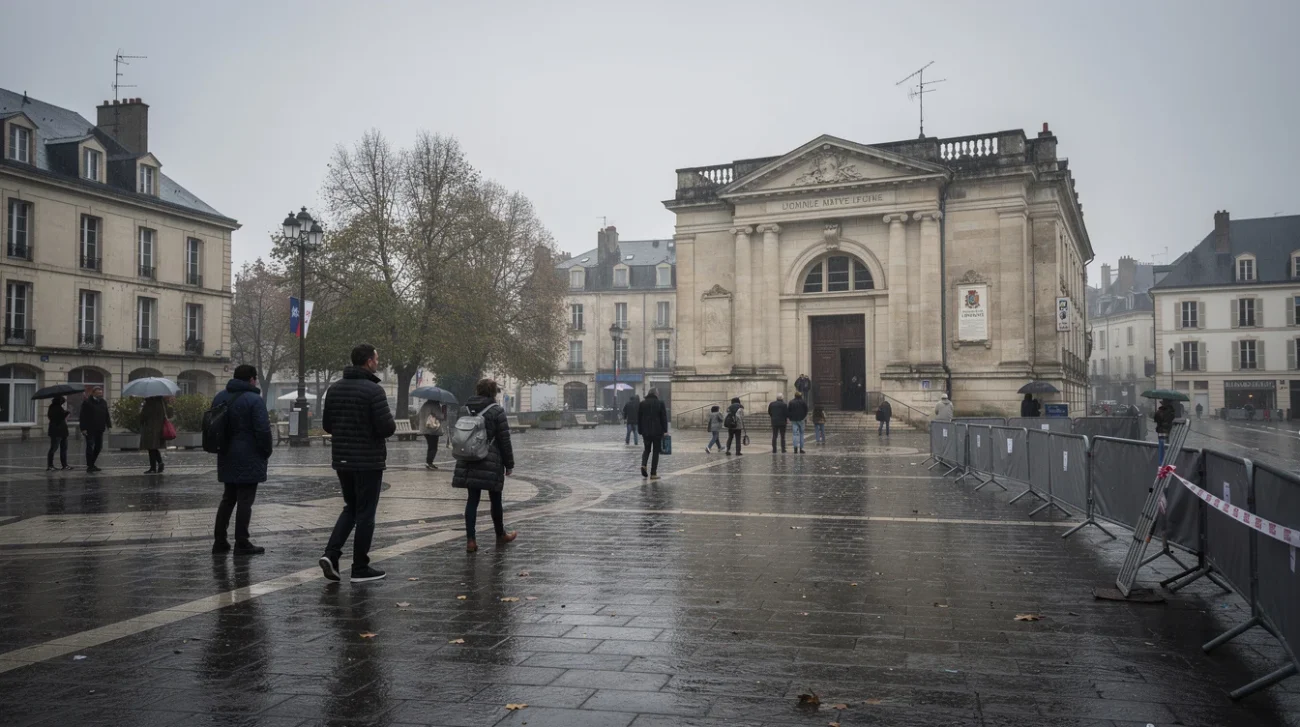
After the Fire, a Town Hall Still Has to Belong to the Town
The most consequential reconstruction drawing for Limoges may not be its skyline. It may be the plan of its front door.
According to Dezeen’s report published on 19 October 2026, significant parts of the 143-year-old Limoges Town Hall were destroyed in an arson attack on 17 October, as protests broke out across France. Videos recorded on the ground showed slate roofs burning and the central bell tower collapsing. Those images establish the scale of the visible destruction, not a complete structural diagnosis. The condition of surviving fabric, the fire’s precise progression and any eventual reconstruction programme require investigation.
But the architectural dilemma is already clear. Rebuilding a historic silhouette while enclosing it behind permanent barriers would recover an image of local government and surrender its civic purpose. A town hall is not simply an asset to defend. It is where residents seek help, contest decisions, register life events and encounter public authority in person.
Limoges should rebuild against another attack without designing every future visitor as a potential attacker. That distinction must shape the brief before defensive habits harden into architecture.
Restore the Relationship, Not Just the Roof
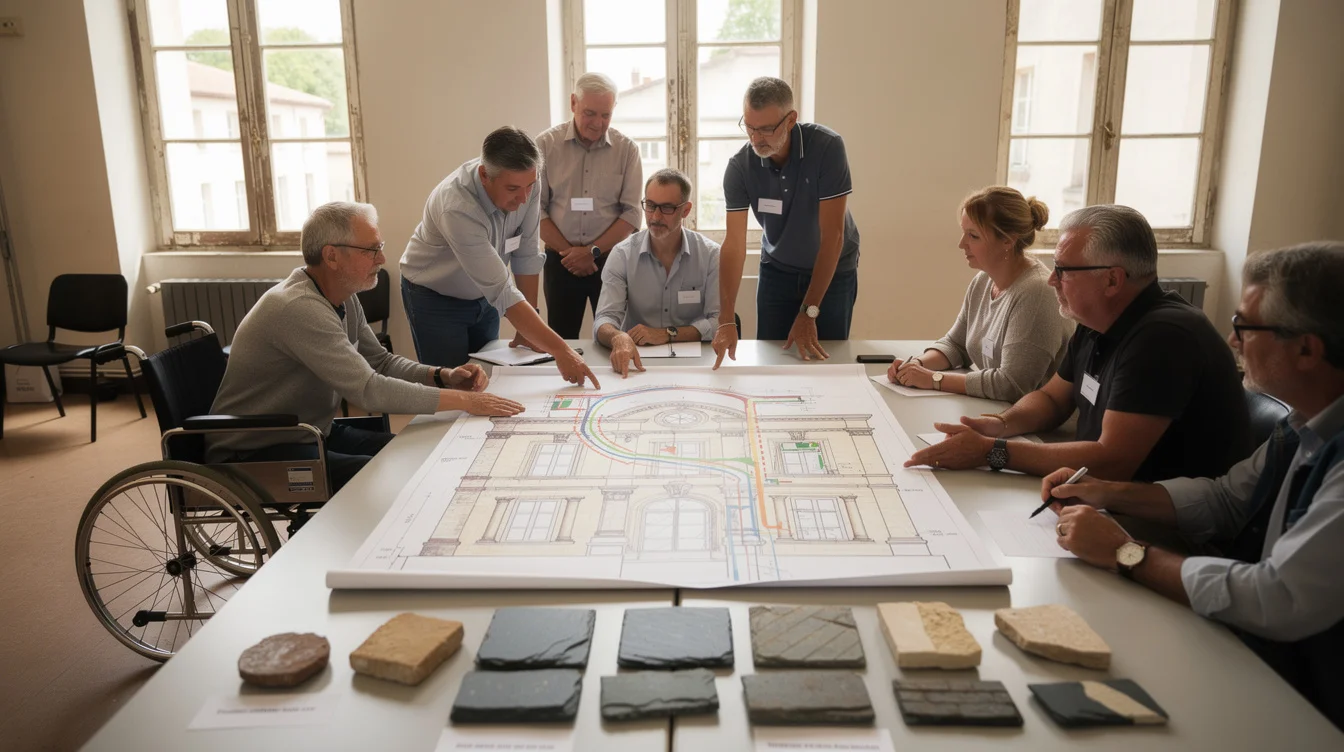
Heritage reconstruction naturally concentrates attention on what has disappeared: roof profiles, ornamental work, a tower’s place in the city. These matter. A familiar silhouette can anchor collective memory. Yet an immaculate exterior can conceal a radically diminished public institution, with its principal entrance permanently locked and everyday visitors redirected to a guarded side door.
The reconstruction brief should therefore document civic use alongside historic fabric. Which entrances did residents actually use? Where could someone arrive without an appointment? Could a person unfamiliar with municipal procedure find assistance immediately? These questions need evidence from staff, disability organisations, regular users and people who already found the building intimidating.
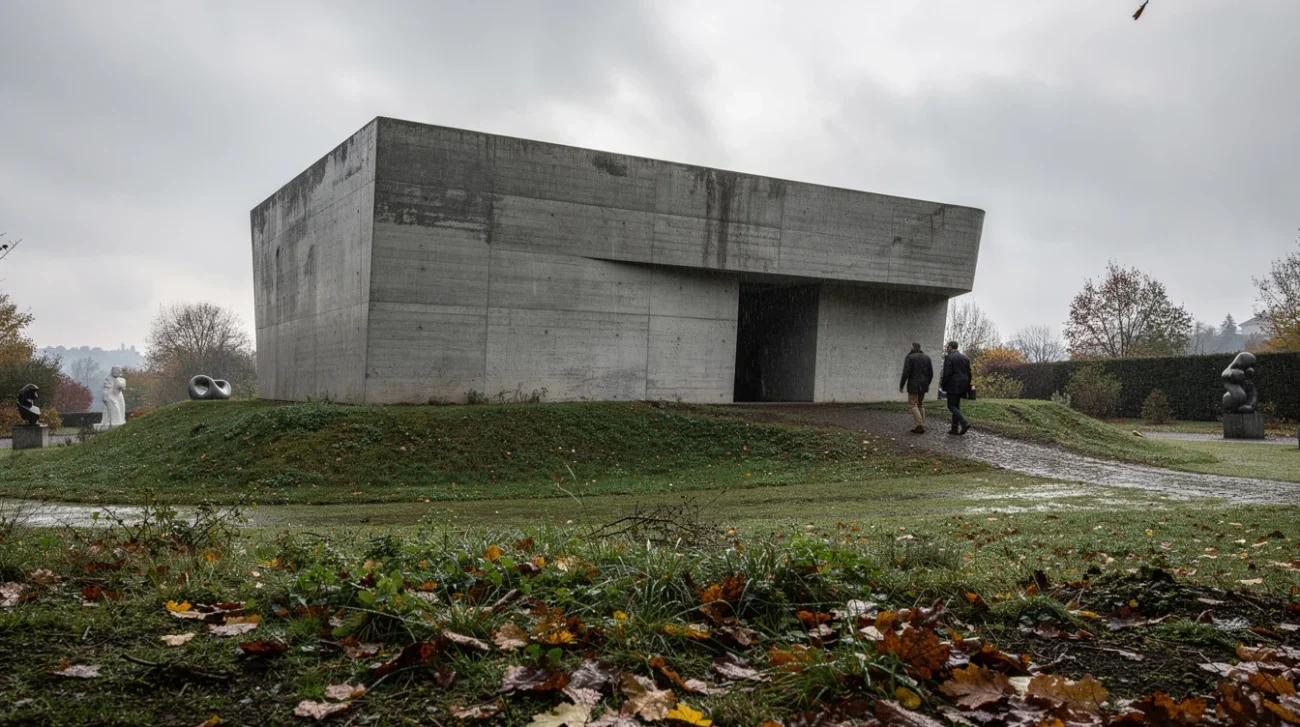
Alvar Aalto’s Säynätsalo Town Hall in Finland offers a useful reference, not a ready-made solution. Its raised courtyard and brick volumes give municipal business ceremonial weight without relying on the vocabulary of a secured compound. Architecture establishes a sequence between settlement, shared space and government.
Limoges needs its own sequence, negotiated with the surviving building. The heritage worth recovering includes the relationship between citizen and institution. Restoring stone while degrading that relationship would be a politically hollow version of conservation.
The Entrance Is Where Democracy Becomes Spatial
Security discussions often begin with perimeter lines. Civic design should begin with an ordinary journey: a resident approaching in the rain, carrying documents, perhaps accompanied by a child or using a wheelchair. Where do they pause? Who explains the procedure? If screening is required, where does the queue go? The question of how floor plans distribute power applies as much to civic entrances as to workplaces.
A generous entrance can accommodate protection without turning arrival into a punishment. A sheltered waiting area, clear sightlines to a staffed reception point, comprehensible signs and an accessible route sharing the dignity of the principal approach are not decorative amenities. They prevent confusion and make assistance visible. Screening, where a risk assessment justifies it, should sit within this designed sequence rather than arrive later as equipment scattered across a doorway.
Foster + Partners’ transformation of Berlin’s Reichstag demonstrates both the ambition and the limits of architectural openness. Public movement and views can make a government building legible, but access still depends on administrative rules and security procedures. Glass alone does not make an institution welcoming.
For Limoges, the test should be blunt: can a first-time visitor understand how to enter without feeling they have approached the wrong side of a border? A transparent vestibule with opaque rules is still an exclusionary threshold.
Protect in Layers, Not with One Hostile Gesture
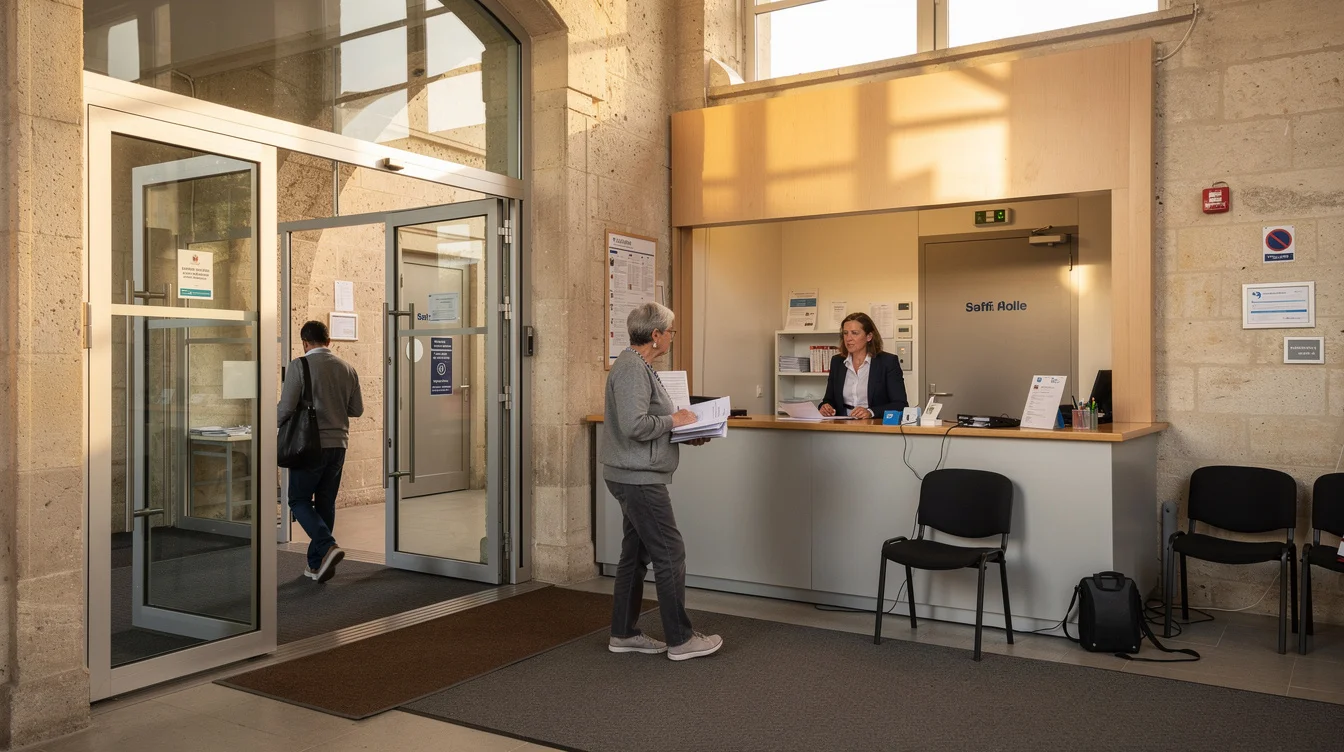
Rejecting a fortress does not mean rejecting security. It means refusing the assumption that the most visible obstruction is necessarily the most effective protection. A reconstruction team should distinguish fire resilience, staff safety, crowd management and control of access to sensitive rooms. They are related tasks, not one problem solved by a fence.
Subject to specialist investigation and conservation requirements, measures could include improved fire detection, appropriate suppression systems, compartmentation and better protection of critical records. Public-facing services need not occupy the same security zone as staff workspaces or essential infrastructure. Carefully planned internal boundaries can preserve substantial everyday access while limiting exposure elsewhere.
These are design principles, not conclusions about how the Limoges fire spread. The forensic findings must lead any specific technical response. Security hardware should not become a substitute for understanding what happened.
Nor should resilience depend exclusively on the building. Secure records management and alternative service locations can keep local government functioning during repairs or emergencies. A municipality that can continue serving residents is more resilient than one that merely looks difficult to approach. Business continuity belongs in the architectural brief because it changes what must be protected, where, and at what cost to public access.
The Square Must Not Become Collateral Damage
The easiest place to accumulate defensive objects is often the public space outside. Temporary barriers become familiar. Familiar barriers become permanent. Eventually, the town receives a restored monument surrounded by a landscape designed to discourage lingering.
Where vehicle protection is demonstrably necessary, tested protective elements can be coordinated with seating, planting and accessible circulation. But ordinary benches and planters should not be presented as security-rated infrastructure. Equally, a protective bench is not automatically a good public bench: its location, comfort and relationship to everyday use still matter. As with parks designed to accommodate flooding, protection has to coexist with everyday public use.
The Market Hall in Ghent, by Robbrecht en Daem architecten and Marie-José Van Hee architecten, offers a contrasting civic instinct. Its roof gives public life a shared shelter rather than treating gathering as a disruption. It is not a security model for Limoges; it is a reminder that urban architecture can make collective presence feel legitimate.
A town hall’s surroundings must accommodate disagreement as well as ceremonies and lunchtime pauses. Peaceful protest is not an architectural malfunction. Any security strategy that quietly erases places to assemble risks punishing the public for the actions of attackers. Protection should address credible hazards, not turn political visibility itself into a suspicious activity.
Put Openness in the Contract
Reconstruction competitions love persuasive images: a recovered tower, warm windows, citizens dotted across a pristine forecourt. Such renderings prove almost nothing about access. Openness has to become an enforceable operational commitment, with responsibilities, funding and review.
The brief should specify which services remain available without an appointment, how accessible entry works, where visitors receive assistance and how public meetings are reached. It should require the entrance to be tested with actual users, including people with sensory and mobility impairments. Staffing and maintenance budgets matter as much as the geometry of the lobby.
Emergency restrictions also need a route back to normality. Temporary closures should have review dates and clear authority for removal. Otherwise, exceptional measures can outlive the circumstances used to justify them. Public reporting can explain access policies without publishing sensitive security details.
Residents and municipal staff should help evaluate proposals before a preferred design makes those decisions difficult to reverse. The choice is not between naïve openness and responsible fortification. It is between security designed around public service and security that displaces it. Limoges deserves a town hall whose survival does not depend on ceasing to behave like a town hall.
FAQ
What is known about the Limoges Town Hall fire?
Dezeen reported that the 143-year-old building was set on fire on 17 October 2026 during a weekend of protests across France. Ground-level videos showed burning slate roofs and the central bell tower collapsing. A full damage assessment and investigation are needed to establish the technical consequences.
Can a historic town hall be secure without permanent fencing?
Potentially, but the answer depends on a site-specific risk assessment. Fire protection, appropriately controlled internal zones, staffed reception and carefully integrated protective infrastructure can contribute to security without making a continuous defensive perimeter the default.
Should reconstruction reproduce the original appearance?
That decision requires evidence about surviving fabric, heritage significance and feasible repair methods. Restoring the historic silhouette may be justified, but visual fidelity should not excuse inaccessible entrances, diminished public services or a hostile forecourt.
How can residents influence the reconstruction?
The municipality could involve residents and staff in defining the brief, reviewing access proposals and testing entrance layouts. Published commitments on opening hours, accessibility and the review of temporary restrictions would make participation more consequential than consultation about appearances alone.
When a town hall is rebuilt after an attack, how much public access should a town be willing to surrender in the name of protecting it?
Watch the Mainifesto Short
Get the Mainifesto weekly — curated design debates, speculative ideas and the week's best articles every Saturday.
Editorial Perspectives
Questions and counterpoints developed by the Mainifesto editorial desk to extend the discussion.
Perspective 1
A town hall can stay visibly open while protecting staff, records and critical systems; those are different design problems, not one security perimeter. Start by mapping actual risks and everyday public routes, because a barricaded entrance often just moves vulnerability into the queue outside.
Perspective 2
The French hôtel de ville is meant to put civic authority on the public square, not withdraw it behind a checkpoint. Restoring the ceremonial façade while making citizens enter like suspects would be a rather hollow version of heritage preservation.
Perspective 3
Before buying more barriers, price proper fire separation, protected escape routes and a layout that lets public services operate without opening every office. Some controlled access is reasonable, but if residents need an appointment for a routine enquiry, you've saved the building at the expense of its job.

MT October 21, 2026
You will have to protect this building for the future if you rebuild it. One idea is a retractable steel wall that is sunken into the ground around the perimeter and comes up in times of protests. I’ve seen pillars like that come up from the ground in Monaco