
How Much Building Does One Painting Deserve?
How Much Building Does One Painting Deserve?
One painting. One concrete building. An entire argument about what culture is entitled to consume.
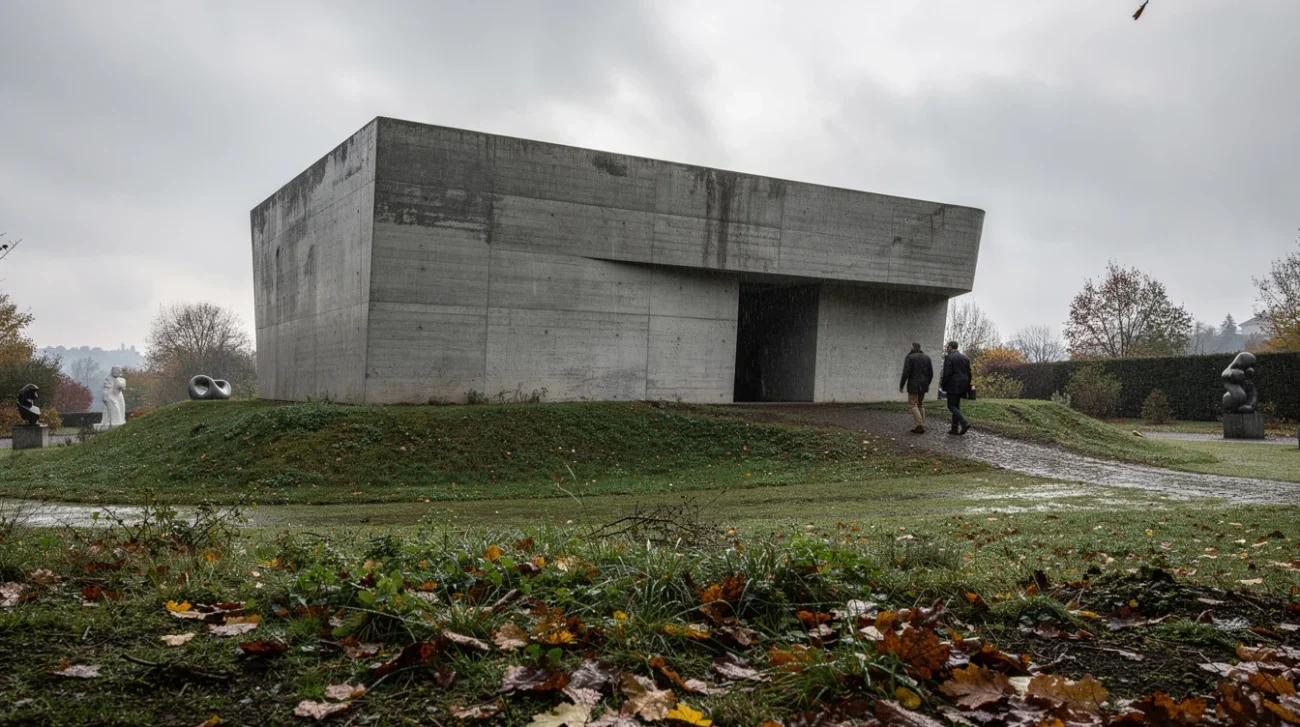
The Berlin office of David Chipperfield Architects has added a monolithic concrete pavilion for a single Anselm Kiefer painting to the sculpture garden of the Carmen Würth Forum in Künzelsau, Germany. Situated on a grassy mound, the pavilion gives one artwork something most museum collections never receive: a building dedicated to its encounter with the public. As reported by Dezeen on 20 October 2026, this is architecture organised around a singular work, rather than a collection competing for space.
The attraction is obvious. A painting can escape the visual interference of neighbouring works, the churn of temporary exhibitions and the museum visitor’s exhausting obligation to keep moving. Architecture can establish a threshold between ordinary attention and sustained looking.
But the concrete is not temporary. A precise curatorial decision has become a long-lived material commitment. The question is not whether Kiefer deserves serious attention. It is whether attention must take the form of another permanent building—and who inherits the consequences when the institution’s priorities change.
The Best Defence Is the Experience, Not the Prestige
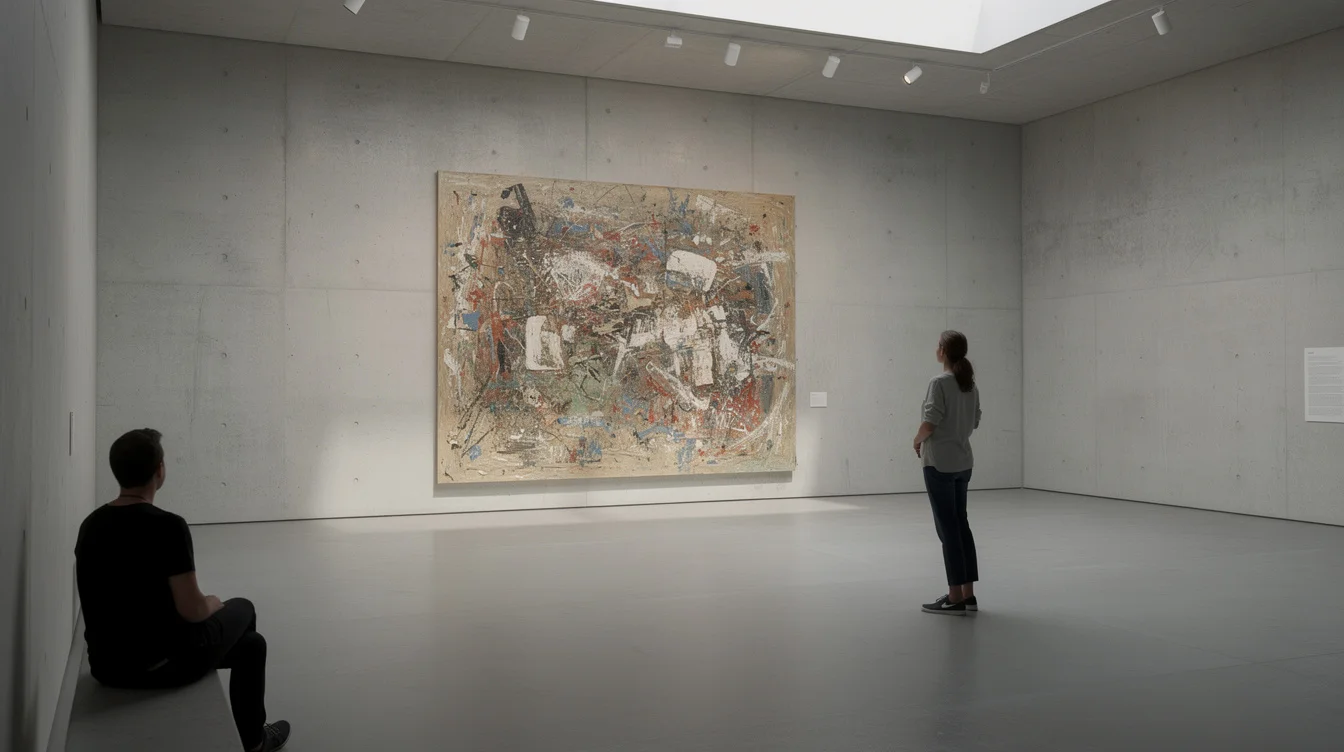
Dedicated art environments can achieve things a general-purpose gallery cannot. Viewing distance, arrival sequence, light and the relationship between a work and its surroundings can become a single composition. These are not decorative extras. They determine how an artwork registers in the body, how long someone stays and what becomes visible after the first glance.
The Musée de l’Orangerie in Paris offers a powerful precedent. Its oval rooms for Claude Monet’s Water Lilies turn viewing into an enveloping spatial experience. Houston’s Rothko Chapel, containing fourteen paintings rather than one, similarly demonstrates that an ensemble can demand an architectural atmosphere more specific than a standard exhibition room.
These examples do not establish that every important painting needs its own address. They establish that architectural specificity can produce genuine cultural value. A room is not interchangeable simply because its floor area matches another room’s.
Kiefer’s practice, often associated with monumental scale, worked surfaces and the weight of historical memory, makes the proposition especially compelling. Yet an artist’s reputation cannot substitute for an account of what this particular building enables. The strongest defence of the Künzelsau pavilion would identify the experience that an existing room, carefully transformed, could not provide. Prestige is not that experience.
Concrete Makes a Curatorial Preference Hard to Reverse
The problem begins when a convincing encounter is treated as sufficient justification for its container. Concrete carries embodied impacts through cement production, aggregates, transport and construction. A building also establishes obligations: inspection, repair, cleaning, environmental management and eventual alteration or dismantling. Smallness does not make those obligations disappear.
The available source context does not provide a whole-life carbon assessment, concrete specification or account of alternative schemes considered for the pavilion. It would therefore be dishonest to assign it a carbon total or declare it uniquely wasteful. It would be equally dishonest to assume that cultural distinction settles the environmental question.
Tadao Ando’s Chichu Art Museum on Naoshima provides a useful comparison. Its largely underground concrete architecture choreographs encounters with works by Monet, James Turrell and Walter De Maria. The integration of art, light and space is central to its identity. But integration with a landscape is not, by itself, evidence of low material impact.
The same distinction matters in Künzelsau. A monolithic building on a grassy mound can read as quiet, restrained and inevitable. Those are aesthetic impressions, not environmental findings. The more architecture makes a substantial intervention appear effortless, the more insistently criticism should ask what that effort actually cost.
A Permanent Room Is Also a Bet on the Future
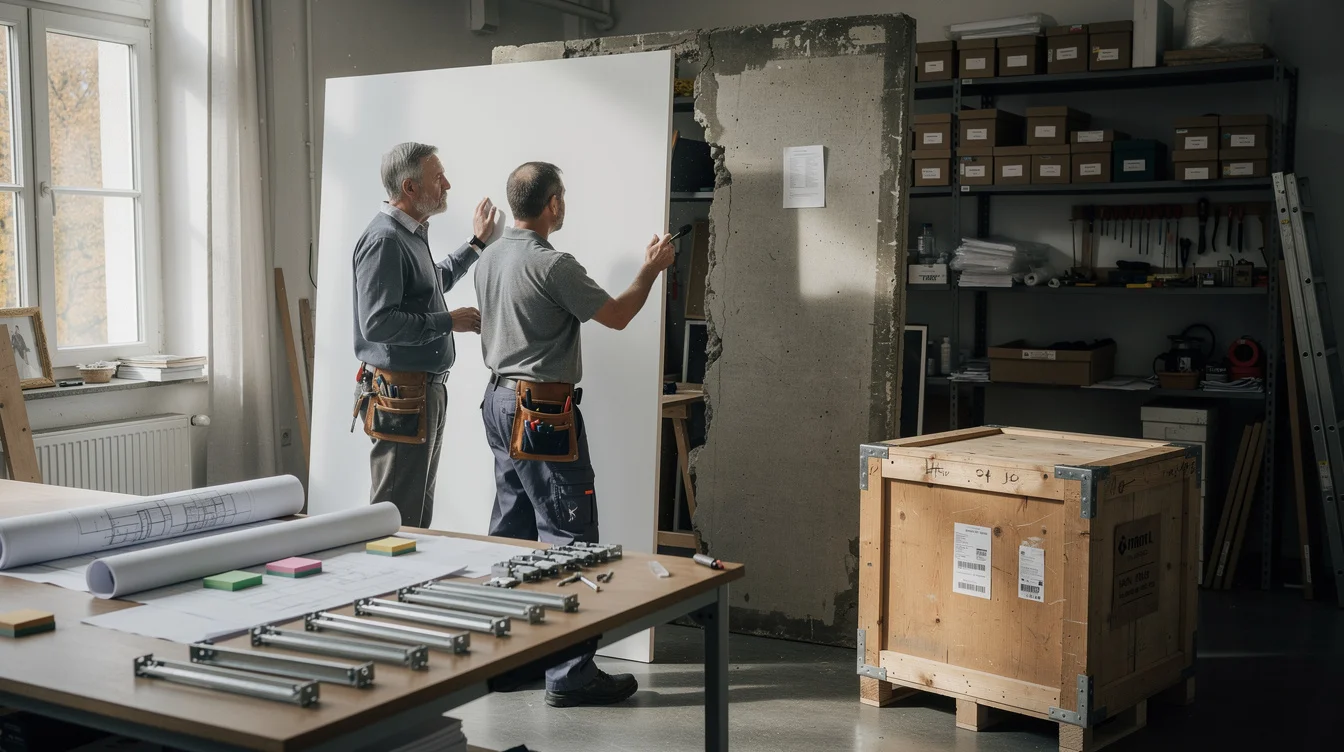
A single-work pavilion assumes continuity. The painting remains available. Its condition permits display. The institution maintains its commitment. Audiences continue to find the encounter meaningful. None of these assumptions is absurd, but none is guaranteed by concrete.
Imagine a future conservation campaign requiring the painting’s extended removal. Or a curatorial programme that wants to put Kiefer into dialogue with other artists rather than isolate him. Or an institutional need for a different kind of public space. These are hypothetical tests, not reported plans for the Carmen Würth Forum. They expose the difference between designing an exceptional present and accommodating an uncertain future.
Flexibility need not mean an anonymous white box. Carlo Scarpa’s interventions at the Castelvecchio Museum in Verona show how highly particular supports, thresholds and sequences can transform an inherited building. Peter Zumthor’s Kolumba museum in Cologne makes a forceful architectural identity from the coexistence of new construction, ruins and historical layers. Neither project is a direct template for a single-painting pavilion; both challenge the assumption that specificity requires a completely autonomous object.
The useful distinction is between specificity of experience and rigidity of infrastructure. A building can be exact about today’s encounter while allowing tomorrow’s interpretation. Whether this pavilion does so requires evidence beyond its monolithic appearance.
Ask for an Alternative, Not an Alibi
Before celebrating a new dedicated gallery, institutions should show what they rejected. Could an existing room have been adapted? Could a reversible enclosure have delivered the required separation? Could the same investment have improved access, conservation or viewing conditions across a larger collection? These are design questions, not attempts to reduce art to a spreadsheet.
Dia Beacon, which occupies a former printing factory in New York State, demonstrates that substantial encounters with demanding art can emerge through the transformation of an existing structure. Its generous industrial spaces are not universally available or suitable. The point is not that every institution has a spare factory. It is that reuse belongs at the beginning of the brief, rather than appearing later as an inconvenient comparison.
A credible case for single artwork architecture should therefore connect three kinds of evidence: the experience it uniquely enables, its whole-life material implications and the plausible uses it could support after its original commission changes. Adaptability might involve replaceable exhibition linings, accessible services or a clear strategy for accommodating other works. Those are possible criteria, not documented features of the Kiefer pavilion.
The burden of proof should rise with permanence. Cultural importance deserves a better argument than the assumption that another building is its natural reward.
The Painting Should Outlast Our Certainty
There is something valuable, even defiant, about giving one painting sustained architectural attention. In a culture of accelerated images, a dedicated place can insist that looking takes time. Rejecting that ambition outright would leave museums with efficiency as their only defensible language. That would be a miserable outcome.
But the opposite position is no better: that artistic seriousness grants construction an exemption from scrutiny. A museum’s cultural purpose does not cancel its responsibility to material resources, maintenance budgets or future custodians. It makes those responsibilities part of the work.
The provocation of Chipperfield’s Kiefer pavilion is therefore not simply that one painting has received too much architecture. We do not have the evidence to settle that verdict. It is that the project makes a hierarchy visible: the present encounter receives a permanent form, while future uses must negotiate with the result.
A convincing dedicated building should be precise without pretending that its brief is eternal. It should offer an extraordinary encounter now and a credible inheritance later. Architecture earns permanence not by freezing cultural judgment, but by giving subsequent generations something worth keeping—even when they no longer agree with the judgment that built it.
FAQ
What is the Anselm Kiefer Pavilion in Künzelsau?
It is a monolithic concrete gallery designed by the Berlin office of David Chipperfield Architects to house one Anselm Kiefer painting. It stands on a grassy mound in the sculpture garden of the Carmen Würth Forum in Germany.
Why design a building for a single artwork?
A dedicated building can tailor the approach, viewing distance, lighting strategy and spatial atmosphere to one work. Its justification is strongest when those qualities create an experience that adapting an existing space could not reasonably achieve.
Is a single-painting concrete pavilion necessarily unsustainable?
No. An assessment requires project-specific evidence about materials, construction, operation, lifespan and alternatives. However, serving a narrow programme does not remove the need to justify embodied impacts or demonstrate long-term usefulness.
Can highly specific architecture accommodate future uses?
Yes. Specificity can reside in adaptable exhibition elements and carefully proportioned spaces rather than irreversible restrictions. Replaceable fittings, accessible services and planned alternative uses can help, although those provisions are not established for this pavilion by the supplied source context.
If a perfect encounter with one painting requires a permanent building, what should that building owe the people who may one day want something else?
Watch the Mainifesto Short
Get the Mainifesto weekly — curated design debates, speculative ideas and the week's best articles every Saturday.
Editorial Perspectives
Questions and counterpoints developed by the Mainifesto editorial desk to extend the discussion.
Perspective 1
A pavilion for one painting commits land, carbon and maintenance budgets long after the patron’s priorities have changed. It owes future users a structure they can adapt without demolition—and a say in what happens next, not just an invitation to admire it.
Perspective 2
I can see paying for a room that makes one painting unforgettable; that’s a clear brief, not automatically an indulgence. But show me the operating budget and how it works when people stop coming for the Kiefer: can you change the lighting, seating and use without gutting the place?