

AI Consent: When Delegation Becomes Surrender
When AI Acts for You, Where Does Your Consent End?
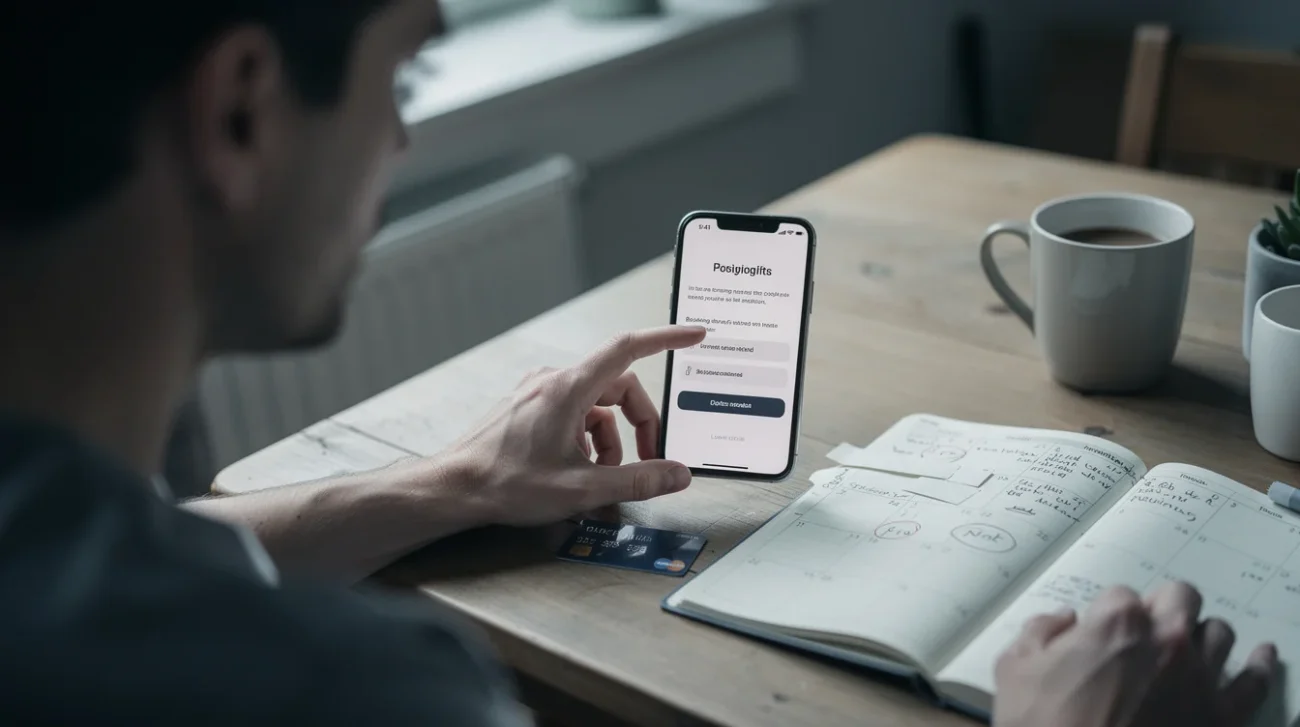
The most consequential button in tomorrow’s interface may be the one you never press. An AI assistant selects, books, replies or purchases while you are doing something else. The transaction is frictionless. Whether it was genuinely yours is a harder question.
Wallpaper*’s discussion of Meta’s Muse frames agentic AI as a more immersive—and potentially intrusive—iteration of digital assistance. It brings a central design conflict into focus: reducing the effort of everyday decisions can also remove the moments in which we question them. The scenarios below are design tests for this category, not claims about verified Muse features. The dispute is not whether delegation is inherently good or bad. It is whether an interface can make delegated authority legible before convenience makes it invisible.
PRO: Delegation Can Be a Form of Agency

There is something patronising about insisting that control requires constant attention. People already delegate to accountants, travel agents and colleagues. We do not become more autonomous by manually completing every administrative task. We become autonomous when we can decide which tasks deserve our involvement.
Agentic interfaces could extend that freedom. Consider a wheelchair user arranging a journey: the useful assistant does not simply find the cheapest train. It works within explicit requirements for step-free access, transfer time and assistance bookings, escalating uncertainty rather than improvising around it. Delegation here is not laziness. It is relief from repetitive coordination work that conventional interfaces routinely dump onto individuals.
Apple Shortcuts offers a modest precedent: people can assemble actions into repeatable workflows rather than perform each step themselves. An AI agent potentially expands that model from specified sequences to contextual judgement. That expansion deserves ambition, not automatic suspicion.
The pro-delegation position is strongest when it treats attention as a scarce resource. A system that asks for approval at every trivial step has not preserved agency; it has automated the production of interruptions. The design challenge is to reserve human judgement for consequential changes.
PRO: Permissions Should Become a Delegation Brief
Today’s permissions often describe access: microphone, location, contacts. An agent needs a second vocabulary describing authority. Reading a calendar is not moving a meeting. Comparing insurance policies is not cancelling coverage. Drafting a message is not sending it in your name. The same question of whose consent counts arises in home security camera privacy, where one person’s settings can affect others.
A useful permission interface would resemble a concise commission to a professional. For grocery shopping: spend up to £60 per week, use this retailer, never substitute products containing specified allergens, and ask before adding a recurring order. Show those conditions together, in plain language, rather than distributing them across account settings and checkout screens.
Operating-system permissions, including Android’s one-time access options, demonstrate that authorisation need not be permanent. Agentic products should extend that principle to transactions: permission for one journey, one project or one afternoon. Authority should expire when its purpose does.
Don Norman’s emphasis on understandable mappings and feedback is relevant here. A person should be able to predict what a setting allows. “Help manage my life” is branding, not a permission boundary. “Reschedule internal meetings within working hours, but never external appointments” is a rule someone can inspect, dispute and change. Good delegation begins with a brief, not a surrender checkbox.
PRO: Previews and Reversal Can Make Action Safer

A decision preview should show the proposed change, its cost, its recipient and the conditions that matter. For travel, that means departure time, accessibility assumptions, refundability and the payment account—not a cheerful paragraph announcing that the agent found a great deal.
GitHub’s pull-request model offers a useful analogy: proposed changes can be examined before they enter a shared system. Everyday agents need a less technical equivalent. Show what changes from the present state, flag departures from standing instructions and distinguish a reversible reservation from a non-refundable purchase.
Not every action needs immediate review. Low-cost, easily reversible tasks can proceed within agreed limits, with an accessible activity record. Higher-stakes actions should stop at a preview. That is risk-sensitive delegation rather than blanket confirmation.
Reversal completes the design. Gmail’s Undo Send illustrates the value—and limits—of a short cancellation window: it delays sending rather than retrieving a message already delivered. Agents could similarly stage actions before committing them. Where counterpart systems permit it, they could also cancel reservations or restore previous settings. Useful autonomy is not the absence of friction. It is friction placed where it protects something worth protecting.
CONTRA: A Beautiful Permission Screen Can Still Manufacture Consent
The strongest objection is not that people cannot understand settings. It is that platforms have powerful reasons to make expansive permission feel like the sensible default. The interface that promises to save time can frame every boundary as an obstacle to getting your life back.
Cookie banners provide the warning. Many technically offer choices while making acceptance prominent and refusal laborious. An agentic equivalent could present “Handle everything” as one inviting button and require a lengthy configuration session for narrower authority. The user has consented in a procedural sense. The design has also priced resistance in time.
For a company such as Meta, whose business is heavily supported by advertising, the question of whose objectives guide assistance is unavoidable. This does not establish any particular commercial behaviour by Muse. It establishes why recommendation criteria and commercial relationships matter before an agent becomes a purchasing intermediary.
Would the assistant choose the best option under your rules, or the option most compatible with a platform’s partnerships? A polished delegation brief cannot answer that alone. Permission controls the scope of action; it does not automatically align the incentives behind it. Consent design without business-model scrutiny risks becoming elegant camouflage.
CONTRA: Previews Can Turn Into Approval Theatre
Decision previews sound reassuring until they arrive by the dozen. A morning queue of bookings, purchases and drafted replies can become another inbox to clear. The assistant has reduced execution work while creating a new occupation: supervising its confidence.
Lisanne Bainbridge’s 1983 paper, “Ironies of Automation,” identified a durable problem: automation can leave people responsible for difficult interventions while reducing their involvement in routine operation. Agentic interfaces risk reproducing that pattern at domestic scale. You are expected to catch the exceptional error precisely because the system has taught you not to scrutinise ordinary successes.
Nor does a preview necessarily reveal the important decision. A travel card may accurately show a £180 fare while concealing that the agent excluded slower, cheaper routes. A reply may faithfully express agreement while missing a relationship’s unspoken history. The visible proposal is only the final slice of a larger selection process. As with the gap between AI interior design images and buildable reality, a convincing presentation is not proof that the underlying constraints have been addressed.
Lucy Suchman’s work on situated action challenges the idea that human intentions can be fully captured in advance. “Arrange something appropriate” depends on context that shifts. No dashboard can eliminate that ambiguity. Unless previews expose consequential assumptions and make alternatives easy to inspect, they may merely recruit the user to legitimise a decision already made.
CONTRA: Undo Cannot Restore Every Consequence
The language of reversal is particularly seductive because software has trained us to expect an escape route. But agents act across organisations, social relationships and physical systems. These do not share a universal undo stack.
Cancel a restaurant reservation and the table may already have been released. Delete a message and someone may already have read it. Reverse a purchase and a delivery worker may already have begun the journey. Retract shared information and the recipient may retain a copy. Restoring an interface state is not the same as restoring the world.
Donald Knuth’s TeX and today’s version-control tools make revision powerful within bounded digital environments. Their example should clarify the limit, not encourage magical thinking: a recoverable document and a recoverable social consequence are different design problems.
Agents therefore need to distinguish cancellation, rollback, compensation and irreversibility. Those labels should appear before action, with any deadline, fee or dependency. They also need a stop control that freezes pending actions and revokes ongoing authority. An activity log is evidence, not a remedy.
The decisive boundary is not whether an AI can act. It is whether you can meaningfully refuse, redirect and recover. Where those powers are missing, delegation is not simply convenient. It is control transferred under an attractive name.
FAQ: Consent When AI Takes Action
What makes AI consent different from ordinary app permission?
Ordinary permissions usually authorise access to a resource, such as location or contacts. Agentic AI also needs authority to change things: spend money, communicate, book or cancel. Access and action should be separately controlled, with limits on purpose, duration and consequence.
Should an AI agent ask before every action?
No. Constant confirmation can create fatigue and undermine useful delegation. Low-risk actions can proceed within explicit boundaries. Unfamiliar, costly, sensitive or difficult-to-reverse actions should require a clear preview and fresh approval.
What should a decision preview include?
It should identify the action, affected people or accounts, cost, timing, important assumptions and reversibility. It should also highlight departures from your instructions and make meaningful alternatives available, rather than simply invite approval of a polished recommendation.
Can an undo button guarantee that an agent’s mistake is reversible?
No. Some systems support cancellation or restoration; others allow only partial repair. A responsible interface explains those limits before acting and provides practical recovery steps afterwards. Revoking permission should also stop future actions, not merely hide past ones.
If an assistant makes your life easier by making your choices less visible, at what point would you stop calling that help?
Get the Mainifesto weekly — curated design debates, speculative ideas and the week's best articles every Saturday.
Editorial Perspectives
Questions and counterpoints developed by the Mainifesto editorial desk to extend the discussion.
Perspective 1
I’m for delegation: in parametric design, setting constraints can give me more control than adjusting every element by hand. Could an assistant work the same way—letting me define what matters, then flagging decisions that push those limits?
Perspective 2
I stop calling it help when I can no longer see what was ruled out for me. I’m excited by AI as an artistic medium, but I don’t want it quietly curating my life; a preview of its preferred choice isn’t the same as showing me alternatives.
Perspective 3
In manufacturing, changing a CAD file back doesn’t undo a tooling order already sent to a supplier. I’d judge these assistants by how often people catch unwanted decisions before they trigger downstream costs, not by how clean the permission screen looks.