
When Design Schools Cut Craft, What Else Disappears?
Close a course and the spreadsheet gets shorter. Close a workshop culture and the consequences become harder to count. That distinction sits at the centre of the dispute at Edinburgh College of Art, where more than one hundred staff have signed an open letter asking the university to reverse its decision to close three craft-focused design courses.
According to Dezeen’s report of 25 November 2026, staff characterise the closures as financially driven. The available source summary does not establish the university’s detailed financial case or the eventual fate of individual workshops. Those limits matter: a course closure is not automatically a workshop demolition. But the dispute raises a question that reaches far beyond Edinburgh. What if the unit being cut is not the unit that creates the value?
A specialist course can support equipment, technical expertise and material experimentation that serve a much wider educational community. Assessing it as an isolated product risks confusing a small enrolment with a small contribution. For a design school, that is not merely an accounting problem. It is a failure to understand what design education actually produces.
The course is not the whole institution
Universities need budgets. Furnaces consume energy, extraction systems need maintenance, and safe workshop teaching cannot always accommodate lecture-hall numbers. Pretending these costs do not exist would make a weak defence of craft. The stronger argument is that costs and benefits must be assessed across the infrastructure they sustain, not simply against the tuition income of a single programme.
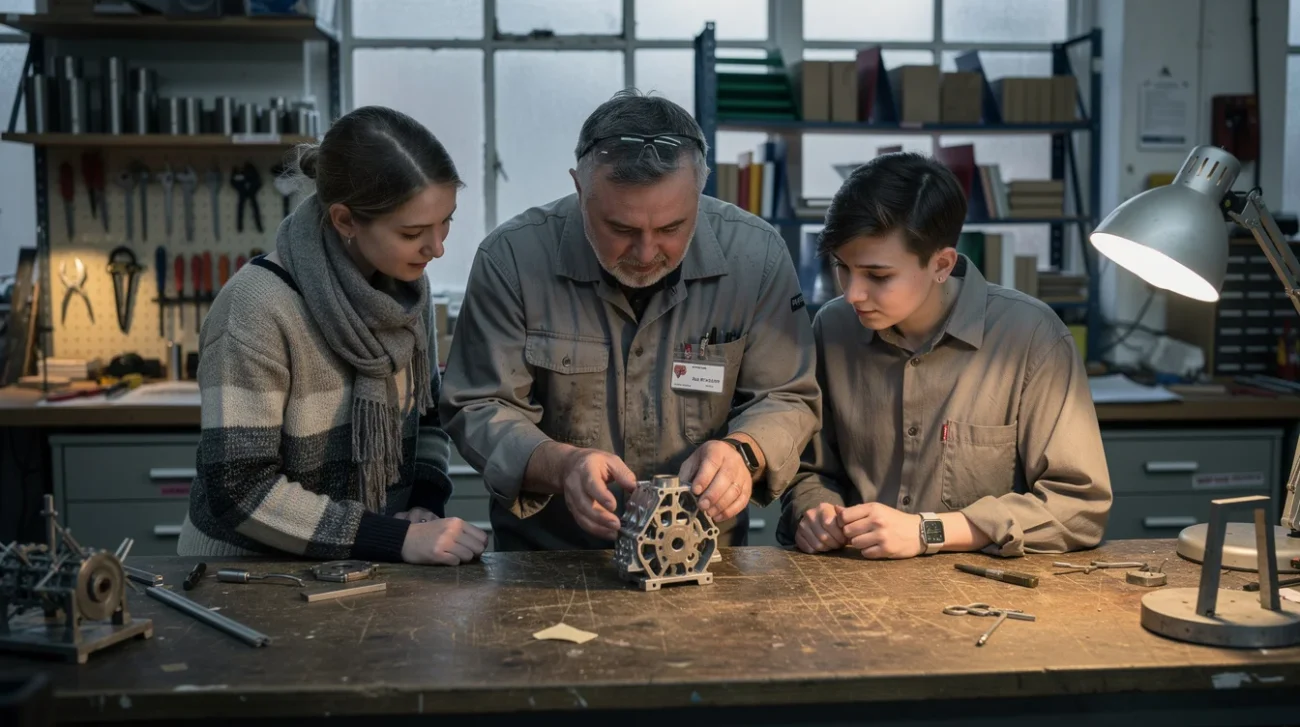
Consider a hypothetical metal workshop used by jewellery students, architecture students testing connections and product designers developing repairable assemblies. Its technician may help all three groups understand tolerances, joining and failure. If the technician’s post sits mainly within one course’s budget, that course can appear expensive while the other programmes quietly benefit. This is an illustration of the accounting risk, not a claim about Edinburgh’s internal allocations.
The Bauhaus offers a useful historical counterexample to the idea that workshops are peripheral services. Its weaving workshop, associated with Gunta Stölzl and Anni Albers, was a site where material experiments became investigations into structure, production and use. The workshop was not simply somewhere students executed ideas developed elsewhere.
A workshop is intellectual infrastructure. The university assessing its future should therefore ask who depends on it, what research it enables and which capabilities disappear if its core teaching community is removed.
What a balance sheet cannot teach
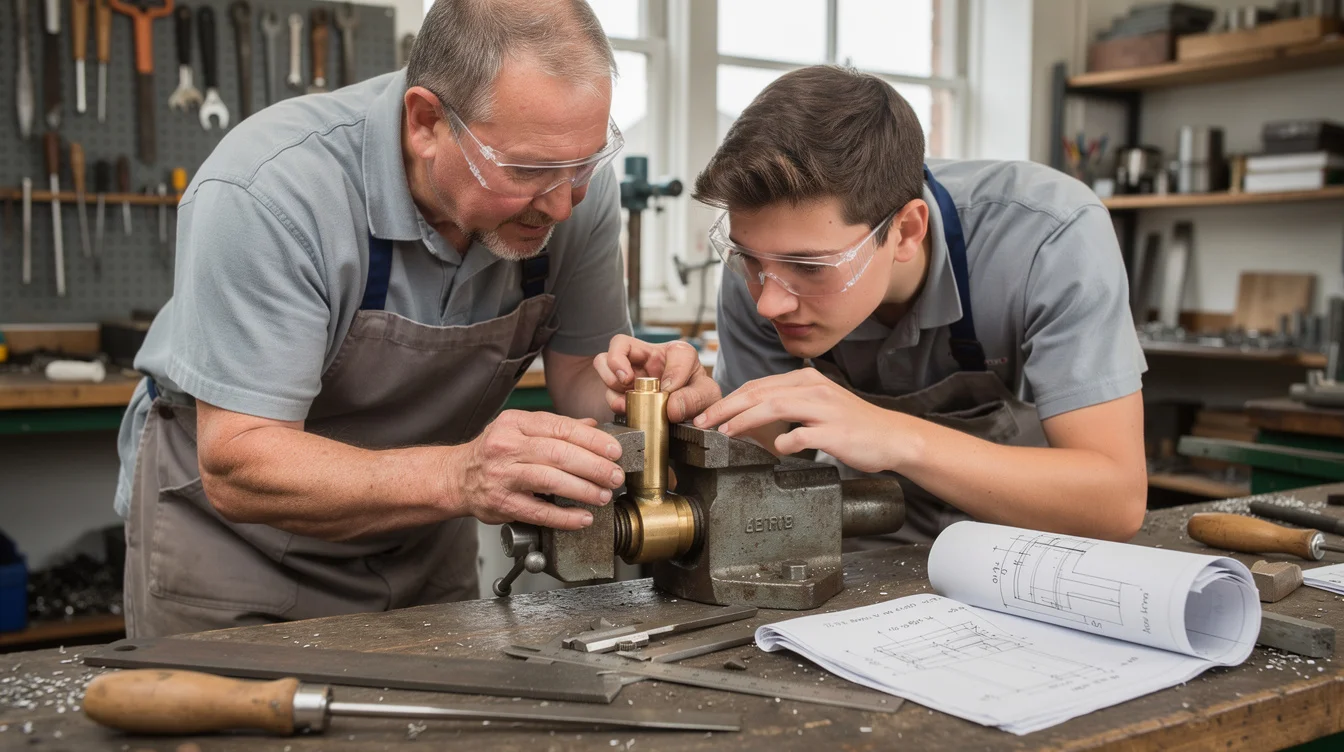
Material knowledge is often described as tacit, which can make it sound mysterious. Much of it is concrete: recognising when a tool is cutting badly, understanding why a joint fails, noticing how a surface changes during finishing. These judgments emerge through supervised repetition. A written procedure helps, but it cannot anticipate every variation in stock, equipment or a beginner’s movements.
Max Lamb’s Pewter Stool makes this relationship between idea and process unusually visible. Cast using a mould formed in beach sand, it ties the object’s shape and surface to the conditions of making. Its relevance to education is not that every student should cast furniture on a shoreline. It is that material encounters can generate design decisions rather than merely realise a predetermined drawing.
That distinction challenges the seductive idea that digital tools can replace workshop provision. Simulation and fabrication software are powerful, but someone must still understand what happens when a model becomes matter. A perfectly drawn component can remain impossible to assemble, unpleasant to handle or wasteful to manufacture.
When experienced teachers and technicians leave, their knowledge does not remain conveniently stored beside the equipment. Machines can sometimes be purchased again. The relationships through which people learn to use them intelligently require sustained teaching, trust and time.
Craft is not the opposite of innovation
The defence of craft becomes weakest when it retreats into nostalgia. Universities do not need to preserve every syllabus unchanged, and labour-intensive production is not automatically ethical or sustainable. Some workshop processes consume substantial energy or involve hazardous substances. Keeping them requires critical teaching, not romantic immunity from scrutiny.
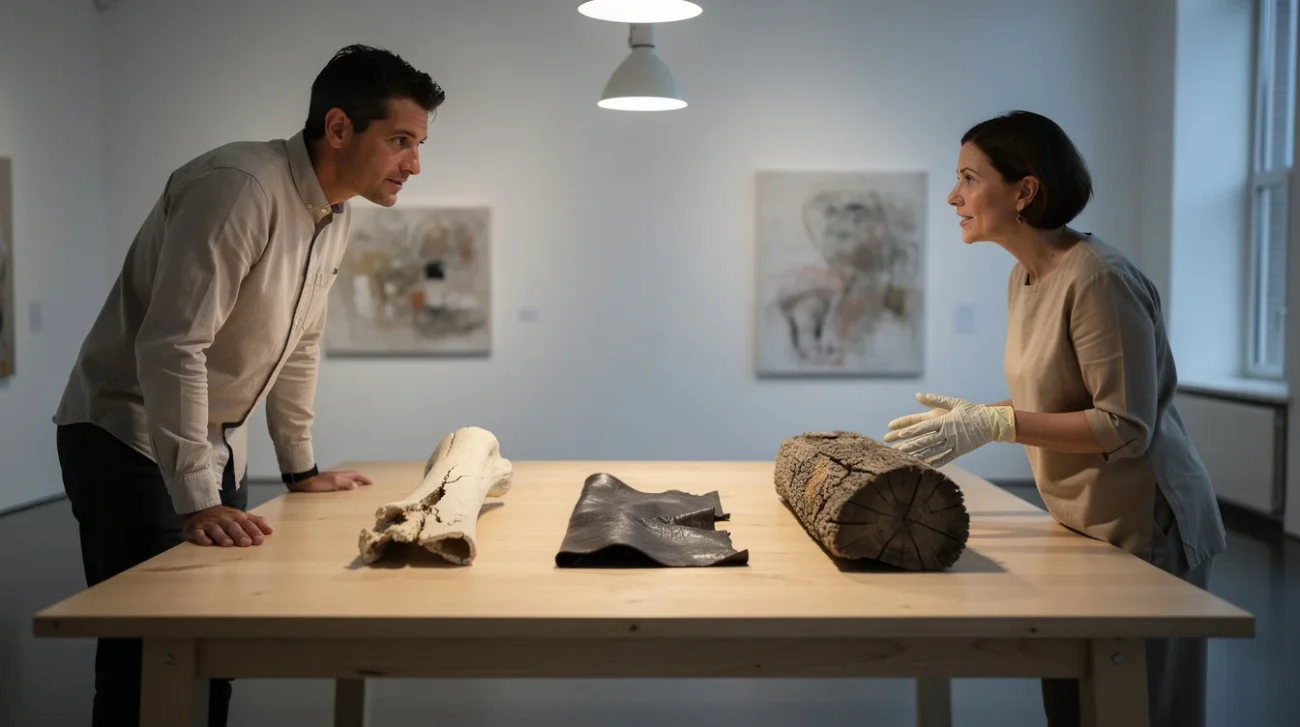
Yet removing material expertise also undermines the capacity to interrogate production. Formafantasma’s Ore Streams, a project investigating electronic waste through research and furniture, connects design to the hidden systems governing extraction, disposal and recovery. Its significance lies partly in refusing to treat an object as an isolated visual proposition. Materials arrive with histories, constraints and political consequences. Similar questions arise when archaeological evidence becomes a resource for design.
Students cannot meaningfully design for disassembly if they never encounter an assembly that resists them. They cannot evaluate the promise of a recycled material solely from a supplier’s promotional photograph. Repairability requires attention to fixings, access, wear and replacement, not just a sustainability statement attached to a presentation board.
The relevant opposition is therefore not craft versus technology. It is informed experimentation versus production at a distance. A school that celebrates circular design while weakening access to material learning risks teaching sustainability as branding. Workshops do not guarantee responsible design, but they provide a place where its claims can be tested against physical evidence.
A closure can travel beyond the campus
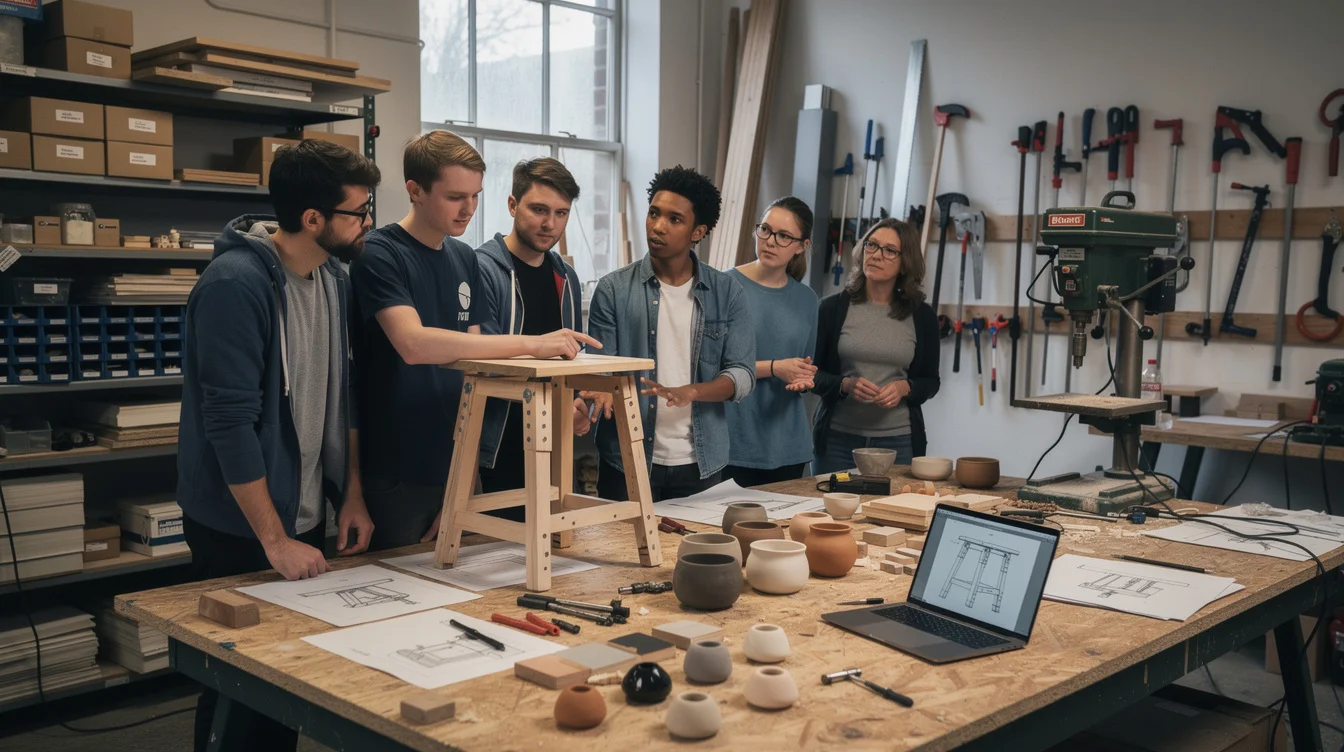
The consequences may also extend beyond enrolled students. Specialist education can feed local studios, independent businesses, cultural organisations and future teaching. Graduates become employers, collaborators and mentors. Where workshop access is already scarce, losing one institutional route can narrow an entire region’s opportunities to learn a discipline.
Granby Workshop in Liverpool offers a useful reference for thinking beyond the self-contained design object. Established in 2015 through the collaboration between Assemble and the neighbourhood’s community-led regeneration, it connects architectural ceramics and making with place, employment and collective ambition. It is not a university programme, nor proof that any particular course must survive. It demonstrates why productive capacity can matter socially as well as commercially.
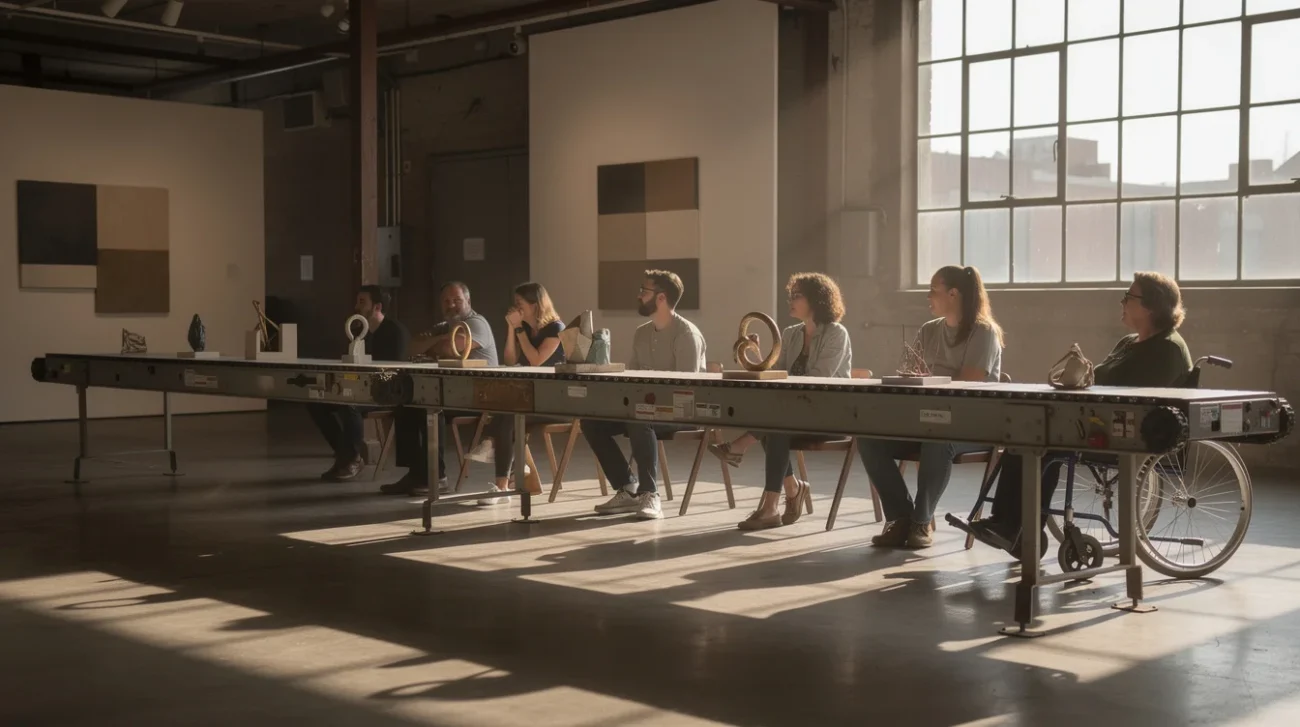
There is an access question here, too. If universities withdraw specialist facilities, students with money may purchase private tuition, rent studio time or draw on family connections. Others cannot. Replacing institutionally supported learning with an instruction to find experience elsewhere does not eliminate its cost. It transfers that cost to the learner. This echoes a question raised by accessibility in art institutions: should people have to overcome barriers themselves, or should institutions change how they provide access?
This is why promises of alternative access need detail. An occasional external workshop is not necessarily equivalent to repeated, supervised experimentation within a degree. Before any closure, an institution should identify who can still learn, where they can learn and what they will have to pay.
Demand an infrastructure test, not a sentimental exemption
The Edinburgh dispute should trigger a more demanding test for course closures. First, publish a dependency map: which programmes use the facilities, which staff support them and which teaching activities rely on the threatened courses. That would allow a debate about the actual institution rather than an abstract contest between financial realism and artistic sentiment.
Second, calculate the cost of reversal. Removing a programme may reduce expenditure, but restoring its capabilities could require recruitment, equipment purchases, safety approvals and the rebuilding of teaching networks. A decision is not genuinely cheap if its apparent savings depend on assigning no value to the option of recovery.
Third, specify what survives. A workshop retained without sufficient technical staffing is not equivalent to an operating educational resource. Equipment in storage is not student access. A commitment to material learning needs timetabled provision, maintenance funding and people authorised to teach safe practice.
None of this proves that every course must remain open forever. It establishes who should carry the burden of proof. Institutions proposing irreversible cuts should demonstrate that they understand the capabilities at stake and have examined credible alternatives, including shared provision where that preserves meaningful access. Course-by-course accounting may be administratively convenient. It is not, by itself, a defensible theory of a design school.
FAQ
What is happening at Edinburgh College of Art?
Dezeen reported on 25 November 2026 that more than one hundred staff had signed an open letter asking the university to reverse its decision to close three craft-focused design courses. Staff describe the closures as financially driven. The supplied report summary does not detail the future of individual workshops.
Why might course-by-course accounting undervalue craft?
A specialist course may sustain facilities and technical staff used across several disciplines. If expenditure is assigned mainly to that course while wider benefits go uncounted, its apparent financial performance can give an incomplete picture of its institutional value.
Can digital fabrication replace traditional workshop teaching?
Digital fabrication can extend workshop learning, but it does not remove the need to understand materials, tolerances, assembly or safe equipment use. The strongest education connects digital methods with physical testing rather than treating them as interchangeable alternatives.
What should universities disclose before closing craft courses?
They should explain the financial rationale, map shared dependencies and specify what happens to facilities, technical staff and student access. They should also assess the cost of rebuilding lost capabilities and show whether alternatives could preserve substantial material teaching.
If a design school can balance its books by dismantling the infrastructure that makes it a design school, what exactly has it saved?
Watch the Mainifesto Short
Get the Mainifesto weekly — curated design debates, speculative ideas and the week's best articles every Saturday.
Editorial Perspectives
Questions and counterpoints developed by the Mainifesto editorial desk to extend the discussion.
Perspective 1
Perhaps it has saved the brand, which is increasingly mistaken for the school. There’s something of Borges’s map here: the institution keeps its name and prospectus while erasing the territory students came to explore.
Perspective 2
Before calling these closures a saving, show which courses use the workshops, what replacement access would cost, and how expensive rebuilding would be. A lightly enrolled course can support heavily used infrastructure; a departmental balance sheet won’t necessarily reveal that.
Perspective 3
In adaptive reuse, keeping the façade is often enough to claim you’ve preserved a building, even after you’ve displaced everything that gave it purpose. A school can pull the same trick: retain the prestigious address, lose the workshops and the people who know how to run them, then sell the atmosphere of craft.
Perspective 4
If we want designers to make products repairable, they need somewhere to take things apart, break joints and try again. I’d challenge the school to open its workshops to repair businesses and local makers before closing them—not as a guaranteed financial fix, but as a serious model worth testing.
Perspective 5
Low-impact materials can look convincing on a sample card and fail when you test moisture, wear or the binder holding them together. Shared workshops give students the tools and guidance to investigate those failures, so any savings calculation should ask where that testing will happen next—and who will still be able to afford it.