

Who Decides What a Successful Building Measures?
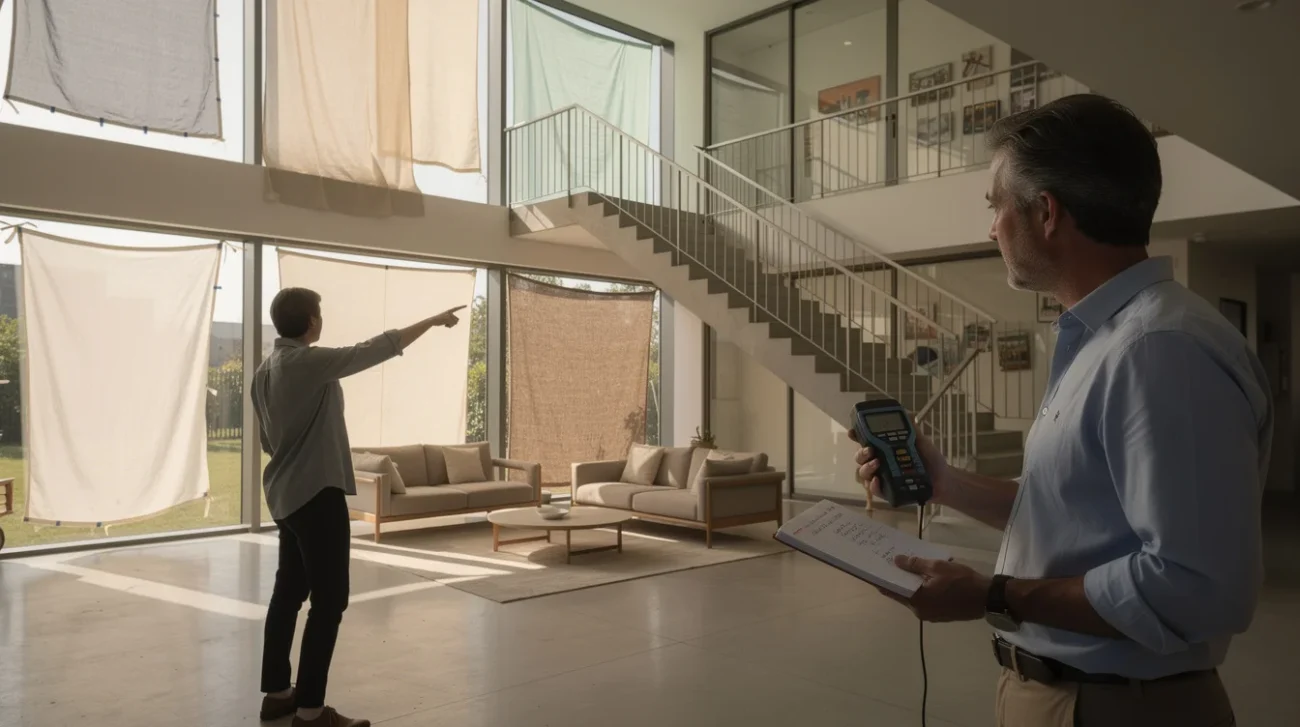
A building can win the feed and lose its inhabitants. Its atrium photographs beautifully; its residents avoid it after dark. Its glass façade signals transparency; its workers improvise cardboard blinds. Architecture has become exceptionally good at distributing images of success. It remains much less consistent at checking whether those images survive occupation.
The ArchDaily article behind this debate asks whether neuroscience and use data could redirect a profession shaped by modelling software, renders and social media. That possibility deserves enthusiasm—and suspicion. Replacing the photograph with a dashboard does not eliminate editorial judgement. It relocates it into a benchmark. The decisive question is not whether buildings should be measured, but who gets to define a good result, challenge it and demand change.
PRO: Evidence Can Make Architecture Answerable
Post-occupancy evaluation offers a necessary insult to architectural vanity: return after the opening, when the furniture has moved and the maintenance team knows which promises were fiction. Measure temperatures, energy consumption, noise and accessibility. Ask occupants what they can control. Compare the operational building with the design brief, rather than comparing its photographs with other photographs.
Britain’s PROBE studies, published through Building Services Journal from the mid-1990s, helped establish this culture of scrutiny. Researchers including Bill Bordass and Adrian Leaman examined occupied buildings through operational evidence and occupant feedback. Their importance was methodological as much as technical: architectural intention was not accepted as proof of architectural performance.
That distinction matters in an ordinary housing block. A predicted energy figure may assume operating conditions that never materialise. Meter readings can expose a gap; interviews can reveal whether residents understand the controls, cannot afford sufficient heating, or open windows because ventilation is inadequate. Low consumption alone cannot distinguish efficiency from deprivation.
Good evaluation makes claims contestable. If a developer promises a comfortable communal room, residents should not have to defeat a marketing campaign with anecdotes alone. Temperature records, documented access restrictions and a properly sampled survey can turn an isolated complaint into a demonstrable failure. Benchmarks become useful when they provide leverage against those who otherwise control the story.
PRO: Measure Experience, Not Just Equipment

The strongest case for neuroarchitecture is not that a brain scan can certify beauty. It is that bodily experience deserves investigation alongside mechanical performance. Eye-tracking can examine visual attention; physiological measurements can register aspects of arousal; navigation tasks can reveal where a layout becomes confusing. None is a complete account of experience, but each can test a specific proposition.
Consider a hospital entrance. A sculptural staircase may dominate the image while an accessible route disappears behind reception. Wayfinding research associated with environmental psychologist Roger Ulrich and architect-researcher Ann Sloan Devlin belongs to a broader tradition of asking what healthcare environments actually do to people. A useful evaluation could combine observed wrong turns, requests for assistance and interviews with patients navigating under stress. The target should be understandable access, not simply faster movement.
Jan Gehl’s public-life studies offer another corrective to the solitary architectural photograph. Counting people who sit, walk or linger makes occupation visible. Repeating observations across weather, seasons and times of day prevents a sunny lunchtime from standing in for an entire year.
The governance opportunity is substantial. Clients can put follow-up evaluations, independent reporting and a corrective budget into the original appointment. Residents can help define questions before equipment is installed. Measurement then becomes a feedback obligation, not an awards submission: the architect and owner must return to explain what worked, what failed and what they will alter.
CONTRA: Every Benchmark Smuggles in a Client
The dashboard is never innocent. Someone commissions the study, chooses its boundaries and decides which deviations count as failure. An office landlord may prize occupancy density. An employer may prize collaboration. A worker may prize the ability to concentrate without being watched. These are competing interests, not imperfect versions of one universal definition of success.
A busy communal space illustrates the trap. High footfall could indicate attraction, but it could also mean that every journey is forced through it. Long dwell times might express delight—or a queue. An empty corridor might be hostile, or simply perform its modest job without demanding attention. Behaviour is evidence of an event, not an automatic explanation of its meaning.
ELEMENTAL’s Quinta Monroy housing in Iquique makes this conflict especially legible. Designed around incremental expansion, it challenges the idea that the architect’s completed object is the final unit of assessment. A later enclosure might register as a departure from the original image while answering a household’s changing needs. That does not make every alteration safe or desirable; it means evaluation must distinguish formal compliance, technical safety and resident agency.
Neuroscience cannot dissolve these conflicts. Physiological arousal does not, on its own, tell an evaluator whether someone feels fascination, fear or excitement. A short experimental exposure cannot stand in for years of attachment, negotiation and routine. Presenting such measures as a definitive score would replace aesthetic authority with scientific-looking authority—without necessarily making architecture more accountable.
CONTRA: Residents Need a Right to Appeal the Score
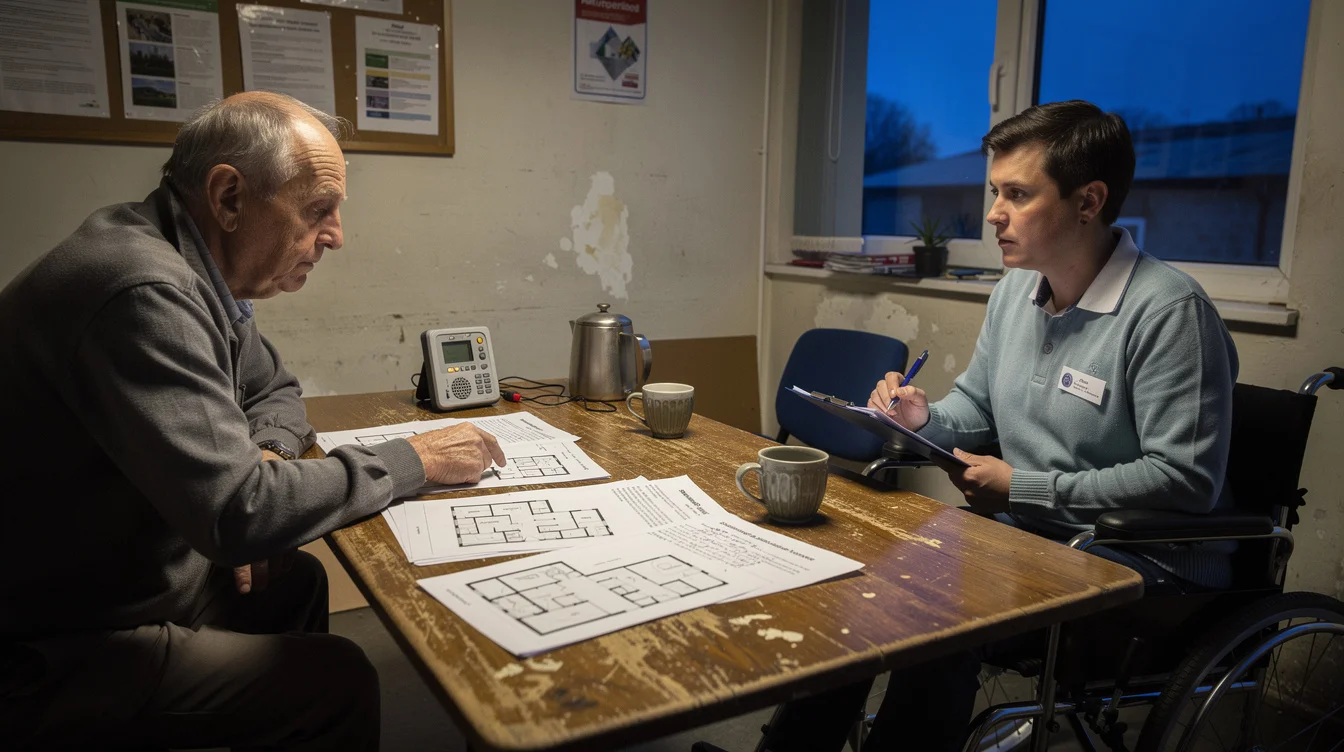
Participation is weak protection if residents can supply answers but cannot challenge the questions. A survey asking whether a refurbished lobby feels welcoming cannot adjudicate the loss of an affordable meeting room. Nor can a favourable average erase the experience of wheelchair users repeatedly blocked by a heavy entrance door. Some failures require a non-negotiable standard, not a majority vote.
The transformation of 530 dwellings at Grand Parc Bordeaux by Lacaton & Vassal, Frédéric Druot and Christophe Hutin suggests a richer frame. Its added winter gardens and balconies invite measurement of space, daylight and thermal conditions. But evaluating that kind of housing intervention also requires questions about continued occupation, housing costs, privacy and how households actually appropriate the new rooms. Additional square metres are important; they are not the entire verdict.
A credible appeal process would let residents inspect the methods, submit counter-evidence and request an independent review. It would publish disagreements rather than bury them in a composite score. Recruitment must reach people missed by digital questionnaires, and participation should be supported with accessible formats, translation and compensation where appropriate.
Behavioural monitoring also demands limits: meaningful consent where applicable, data minimisation, clear retention rules and protection against repurposing information for tenancy enforcement or employee surveillance. The remedy must be designed as carefully as the measurement. Without a responsible decision-maker, a repair budget and a timetable, evaluation risks becoming an elaborate way of recording discomfort while leaving its causes intact.
FAQ: Who Owns the Verdict?
What is post-occupancy evaluation?
It is a structured assessment of a building after people begin using it. It can combine energy and environmental measurements, inspections, observation and occupant feedback. The best evaluations compare promised outcomes with actual conditions and establish what needs to change.
Who chooses a building’s performance benchmarks?
Usually the commissioning client and evaluation team define them, within applicable regulations, contracts and certification requirements. That arrangement can privilege owners’ priorities. Residents and other users should help set the brief, identify overlooked harms and determine which results need separate reporting rather than averaging.
Can neuroscience prove that a building is successful?
No single neurological or physiological measure can establish that. Such methods can help investigate bounded questions about attention, stress or navigation, provided their limitations are explicit. They cannot independently decide whether a place is fair, affordable, culturally meaningful or worth preserving.
Can residents challenge a favourable performance score?
They can contest its evidence and interpretation, but a formal route to change depends on local law, tenure and contractual arrangements. Evaluation agreements should establish access to findings, an independent complaints process and responsibility for corrective action. A positive score should never override applicable safety or accessibility obligations.
If a building passes every commissioned test but the people living there say it fails them, who should have the authority to reopen the verdict?
Watch the Mainifesto Short
Get the Mainifesto weekly — curated design debates, speculative ideas and the week's best articles every Saturday.
Editorial Perspectives
Questions and counterpoints developed by the Mainifesto editorial desk to extend the discussion.
Perspective 1
I’m in favor of post-occupancy evaluation: measured performance gives residents something firmer than an architect’s assurances. But residents need a formal route to trigger an independent reassessment, because passing an energy test tells us little about whether anyone can sleep with the windows open.
Perspective 2
I’m against treating a commissioned score as the verdict on a building, especially in adaptive reuse. A courtyard can miss a comfort target and still sustain decades of shared life; a polished conversion can pass while pricing that life out. Residents should be able to reopen the verdict without having to translate every loss into a metric.
Perspective 3
Who pays for the tests, who owns the data, and who can compel a repair? In a city with unreliable power or water, a building tested under uninterrupted supply has passed the wrong exam. Residents need access to the evidence and an appeal body with enforcement powers, not another feedback dashboard.
Perspective 4
If people keep reporting noise, bad sleep, or unusable rooms, I want the case reopened—even if every consultant has signed off. Give residents a direct escalation route and put someone with a repair budget on the other end; repeat complaints and turnover are costs, not theoretical disagreements.
Perspective 5
The photograph once supplied architecture’s alibi; now the performance certificate threatens to do the same. Lefebvre’s distinction between conceived and lived space remains inconveniently useful here: residents must be able to contest a verdict whose categories they never chose.