
GTA VI’s Miami: When a City Becomes a Game
When a City Becomes a Game, What Counts as Authentic?
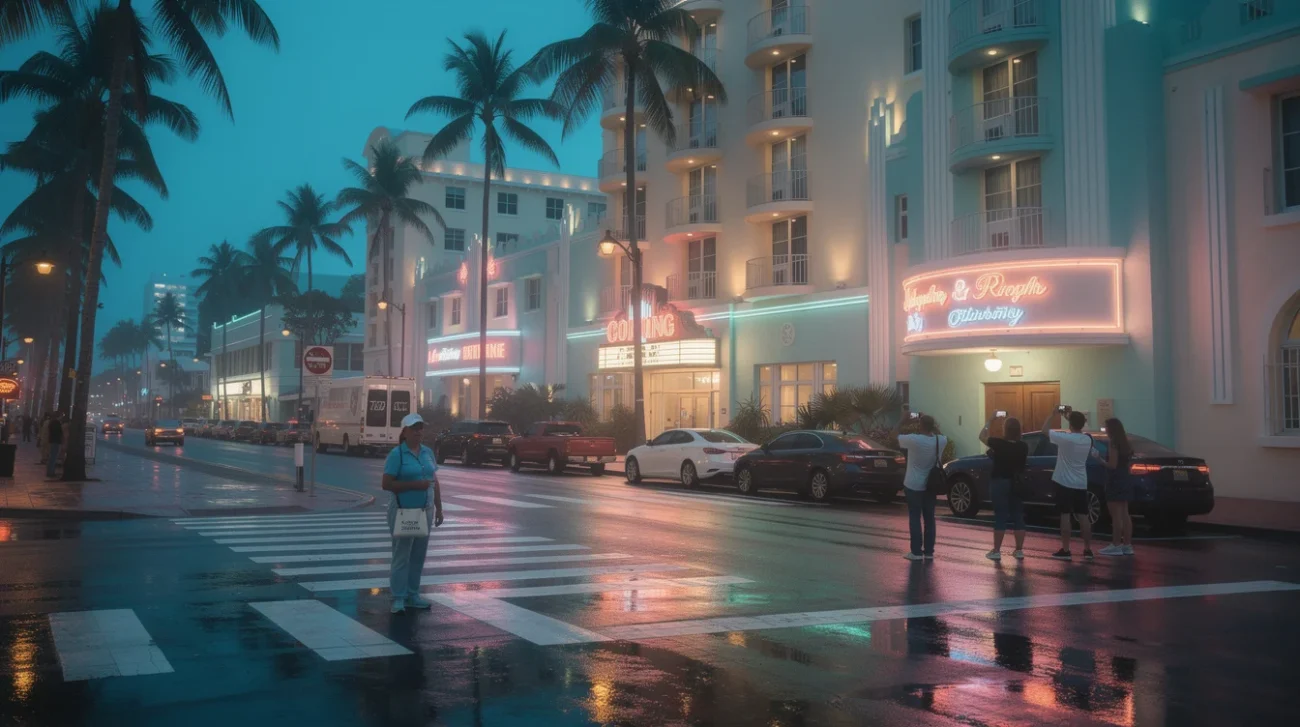
A convincing Miami is relatively easy to recognise: pastel Art Deco façades, palms against an enormous sky, causeways that turn driving into cinema. A convincing account of Miami is harder. It requires the cleaner arriving before the hotel lobby fills, the pedestrian negotiating an exposed intersection, the resident calculating whether another rent increase means leaving. These are not atmospheric extras. They are the city.
Designboom’s account of GTA VI’s fictional Vice City describes detailed environments informed by more than a decade of research, including Florida field trips and attention to Miami’s architecture and streets. That investment deserves serious architectural scrutiny, not just applause for visual detail. The argument is not whether Vice City looks authentic, but which definition of authenticity a playable city can sustain. The reporting establishes a research-intensive design process; it does not, by itself, establish how fully the game represents everyday urban life.
PRO: Architectural Fidelity Is More Than Cosmetic
Start by rejecting an architectural prejudice: popular entertainment cannot produce serious spatial knowledge. A game environment can teach relationships that a photograph cannot. A façade becomes part of a sequence; a boulevard acquires length; a waterfront becomes accessible from one direction and obstructed from another. Moving through space makes architecture relational rather than merely iconic.
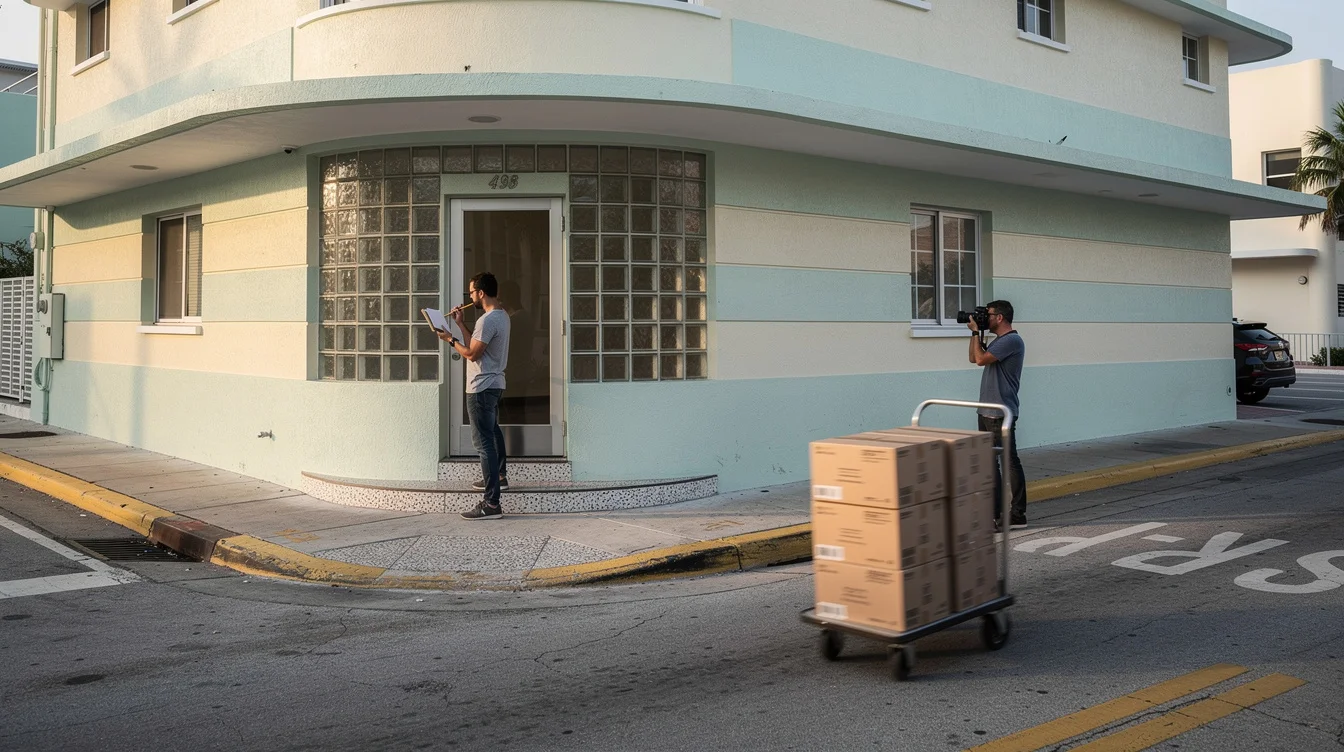
Miami Beach’s Art Deco vocabulary is especially useful here. Rounded corners, projecting horizontal bands and shaded entrances are not interchangeable decorations. They organise the encounter between building, sidewalk and subtropical climate. A reconstruction attentive to those relationships can communicate more than a generic collection of pink hotels. Its credibility depends on how buildings meet the street, not simply how accurately their upper floors catch sunset. The distinction echoes why a brighter city is not always a better city: visual impact is not the same as urban quality.
Robert Venturi, Denise Scott Brown and Steven Izenour made a related provocation in Learning from Las Vegas: commercial signs, roadside buildings and the view from a moving car deserve architectural attention. Their example matters because GTA’s urban viewpoint is often vehicular. The supposedly vulgar landscape of parking lots, billboards and drive-through commerce is a designed environment, not an embarrassing interruption between monuments.
Field research can therefore correct the architectural postcard. If designers study service roads, setbacks, pavement markings and ordinary retail frontages alongside landmarks, entertainment becomes an unusually expansive vehicle for looking closely. Accuracy at this scale can make everyday construction visible to audiences unlikely to open an urban-design monograph.
PRO: A Playable City Can Reveal Spatial Relationships
Compression is not automatically falsification. Every architectural representation selects: a figure-ground drawing suppresses height, a transit diagram distorts distance, and a sectional model cuts away most of a building. The useful question is what the selection allows someone to understand. A game can shorten journeys while retaining meaningful contrasts between dense commercial streets, detached housing and infrastructural edges.
Kevin Lynch’s The Image of the City offers a productive framework. His paths, edges, districts, nodes and landmarks describe how people mentally organise urban space. These are also powerful ingredients for navigable game environments. A legible district boundary or memorable junction can make a fictional city intelligible without reproducing every parcel. Gameplay and urban understanding are not necessarily enemies.
Movement can also turn infrastructure into an experience rather than background scenery. Crossing a causeway makes separation palpable. Approaching a large interchange reveals how much territory mobility consumes. Returning to a neighbourhood from another direction can expose connections that a static image conceals. These are possibilities of the medium, not claims about features confirmed in GTA VI.
Miami’s Underline, the public-space project beneath Metrorail with a master plan by James Corner Field Operations, offers a useful real-world comparison: urban understanding changes when residual infrastructure becomes somewhere people can move through and occupy. A game need not reproduce that project to achieve a comparable perceptual shift. Its strongest claim to authenticity is experiential: making spatial relationships readable through action.
CONTRA: Recognisable Streets Can Still Misrepresent a City
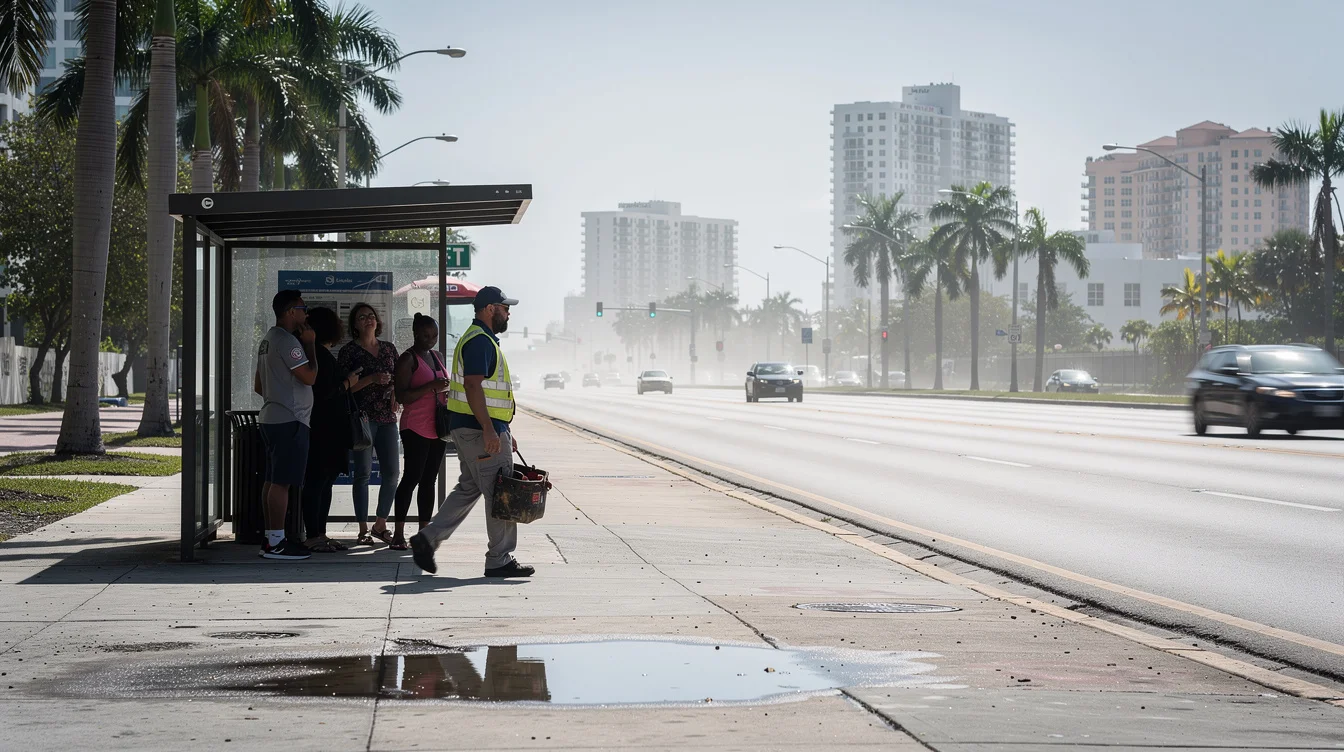
The counterargument begins where visual credibility becomes too persuasive. A similar risk arises when AI-generated architectural images are mistaken for evidence. A meticulously modelled district can suggest completeness while leaving out the forces that determine who lives there. Rent, insurance, employment and access to transport are difficult to photograph on a research trip. Yet they organise urban life more decisively than the profile of a hotel cornice.
Consider the difference between depicting a luxury waterfront tower and representing its urban consequences. The first requires geometry, materials and lighting. The second requires some account of property, labour, access and displacement. A resident, a maintenance worker and a visitor may approach the same building through different entrances and under radically different conditions. Architectural authenticity resides partly in those permissions.
Jane Jacobs’s The Death and Life of Great American Cities located street vitality in overlapping routines and uses, not a high density of exciting incidents. The person opening a shop, watching a doorway or making a short errand sustains a neighbourhood without performing for an audience. If such figures exist only to make the street look occupied, the representation retains the crowd but loses its agency.
This is the danger of the research boast. A decade of observation can generate an extraordinary inventory of surfaces without producing an equally sophisticated model of relationships. Detail is evidence of attention, not proof of social truth. A fictional Miami may look most convincing precisely where it encourages players to mistake visible abundance for an adequate account of the city.
CONTRA: Entertainment Decides Which Frictions Survive
A playable city needs rhythms, incentives and routes. Real cities contain long stretches of repetition, delay and obligation. The pressure to turn space into entertainment therefore acts as an editorial filter: some obstacles become thrilling, while others become expendable. A congested intersection can support a chase; an unreliable commute may simply exhaust patience.
Miami’s heat and heavy rain sharpen the distinction. Reflective wet asphalt is spectacular. Waiting beside a wide road without adequate shade is not. Floodwater can be dramatic scenery, but recurring disruption also means missed shifts, damaged possessions and arguments over responsibility. The image of environmental exposure is much easier to retain than its unequal consequences.
Jan Gehl’s Life Between Buildings helps explain what gets lost. Necessary activities, optional activities and social encounters depend on the quality of public space, but they do not all generate compelling missions. The width of a crossing, the availability of a seat and the distance to shelter matter intensely to someone walking slowly. A city optimised around rapid traversal risks treating those conditions as negligible.
None of this requires GTA VI to become a municipal simulator, nor does it establish that these realities are absent from the game. It establishes a demanding standard for criticism. Research-intensive architecture should be judged both by what it renders and by what its rules make consequential. The most revealing authenticity test is whether the city appears to have purposes beyond the player. When everyone and everything exists primarily to supply spectacle, recognisable Miami becomes a magnificent set rather than a convincing urban society.
FAQ: Reading Authenticity Beyond the Façade
What does architectural authenticity mean in GTA VI?
It can mean recognisable building forms, credible street layouts and convincing materials. A stronger definition also considers how spaces are used, who can access them and whether ordinary activities have significance beyond providing atmosphere.
Does the reported research guarantee an accurate Miami?
No. Designboom describes extensive research informing the fictional Vice City. Research can strengthen observation and detail, but designers still select, compress and transform their material. A researched fictional setting is not the same thing as a comprehensive urban record.
Can a compressed game map still represent a city honestly?
Yes, if its alterations preserve meaningful relationships. Distances may shrink while neighbourhood contrasts, barriers and connections remain legible. Problems arise when convenient movement disguises the access difficulties and separations that shape everyday life.
How should architecture critics assess a virtual city?
They should examine both appearance and behaviour: streets and façades, but also movement, access, routines and consequences. The crucial distinction is between a city that rewards recognition and one that helps players understand how urban space works.
If a game reproduces Miami’s buildings but edits out the obligations of living between them, what kind of authenticity should we be willing to celebrate?
Get the Mainifesto weekly — curated design debates, speculative ideas and the week's best articles every Saturday.
Editorial Perspectives
Questions and counterpoints developed by the Mainifesto editorial desk to extend the discussion.
Perspective 1
I’m happy to celebrate Vice City as a designed experience, not a certificate of urban authenticity. Letting people explore Miami’s architecture without needing a flight or a car has real value; the exciting question is whether the game makes them curious about how the actual city works.
Perspective 2
A convincing skyline isn’t a convincing city. If rent, flood insurance and the commute of the person cleaning that waterfront tower disappear, what’s left is Miami packaged for consumption—not urban authenticity.
Perspective 3
Vice City can be an extraordinary digital artwork without being an honest portrait of Miami. I’m interested in the edits: whose routines become atmosphere, whose neighbourhood becomes a playground, and what the game rewards us for noticing.