
A Brighter City Is Not Always a Better City
A Brighter City Is Not Always a Better City
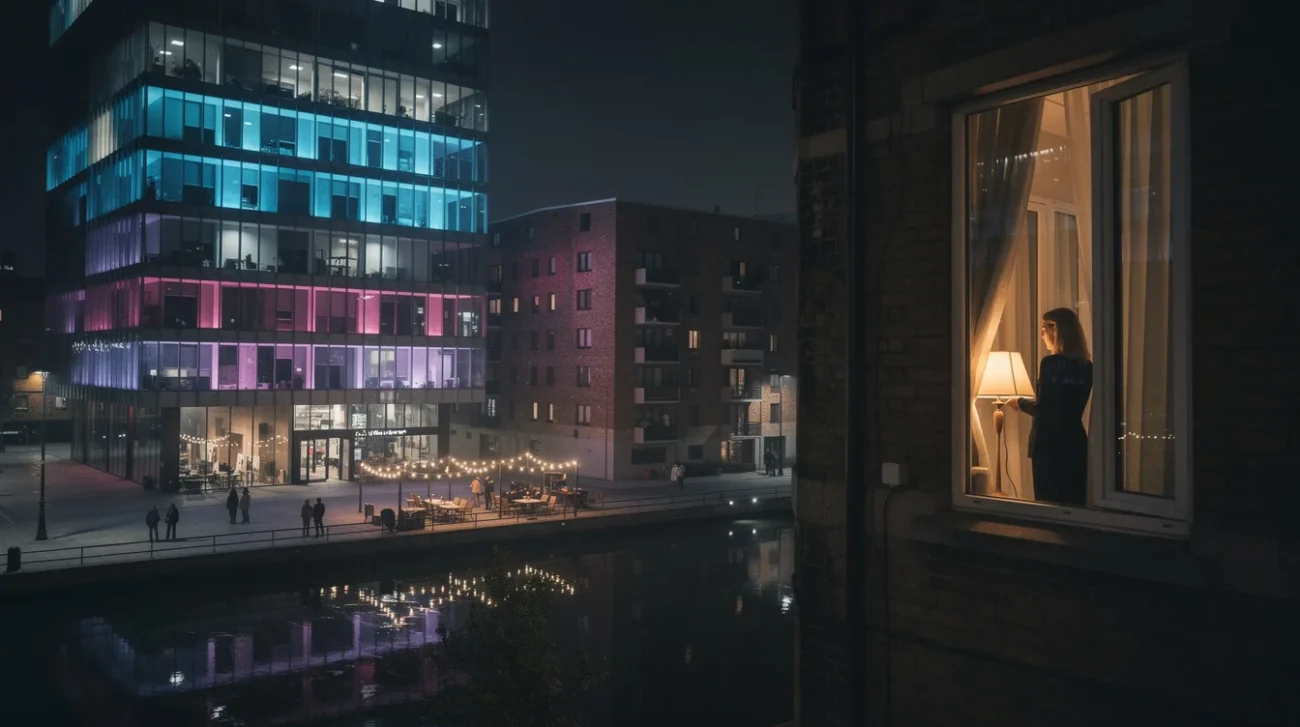
A luminous waterfront can become a city’s calling card. It can also become the thing someone across the water cannot switch off. Architectural lighting occupies this uncomfortable territory: part public amenity, part commercial asset, part involuntary exposure. Its advocates sell a shared urban experience. Its electricity bill rarely captures everyone who pays.
In Dezeen’s October 2026 coverage, Sameer Sodhi, Signify’s business leader for entertainment and Colour Kinetics, presents lighting design as a strategic economic investment, arguing that illuminated architecture and public installations can encourage interaction, strengthen local identity and support wellbeing. That is a credible proposition, not an innocent one. A lighting supplier benefits when cities equate visibility with value. The real debate is whether illumination creates enough public benefit to justify occupying everybody’s night.
PRO: Darkness Is Not Automatically Democratic
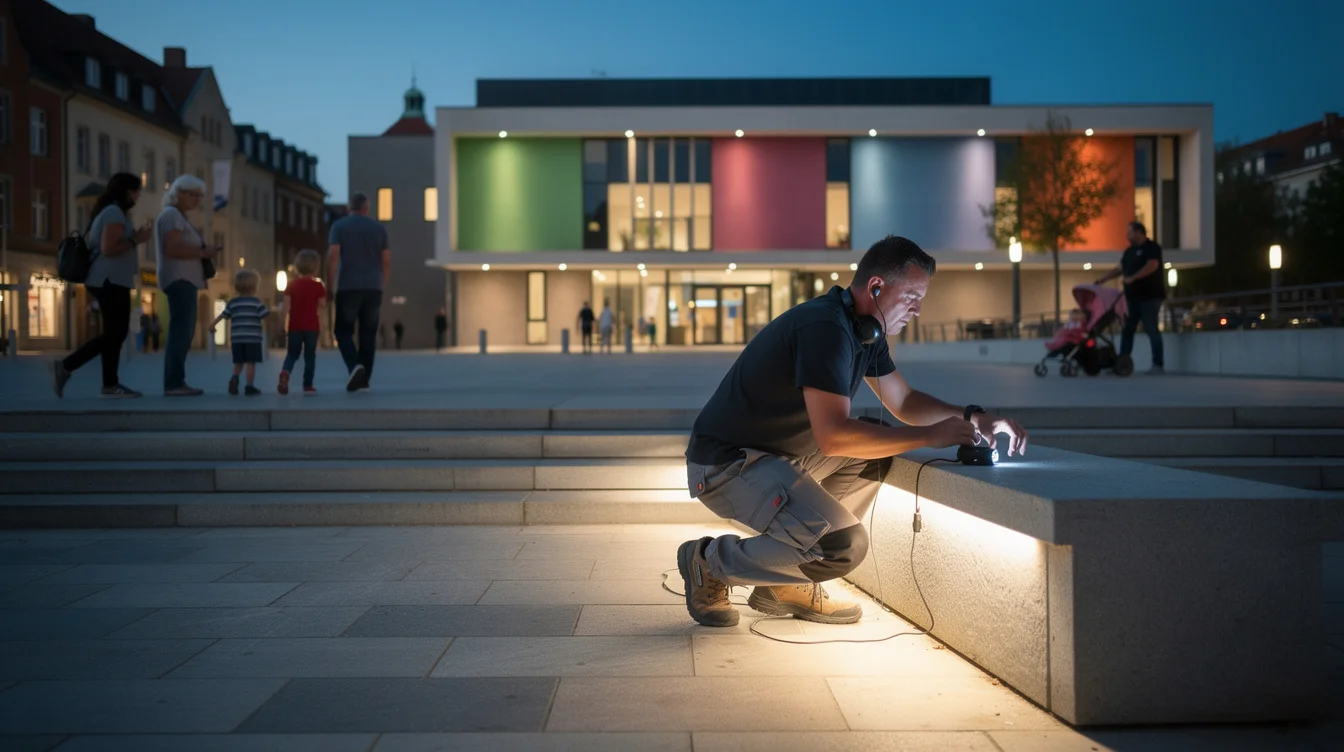
The strongest case for architectural lighting begins with access, not spectacle. A civic square that becomes difficult to navigate after sunset is not equally available to everyone. Older pedestrians, people with low vision and workers travelling outside conventional office hours need legible routes, visible changes in level and recognisable entrances. Darkness can preserve an ecosystem; badly managed darkness can also narrow the usable city.
The High Line in New York offers a useful design reference. Its lighting, developed with L’Observatoire International, demonstrates how illumination can be integrated into landscape and architectural elements rather than delivered exclusively through conspicuous overhead fixtures. The relevant ambition is not maximum brightness but a readable pedestrian environment. Lighting a step and lighting an entire skyline are different public propositions.
Perceived safety matters here, although it should not be confused with proof that brighter spaces always reduce crime. Harsh glare can undermine visibility, while a brilliantly illuminated plaza may still feel hostile if it lacks activity, maintenance or accessible transport. Nevertheless, withdrawing light without considering who uses a space is no more progressive than flooding it indiscriminately. The public benefit lies in making nighttime participation possible.
PRO: A Nighttime Identity Can Produce Real Value
Lyon’s Fête des Lumières and Vivid Sydney show why municipalities take luminous spectacle seriously. Buildings, streets and waterfronts become stages; an ordinary evening becomes a reason to travel, linger and meet. Restaurants, guides, technicians and cultural producers can participate in that activity. Architectural lighting is not merely decoration when it helps organise a wider cultural programme.
These events also expose the weakness of treating every illuminated facade as an investment with an automatic return. A festival bundles light with programming, publicity, transport and a defined occasion. Its appeal cannot simply be transferred to a privately owned tower running colour sequences every night. Nor does a crowded pavement establish how much spending is additional rather than diverted from another neighbourhood.
Still, dismissing all spectacle as corporate vanity would miss its civic potential. Shared nighttime experiences can make architecture approachable to people who never enter a museum or attend a planning consultation. A familiar building temporarily transformed can become a meeting point rather than a distant object. The strongest economic argument therefore measures more than visitor totals: local procurement, paid creative work, accessible participation and the distribution of trade matter. A city should buy a public experience, not merely an impressive photograph.
PRO: Programmable Light Can Be a Negotiated Service
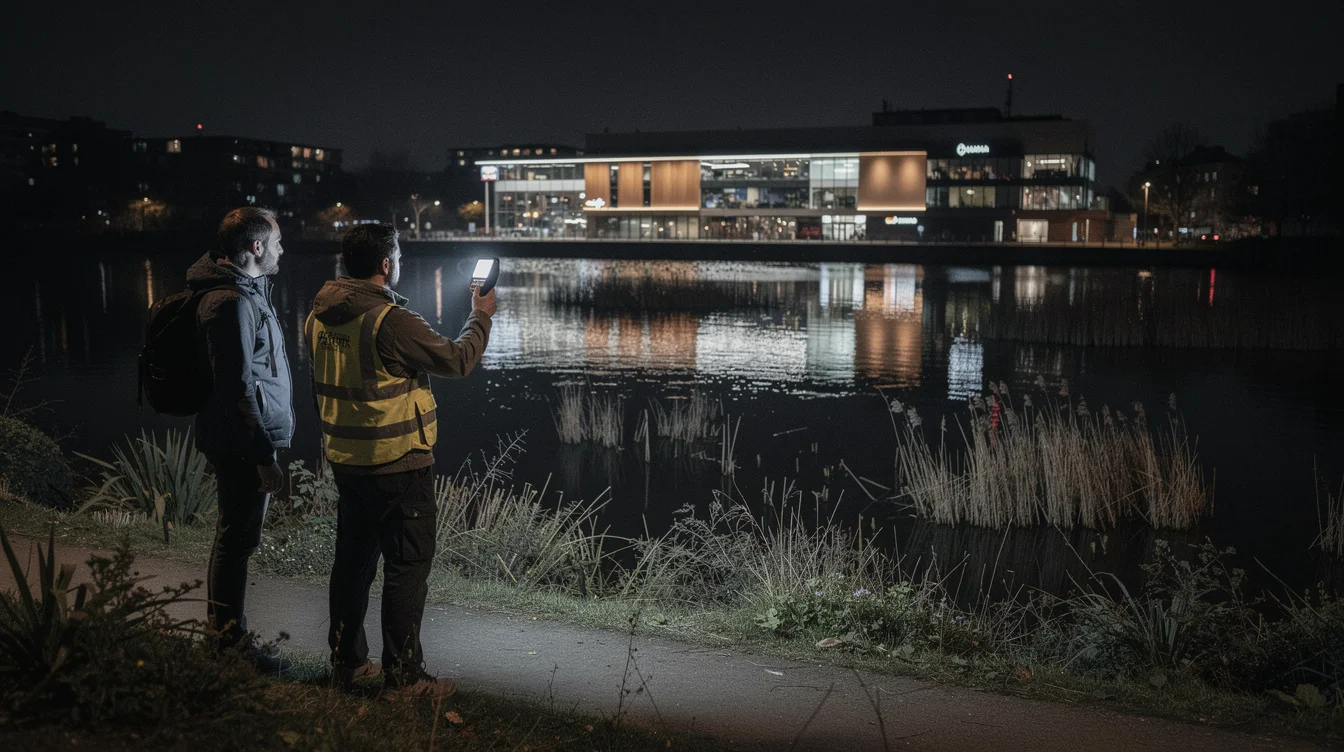
Contemporary controls offer a more persuasive investment case than permanent brilliance. Dimming, scheduling, shielding and separately controlled lighting zones allow a building to perform differently at opening time, during an event and after the last visitor leaves. An entrance can remain usable while an ornamental crown goes dark. The technology exists to stop treating a property as a single on/off object. But, as with a smarter home that still needs someone to run it, automation does not remove the need for accountable management.
James Turrell’s work is a useful counter-reference to the assumption that visual impact requires abundance. His practice repeatedly makes perception itself the subject, using carefully controlled luminous conditions rather than simply adding more light. A municipal commission need not imitate a Turrell installation to learn the lesson: precision and restraint can produce a stronger experience than indiscriminate output.
For the investment argument to deserve public support, procurement should purchase that restraint. Contracts could require commissioning from neighbouring windows, published operating schedules and funded maintenance so that failed controls do not become permanent nuisance. Evaluation should distinguish lighting’s contribution from the effects of new paving, security staff or cultural programming. Here the pro position becomes demanding rather than promotional: invest in lighting as managed civic infrastructure, with clear service obligations. If the supplier promises adaptability, the city should insist on the right to turn the spectacle down.
CONTRA: The Returns Are Private; the Bedroom Is Not
The opposing case begins at the property boundary. A hotel receives the recognition generated by its luminous facade. A resident opposite receives the spill. A developer can count bookings, rents or brand impressions; the neighbour’s need for blackout curtains does not appear on that balance sheet. This is not a dispute between people who appreciate design and people who dislike change. It is a conflict over an environmental condition that one party can alter without the other’s consent.
Light entering bedrooms can disturb sleep, depending on its intensity, timing, spectrum and duration. Evidence about artificial light at night should not be flattened into a claim that every glowing building causes illness. But uncertainty about a particular exposure does not make compulsory exposure acceptable. Residents should not need to establish a medical injury before a decorative installation can be restricted.
The Institution of Lighting Professionals’ guidance on obtrusive light provides a practical reference: assess light at receiving properties and consider environmental context and curfews. That is a better starting point than judging an installation solely from the client’s preferred viewpoint. A beautiful elevation can still be a bad neighbour. Architectural lighting limits should follow the light beyond the site, including toward tenants who had no voice in commissioning it.
CONTRA: Urban Wildlife Cannot Attend the Consultation
Human discomfort is only part of the account. Artificial light at night can alter the behaviour of insects, birds and bats, with effects varying by species, habitat, spectrum and exposure. A riverside facade is not an isolated object: its illumination may reach a feeding corridor, vegetation or water. The city’s ecological systems do not stop where the architectural photograph ends.
New York’s Tribute in Light makes this conflict unusually visible. Monitoring has documented migrating birds gathering within the powerful beams, and temporary shutdowns have been used when significant concentrations occur. The installation’s commemorative importance does not erase its ecological effect. Instead, its operating practices demonstrate a principle that ordinary commercial buildings should also accept: cultural value is not an exemption from intervention.
Chicago’s Lights Out initiative similarly treats unnecessary building illumination during migration as something that can be reduced, rather than an inevitable expression of metropolitan ambition. These examples puncture the idea that environmental responsibility is exhausted by installing LEDs. Efficient equipment can reduce electricity demand while expanded installations or longer operating hours undermine those savings. Warmer spectra may help in some circumstances, but colour temperature alone is no ecological permission slip. Sometimes the responsible specification is less light, for fewer hours, across a smaller area.
CONTRA: The Right to Illuminate Must Have Conditions
Who should set the limits? Not the supplier, whose expertise comes with a commercial interest. Not the building owner alone, because ownership does not include unlimited rights over neighbouring windows or habitats. Much like the debate over where flying cars should be allowed to operate, the question is not simply what technology can do, but what others should have to accommodate. Municipal government should establish enforceable baselines through a public process, informed by independent lighting specialists, ecologists, accessibility expertise and affected residents. Developers should fund assessments without controlling their conclusions.
Flagstaff, Arizona, offers a longstanding counterexample to the claim that darkness is incompatible with civic identity. Its lighting rules and association with dark-sky protection make restraint part of the city’s identity. Its astronomical context is distinctive, but the transferable lesson is straightforward: an illumination ceiling can express ambition rather than deprivation.
Rules should distinguish essential route lighting from decorative display, set context-sensitive limits on spill and glare, and require curfews or seasonal reductions where appropriate. Major installations should have reviewable permissions, with complaints triggering independent measurement rather than an exchange of opinions. Responsibility for controls, maintenance and remedies must be assigned before switch-on. Residents deserve meaningful influence, though not an automatic veto over necessary public access. The burden should be sharper for commercial spectacle: demonstrate the benefit, contain the exposure and accept revision. The brighter city must justify itself to the people—and living systems—that cannot look away.
FAQ
Does brighter architectural lighting make streets safer?
Not automatically. Well-designed lighting can improve visibility and confidence, but glare, deep contrasts and poor placement can work against those goals. Safety also depends on street activity, accessible routes, maintenance and other conditions beyond illumination.
Are LEDs enough to make architectural lighting sustainable?
No. LEDs can lower electricity use for a given lighting task, but sustainability also depends on operating hours, total output, spill, spectrum and habitat sensitivity. Efficient equipment does not justify lighting more surfaces indefinitely.
Who should decide architectural lighting limits?
Municipal authorities should set enforceable limits through transparent consultation and independent technical advice. Residents, accessibility groups and ecological specialists need meaningful representation; owners and suppliers should contribute expertise without deciding their own obligations.
Can cities support nightlife while protecting darkness?
Yes. They can prioritise pedestrian routes and entrances, constrain decorative lighting, use timed cultural events and preserve darker residential and ecological areas. The goal is a differentiated nightscape, not a choice between universal floodlighting and universal blackout.
If a building’s visibility creates profit for its owner but consumes darkness shared by everyone, how much of the night should that owner be allowed to buy?
Get the Mainifesto weekly — curated design debates, speculative ideas and the week's best articles every Saturday.
Editorial Perspectives
Questions and counterpoints developed by the Mainifesto editorial desk to extend the discussion.
Perspective 1
A brighter façade is not automatically better design, especially when the rendering hides what reaches somebody’s bedroom. Owners should have to meet measurable spill-light limits and switch-off times; efficient LEDs are no excuse for installing twice as many.
Perspective 2
I’d push back on treating darkness as the default public good: well-designed lighting can extend street life and help small businesses stay visible after sunset. Let owners light their buildings within strict energy and glare budgets, rather than making a darker city the goal.
Perspective 3
The owner should be allowed only as much light as the surrounding streets and homes can accommodate, not as much as their marketing budget buys. A lighting district needs cumulative limits and enforcement with teeth, because ten individually compliant façades can still overwhelm a block.
Perspective 4
A luminous façade can be a wonderful public artwork, but an advertising screen doesn’t become civic culture because its pixels respond to pedestrians. Give residents a say over the programme and the off switch; otherwise ‘interactive’ just means everyone gets enrolled as an audience.