Can a Bicycle Punish Gentrification?
The bicycle as a speed bump for capital
What if the city could make gentrification physically uncomfortable? Not through a protest banner, a zoning hearing, or another glossy report on displacement, but through the humble act of slowing a bicycle?
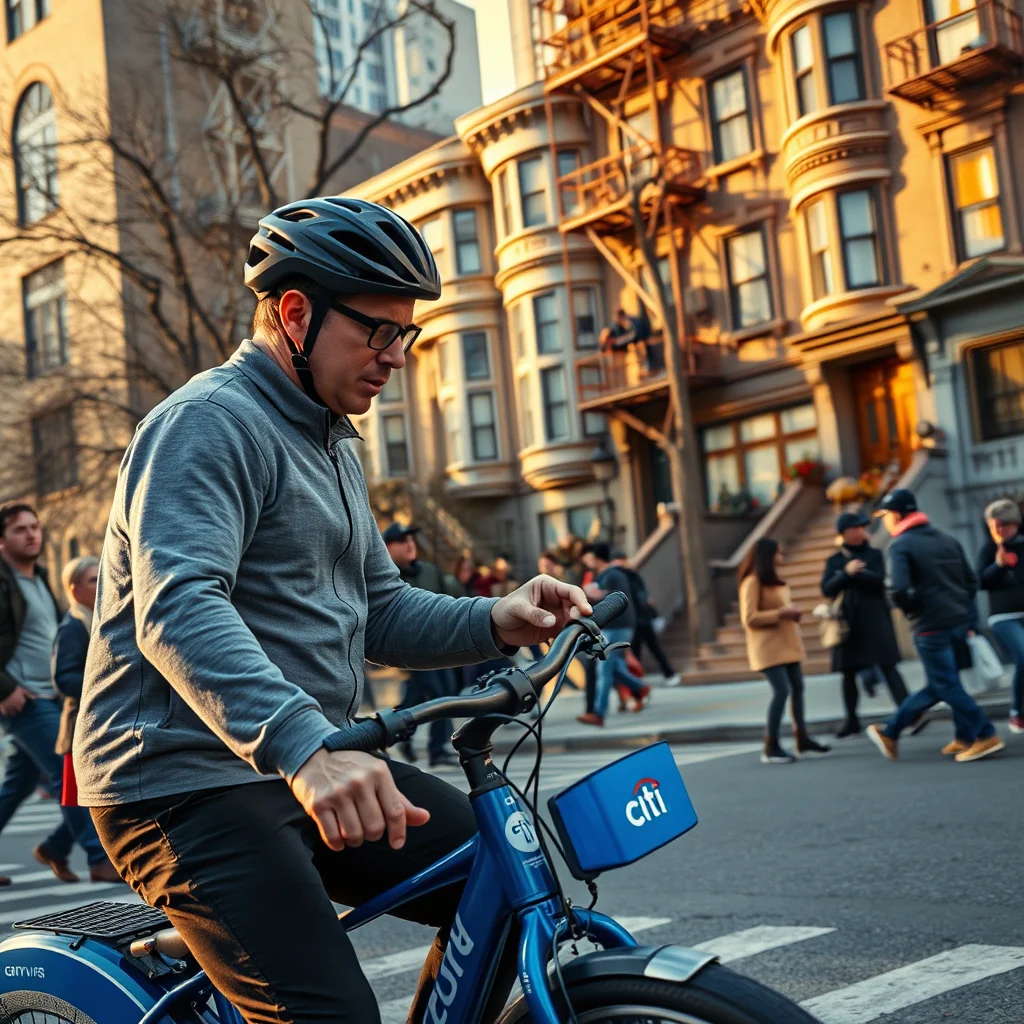
That is the provocation at the centre of Justin Blinder’s Ground Truth project in New York. Blinder has created a 3D-printed device that slows Citi Bikes as they pass through parts of the city identified as being under “greater housing pressure”. The project combines his experience in data and design with his past work as a bike messenger, turning an everyday mobility system into a live political instrument.
The intervention is deliberately modest in appearance. It is not a redesigned street, a new transit line, or an app that announces a rider’s privilege. It is a physical object attached to a paid-share bicycle, calibrated to alter its performance in a particular geography. A Citi Bike passing through a rent-burdened block does not stop. It simply moves more slowly, making the economics of the neighbourhood felt as friction.
That gesture is powerful because it is legible. The city already sorts people through rent, surveillance, transit access, policing, and private development. Blinder’s device makes that sorting visible by placing a consequence on movement. The question is whether that visibility produces political awareness—or merely transfers the burden of structural inequality onto an unsuspecting stranger on two wheels.
Ground Truth turns data into an encounter
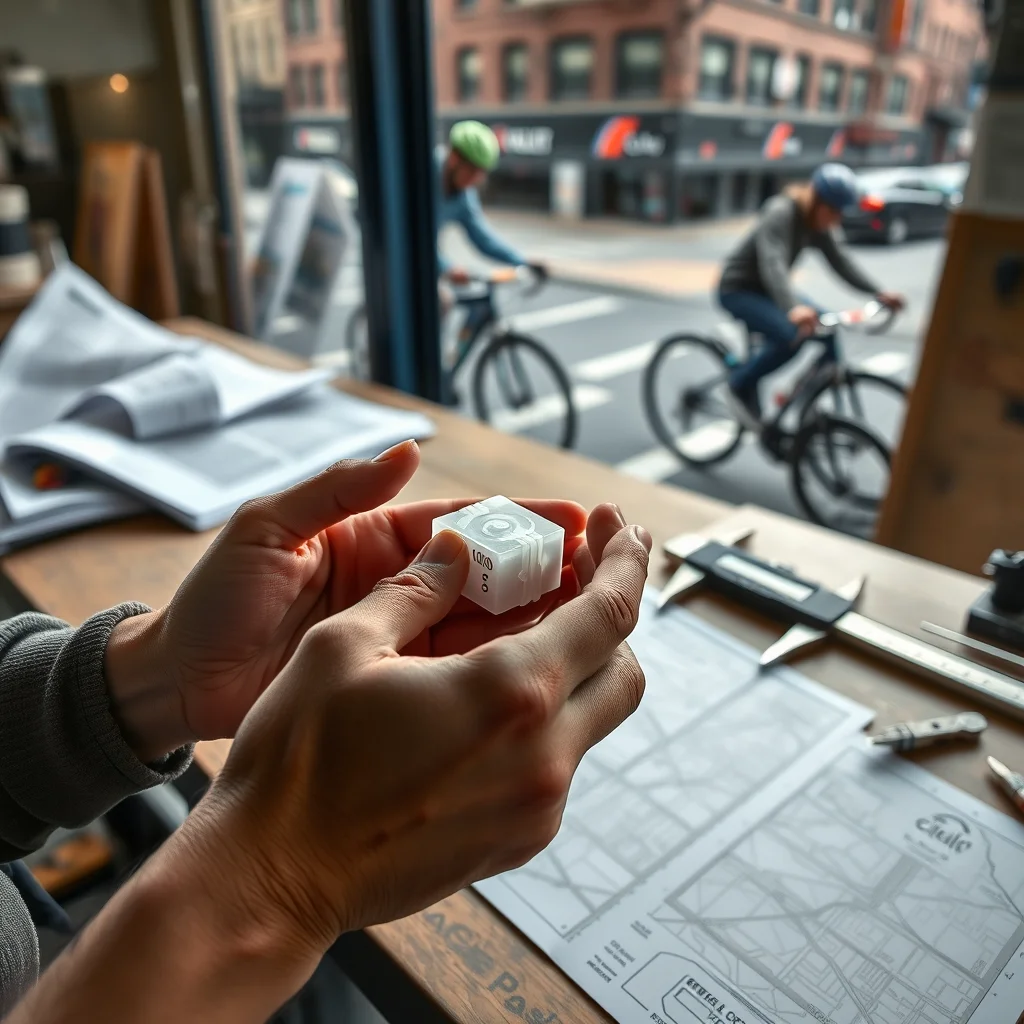
The most interesting aspect of Ground Truth is not the gadget itself. It is the translation from abstract housing data into bodily experience. “Housing pressure” usually arrives as a map, an index, a rent-burden statistic, or a colour gradient in a planning presentation. These formats are useful, but they are also strangely painless. A red zone on a screen does not slow anyone down.
Blinder’s background makes the conversion unusually precise. Data supplies the territorial logic; design supplies the mechanism; messenger experience supplies knowledge of how speed, route choice, and street texture actually feel. The result is a form of spatial annotation that cannot be ignored by the person operating the bike. A rider may not know why the vehicle has become sluggish, but the city has acquired a new sensation.
This follows a long history of designers using objects to reveal hidden systems. The Critical Engineering movement has treated infrastructure as something to be interrogated rather than passively consumed. Artists such as Trevor Paglen have exposed the visual and political machinery behind surveillance, while projects like The Architecture of the Commons have asked who gets to shape the systems that organise daily life. Blinder’s intervention belongs to this lineage, but with a sharper point of contact: the artwork is not merely viewed. It interrupts a service.
That distinction matters. A gallery visitor can choose to approach an artwork. A Citi Bike rider cannot meaningfully consent to a device installed before their journey. Ground Truth therefore makes public space into an exhibition without an entrance, ticket, or opt-out button.
Why slowing the privileged can feel righteous
There is an understandable satisfaction in the project’s moral geometry. Gentrification is often experienced as acceleration for some and stagnation for others. New investment, new cafés, new towers, and new mobility services arrive quickly, while existing residents confront rising rents, eviction pressure, and the gradual loss of local institutions. The newcomers get convenience; the people already there absorb the cost.
A speed-limiting device appears to reverse that arrangement, however symbolically. The rider becomes aware that movement is not neutral. A convenient rental bike depends on an urban landscape shaped by unequal property values, public subsidies, and uneven political power. The slowdown turns a frictionless consumer experience into a small encounter with the neighbourhood’s contested reality.
It also avoids the familiar trap of socially engaged design that communicates only to those already convinced. A poster about displacement may circulate among architects, activists, and cultural institutions. A modified Citi Bike reaches the person who is simply commuting, sightseeing, or crossing town. The project refuses to let “awareness” remain a comfortable spectator activity.
There is precedent for this kind of tactical discomfort. Santiago Cirugeda’s architectural actions have challenged property regimes through temporary occupations and legal loopholes. Superflex’s Flooded McDonald’s used simulation to expose the fragility of corporate environments. Even the humble pothole, when strategically ignored or politically maintained, can become a statement about whose routes matter. Blinder’s device is less monumental but potentially more intimate: it makes inequality happen under the rider’s hands.
The ethical problem is not a footnote
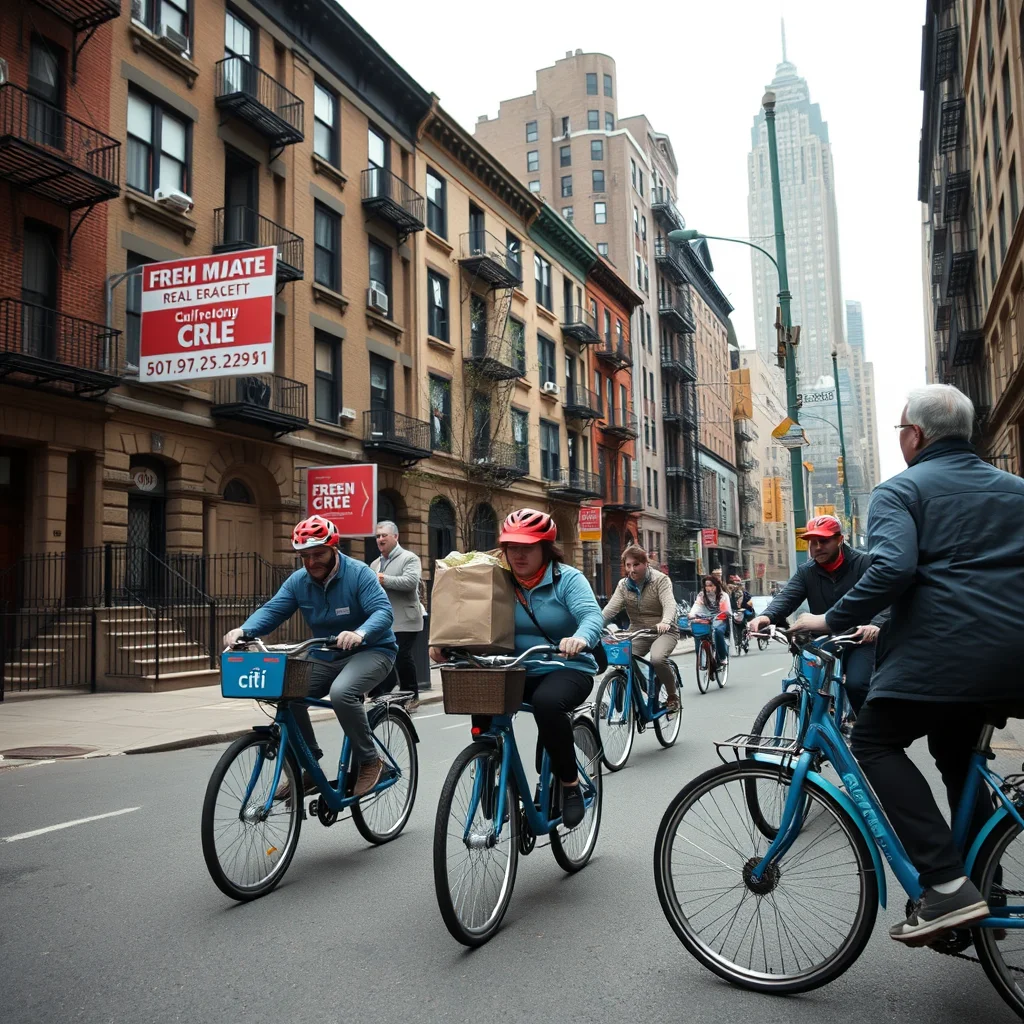
Yet the project’s legitimacy is far from settled. The rider affected by the slowdown may not be a wealthy newcomer. They may be a delivery worker, a low-income commuter, a disabled person relying on pedal assistance, or a resident travelling through a neighbourhood they have lived in for decades. The device does not identify a landlord, a developer, a speculative investor, or a luxury brokerage. It identifies a bicycle in a mapped zone.
This is the central weakness of punitive mobility design: it confuses symbolic proximity with political responsibility. The person who feels the intervention is not necessarily the person who benefits from displacement. If the work claims to redistribute inconvenience, it must answer where that inconvenience lands. Otherwise, the project risks reproducing the same blunt territorial logic it wants to criticise.
There is also a question of public infrastructure and consent. Citi Bike is a commercial service embedded in a public street network. Modifying its equipment, even as an artistic project, raises questions about safety, liability, maintenance, and access. A bike that slows unpredictably could create hazards in traffic or affect a rider’s ability to merge, climb, or respond to danger. Political intent does not automatically make a physical intervention responsible.
Socially conscious design cannot claim exemption from ordinary design ethics. If a chair collapses, its designer is accountable; if a mobility device changes a rider’s control, the standard should be higher, not lower. The more persuasive the politics, the more rigorous the safety case must be.
Can an artwork intervene without becoming infrastructure?
Ground Truth occupies an unstable category. It is an artwork, but it behaves like infrastructure. It is a critique, but it operates through a service. It is a data visualisation, but its output is kinetic rather than graphic. That ambiguity is the project’s strength and its danger.
When designers intervene in public systems, they often borrow the authority of infrastructure while disavowing its obligations. A temporary installation can close a street, redirect pedestrians, or alter a public interface, then disappear before anyone can demand accountability. This is especially seductive in an era when design culture celebrates “hacks” and “nudges” as clever alternatives to legislation.
But nudging is not politically innocent. The behavioural economist’s supermarket shelf, the hostile bench, the algorithmic route recommendation, and the traffic-calming intervention all shape action without requiring explicit permission. The difference is who controls the nudge and who can contest it. A city government at least has a formal, if imperfect, process for public review. An artist-led device has to build that legitimacy through transparency, community participation, and limits.
Blinder’s use of housing-pressure data is therefore crucial but insufficient. Which dataset defines the affected blocks? Who selected the threshold? How often is it updated? Does the intervention distinguish between speculative redevelopment and long-term rent burden? Without answers, the map can become another authoritative-looking proxy, much like the systems described in how homes become data-driven risk objects, that compresses complex neighbourhood histories into a technical trigger.
Design must target power, not just sensation
The provocative value of Ground Truth should not be confused with policy effectiveness. Slowing a share bike will not reduce rents, preserve a community garden, stop an eviction, or force a developer to build permanently affordable housing. Its impact is rhetorical and experiential. That does not make it meaningless, but it places a heavy burden on the project to connect sensation to action.
The strongest version of socially engaged design does not end with the encounter. It directs attention toward institutions capable of changing the conditions being represented. A slowdown could be paired with public documentation of rent burdens, tenant-union organising, legal aid, or campaigns for community land trusts. Without those links, the artwork risks becoming an elegant pressure valve: the rider feels a moment of confusion, the cultural press praises the concept, and the property regime continues untouched.
There is a further danger in making “the gentrifier” the implied user. Urban identities are rarely so clean. New York’s neighbourhoods are crossed by overlapping histories of migration, race, class, work, and housing insecurity. The person on a Citi Bike may be arriving to work in a restaurant, leaving a public-housing complex, visiting family, or paying for a short trip because the subway is inaccessible. A design that assigns moral status from location alone risks turning structural critique into interpersonal suspicion.
Still, the project deserves attention precisely because it refuses the safe language of awareness campaigns. It asks whether design can do more than represent injustice. The answer should be yes—but only if intervention is accountable to the people most affected, technically safe, and aimed upward at the systems that produce displacement.
The uncomfortable promise of public friction
Architecture and technology increasingly present convenience as a civic virtue. Faster delivery, faster travel, faster development, faster data: acceleration is sold as progress, even when the benefits are distributed wildly unevenly. This is part of the broader politics of air-conditioning and urban heat, in which seemingly ordinary systems of comfort can reveal who receives protection and who absorbs environmental costs. Ground Truth challenges that assumption with an almost mischievous proposition: perhaps the city needs deliberate friction, and perhaps the people moving through it should feel some of the instability that their mobility can conceal.
That proposition becomes legitimate only when friction is designed with care. The device must not pretend that every rider is culpable. It must not endanger users. It must not substitute spectacle for organising. Most importantly, it should make its own politics inspectable rather than hiding behind technical neutrality.
Blinder’s bicycle intervention is compelling because it makes a systems argument through a tiny mechanical alteration. A printed object becomes a line on a map, a line on a map becomes a bodily sensation, and that sensation becomes a question about who is allowed to move easily through a changing city. Whether the project is fair depends on what happens next: whether the slowdown opens a conversation about housing power, or merely creates another urban nuisance for someone with no control over the market.
Get the Mainifesto weekly — curated design debates, speculative ideas and the week's best articles every Saturday.
Editorial Perspectives
Questions and counterpoints developed by the Mainifesto editorial desk to extend the discussion.
Perspective 1
The intervention is powerful because it turns an invisible housing crisis into a bodily experience, but friction alone is not a sustainability strategy. If mobility is being redesigned, let’s push the experiment further: build systems that expose who benefits from a neighborhood while giving residents real power over the changes.
Perspective 2
The interesting design question is not whether the bike slows down, but where the burden of that slowdown is distributed. Could the system target landlords, speculative property networks, or policy zones rather than individual riders, so the spatial data produces accountability instead of simply adding inconvenience?
Perspective 3
I’m wary of calling this a liberating interface when the technology can turn an ordinary rider into the easiest person to punish. The gesture is legible and shareable, which is exactly why it risks becoming protest as spectacle: a clever system that visualizes displacement without changing who controls the city.