
When Your Home Becomes a Risk Object
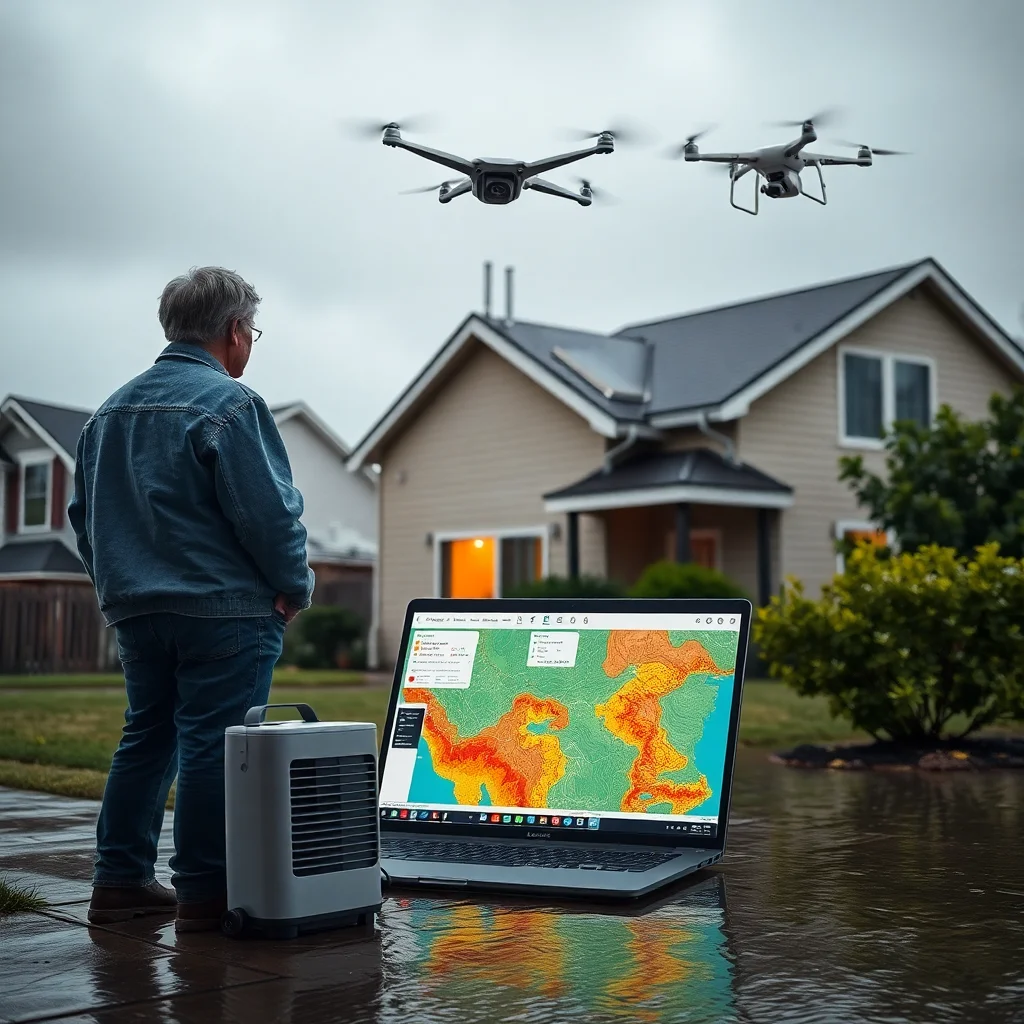
The house is no longer just shelter. It is a data stream.
For most of modern housing history, insurance was a grudging, paper-heavy promise: pay a premium, file a claim, wait for an adjuster. That model is now being dismantled by climate volatility and rebuilt by AI, satellite imaging, weather modeling, and parametric insurance—policies that pay out automatically when a measurable threshold is crossed. If wind speed exceeds a number, if rainfall hits a benchmark, if flood depth reaches a modeled line, money is released. No claims drama, no long arbitration, no trust in a human adjuster to interpret ruined drywall.
This sounds like the future because it is the future. In disaster-prone regions from the Caribbean to California, insurers are withdrawing, re-rating, or making coverage prohibitively expensive. In response, a new system is emerging that treats the home less like a private refuge and more like a continuously priced risk object. The house becomes an interface between sensor data, climate models, underwriting algorithms, and capital markets. It is no longer merely insured; it is monitored, scored, and translated into probability. That shift is not neutral. It makes resilience faster for some and more exclusive for others.
The promise is seductive: a homeowner in a hurricane zone can receive payout within hours, not months, and use the money to board windows, replace a roof, or keep a business alive after an event. The danger is equally clear: once resilience is measured continuously, it becomes something you can be priced into or priced out of. A storm-resistant roof, a smart leak detector, a drone inspection, a facade retrofit—each can reduce risk, but also create a new premium tier. Insurance stops being a social backstop and starts acting like a luxury product with climate credentials.
Parametric insurance solves delay by replacing judgment with thresholds
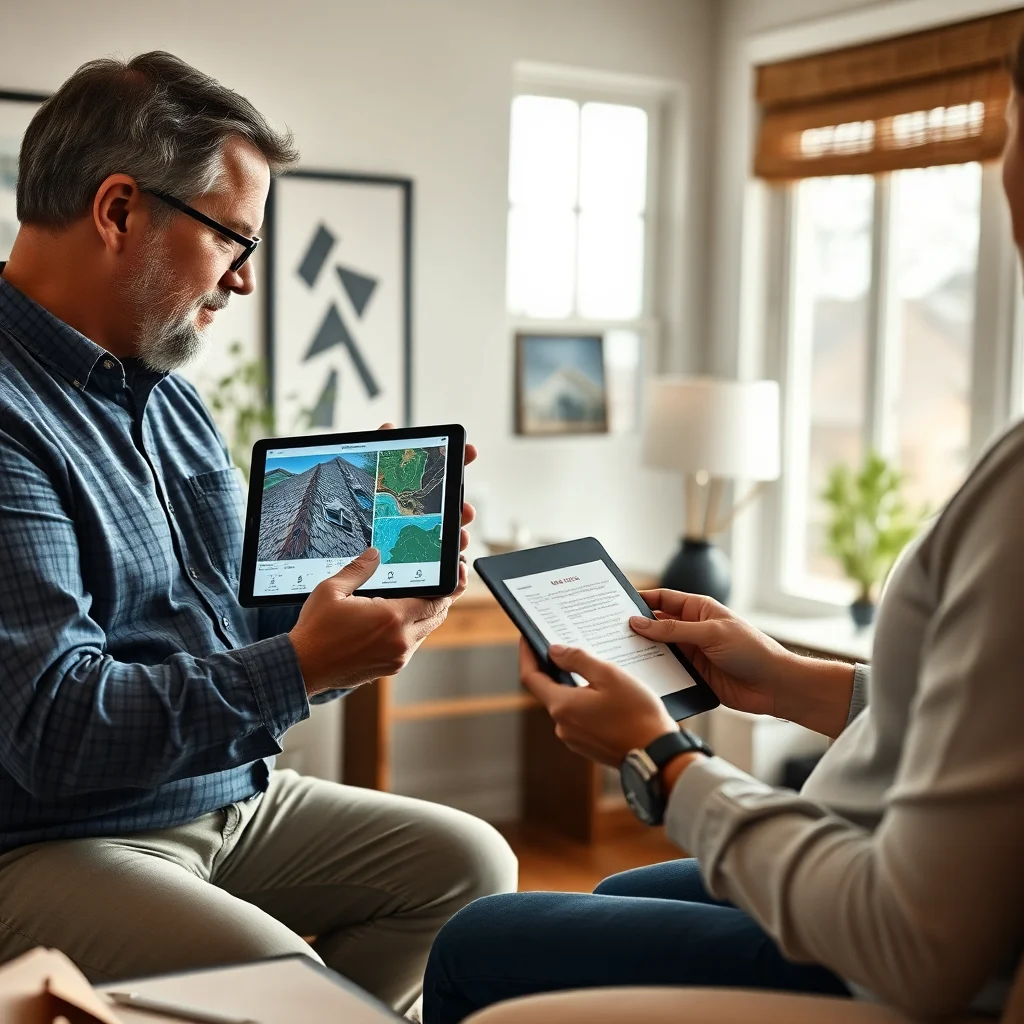
The classic insurance model depends on loss assessment. The parametric model depends on triggers. That difference matters because it changes the politics of recovery. A home damaged by wildfire smoke, hail, or storm surge may not suffer an easily documented “loss” on paper, even while the residents are displaced, ill, or financially trapped. Parametric policies are designed to acknowledge that lag between catastrophe and reimbursement is itself a form of harm.
AI accelerates this shift. Instead of waiting for an adjuster to inspect a property, an insurer can compare satellite imagery before and after a disaster, cross-reference weather feeds, estimate roof integrity, and automate payouts. That makes the system more scalable in places where climate events are frequent and bureaucratic delay is costly. It also explains why major reinsurers and insurtech platforms have become so interested in the model. The old logic of “prove your damage” is being replaced by “prove your exposure.”
There is a real design lesson here. In architecture, we talk about performance: thermal performance, structural performance, environmental performance. Parametric insurance extends that logic into the financial afterlife of a building. A house is no longer only designed to withstand weather; it is designed to be legible to climate finance. This is the same world that has produced floodable landscapes, elevated homes, amphibious foundations, and adaptive skins. But now the envelope is also a contract. The building is being read as a portfolio instrument.
That is why the current boom in AI-assisted insurance should concern architects, planners, and designers. A home that cannot be priced efficiently may become harder to insure. A home that can be priced beautifully—through sensors, models, and continuous data capture—may become easier to finance, sell, and retrofit. In other words, resilience is being translated into market language. The question is not whether that language is useful. It is who gets excluded when usefulness becomes the gatekeeper.
From FEMA to fintech: resilience is shifting from public duty to private subscription
The deeper upheaval is not technical but political. As climate disasters intensify, public disaster relief is under pressure, slow to arrive, or politically contested. That vacuum is being filled by private platforms that promise immediacy. The source context suggests this model may even come for FEMA, and that possibility should alarm anyone who believes disaster recovery should be universal. If parametric products begin to substitute for public aid, then the logic of citizenship is replaced by the logic of underwriting.
We already know what happens when resilience becomes a premium feature. In many cities, flood insurance is available only if you can pay escalating rates; fire hardening is a matter of household wealth; elevated construction is feasible for new developments but unrealistic for existing owners. The home becomes a class filter. Those with capital buy out of climate uncertainty. Those without become trapped in exposed geographies, where premiums rise, loans tighten, and repair cycles lengthen. The market does not merely price risk. It amplifies it.
Design culture has spent years celebrating “adaptation” without always confronting who pays for it. A seawall is a public work until it protects a luxury district. A green roof is civic ecology until it becomes a branding device. A climate-resilient retrofit is an ethical necessity until it is bundled into a mortgage product and sold as lifestyle optimization. The same rhetoric appears in housing, from resilient prefab to smart home automation: convenience, efficiency, security. But underneath, the question is access. Can resilience be made ordinary, or will it become one more premium package layered onto a stratified housing market?
The most provocative thing about AI-enabled insurance is that it reveals a truth architecture often avoids: buildings are already financial devices. Mortgages, tax assessments, zoning envelopes, and maintenance schedules all prove this. Parametric insurance simply makes the device more explicit, more granular, and more continuous. The house is now brokered through data in real time.
CONTRA: the new model can also democratize survival
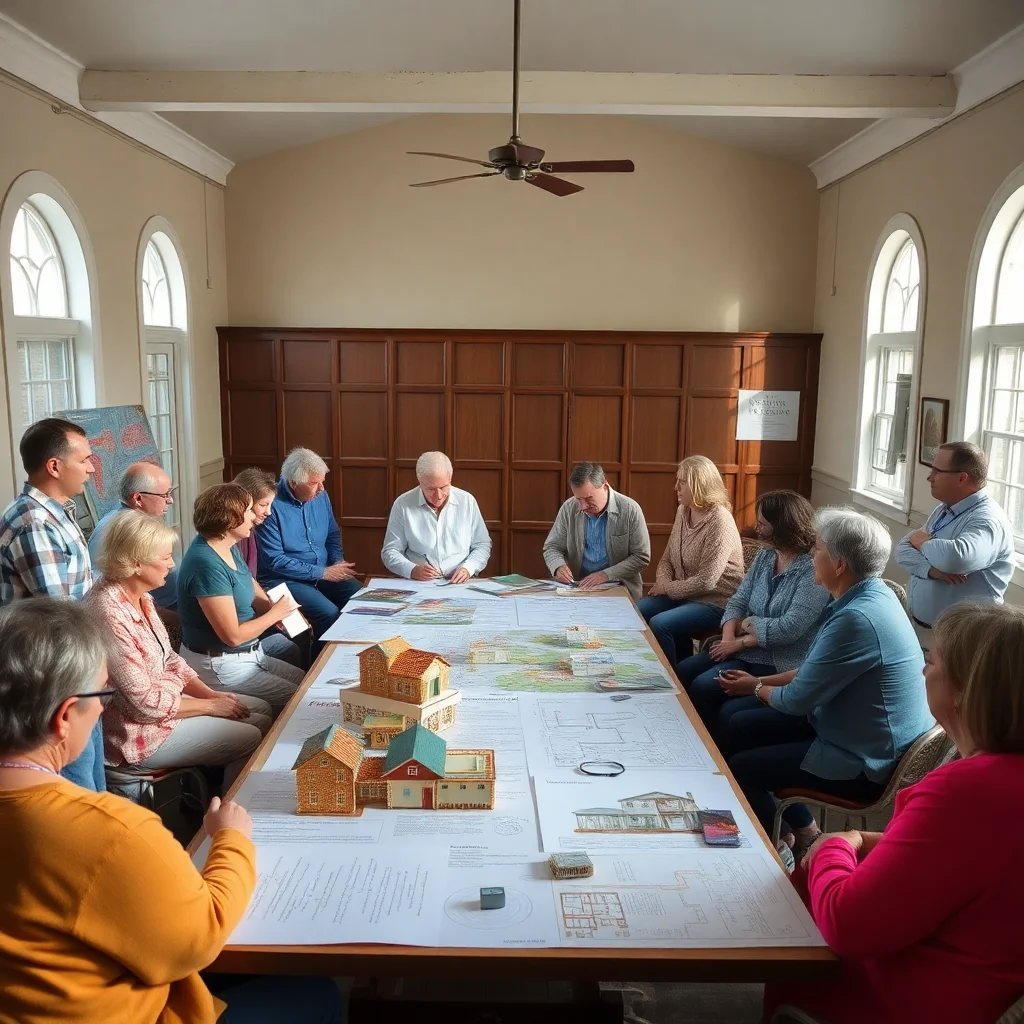
To dismiss parametric insurance as pure extraction would be lazy. In the best cases, it solves a longstanding failure of conventional insurance: slow, adversarial payouts in the aftermath of a disaster. In Puerto Rico, the Caribbean, and parts of the Global South, parametric products have been explored precisely because conventional coverage is unreliable, too expensive, or simply absent. For small businesses, farmers, and homeowners living in repeated hazard zones, immediate liquidity can mean the difference between reopening and collapse.
There is also an architectural advantage to automatic triggers. If a household receives payment quickly after a hurricane, it can repair envelope damage before mold spreads, secure temporary housing before displacement drags on, and restore power before food and medicine are lost. That speed matters. It supports a more agile resilience culture: shutters, membranes, backup energy, raised thresholds, water sensors, landscape grading, sacrificial ground floors. It rewards buildings that can adapt instead of merely endure.
AI can improve fairness too, if it is used to recognize loss patterns that human adjusters miss. Smoke infiltration, heat stress, repeated minor flooding, and cumulative damage are often invisible in traditional claims systems. A more granular model can potentially acknowledge these forms of harm and make coverage relevant to everyday climate anxiety, not just headline disasters. In this reading, the home is not a broker of risk but a site where intelligence can restore responsiveness to a broken system.
There is a reason developers, insurers, and architects are converging around these tools. Climate change has made the old model unworkable. If the market is capable of producing a better mechanism for immediate relief, why reject it on principle? The answer is that utility is not justice. A fast payout is not the same as affordable housing, equitable rebuilding, or public disaster capacity. But it can be part of a broader toolkit. The strongest case for parametric insurance is not that it replaces public systems, but that it can relieve pressure on them when they are already failing.
PRO: speed, clarity, and a new language for climate adaptation
Supporters of AI-assisted parametric insurance argue that the model finally aligns climate risk with real time. A policy tied to rainfall, wind, temperature, or flood depth does not wait for bureaucratic interpretation. It is clean, measurable, and programmable—qualities the insurance industry values because they reduce disputes and administrative drag. In the context of increasingly frequent disasters, that speed is not a gimmick; it is survival infrastructure.
There is also an important design argument here. Climate adaptation has too often been framed as a matter of heroic buildings or expensive infrastructure. Parametric products shift attention to operational resilience: the roof that can be patched immediately, the pump that can be replaced before the basement rots, the family that can pay for temporary shelter without entering debt. This is adaptation as liquidity. It is less glamorous than a seawall, but often more immediately useful. For households already navigating constant monitoring and automated feedback, the logic overlaps with AI monitoring in the home, where sensing can be framed as support rather than intrusion.
For architects and urbanists, the appeal is that the system can reward measurable improvements. A home with better drainage, reinforced openings, elevated critical systems, or smart monitoring may receive better terms. That creates a financial incentive for resilience retrofits, much like energy-performance ratings once nudged the market toward better insulation and heat pumps. The house becomes a feedback loop: design informs risk, risk informs capital, capital informs further design.
CONTRA: once everything is measurable, everything is monetizable
Yet the very features that make parametric insurance efficient also make it dangerous. When the home becomes continuously priced, every improvement can be monetized, every shortcoming penalized, every neighborhood sorted by exposure. The risk is not only individual premium increases but a broader cultural shift in which safety itself is privatized. If you can afford sensors, monitoring, retrofits, and higher-tier policies, you can buy down uncertainty. If you cannot, you live inside a more expensive future.
This is where the architecture of inequality becomes visible. The better your data, the more legible you are to insurers. But legibility is not the same as fairness. A wealthier household can install leak detectors, storm shutters, backup batteries, and digital twins; a lower-income renter cannot. Even homeowners may be constrained by credit, by local contractors, by aging stock, by zoning, by inherited geography. The market calls this pricing accuracy. In practice, it often means climate stratification with a dashboard.
There is a more subtle danger too: once the home is a broker of data, privacy itself becomes collateral. Insurance may depend on occupancy patterns, utility consumption, maintenance behavior, geolocation, and property scans. The line between risk management and surveillance blurs quickly. Who owns the data from your roof sensor? Who can subpoena your home’s history? Who decides whether a neighborhood’s repeated loss data makes it uninsurable rather than worth saving?
This is why resilience cannot be left to insurance alone. The future should not be a world where the most climate-ready homes are those that can afford the best pricing architecture. Resilience must remain a civic norm, not just a financial optimization.
What designers should do now
The emerging conversation between insurance, climate risk, and AI is not abstract. It is already shaping renovation briefs, mortgage terms, subdivision planning, and disaster recovery. Designers should stop treating insurance as an externality and start seeing it as part of the spatial brief. If the home is being transformed into a risk object, then architectural practice must answer with more than aesthetics.
That means designing for repairability, not only durability. It means specifying assemblies that can be inspected quickly after an event. It means thinking about low-tech resilience alongside smart systems, because a home that only performs when it is fully connected may fail the people who need it most. It also means questioning whether every resilience upgrade should be left to the market. Public subsidies, code reform, community land trusts, and municipal retrofitting programs remain essential if adaptation is to be anything other than a boutique service. The broader lesson is similar to debates about how AI learns from the way cities grow: systems become more equitable when they are shaped by collective rules, not only by private optimization.
The radical position is simple: climate resilience should be treated like sanitation or public education, not like concierge insurance. Parametric insurance may be a necessary tool, but if it becomes the main engine of survival, we will have quietly accepted that the future belongs to those who can afford to be legible. That would be a design failure far larger than any flooded basement.
The home is becoming a data-broker, and the question is whether architecture will let it do so on behalf of the many, or only on behalf of those who can pay to remain invisible to risk.
Get the Mainifesto weekly — curated design debates, speculative ideas and the week's best articles every Saturday.
Editorial Perspectives
Questions and counterpoints developed by the Mainifesto editorial desk to extend the discussion.
Perspective 1
The dangerous part isn’t that homes get priced dynamically — it’s that resilience starts looking like a subscription tier. Architecture has to stop treating protection as a premium finish and start designing basic survivability into the bones of the building, from drainage to thermal comfort to repairability.
Perspective 2
Once resilience becomes a product, the supply chain will decide who gets protected, not just the architect. If policy doesn’t standardize affordable retrofits and materials, AI-driven pricing will simply reward the people who already have the most robust homes.
Perspective 3
This is a governance problem disguised as a design trend. If insurance models can reclassify neighborhoods in real time, then public policy needs to cap exclusion and fund collective infrastructure, because no city survives when adaptation is left to individual purchasing power.
Perspective 4
The article makes me wonder whether parametric tools are being used to optimize resilience or just to optimize risk transfer. If survival is becoming premium-priced, then architecture schools need to teach not only performance modeling, but also the ethics of who those models leave behind.
Perspective 5
I like the way the article frames the home as a risk object, because that’s exactly how finance and AI are seeing it. But once resilience turns into an aestheticized market layer, we should be suspicious — design can’t just help people buy their way out of climate damage while everyone else gets priced into exposure.