
AI Monitoring and the Future of Aging in Place
The Home Is No Longer Just a Shelter. It Is Becoming a Warden.
Aging in place has been sold as a humane ideal: stay in the home you know, keep your routines, keep your dignity. But the contemporary version of that promise is being rewritten by sensors, algorithms, and remote dashboards. The new domestic infrastructure is not a grab bar or a wider doorway. It is a network of motion detectors, radar units, voice assistants, anomaly alerts, and pattern-recognition software that decides whether your life looks normal enough to continue unattended.
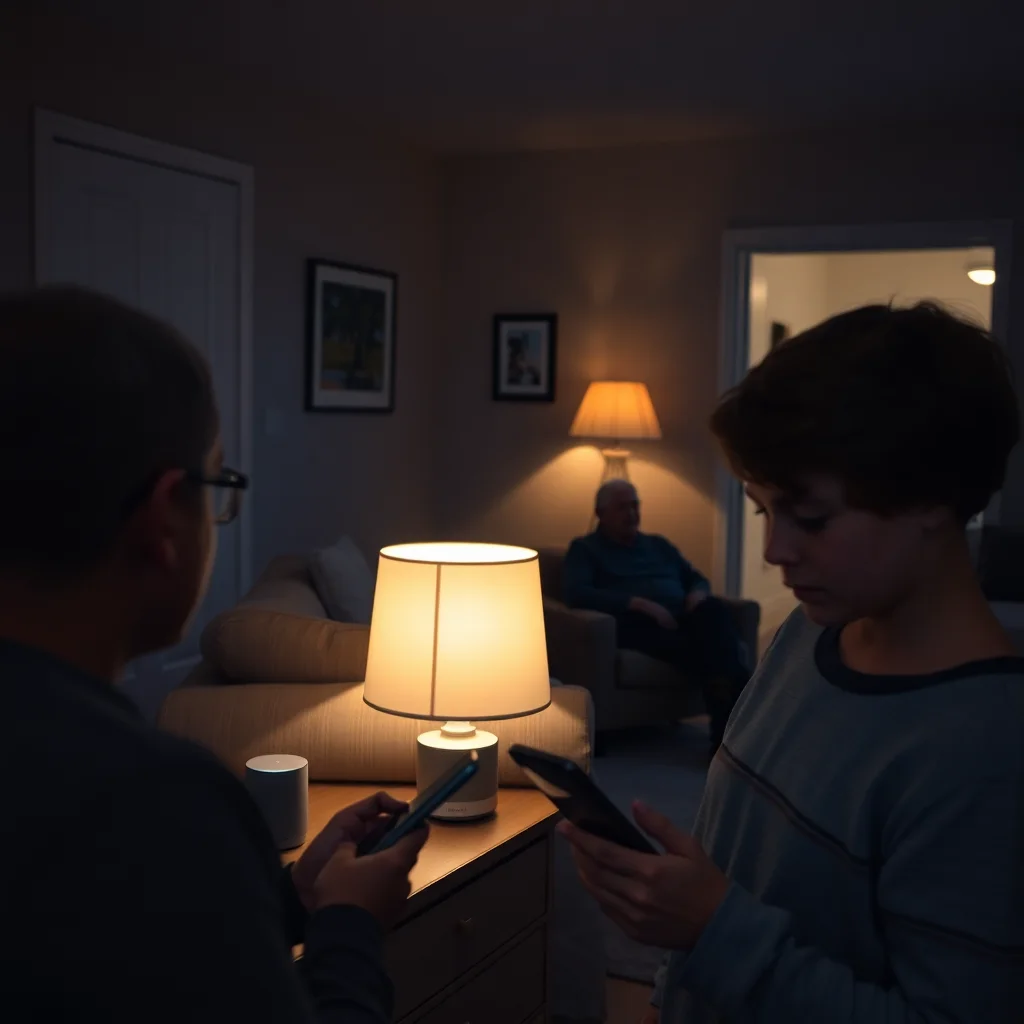
The appeal is obvious. Families worry. Care agencies are understaffed. Adult children live far away and want reassurance that a parent has gotten out of bed, eaten breakfast, or not fallen in the bathroom. Companies such as Sensi.AI have built a business around that anxiety, using ambient listening and machine learning to identify events inside the home without requiring a wearable device or a camera pointed at the couch. It is easy to call that innovation. It is also equally easy to call it the domestication of surveillance.
This is the architectural shift worth naming: the home is no longer being designed only as a private refuge. It is being reclassified as a monitored environment, an interface between care, risk management, and data extraction. The question is not whether technology can observe. It already can. The question is what kind of household we are building when being watched starts to feel like the price of being safe.
Care Tech Makes a Moral Promise Before It Makes a Product
Every monitoring platform enters the market with a morally uplifting story. It will prevent emergencies. It will reduce loneliness. It will let older adults remain independent longer. And because the alternative is often institutional care, which many people fear more than data collection, the pitch lands hard. Why argue with a system that claims to protect the vulnerable?
Yet the rhetoric of care can be a perfect delivery vehicle for surveillance. Once monitoring is framed as compassionate, objections sound selfish or sentimental. Privacy begins to look like stubbornness. “Why not let the system learn your routines?” becomes the same kind of question as “Why wouldn’t you want smoke detectors?” But a smoke detector does one thing. A caregiving sensor stack may learn when you wake, how often you use the kitchen, whether you are speaking, moving, or falling silent. That data can support intervention, but it also creates a behavioral archive of the home.
We have seen this logic before in other domains. Ring transformed the front door into a neighborhood surveillance node, packaged as convenience and security. Smart speakers brought microphones into kitchens and living rooms under the banner of ease. The caregiving market is different only in its emotional leverage. It does not merely promise convenience; it promises to preserve autonomy by monitoring it. That is a seductive contradiction, and designers should not pretend it is neutral.
From Assistive Design to Algorithmic Housekeeping
Traditional accessible design works by reducing friction and giving the resident control: lever handles, no-step entries, better lighting, contrast strips, wider circulation paths, non-slip floors, and clear wayfinding. The best age-friendly homes, from early universal design frameworks to contemporary practice, make the environment easier to read and use without making the occupant feel observed. That distinction matters. A well-designed threshold is not a witness.
AI monitoring collapses that line. The home becomes a system that interprets behavior in real time. If a resident lingers unusually long in the bathroom, the software may flag a concern. If the kitchen is unused, someone may ask whether meals are being skipped. If nighttime movement changes, the family may receive an alert. These are not trivial insights; they can prevent disasters. But they also encode a new domestic norm: deviation from routine becomes a problem to be reported.
That is algorithmic housekeeping. The house is no longer simply arranged for use; it is optimized for legibility. In architecture, legibility is not inherently bad. Jane Jacobs praised it in urban life, and clear spatial organization can help older adults navigate safely. But when legibility is fed into a remote monitoring pipeline, the intent changes. The house stops being an extension of the resident’s body and becomes a readable data surface for outsiders.
PRO: Why Monitoring Can Be a Real Care Tool
Let’s not romanticize privacy into a fantasy of total independence. For many older adults, the home already contains risk: falls, wandering, medication errors, dehydration, undetected illness, and the simple impossibility of being fully present at all times. When families are fragmented and care budgets are thin, passive monitoring can serve as a crucial second set of eyes. In that sense, AI is not a spectacle; it is a substitute for labor that the market has failed to provide.
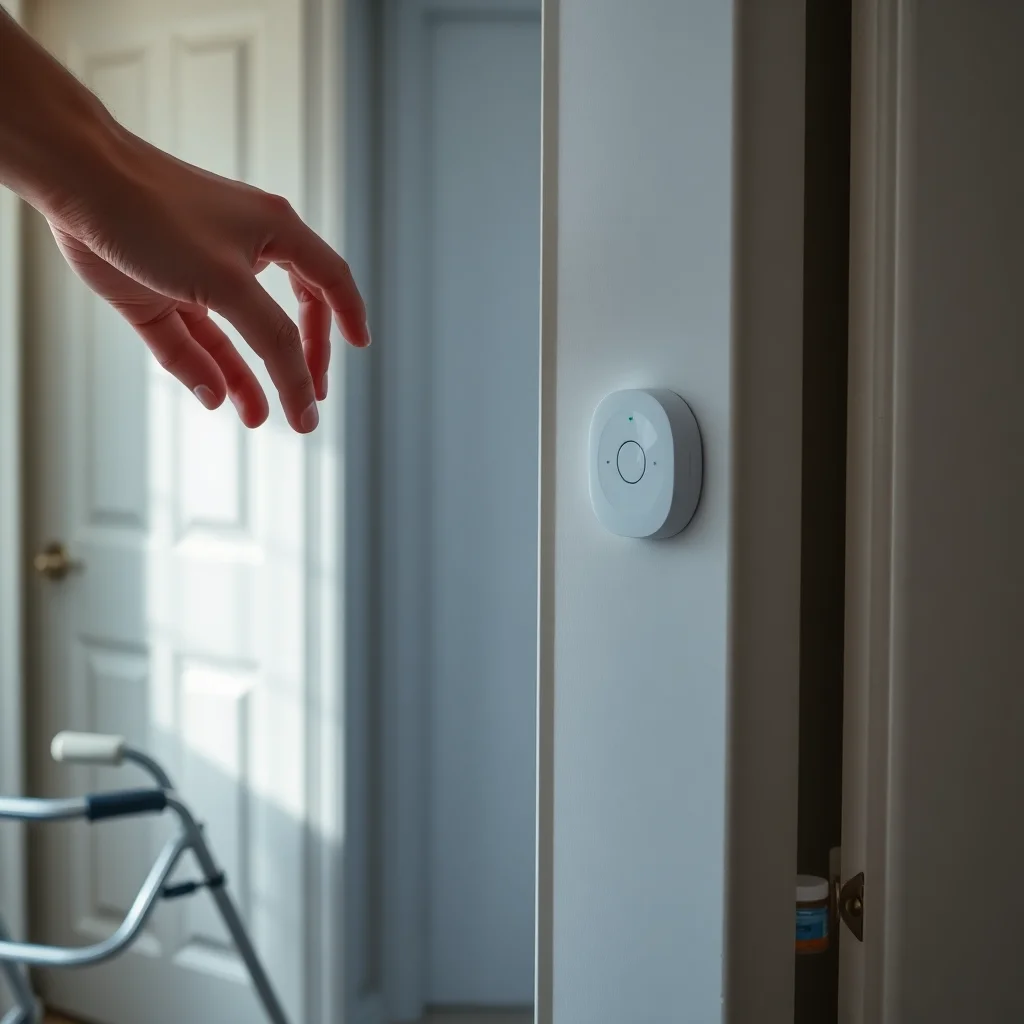
Unlike a camera system, some newer platforms are designed to avoid visual intrusion. Ambient sensors can track motion, sound signatures, room-to-room patterns, and anomalies without broadcasting a person’s face into the cloud. That matters. There is a meaningful difference between a device that says “something is wrong” and a device that records the body as image. For people who refuse wearables or cannot reliably remember to charge them, passive systems can be the only practical option.
The strongest argument for monitoring is not convenience but continuity. A person can remain in the familiar domestic environment while gaining a layer of invisible support. That can delay institutionalization, reduce emergency-room visits, and make sparse home-care visits more targeted. If a home health aide knows a client has not opened the fridge for two days or has become unusually sedentary, the visit can shift from guesswork to intervention. In a broken care system, that is not a gimmick. It is infrastructure.
Still, the broader challenge is not just the gadget itself but the value system around it. As privacy becomes a control layer in so many built environments, the domestic version of that logic can start to feel inevitable. Once oversight is normalized as a feature, it becomes harder to tell where support ends and compliance begins.
CONTRA: The Datafied Home Normalizes Obedience
The problem is that the same systems that make care legible also make life governable. Once the home becomes a monitored environment, routines can harden into expectations. A person who sleeps late, takes longer showers, forgets a meal, or spends an afternoon in silence may trigger automated concern. In other words, the system may begin to treat ordinary variation as clinical risk. The result is not just surveillance; it is behavioral pressure.
That pressure falls hardest on the very people aging in place is supposed to protect. Older adults already navigate a culture that treats them as problems to be managed, not agents to be trusted. Add AI monitoring and the message becomes even more blunt: independence is acceptable only if it remains measurable. Autonomy is tolerated as long as it is predictable.
This is why the metaphor of the smart home is too cute. These systems are not merely smart. They are judgmental. They transform domestic life into a stream of signals to be interpreted by distant relatives, care teams, insurers, and vendors. Today the alert is about a fall; tomorrow it may be about a pattern that suggests loneliness, noncompliance, or declining function. The same logic that promises reassurance can be used to authorize intervention, and intervention can quickly become coercion.
And then there is the question nobody wants to foreground: who owns the intimate behavioral data of the aging body? If a company can infer bathroom use, sleep quality, gait changes, and daily rhythms, it holds a portrait of vulnerability more revealing than a credit score. A home that watches you may be safer. It is also richer in data than many residents will ever understand.
Designing Dignity Requires More Than Better Sensors
If this field is going to mature responsibly, it cannot rely on nicer branding or softer language. It needs architectural and ethical design principles that are visible in the product, not only in the privacy policy. Consent must be granular, revocable, and understandable. Monitoring must be configurable so residents can decide what is sensed, when it is sensed, and who is notified. Families should not receive the same data stream as care professionals by default.
Designers can learn from adjacent fields that have fought similar battles. Universal design insists that environments should be usable by the broadest range of bodies without stigma. Feminist design has long asked who is being centered and who is being disciplined by systems that claim neutrality. And the best healthcare spaces understand that trust is spatial, not just digital: sightlines, acoustics, thresholds, and control over exposure matter as much as software.
That means the future domestic toolkit should include not just sensors but refusal mechanisms: hard off-switches, local processing, visible indicators, household permissions, and modes that preserve a resident’s right to be temporarily unknowable. If the home is going to become an infrastructure of care, it must also remain a place where nobody needs to perform wellness on command.
There is also a design lesson in adjacent conversations about AI and built form. The question raised by whether AI makes architecture clearer or more seductive applies here too: when a system is optimized to feel helpful, its persuasive power can outpace its actual ethics. In care tech, the most important interface may be the one that says no.
The Real Debate: Independence or Managed Comfort?
The deepest danger is that surveillance will be mistaken for care simply because it is efficient. Efficiency is not dignity. A home that can alert a relative in another state after a fall is useful. A home that makes every bodily irregularity visible to a remote system is something else entirely. It may reduce uncertainty, but it also converts ordinary domestic life into administrable evidence.
That is the editorial issue architects, designers, and technologists need to face: aging in place is being reframed as a surveillance problem because surveillance is cheaper than care. Sensors are filling the gap left by labor shortages, fragmented healthcare, and family distance. But every technical fix carries a politics. If we are not careful, the aged home becomes a managed home, and managed homes teach everyone else what domestic life is supposed to look like.
There is still a better path. The future home could use AI to support without dominating: to notice emergencies, not to police habits; to expand autonomy, not to surveil it; to assist the household, not to own its behavior. But that future will not arrive by default. It has to be designed against the market’s instinct to monitor first and justify later.
That debate is not unique to aging in place. Similar tensions show up when people ask should brands be rated on death care—because once intimate support becomes a product category, the moral burden shifts from institutions to interfaces.
If the home can now watch back, who gets to decide whether that gaze is care—or control?
FAQ
What is AI home monitoring in the context of aging in place? It refers to sensor-based systems that use AI to detect activity, anomalies, or possible emergencies in a home, often to help older adults stay independent longer. These systems may use ambient audio, motion detection, radar, or pattern analysis rather than cameras or wearables.
Why are families and care agencies interested in these systems? Because they can provide reassurance and extend limited care resources. They help flag falls, unusual inactivity, or changes in daily routines, which can make home visits and interventions more targeted.
What is the main privacy concern? The concern is that monitoring older adults normalizes constant oversight inside the home. Even when systems avoid cameras, they can still collect intimate behavioral data about sleep, movement, routines, and vulnerability.
Can AI monitoring be designed more ethically? Yes, but only if residents have real control over what is sensed, who sees the data, and when the system can be turned off. Ethical design should prioritize consent, local processing, transparency, and the right to remain unmonitored at times.
Get the Mainifesto weekly — curated design debates, speculative ideas and the week's best articles every Saturday.
Editorial Perspectives
Questions and counterpoints developed by the Mainifesto editorial desk to extend the discussion.
Perspective 1
The real test is whether these systems extend dignity or quietly shrink it. If aging in place becomes a data product, we’ve already lost the plot — care should feel like support, not a building that behaves like a supervisor.
Perspective 2
The conversation can’t stay at the level of elegant interfaces and soft lighting. These systems are only as honest as the hardware, the calibration, and the supply chain behind them — if the sensors are unreliable or the data loop is opaque, the home is just performing care.
Perspective 3
Who gets to decide the line between care and control? In practice, it should be the resident first, then the designers and clinicians who can make the system legible, opt-in, and reversible — otherwise we’re just automating consent around surveillance.
Perspective 4
This is a governance problem before it is a design problem. When monitoring is packaged as convenience, the people with the least power — older adults, tenants, caregivers — end up living inside someone else’s risk model.
Perspective 5
Smart homes are already staging a new kind of domestic theater, where every motion can be translated into a metric. The danger isn’t the technology itself; it’s the way surveillance gets aestheticized until control looks like compassion.