
The £30m Yacht Restoration Paradox
The £30 Million Question Hiding Below Deck
A vintage superyacht is supposed to be a floating argument for continuity: teak, brass, hand-stitched leather, and a silhouette that can survive fashion longer than most buildings. Yet the sector’s most prized restorations now arrive with price tags that can hit £30 million, and sometimes more. At that point, the project stops looking like preservation and starts looking like a sanctioned act of reinvention, where the original vessel is less a surviving object than a pretext for a highly curated fantasy.
The modern appetite for classic yachts comes from the same cultural instinct driving luxury watch revival, vintage car auctions, and heritage renovation on land: people want proof that craftsmanship once mattered and can still matter now. But in the marine world, the economics are brutal. A restoration can require stripping a hull to bare frames, re-engineering safety systems, rebuilding engines, sourcing timber from dwindling stockpiles, and persuading specialist shipwrights to recreate techniques that industrial shipyards abandoned decades ago. The result is neither simple conservation nor simple commerce. It is restoration as luxury theatre.
That is why the question matters. When a project costs more than a new build, what exactly is being preserved: the yacht, the idea of the yacht, or the prestige of saying it was “saved” rather than made?
Restoration, in this market, is never only about the vessel. It is about authorship, lineage, and the emotional premium of scarcity. The owner is not merely buying a boat; they are buying proximity to a narrative in which time, money, and skill are all turned into evidence of taste.
Why Old Hulls Now Command New Money
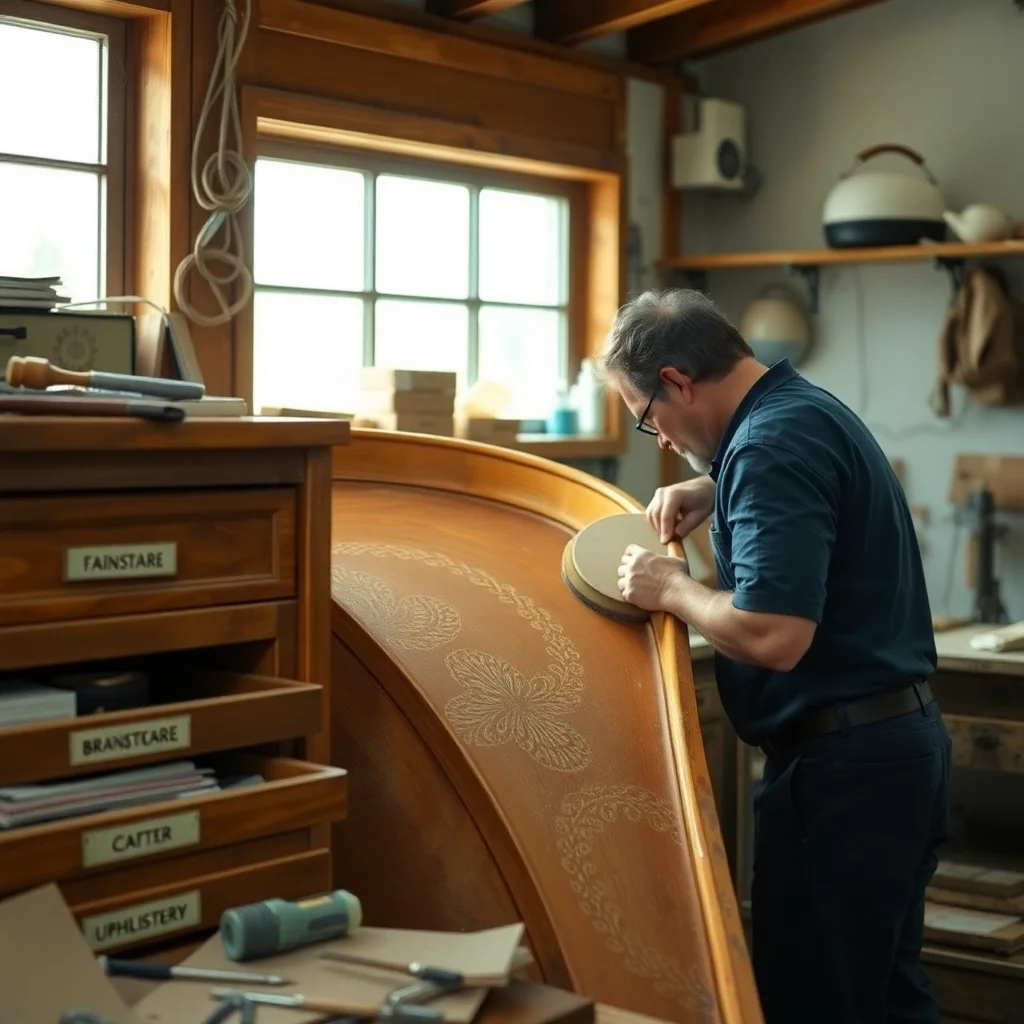
The boom in classic superyacht restoration is part nostalgia, part status calculation. Iconic vessels from the early and mid-20th century offer what fresh launches often cannot: romance, history, and design restraint. A restored pre-war yacht or post-war motor cruiser carries the aura of a more elegant world, one where proportion was judged by eye and interiors were built to be read as craftsmanship rather than brand messaging.
Projects such as the restoration of Christina O—the legendary yacht associated with Aristotle Onassis—show how a vessel can become an international cultural symbol as much as a private asset. Likewise, restorations of classic sailing yachts and wartime-era motor yachts across yards in Italy, the Netherlands, and the UK are often marketed not just as technical achievements but as acts of stewardship. The language is telling: “preserve,” “save,” “rescue,” “return to former glory.” The vocabulary of care is doing the work of pricing.
Design historians know this pattern well. Once an object becomes rare enough, the market stops asking whether it is useful and starts asking whether it is authentic. In architecture, that logic underwrites expensive facadism and heritage retrofits. On the water, it becomes even more seductive because the vessel is mobile, public, and inherently performative. A yacht is seen moving through ports and marinas; restoration therefore becomes a visible claim that old-world refinement still outranks new-money excess.
The irony is obvious: the more money spent to make something look untouched by money, the more conspicuously luxurious it becomes.
The Craftsmanship Argument: Preservation as Living Practice
The strongest case for restoration is also the most sincere. Without these projects, specialist marine craft risks disappearing. Traditional wooden-boat building, hull planking, varnishing, engine refitting, metalwork, and interior joinery are not abstract heritage categories; they are embodied skills that survive only if somebody pays for them. In that sense, a restoration budget subsidises an ecosystem of knowledge.
Consider the type of labour involved. A serious classic yacht project can demand naval architects, wooden-hull specialists, carpenters, riggers, upholsterers, painters, machinists, electricians, and historians working in a choreography closer to museum conservation than to mass production. The work is often invisible once the yacht is relaunched, which is precisely what makes it valuable. The best restoration does not advertise the hand that made it; it lets the hand disappear into the object.
There is also a legitimate environmental argument, even if it is inconveniently mixed with luxury. Reusing a substantial existing hull and structure can, in principle, avoid some material waste and embodied-carbon expenditure associated with full demolition. This is not a moral free pass, but it is not nothing. To repair what exists, especially at a high level of skill, is a serious alternative to the disposable logic that governs too much product design, a logic explored in Can Reuse Become Luxury in Design?
Yet preservation only retains its integrity if the original object remains legible. Replace too much, and “restoration” becomes a costume drama. Keep too little, and the project drifts into replica culture. This is where the discipline gets hard, and where the best yards reveal themselves. They do not merely polish history; they negotiate with it.
In its ideal form, yacht restoration is a laboratory for maintenance as design culture. It insists that making things last can be as inventive as making them new.
The Contradiction: Authenticity as a Premium Service
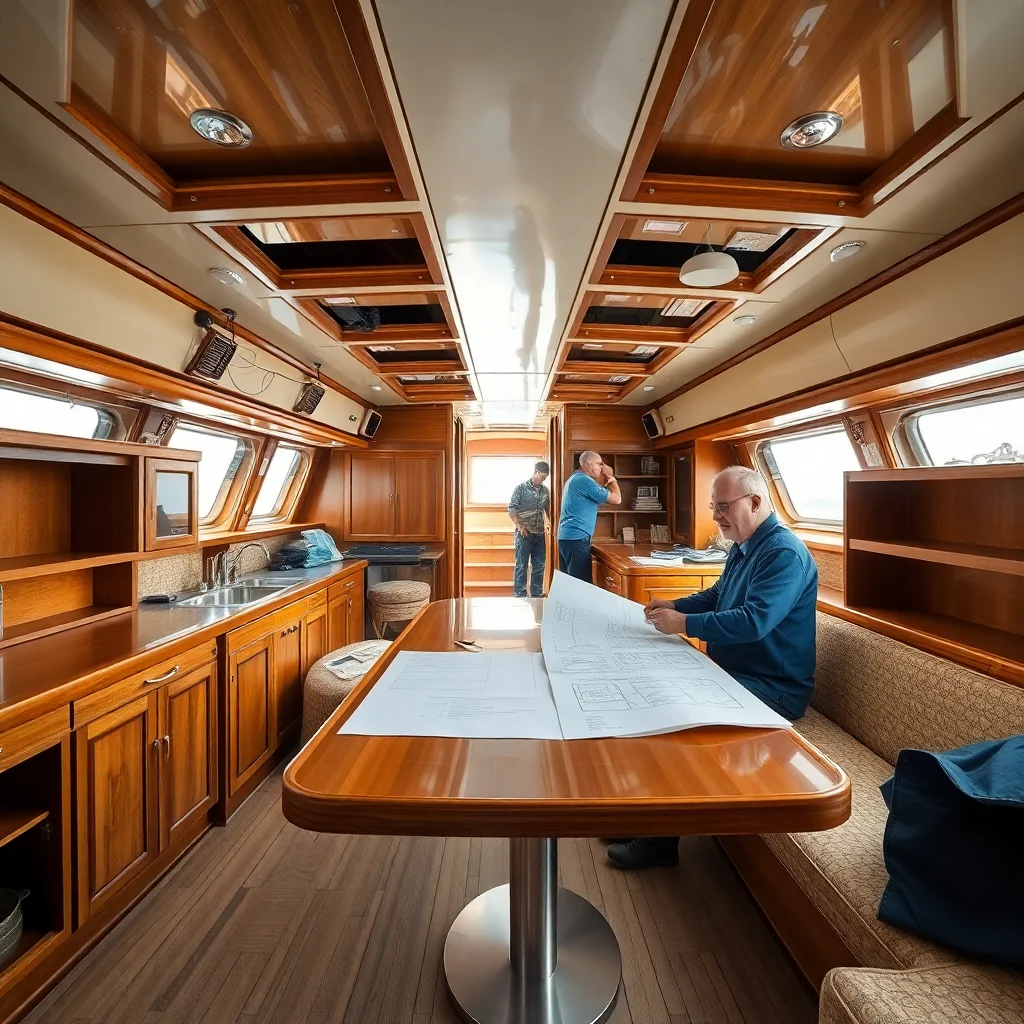
And yet authenticity in the superyacht world is often purchased like any other luxury upgrade. Owners can spend extraordinary sums to recreate an atmosphere of lineage that is, in many cases, only partially original. Teak decks are renewed, interiors are redesigned to current taste, mechanical systems are replaced wholesale, and cabins are reconfigured around contemporary expectations of privacy, wellness, and entertainment. What remains of the original is frequently a shell, a profile, a set of stories, and a sufficiently conserved set of signature details to support the myth.
This is not inherently bad. But it becomes ethically slippery when restoration is sold as moral superiority over new build. A brand-new yacht may be more honest about what it is: a contemporary luxury machine with zero pretence of age. A restored yacht, by contrast, can trade on the aura of restraint while delivering the same scale of opulence underneath. In some cases, the process is less preservation than retroactive branding.
The problem is especially sharp because the market often rewards the appearance of restraint more than the reality of intervention. A vessel that looks as though it has been carefully returned to original condition may actually contain more modern material, more hidden systems, and more replacement parts than a new build. The authenticity is not pure; it is engineered. That does not make it worthless, but it does make it a performance.
There is a parallel here with heritage architecture projects that preserve facades while replacing nearly everything behind them. The public sees continuity. The accountant sees cost. The designer sees the tension. Restoration becomes a kind of luxury alibi: proof that wealth can be framed as guardianship rather than consumption.
When Restoration Costs More Than Replacement
At a certain point, the price itself becomes the argument against preservation. If a yacht restoration exceeds the cost of building a new vessel of similar size and specification, then the case can no longer rest on efficiency. It rests on ideology. This is not automatically illegitimate, but it should be named honestly.
Why does it happen? Because old boats are unpredictable. Hidden rot, corrosion, outdated wiring, obsolete systems, and the scarcity of original materials all inflate costs. The moment a vessel is opened up, the rest of the project can turn into controlled archaeology. Unlike a new build, where every component is planned from the start, restoration is full of surprises—and every surprise is billed. That is how a romantic project becomes a financial sinkhole wrapped in artisanal language.
There is also a perverse incentive structure. The more difficult and expensive the restoration, the more elite the object becomes. The budget itself becomes part of the story, evidence that the owner valued heritage enough to outspend common sense. In a luxury market, overspending is not always a failure; it can be a badge.
But this is where the debate turns from taste to ethics. If a classic yacht is restored mostly to satisfy a collector’s desire for distinction, is the project still preservation? Or is it simply the monetisation of nostalgia? The answer may depend on whether the work contributes to the wider culture of craft—or merely shelters private vanity beneath the rhetoric of care.
Restoration becomes preservation only when it expands public or professional knowledge, not just private prestige.
The Future of Heritage at Sea: Stewardship or Spectacle?
The most compelling restorations are not those that make old yachts look new. They are those that make the value of maintenance visible. In that sense, the best projects offer a critique of disposable product culture: they prove that repair can be architectural, aesthetic, and ambitious. They also remind us that “new” is not always the most advanced category. Sometimes the most progressive act is to keep something alive for another generation.
But the industry must admit the truth: the line between stewardship and spectacle is thin, and in luxury markets it is often intentionally blurred. A restored vintage superyacht can be an extraordinary act of care, a floating archive of lost skills, and a compelling counterpoint to throwaway design. It can also be a status object disguised as cultural philanthropy. The difference lies in transparency. Who benefits from the work? Which parts are original? What was replaced, and why? Who gets to call it preservation?
In product design, we increasingly celebrate repair, circularity, and longevity. Yet the yacht world exposes how easily those ideals can be absorbed into elite consumption. A £30 million restoration may save a vessel. It may also save the owner from the embarrassment of buying something merely new. That is not the same thing.
The uncomfortable truth is that the market wants authenticity, but it often wants it in luxury packaging. Restoration survives because it sits exactly at that contradiction, turning memory into value and labour into prestige.
So perhaps the real issue is not whether a £30 million yacht can be preserved. It is whether preservation remains meaningful once only the richest people can afford to perform it.
FAQ
What counts as restoration on a vintage superyacht? Restoration can range from cosmetic refurbishment to a full structural rebuild involving hull repair, new mechanical systems, interior reconstruction, and period-correct detailing. The more material that is replaced, the more the project shifts from conservation toward reinterpretation.
Why do yacht restorations get so expensive? Costs rise because classic vessels require scarce specialist labour, custom fabrication, original-style materials, and extensive problem-solving once hidden deterioration is exposed. Unlike a new build, restoration is unpredictable from the first inspection onward.
Is restoring an old yacht more sustainable than building a new one? Sometimes, but not automatically. Reusing an existing hull can reduce waste, but major restorations can still consume huge amounts of material, energy, and labour. Sustainability depends on how much is retained, repaired, and documented.
How do you tell the difference between preservation and prestige spending? Preservation prioritises historical integrity, craft continuity, and long-term stewardship, while prestige spending prioritises image, rarity, and resale myth. The difference is often visible in how much of the original object remains legible after the work is done.
FAQ
What counts as restoration on a vintage superyacht? Restoration can range from cosmetic refurbishment to a full structural rebuild involving hull repair, new mechanical systems, interior reconstruction, and period-correct detailing. The more material that is replaced, the more the project shifts from conservation toward reinterpretation.
Why do yacht restorations get so expensive? Costs rise because classic vessels require scarce specialist labour, custom fabrication, original-style materials, and extensive problem-solving once hidden deterioration is exposed. Unlike a new build, restoration is unpredictable from the first inspection onward.
Is restoring an old yacht more sustainable than building a new one? Sometimes, but not automatically. Reusing an existing hull can reduce waste, but major restorations can still consume huge amounts of material, energy, and labour. Sustainability depends on how much is retained, repaired, and documented.
How do you tell the difference between preservation and prestige spending? Preservation prioritises historical integrity, craft continuity, and long-term stewardship, while prestige spending prioritises image, rarity, and resale myth. The difference is often visible in how much of the original object remains legible after the work is done.
Get the Mainifesto weekly — curated design debates, speculative ideas and the week's best articles every Saturday.
Editorial Perspectives
Questions and counterpoints developed by the Mainifesto editorial desk to extend the discussion.
Perspective 1
If the hull, systems, and half the structure are replaced, you’re not “restoring” in any industrial sense—you’re authoring a new object with an old badge. The cost parity with new build just exposes how much of superyacht heritage is really about labor, custom fabrication, and keeping a story intact.
Perspective 2
Authenticity here feels like a label more than a fact. If almost everything has been remade, the value sits in continuity of form and memory, not material truth.
Perspective 3
This is the familiar museum problem translated into maritime glamour: the fetish for the original survives even when the original no longer does. One may admire the craft, but let us not confuse conservation with a very expensive reenactment.
Perspective 4
From an ecological standpoint, the paradox is simple: if restoration demands near-total replacement, the carbon and material burden can easily exceed a careful new build. Preservation only makes sense when it extends service life with restraint, not when it becomes a prestige exercise in waste.
Perspective 5
This feels like the analog version of keeping a platform alive by swapping every component and still calling it the same thing. I’m not ضد the romance of heritage, but if authenticity depends on endless reconstruction, then it’s really a managed illusion—not preservation.