To Preserve a Cathedral, Make Room for Something New
To Preserve a Cathedral, Make Room for Something New
A cathedral does not survive on reverence. It survives because people inspect joints, cut replacement stone, repair damaged fabric and pass difficult skills to another generation. Yet architectural conservation still has a peculiar habit: celebrating the finished monument while treating the infrastructure of its maintenance as an intrusion.
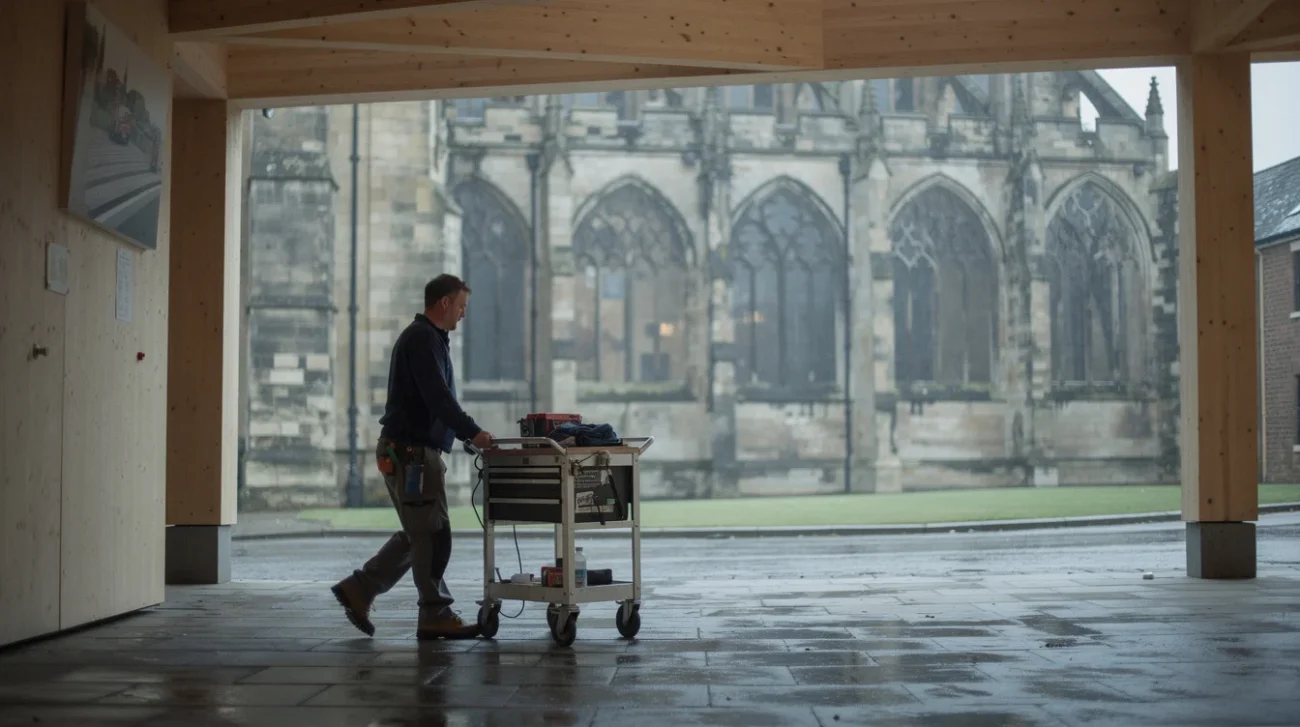
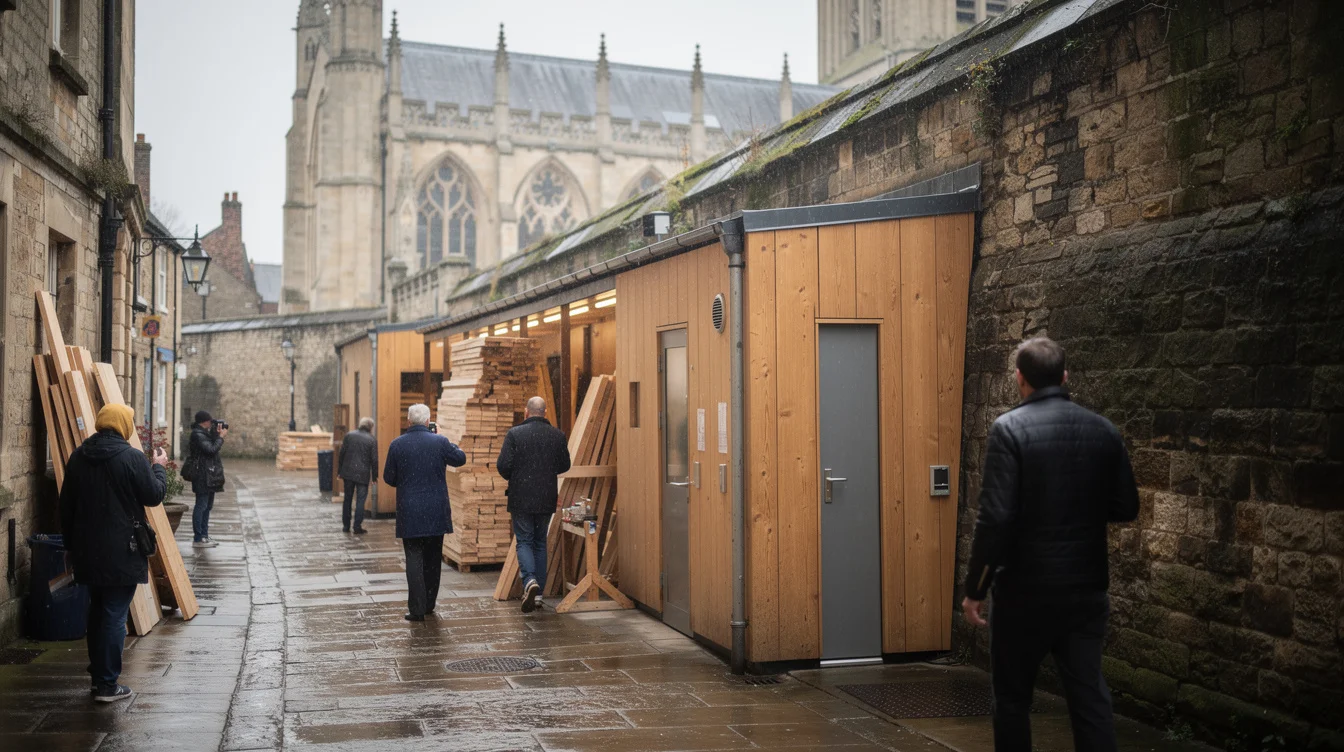
London-based Tonkin Liu has added two timber buildings, using glued laminated timber, on either side of York Minster to provide facilities for craftspeople restoring the Gothic cathedral. Their arrival raises a more consequential question than whether contemporary architecture looks sufficiently deferential. What must a historic place accommodate to remain repairable—and who gets to decide when that accommodation becomes too much?
PRO: Preservation Must Protect the People Doing It
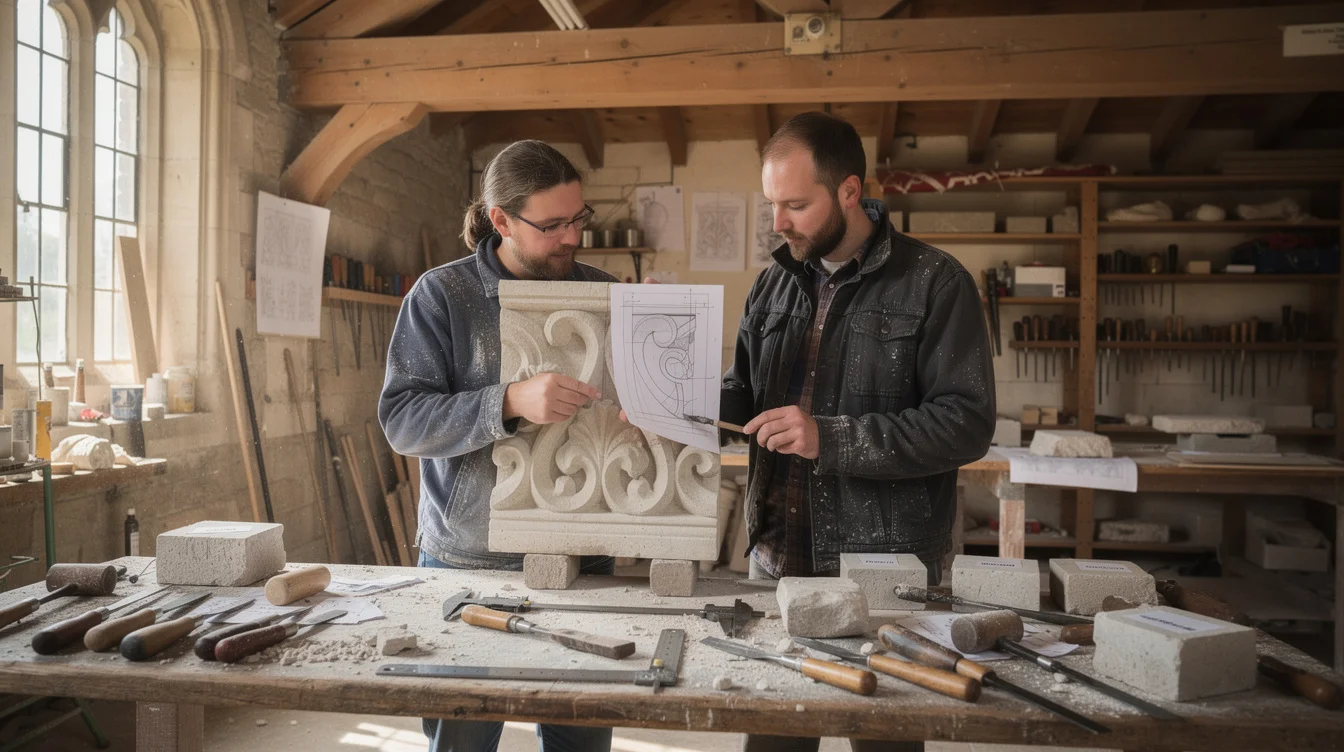
The strongest argument for these additions is not timber’s visual warmth. It is that conservation needs a functioning workplace. A stone carver requires more than a picturesque bench: handling space, suitable lighting, safe equipment and arrangements for controlling dust all matter. These are criteria by which restoration facilities should be judged, not claims about the particular specification of Tonkin Liu’s buildings. An elegant exterior cannot compensate for an awkward working environment.
Locating facilities close to a monument can also connect diagnosis with making. The person preparing a repair can consult the fabric, compare a profile or discuss an intervention without turning every exchange into a logistical exercise. Proximity does not automatically produce better conservation, but distance has costs that a protected-view photograph cannot register.
Strasbourg offers a useful corrective to the idea that cathedral preservation is principally about appearances. The Fondation de l’Œuvre Notre-Dame maintains a living tradition of specialist work associated with the cathedral. The institution matters alongside the building: knowledge resides in people, tools and routines, not only in the stones.
York’s additions should therefore be assessed as part of a system of care. Do the facilities make skilled work safer, support teaching and help retain craftspeople? Those questions belong near the top of the architectural brief. A monument that keeps its ideal silhouette while losing its capacity for repair has not been successfully conserved.
PRO: Honest Additions Can Preserve Historical Legibility
There is another reason to welcome contemporary construction: it can make the present’s contribution readable. A new building need not impersonate a medieval dependency to belong in a cathedral setting. Indeed, imitation can disguise the very historical distinction conservation is supposed to protect.
David Chipperfield Architects’ restoration of Berlin’s Neues Museum, undertaken with conservation architect Julian Harrap, demonstrated the value of allowing repair and loss to remain legible. Its new interventions did not require every room to recover an imagined original completeness. Carlo Scarpa’s work at Castelvecchio in Verona similarly made modern circulation, supports and connections active participants in the encounter with historic fabric. Neither project is a template for York; both challenge the assumption that respect requires architectural disappearance.
Tonkin Liu’s use of glulam introduces a contemporary structural language beside Gothic masonry. That distinction is not, by itself, either an offence or an achievement. Its value depends on what the construction enables and how carefully it occupies its site.
The productive possibility is that restoration becomes understandable as an ongoing activity rather than an invisible service. Where safety and access permit, interpretation or controlled views into working areas could explain why replacement stones are necessary and why craft takes time. Visitors would encounter a cathedral being sustained, not a supposedly untouched relic. Conservation could then defend change through evidence of care, rather than apologising for every sign of present-day life.
CONTRA: A Necessary Function Is Not a Blank Cheque
The case against new construction deserves more than the caricature of sentimental resistance. A cathedral’s setting is not spare land awaiting a worthy programme. Open space, smaller neighbouring buildings, approach routes and interrupted views contribute to how a monument is understood. Their value can be difficult to measure precisely because it lies in relationships rather than isolated objects.
A proposal may improve working conditions and still occupy the wrong location, demand too much volume or weaken an important public space. That is why the language of necessity must be interrogated. Which activities genuinely require immediate proximity? Could an existing building accommodate some functions? Could storage or less site-dependent operations be located elsewhere without burdening workers? These are questions for an options appraisal, not assertions that York’s scheme failed one.
The Dresden Elbe Valley’s removal from UNESCO’s World Heritage List in 2009, following the construction of the Waldschlösschen Bridge, remains a stark reminder that a useful contemporary intervention can fundamentally alter a valued historic landscape. A bridge and a cathedral workshop operate at very different scales, but the principle travels: public utility does not erase spatial consequences.
There is also cumulative change. One modest facility can establish the logic for another, then an extension, servicing provision or security boundary. Conservation must assess the likely estate over time, not merely the reassuring footprint of the latest application. Otherwise, every individual decision can seem reasonable while the collective result becomes irreversible.
CONTRA: Craft Can Become an Alibi for Institutional Expansion
Craftsmanship carries enormous persuasive power. Place a mason beside a block of stone and almost any accompanying architecture acquires an aura of authenticity. That makes craft a compelling public argument—but also one that demands scrutiny. An institution’s building ambitions and its workers’ needs are not necessarily identical.
A serious evaluation would ask craftspeople what changed after occupation: handling distances, usable work areas, noise, environmental comfort and opportunities to supervise apprentices. It would distinguish those outcomes from benefits to branding, visitor experience or institutional prestige. A new facility may deliver all of them, but publicity should not be allowed to substitute for workplace evidence.
Nor should timber serve as an automatic environmental absolution. Glulam can offer structural and embodied-carbon advantages in appropriate circumstances, yet the assessment still depends on sourcing, material quantities, foundations, operational energy, durability and the alternative of adapting existing space. Warm-toned photographs are not a life-cycle assessment.
The Burra Charter’s emphasis on understanding cultural significance before deciding how a place should change offers a useful discipline here. The cathedral authority, conservation specialists, craftspeople and local communities may value the same setting differently. None should be treated as merely obstructive because they complicate a persuasive design narrative.
The strongest objection, then, is not that York must remain visually frozen. It is that care must be demonstrated rather than declared. New architecture earns its place through comparative evidence, accountable decisions and lasting usefulness—not through a worthy programme alone.
FAQ: Who and What Does Conservation Protect?
What has Tonkin Liu added at York Minster?
The London-based studio has added two glulam timber buildings on either side of the Gothic cathedral. They contain facilities for craftspeople involved in its restoration, putting the infrastructure of conservation into the architectural foreground.
Why might restoration facilities need to be near a cathedral?
Proximity can support inspection, consultation and coordination between work on historic fabric and the preparation of repairs. However, not every activity necessarily needs the same location; that distinction should inform the assessment of alternatives.
Does contemporary architecture undermine a historic setting?
Not inherently. Clearly contemporary work can make historical layers easier to understand. Its acceptability depends on scale, location, material behaviour and effects on significant spaces and views—not simply whether it resembles its older neighbour.
How should the success of these additions be judged?
By combining heritage assessment with evidence of workplace performance: safety, practical usefulness, training capacity, environmental impact and long-term maintenance. Neither visual discretion nor better facilities alone should settle the argument; conservation must account for both people and place.
If keeping a cathedral alive requires changing its setting, whose definition of preservation should prevail: the craftsperson’s, the conservation authority’s or the public’s?
Get the Mainifesto weekly — curated design debates, speculative ideas and the week's best articles every Saturday.
Editorial Perspectives
Questions and counterpoints developed by the Mainifesto editorial desk to extend the discussion.
Perspective 1
Cathedrals have always changed to accommodate the work that keeps them standing; Tonkin Liu’s additions belong to that history, not outside it. I’m for making the craftspeople visible and giving them proper space, provided preservation doesn’t become an excuse to polish the precinct and price everyone else out.
Perspective 2
I’m not convinced that better workshops justify changing the cathedral’s setting before less intrusive options have been ruled out. Craftspeople should define what the work requires, but conservation authorities must test the alternatives publicly—an institution with money and a celebrated architect shouldn’t get to define necessity for everyone.
Perspective 3
Can the team repair stone safely and efficiently, and can visitors still navigate and enjoy the place? That’s the test I’d use for these additions: fund better working conditions first, then see whether making the craft visible adds enough visitor value to justify any extra spend.
Perspective 4
A cathedral needs a working yard, not just a handsome approach. I’d give the craftspeople first say on the brief and the conservation authority a firm say on siting, then ask who’s paying to maintain the new timber buildings in thirty years.