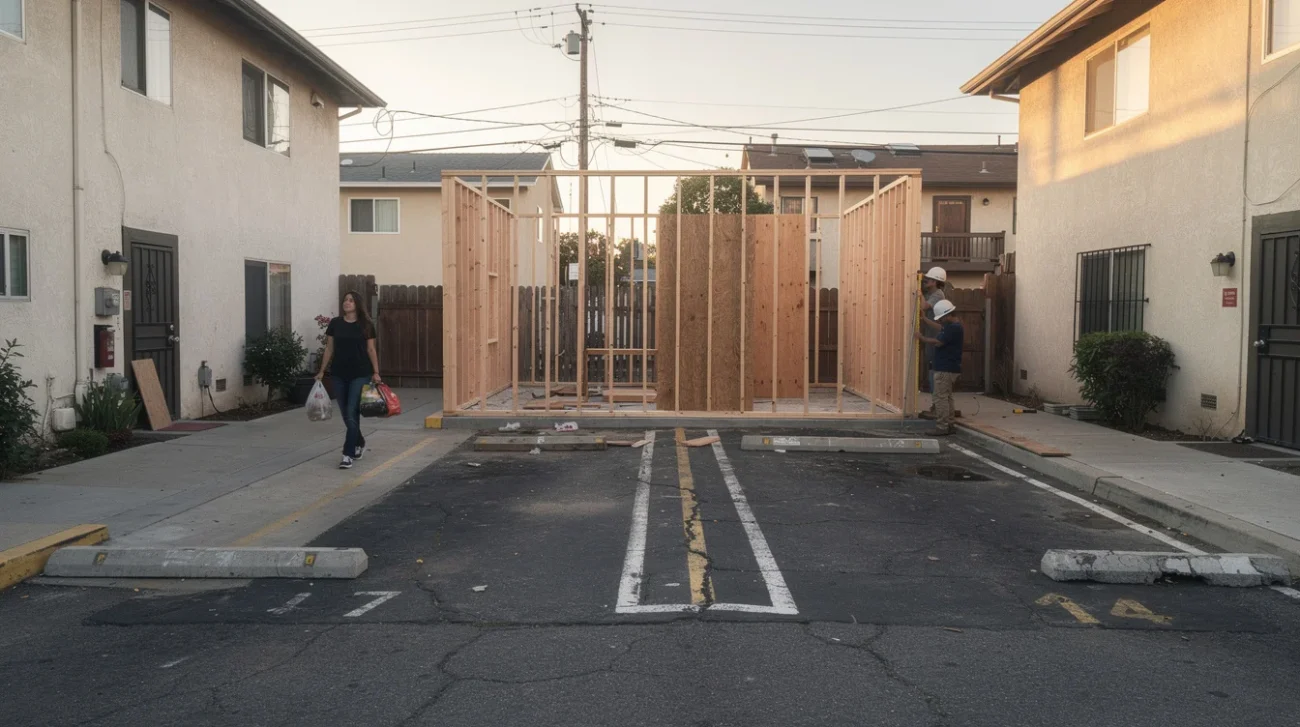

A Timber City Needs More Than a Supply of Wood
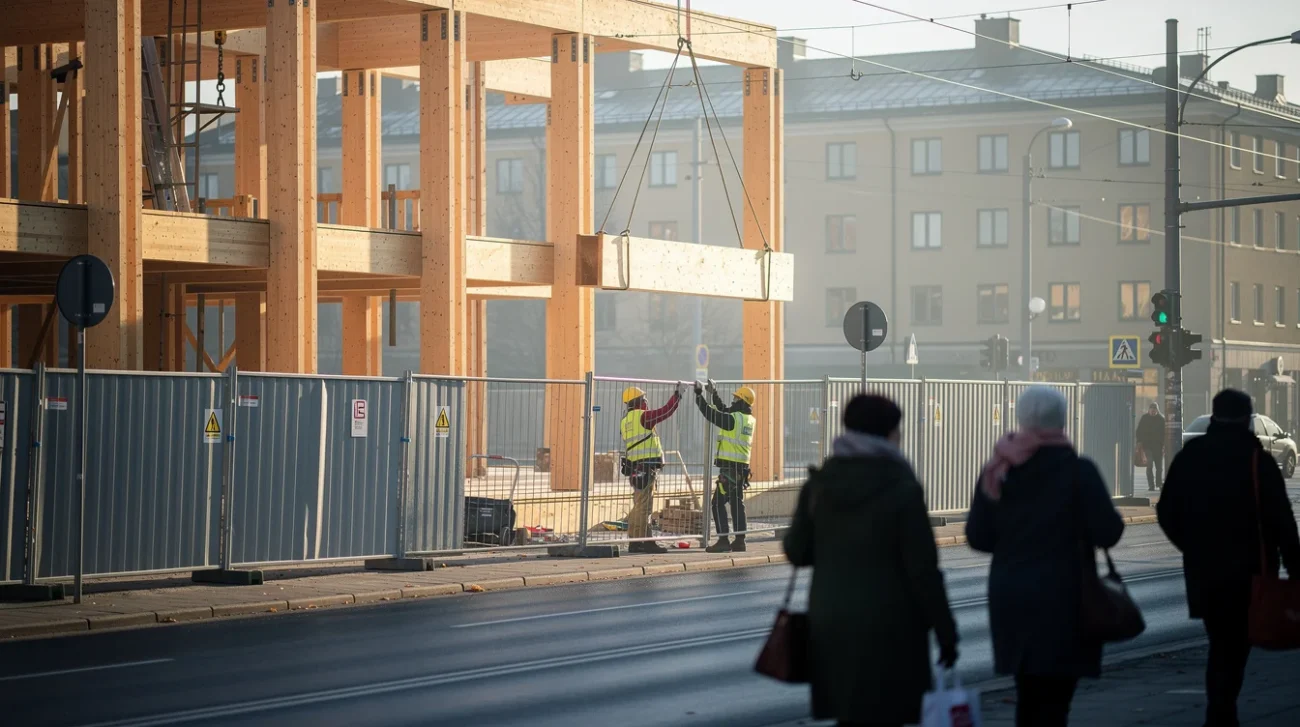
A timber city does not begin at the sawmill. It begins with a decision about land: what should grow there, what should remain untouched, and how much a city is entitled to take. Architecture’s enthusiasm for engineered wood too often starts later, with an immaculate beam arriving on a construction site. Everything before that delivery becomes someone else’s problem.
In Wallpaper’s interview with White Arkitekter’s Oskar Norelius, building with wood at scale emerges as an exercise in consideration and experimentation. The studio’s work gives that ambition substance. But scaling timber construction changes the question. A convincing wooden building is not yet a convincing system for supplying an entire urban district.
The argument for timber deserves to win against unnecessary concrete and steel. It does not deserve immunity from scrutiny. Here are the two sides of a proposition that architecture can no longer evaluate solely within the property boundary.
PRO: Replace the emissions, not merely the aesthetic
The strongest case for a timber city is brutally practical: construction needs alternatives to materials whose production generates substantial greenhouse-gas emissions. Cement production releases carbon dioxide through both fuel use and the chemical conversion of limestone. Primary steel production remains heavily dependent on fossil fuels. Substituting engineered wood for suitable structural applications can reduce upfront emissions, although the result depends on the building, its supply chain and the materials actually displaced.
White Arkitekter’s Sara Cultural Centre in Skellefteå, Sweden, completed in 2021, makes this proposition architectural rather than abstract. Its cultural spaces and 20-storey hotel demonstrate that timber need not be confined to suburban houses or decorative ceilings. Cross-laminated timber and glued-laminated timber become instruments for civic scale.
The lesson is not that every tower should become wooden. It is that the default specification deserves interrogation. Waugh Thistleton’s Dalston Works in London similarly shows how engineered timber can support substantial urban housing without adopting the language of the isolated eco-villa.
Lightweight structures can also reduce foundation demands in appropriate conditions. Those savings must be calculated, not presumed. Nevertheless, refusing timber because it is imperfect would leave incumbent materials enjoying a remarkably convenient exemption from comparison.
PRO: A district can change the construction industry
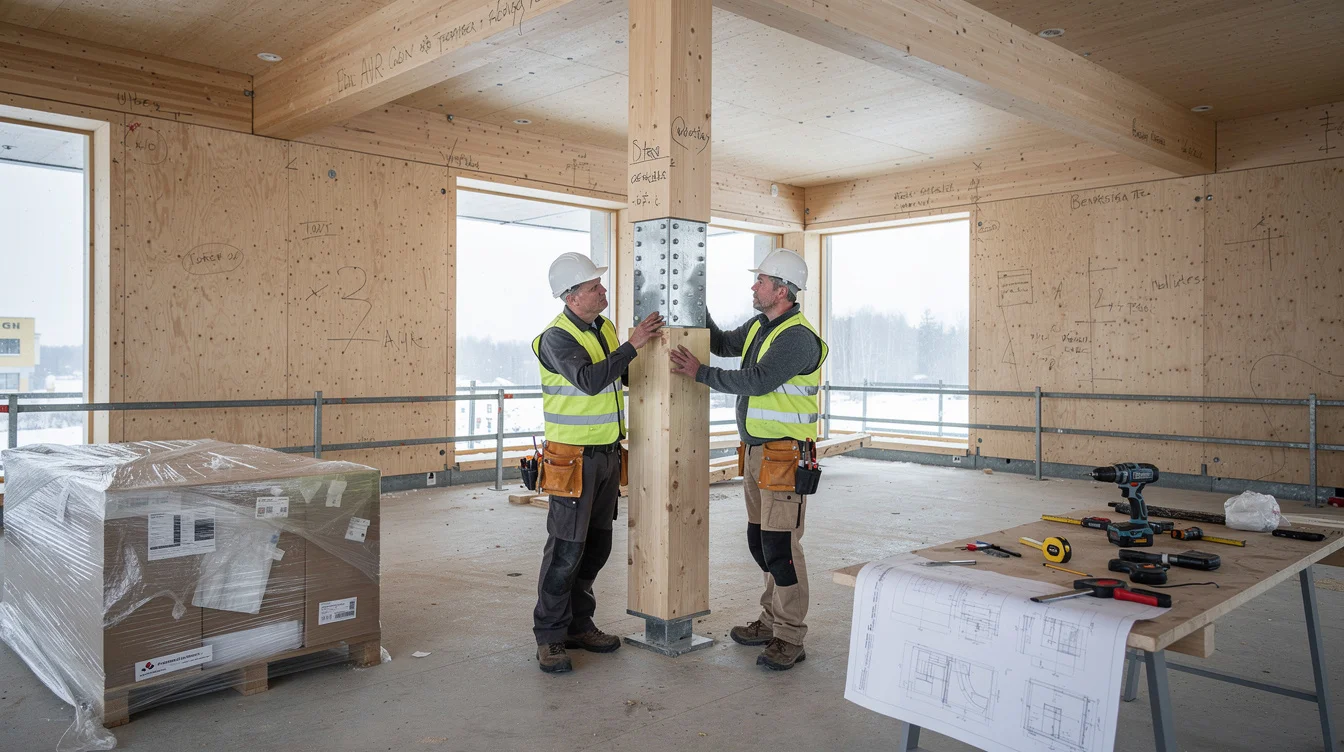
Stockholm Wood City, planned for Sickla in Nacka by developer Atrium Ljungberg with White Arkitekter and Henning Larsen, shifts the discussion from the exceptional object to the urban development pipeline. As a planned district rather than a completed demonstration, it should be judged by what it eventually delivers. Its significance already lies in the scale of the organisational challenge.
Repeated demand can support investment in manufacturing, engineering expertise and contractor training. Factory-cut components can make assembly more precise and reduce some disruptive site operations. In dense neighbourhoods, fewer noisy processes and shorter structural erection periods are meaningful public benefits, not just efficiencies on a contractor’s spreadsheet. They remain contingent on logistics, design and procurement. As with the push for more homes with less parking, the transition must be judged by its effects on existing residents as well as its promised efficiencies.
Scale also creates opportunities to stop treating every timber building as a bespoke prototype. Shared connection details, coordinated structural grids and repeatable moisture-protection procedures can make experimentation accumulate into competence.
Andrew Waugh’s advocacy for timber has long connected material choice with changes to how construction is organised. That is the productive ambition here: not a city wearing wooden cladding, but a construction culture that learns to use less material, assemble accurately and document what it builds. A district can establish that discipline more convincingly than a single photogenic pavilion.
PRO: Long-lived buildings can keep wood useful
Wood contains carbon taken from the atmosphere during tree growth. Keeping that wood in a durable building delays its release, while using it instead of a more emissions-intensive product may provide an additional climate benefit. These are distinct effects, and neither makes a building automatically carbon-negative.
The architectural opportunity is to extend usefulness. A timber office with generous floor-to-floor heights and an adaptable plan may become housing or education space rather than demolition waste. Accessible mechanical connections can make some components easier to recover. Material records can help a future engineer identify their species, grade, treatment and previous service conditions.
The circular ambitions of projects such as the timber-based ABN AMRO Circl pavilion in Amsterdam illustrate a broader design shift: components should be understood as recoverable assets rather than disposable ingredients. Timber is not uniquely capable of this, but its fabrication methods make the discussion especially pertinent.
A serious timber district would therefore commission repair strategies and disassembly plans alongside elevations. It would protect structures against leaks, manage construction moisture and design fire safety explicitly. The environmental achievement is not exposing wood for the opening photograph. It is keeping the structure valuable after its first tenant, first programme and first fashion have disappeared.
CONTRA: A forest cannot follow a development timetable
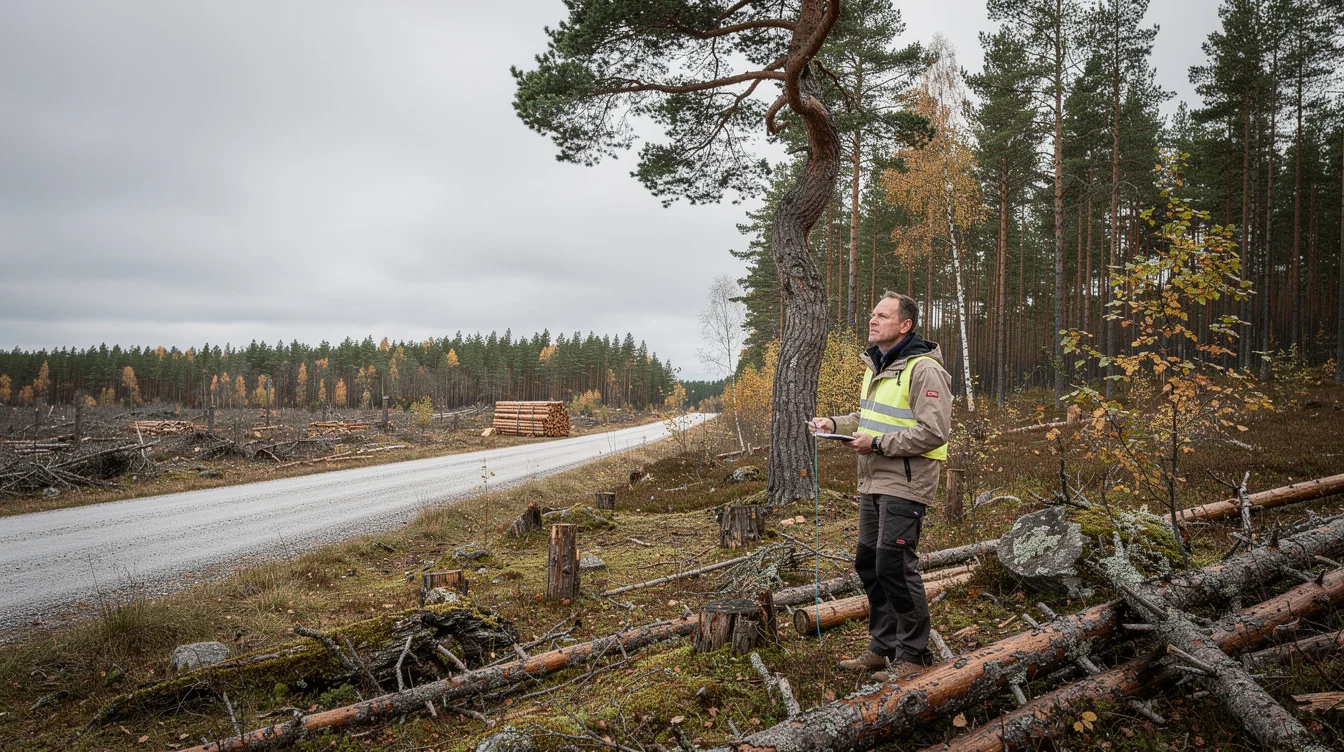
The counterargument begins with a mismatch of clocks. Developers schedule projects in quarters and years. Commercial forests grow over decades, with harvesting cycles varying by species, climate and management regime. Replanting after felling is not an instantaneous restoration of the carbon previously held on that site.
Harvesting changes carbon stocks in living trees, deadwood and, depending on conditions and operations, soils. Residues and processing losses have their own trajectories. Whether additional timber demand improves or worsens the climate outcome depends partly on the counterfactual: what would that forest have stored without the harvest, and what would the building have used without the timber?
This is why a calculation that credits carbon stored in a beam but treats forest recovery as settled fact is insufficient. The timing matters, particularly when emissions reductions are urgently needed over the coming decades. Long-term regrowth cannot simply erase a near-term loss in every assessment.
Stockholm Wood City’s ambition should therefore trigger questions beyond product-level declarations. Which forests supply its components? Is procurement supported by existing output or additional harvesting? What happens to landscape carbon stocks under that demand? A timber city without answers is exporting its most difficult accounting beyond the architect’s drawing set.
CONTRA: A productive plantation is not an intact ecosystem
Forest cover is a poor standalone measure of ecological health. A landscape can remain statistically forested while losing old trees, varied age structures, deadwood and habitat continuity. Intensively managed stands may produce useful construction timber while supporting different and often less diverse ecological communities than older, structurally complex forests.
In Sweden, these questions also intersect with Sámi reindeer husbandry. Forestry operations, road networks and changes to lichen-rich habitats can affect grazing and movement. The territory supplying a timber city is not empty countryside awaiting an urban purpose; it contains existing livelihoods, rights and contested priorities.
FSC or PEFC certification can provide important procurement safeguards. Neither should function as permission to stop asking questions. Certification scope, traceability, regional conditions and the cumulative effects of harvesting still matter. Mixing feedstock through industrial supply chains can also make the relationship between a polished structural panel and a particular landscape difficult to explain.
White Arkitekter’s considerate approach becomes most demanding here. Consideration must reach beyond users enjoying a warm interior to species and communities that never enter the building. A credible procurement brief would specify habitat protections and sourcing exclusions, then require evidence. An attractive renewable material is not a substitute for an ecologically defensible extraction regime.
CONTRA: The same tree has several claimants
Architecture does not hold an exclusive claim on wood. Packaging, furniture, pulp, panels and energy systems compete for forest resources, although they use different species, grades and fractions. Sawmills produce both structural products and co-products. Increasing demand for one output can alter the economics of the whole processing chain.
Cascading use offers a useful principle: retain material in high-value, long-lived applications, reuse it where feasible, recycle it where appropriate, and avoid treating immediate combustion as equivalent to decades of service. But glues, coatings, contamination and damaged connections complicate recovery. A cross-laminated timber panel is an engineered product, not a tree waiting harmlessly to return to nature.
Competition also exposes the question architecture prefers to evade: how much new construction is necessary? Lacaton & Vassal’s transformation of Grand Parc Bordeaux with Frédéric Druot and Christophe Hutin demonstrates the power of keeping existing buildings while improving their usefulness. That strategy can avoid substantial new structural demand altogether. Debates over how much of a segregated school to preserve add another dimension: retaining a building also requires deciding which parts of its social legacy to carry forward or transform.
The first specification for a responsible timber city should be a limit on unnecessary building. Retain before replacing; use timber where comparative assessment supports it; choose hybrid structures when they perform better; and procure within credible ecological constraints. Otherwise, material substitution risks becoming a sophisticated justification for carrying on with excess.
FAQ: What a timber city must prove
Is mass timber always lower-carbon than concrete or steel?
No. It can reduce upfront emissions in suitable applications, but comparisons must include equivalent structural performance, foundations, fire protection, manufacturing, transport and end-of-life assumptions. Forest-carbon effects also need explicit treatment rather than disappearing behind a claim of renewability.
Does harvesting a forest and replanting it make construction timber sustainable?
Replanting alone is insufficient. Sustainability also depends on harvesting intensity, recovery time, soil impacts, biodiversity, water and community rights. A newly planted stand does not immediately replace the carbon stocks or ecological functions of the forest that preceded it.
Can timber buildings be fire-safe at urban scale?
Yes, with properly engineered systems and compliance with applicable regulations. Designers must address connections, cavities, exposed surfaces, evacuation and suppression where required. Moisture management and construction-stage precautions are also essential; timber’s suitability does not eliminate the need for rigorous technical design.
What should cities demand before approving large timber developments?
Require whole-life carbon comparisons, an assessment of retention and reuse alternatives, traceable sourcing, biodiversity safeguards and realistic maintenance and recovery plans. District-scale ambitions should demonstrate responsible resource use, not merely count the volume of timber installed.
If a timber city can only expand by intensifying pressure on forests elsewhere, should its architects change the material—or challenge the city’s appetite for building?
Watch the Mainifesto Short
Get the Mainifesto weekly — curated design debates, speculative ideas and the week's best articles every Saturday.
Editorial Perspectives
Questions and counterpoints developed by the Mainifesto editorial desk to extend the discussion.
Perspective 1
I’m in favour of timber construction, but a city needs a credible forest budget as much as a carbon budget. Retrofit first, then use timber where whole-life assessments and traceable sourcing justify it—not wherever a rendering looks warmer.
Perspective 2
I’m not persuaded by the timber city: modernism also promised that the right construction system would resolve problems rooted in land and politics. Replacing concrete with wood leaves the growth imperative untouched; the forest merely becomes another territory serving the metropolis.
Perspective 3
For a hotel, exposed timber can make a room feel welcoming, but guests also need quiet, comfort and a rate they can afford. Before commissioning another timber flagship, I’d ask whether refurbishing an existing property delivers the same experience with less material and a better return.
Perspective 4
Timber earns its place when the programme, insurance and installed cost stack up—not simply because the frame has a good carbon story. Challenge unnecessary demolition, certainly, but don’t confuse speculative oversupply with places that genuinely need homes; there, choose the lowest-impact system you can reliably deliver.