
AI at Seoul Biennale 2027: Who Answers for Its Choices?

An AI Can Help Curate a Biennale. Who Answers for Its Choices?
A biennale does not simply display architecture. It distributes attention, lends institutional authority and helps decide which practices become part of the discipline’s public memory. Introducing artificial intelligence into that process is therefore not just an experiment in productivity. It changes how cultural power can be exercised—and how easily its exercise can become difficult to trace.
According to Dezeen’s report of 26 November 2026, Italian architect Carlo Ratti has been named curator of the 2027 Seoul Biennale of Architecture and Urbanism and plans an “unconventional, AI-based” approach. The announcement establishes an intention, not a publicly documented selection system. It does not, in the source context available here, establish which model will be used, what authority the assistant will have or how its recommendations will be checked.
That uncertainty is the point at which scrutiny should begin, not an excuse to invent a scandal. An AI assistant can contribute to curatorial thinking. It cannot absorb curatorial responsibility. If Seoul wants computational experimentation to count as an intellectual proposition rather than a promotional device, its organisers should make the machinery of selection part of the exhibition’s public record.
Define the Assistant Before Celebrating It
“AI-assisted” can describe radically different arrangements. A system might translate submissions, identify recurring themes, suggest overlooked references or write draft exhibition labels. It might also rank applicants, generate a shortlist or recommend exclusions. Calling all these activities assistance conceals the difference between administrative support and delegated judgement.
Ratti’s work with the MIT Senseable City Lab offers a useful reference for why computation might appeal to him. Projects such as Trash Track used tracking technologies to make waste journeys visible. Applied thoughtfully, computational analysis can expose relationships that conventional observation misses. A biennale could similarly connect projects addressing urban heat, informal infrastructure or material reuse across different regions and architectural vocabularies.
But finding a relationship is not the same as deciding that it deserves a platform. A cluster of projects described as “resilient” might reflect shared environmental concerns—or merely the vocabulary architects use when applying for funding.
Seoul should publish a plain-language account of the assistant’s permitted tasks, the model and version used, its information sources and its position in the decision process. If several tools are involved, say so. The public needs a workflow, not a mascot. A conversational interface given a memorable name does not explain whether it edits sentences or narrows the field of possible exhibitors.
The Searchable World Is Not the Architectural World
The deepest risk arrives before any ranking. An assistant asked to identify important architecture can only work with information it can access and interpret. Searchable publications, polished practice websites and familiar institutional endorsements are convenient evidence. They are not a representative map of architectural intelligence.
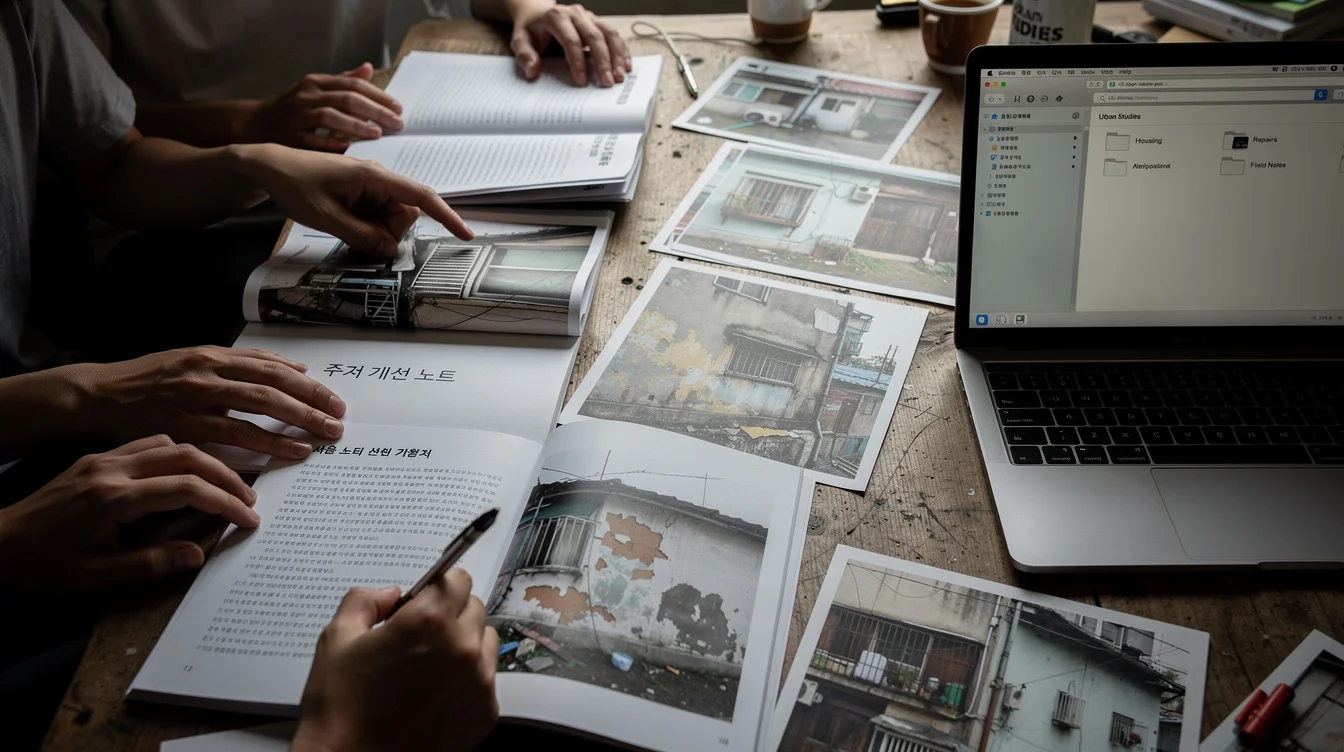
Consider the difference between a widely photographed cultural building and a resident-led housing repair programme documented through local meetings, modest reports or oral testimony. The former arrives already formatted for discovery. The latter may require translation, fieldwork and relationships. A pipeline built mainly from English-language architecture media could reproduce that disparity while presenting the result as a fresh computational perspective.
Practices such as Thailand’s community architecture network Openspace and organisations such as the Asian Coalition for Housing Rights offer useful reference points for work whose significance cannot be reduced to a portfolio image. Their approaches foreground processes, communities and negotiated urban change. That is precisely the kind of evidence a conventional project database can struggle to accommodate.
Organisers should disclose how the candidate pool was assembled: open calls, invitations, research trips, databases, nominations or some combination. They should also explain which languages and submission formats are supported. Before asking whether the assistant makes fair choices, ask who becomes legible enough to be considered.
Publish Criteria That Can Be Challenged

“Innovation,” “impact” and “relevance” sound rigorous until someone asks what earns a high score. Does innovation mean unfamiliar geometry, a different ownership model or a construction technique that local workers can maintain? Does impact mean visitors, press coverage, reduced emissions or improved tenure security? Each definition produces a different exhibition.
Lacaton & Vassal’s transformation of the Grand Parc housing blocks in Bordeaux, undertaken with Frédéric Druot and Christophe Hutin, makes the stakes concrete. Its architectural force lies in extending and improving existing homes rather than replacing them. A selection framework that privileges spectacular new objects could undervalue precisely the refusal to demolish that makes the project important.
The same tension appears in Assemble’s Granby Four Streets work in Liverpool, where architecture intersects with neighbourhood organisation and long-term stewardship. Neither example proves how an AI assistant would behave. Both show why selection criteria must distinguish formal novelty from social, material and institutional invention.
Seoul should publish its criteria before selections are final, including any numerical weighting or explicit acknowledgement that no scoring system is used. If the assistant ranks projects, organisers should disclose the ranking method and how uncertainty is handled. If it only proposes associations, they should not market those associations as objective findings. A curatorial position can be subjective and defensible; an unexplained score is neither.
Human Oversight Must Have Names and Consequences
A promise that humans remain “in the loop” is almost meaningless without decision rights. Someone who glances at an automated shortlist is not exercising the same authority as someone who can challenge its source material, restore excluded candidates and stop the process.
A credible structure would identify who sets the criteria, who reviews recommendations, who can override them and who signs off on the final selection. It would also separate factual checking from aesthetic judgement. An assistant’s claim about a project’s construction date, authorship or environmental performance needs verification; its suggestion that two projects form an interesting dialogue needs argument.
Lesley Lokko’s 2023 Venice Architecture Biennale, The Laboratory of the Future, provides a useful contrast in curatorial authorship. Its explicit centring of Africa and the African diaspora made its position available for debate. Agreement was not required to understand that a deliberate redistribution of attention was being attempted. Seoul’s computational approach should be equally explicit about its commitments.
Organisers should keep decision logs recording significant recommendations, overrides and reasons. Public reporting can summarise these without exposing private submissions or personal data. There should also be a route for correcting misattribution or factual error. Responsibility becomes real when a named person must explain a decision and has the authority to repair it.
Make the Experiment Visible Without Turning It Into Theatre
There is a compelling exhibition hidden inside this governance problem. Seoul could show how different search strategies produce different candidate pools, how translation changes a project description or how a human researcher challenges an apparently persuasive machine-generated comparison. Such displays would make computation a subject of architectural inquiry rather than an invisible service.
But transparency should not become another spectacle. A wall of prompts or a live chatbot can reveal very little about the decisions that mattered. Nor would releasing every interaction necessarily be responsible: submissions may contain confidential budgets, unpublished designs or information about vulnerable communities.
The useful disclosure is structured and selective. Publish the workflow, source categories, criteria, oversight roles and known limitations. Report meaningful changes to the system during selection. Explain whether submitted material is retained or used by technology providers, and disclose relevant commercial relationships. After selection, assess the distribution of representation across geography, language and practice type without pretending that a balanced spreadsheet guarantees a strong exhibition.
The provocation is not that machines must be kept out of culture. It is that cultural institutions should stop treating technological novelty as permission to lower their standards of explanation. The more experimental the method, the clearer the authorship must become. Ratti and Seoul have an opportunity to make AI-assisted curation accountable by design—not merely impressive by announcement.
FAQ
What has been announced about AI at the 2027 Seoul Biennale?
Dezeen reported on 26 November 2026 that Carlo Ratti had been named curator and planned an “unconventional, AI-based” approach. The source context provided does not establish the assistant’s model, detailed tasks or decision-making authority.
What should organisers disclose about the AI assistant?
They should identify its tasks, model and version, information sources, selection criteria and role in shortlisting. They should also explain human approval rights, data handling, relevant commercial relationships and procedures for correcting errors.
Could AI help broaden architectural representation?
Potentially. Translation and cross-regional research could help curators discover unfamiliar work. But those benefits depend on deliberate sourcing and human verification; relying on highly visible digital material could instead reinforce existing exclusions.
Who should answer for an AI-influenced selection?
The named curator and organising institution should retain responsibility for selections they approve. Technical providers should answer for their own contractual commitments, but their involvement does not erase the organisers’ duty to explain and defend the exhibition.
If an AI-assisted biennale cannot explain whose work never entered its field of view, on what grounds should we trust the vision it presents?
Watch the Mainifesto Short
Get the Mainifesto weekly — curated design debates, speculative ideas and the week's best articles every Saturday.
Editorial Perspectives
Questions and counterpoints developed by the Mainifesto editorial desk to extend the discussion.
Perspective 1
If AI saves the curatorial team time, fine—but put some of that saving into checking who the search missed. Organisers should publish the selection criteria and name the person responsible for exclusions; otherwise, the efficiency claim just means someone else bears the cost.
Perspective 2
The Salon managed exclusion perfectly well without an algorithm; AI hardly invented the problem. But calling its output a curatorial vision is rather generous unless Ratti’s team explains which archives, languages and institutions define its horizon—and owns those limits.
Perspective 3
I’d want to see how the shortlist changes when you switch languages, sources or ranking criteria, not just an explanation of the final picks. Could the biennale publish those tests and invite practitioners to flag missing work before selection closes? That would make AI-assisted curation something we can question while it still matters.
Perspective 4
AI could help a biennale find brilliant work beyond the usual circuit, but not if it only searches polished portfolios and well-indexed publications. Give repair workshops and informal building networks a route in that doesn’t require a glossy digital presence, and pay local researchers to help find them. That’s a more exciting use of the technology than making familiar names easier to discover.