Black Design: Its Own Gallery—or a Different Museum?
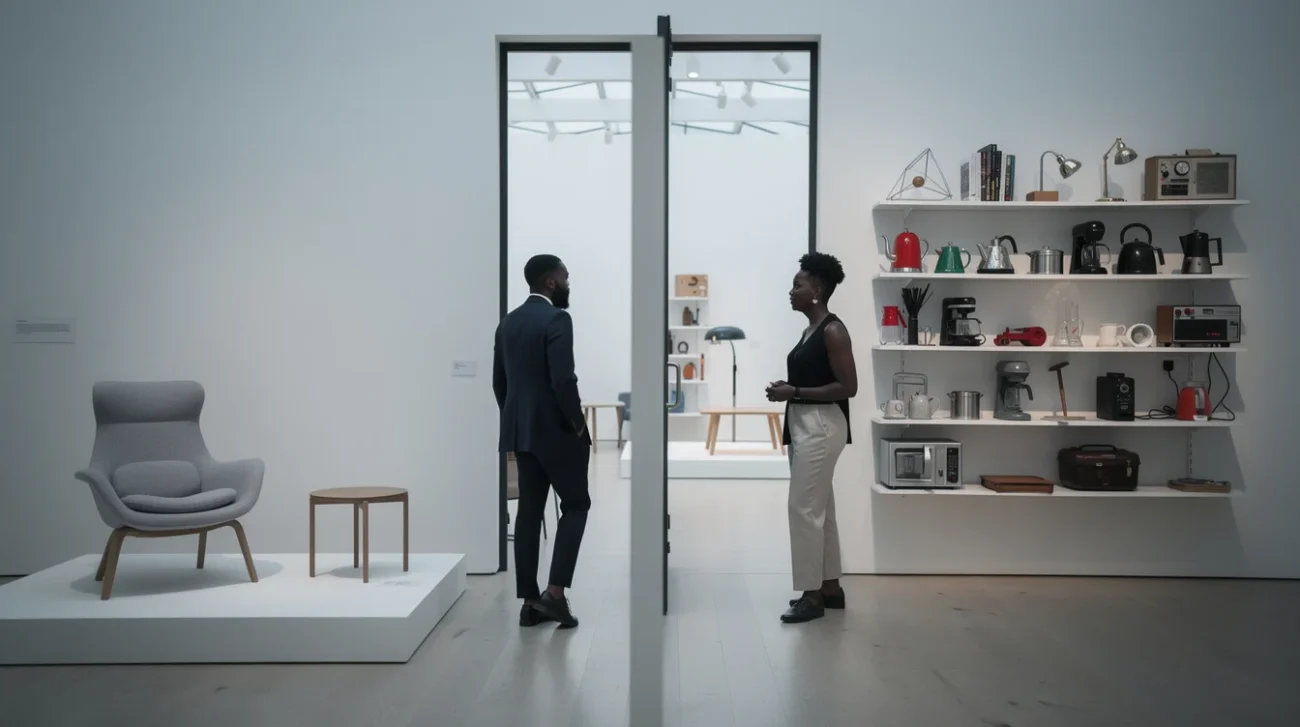
Does Black Design Need Its Own Gallery—or a Different Museum?
A museum can put Black designers in the spotlight without moving the furniture of design history. That is the uncomfortable distinction raised by The Nue Black Aesthetic at London’s Design Museum. Described by Wallpaper as an exploration of the people and histories shaping Black design today, and where it might evolve, the exhibition was listed as running until 8 August 2026. Its premise opens a question bigger than any temporary display: does dedicated visibility change the institution, or simply give its exclusions a more attractive interval?
There are two serious positions here. One argues that a distinct platform is necessary because supposedly universal design histories have never been universal. The other warns that a separate platform can become the mechanism that keeps those histories intact. The designers and projects discussed below are comparative examples, not a claimed exhibition checklist. The argument is about what a show like this can demand from a museum—and what a museum might quietly avoid giving.
PRO: A Dedicated Gallery Can Make the Missing Connections
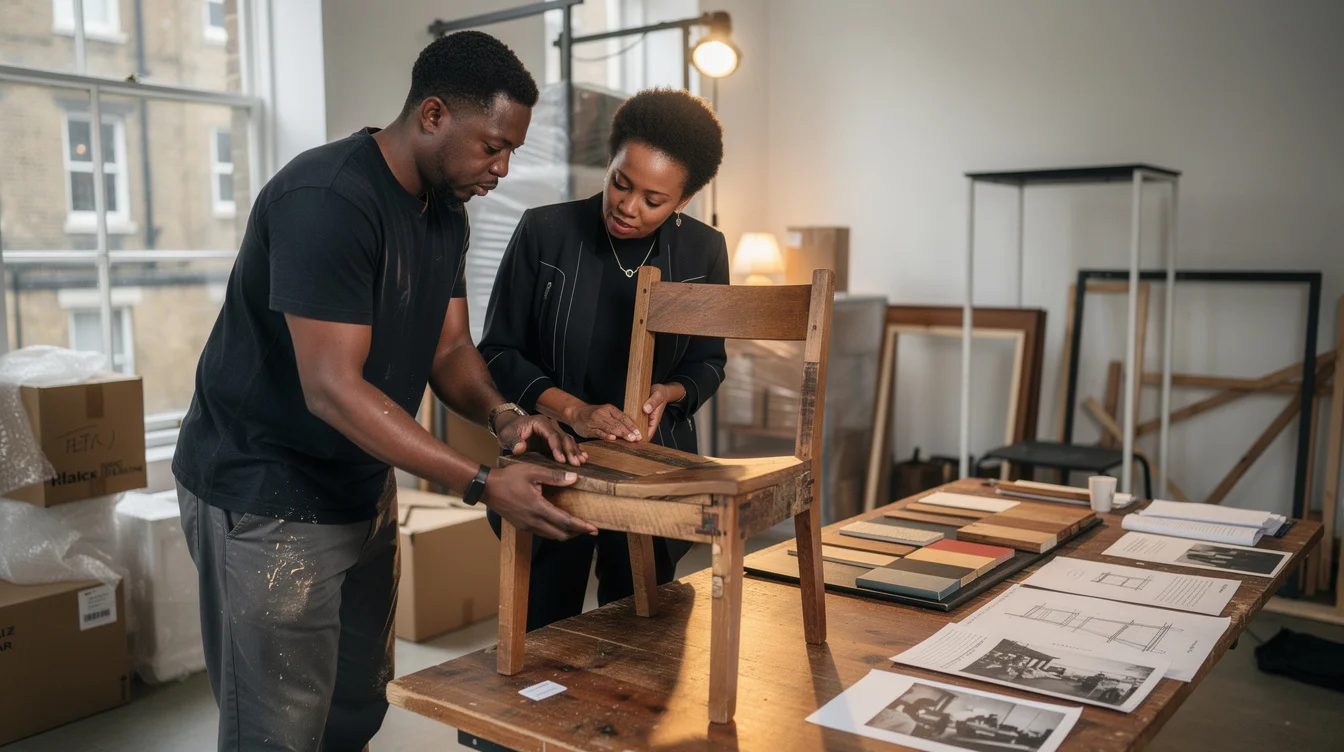
The strongest case for Black design exhibitions is not that Black designers all make similar things. They demonstrably do not. It is that their work has often been separated from the networks, negotiations and historical conditions that make it intelligible. A focused exhibition can reconnect what conventional categories have pulled apart.
Consider Stephen Burks’s Man Made practice, which brings industrial design into dialogue with craft traditions and artisan production. His work raises questions about whose knowledge becomes a premium product, who receives authorship and how making travels between communities and luxury markets. Place that beside Yinka Ilori’s early upcycled chairs, with their connections to Nigerian storytelling and his British upbringing, and the useful connection is not a shared palette. It is how objects carry cultural knowledge that a label reading merely “chair” would suppress.
Such a gallery can also resist the lazy equation of Black design with exuberant colour or decorative pattern. Ini Archibong’s Below the Heavens collection for Sé, for example, offers another vocabulary: sculptural furniture, refined materials and an interest in spiritual and mythological narratives. A serious exhibition makes room for these differences. Its achievement is not to announce a single Black aesthetic but to demonstrate why no single aesthetic could contain the field.
PRO: Concentrated Attention Can Become Institutional Leverage
Visibility is not trivial when institutions have historically distributed it so unevenly. A dedicated exhibition can gather objects, oral histories and archival evidence that might otherwise remain dispersed. It can establish relationships with designers and estates, produce scholarship and give acquisition committees a documented reason to act. The temporary gallery can function as research infrastructure rather than an identity-themed stage.
Charles Harrison makes the stakes concrete. His industrial-design career included a redesign of the View-Master and decades developing consumer products at Sears. His work belongs in accounts of mass manufacturing, retail, ergonomics and everyday American life—not only in a corrective biography of an overlooked Black designer. A focused exhibition could supply the research that makes those wider connections unavoidable.
The same applies to graphic design. Georg Olden’s television graphics at CBS and Emmett McBain’s advertising practice offer routes into broadcast identity, commercial persuasion and the construction of audiences. Bringing these histories together can reveal both exclusion and influence without pretending that every Black practitioner pursued the same political programme.
The condition is follow-through. Before opening night, a museum should identify acquisition priorities, fund archival work and specify where the resulting knowledge will appear after closing. A dedicated platform earns its strongest defence when it becomes a lever for permanent change, not a substitute for it.
CONTRA: The Separate Category Can Protect the Main Story

The danger begins when the institution treats identity as the explanation rather than one dimension of the work. “Black design” then becomes a room visitors enter, while industrial design, modernism, digital culture and architectural innovation continue elsewhere as apparently unmarked categories. Whiteness retains the privilege of looking universal; everyone else receives a heading.
Harrison exposes this problem especially clearly. If his consumer products appear only in a Black-design exhibition, the museum can celebrate his achievement while leaving its account of industrial design untouched. The correction is visible but structurally contained. Inclusion has happened at the level of programming, not historical argument.
Architecture offers a parallel. Norma Merrick Sklarek’s work at Gruen Associates belongs within the history of large architectural practices, technical coordination and collaborative authorship. Presenting her only as an exceptional Black woman overcoming barriers risks making the barriers more legible than her professional expertise. Recognition becomes another form of reduction when biography displaces the work.
A title invoking an aesthetic also creates pressure to find visual coherence where historical complexity would be more honest. Blackness is not a material specification, a formal movement or a reliable guide to a designer’s intentions. An exhibition that forgets this can replace one exclusion with another: rewarding work that looks recognisably “Black” to curators while sidelining work that refuses that expectation.
CONTRA: A New Exhibition Is Cheaper Than Shared Authority
There is also an institutional convenience to temporary visibility. A museum can commission a compelling exhibition, invite a guest curator and generate publicity without changing who controls its acquisition budget or approves its permanent displays. The programme looks transformed while the decision-making structure remains remarkably comfortable.
This is why counting represented designers is insufficient. The harder questions concern authority: who defines significance, who writes the labels, who negotiates loans and who decides what survives in storage or enters the collection? Guest expertise matters, but a short contract does not automatically redistribute long-term power. Nor should Black curators be expected to supply institutional repair as an extra, unpaid layer of their work.
Duro Olowu’s curatorial practice, including the exhibition Seeing Chicago at the Museum of Contemporary Art Chicago, provides a useful comparison. His cross-disciplinary juxtapositions suggest a different ambition from simply adding a demographic section: changing the relationships through which a collection becomes readable. That is an intervention in the museum’s grammar, not just its guest list.
The argument against separation is therefore not an argument for colour-blind display. That would erase the conditions that made separation necessary. It is an objection to museums outsourcing difficult questions to temporary projects while their permanent narratives remain exempt. The category becomes a trap when only the people inside it must explain themselves.
The Test Is What the Museum Does After Closing
Both positions lead to a sharper standard: dedicated visibility is valuable, but institutional consequence is the measure of success. The choice need not be a separate gallery or complete assimilation into existing displays. A museum can sustain focused research while allowing that research to rewrite its broader account of design.
Imagine a permanent display on domestic consumption that places Harrison within the history of mass-market product development. Imagine a section on authorship that uses Burks’s collaborations to interrogate how museums credit designers, manufacturers and makers. Imagine broadcast graphics discussed through Olden as part of the central narrative, not an annual supplement. These are proposals, not claims about the Design Museum’s current displays.
The practical demands are straightforward: publish acquisition outcomes, pay for continuing research, give relevant expertise durable influence and revise permanent interpretation. Purchasing an object is only a beginning if it disappears into storage without study or display.
The Nue Black Aesthetic offers a lens through which to ask these questions; its premise alone cannot establish how far institutional change has occurred. Museums should welcome that scrutiny. If a show claims to consider where Black design might evolve, the institution presenting it must also be willing to evolve.
FAQ
What is The Nue Black Aesthetic?
It is an exhibition at London’s Design Museum exploring the people and histories shaping contemporary Black design and its possible futures. Wallpaper’s account listed it as running until 8 August 2026.
Does Black design describe one visual style?
No. Black designers work across industrial products, graphics, fashion, furniture, architecture and other disciplines. Identity can inform a practice without producing a shared visual language or determining every design decision.
Why have dedicated Black design exhibitions?
They can connect overlooked histories, support scholarship and give designers sustained attention. Their value is strongest when that work influences acquisitions, permanent displays and the museum’s wider interpretation of design.
How can museums avoid tokenistic representation?
They should connect temporary exhibitions to funded research, transparent collecting priorities and lasting curatorial authority. Success requires more than attendance figures: it means changing whose expertise shapes the collection and how its objects are understood.
If Black designers receive a gallery but not the power to rewrite the museum around it, has the institution opened a door—or simply drawn a better-looking boundary?
Get the Mainifesto weekly — curated design debates, speculative ideas and the week's best articles every Saturday.
Editorial Perspectives
Questions and counterpoints developed by the Mainifesto editorial desk to extend the discussion.
Perspective 1
I’m for a dedicated gallery: Black design deserves space on its own terms, not another guest appearance in somebody else’s story. Use that foothold to push repair cultures, material ingenuity and different production models into the museum’s permanent acquisitions—not just its exhibition calendar.
Perspective 2
Without curatorial and budget power, a dedicated gallery is a better-looking boundary. Museums can commission dazzling digital installations while leaving their collecting categories untouched; I’d rather see Black designers help decide what gets acquired, how it’s described and whose work gets preserved.