
Can a Fashion Museum Tell a Story Without a Star?
Can a Fashion Museum Tell a Story Without a Star?
A spectacular dress arrives at a museum with its publicity already attached. There is a designer, a collection, perhaps a famous body that wore it. A washed-out T-shirt arrives with a harder question: why should anyone look? The answer could change what fashion museums consider worth knowing.
As reported by Surface, the Metropolitan Museum of Art’s Costume Institute has replaced its canceled John Galliano exhibition with a show about everyday clothes. That reported change establishes a curatorial pivot, not proof of its outcome. It does not, by itself, tell us whether wearers will speak, whether production will become legible, or whether ordinary garments will receive the same theatrical treatment previously reserved for exceptional ones.
The stakes nevertheless exceed a programming substitution. Can a museum move from celebrating who designed a garment to explaining who made, wore, washed, altered and eventually discarded it? The strongest argument for the shift is that clothing becomes more interesting when authorship is distributed. The strongest argument against it is that museums are exceptionally skilled at turning distributed life back into singular, desirable objects.
PRO: The Wearer Can Become the Protagonist
The designer retrospective has an efficient narrative engine: a gifted individual develops a recognizable language, overcomes obstacles and produces masterpieces. Galliano’s theatrical work fits that engine almost too well. Everyday clothing offers a less predictable structure. Its story can begin after purchase, when an object encounters a body, a job, a household and the repetitive demands of survival.
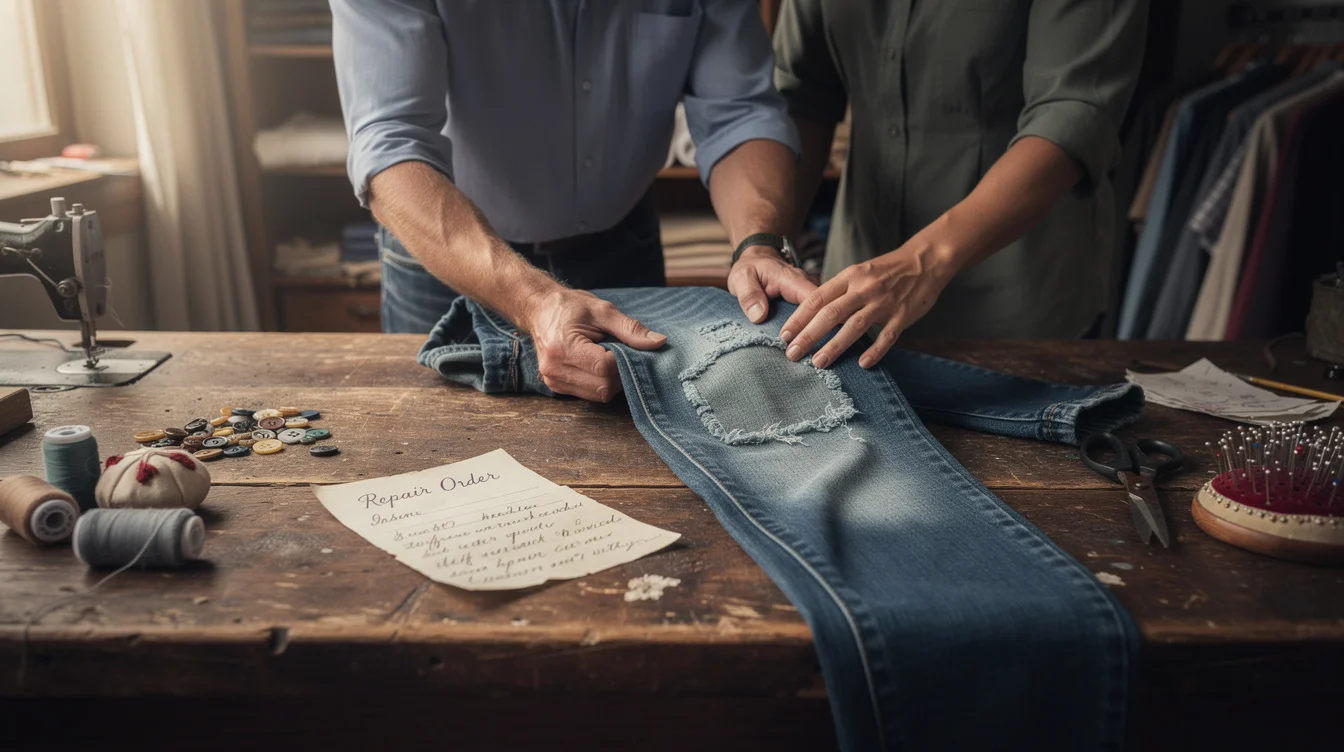
Consider a pair of Levi’s 501 jeans. A conventional label might identify the manufacturer, date and cotton construction. A wearer-centered display could instead trace a shortened hem, a patched knee and a waistband let out after pregnancy. Those changes are not supplementary anecdotes. They are design decisions made outside the officially credited design process. With the owner’s consent, photographs and recorded testimony could establish why each intervention happened.
There is an institutional precedent for making familiar garments carry larger arguments. MoMA’s 2017 exhibition Items: Is Fashion Modern? examined 111 clothing and accessory types, from the white T-shirt to the sari. Its typological approach demonstrated that fashion history need not depend on a succession of named geniuses.
The next step is more demanding: preserve differences between actual wearers rather than allowing one representative garment to stand for millions. A cleaner’s polo shirt and a collector’s vintage polo may share a silhouette while belonging to radically different economies of time, status and choice.
PRO: Display Design Can Make Maintenance Visible
Maintenance is where the supposedly finished design keeps being redesigned. Mierle Laderman Ukeles’s 1969 Manifesto for Maintenance Art challenged the hierarchy separating celebrated creation from the labor that sustains it. Applied to fashion exhibitions, that challenge asks why the sketch gets a spotlight while laundering, pressing and repair remain backstage.
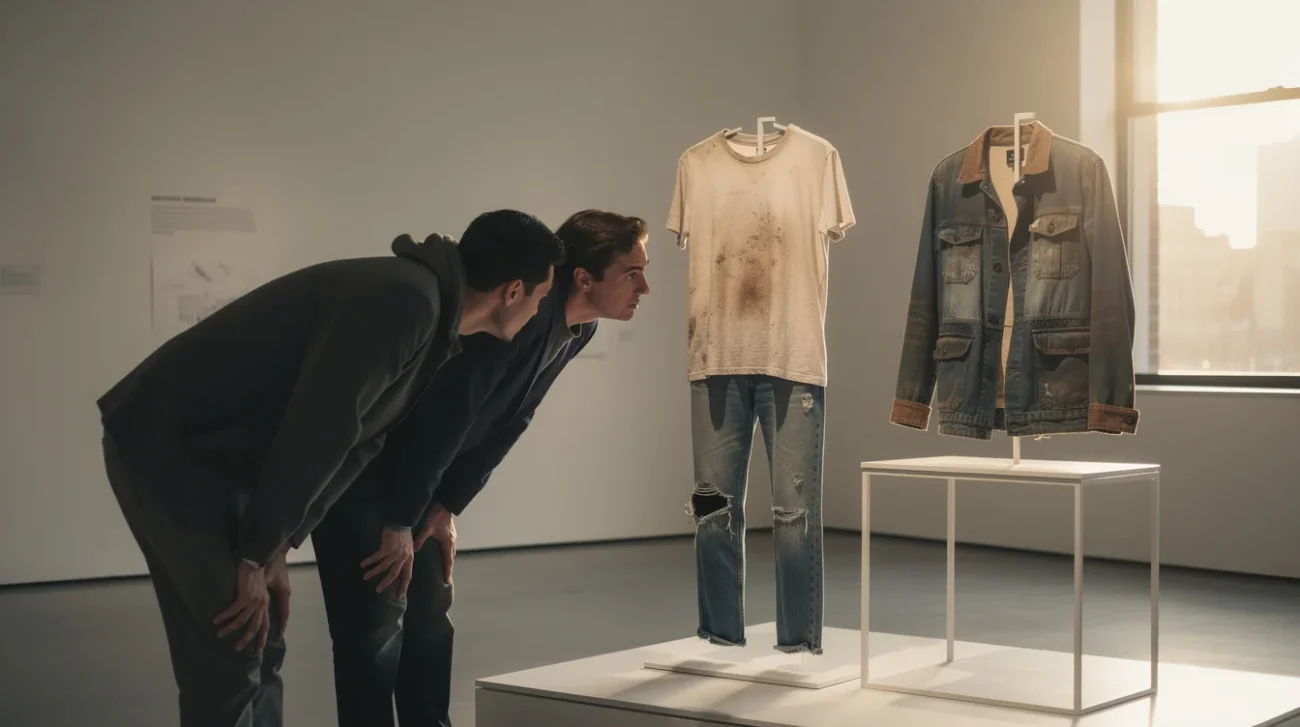
A convincing gallery would not simply decorate itself as a laundry. It would make maintenance readable through evidence. A shirt could appear alongside its replacement buttons, a repair invoice and photographs documenting collar wear. A carefully lit, low-angle mount could expose a reinforced seam without flattening the garment into an abstract textile. Transcripts should accompany audio testimony so that the story does not depend on hearing, headphones or a functioning screen.
Mass production also becomes narratable through selection. Display three apparently identical T-shirts with documented differences in fiber, stitching, price and production route. Where records exist, identify the factories and workers involved; where they do not, make that absence explicit. Cheapness then stops looking like an intrinsic property of cotton.
Such decisions can produce genuine narrative authority because they change what counts as evidence. The museum no longer asks a wearer merely to add emotional warmth to a designer’s achievement. It allows use, repair and production to determine the exhibition’s sequence and its central questions.
CONTRA: The Museum Can Make Anything Into a Trophy
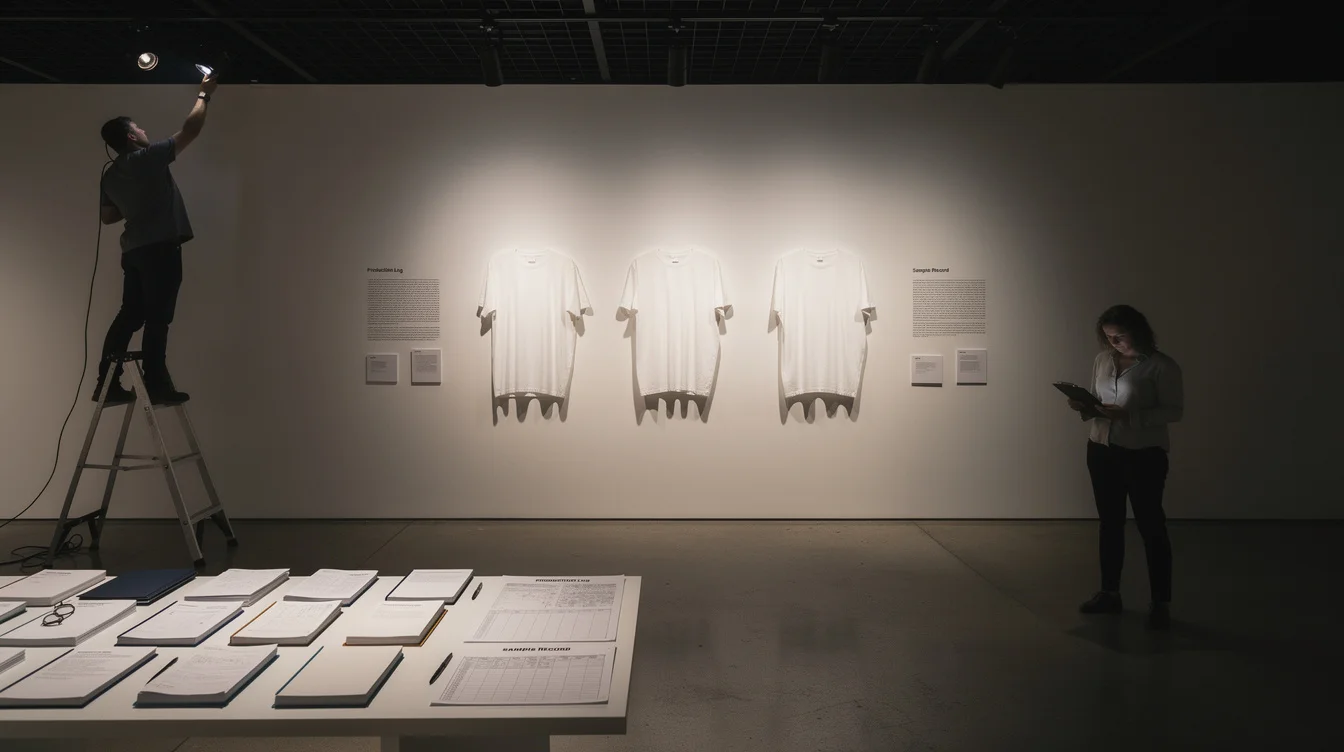
But a worn shirt under immaculate lighting is still a worn shirt under immaculate lighting. Museums do not merely recognize value; their architecture, conservation practices and publicity manufacture it. Remove the celebrity designer and the institution can become the celebrity instead, congratulating itself for discovering the extraordinary within the ordinary.
The Costume Institute’s Sleeping Beauties: Reawakening Fashion in 2024 used sensory and technological interpretation to address garments whose fragility limits direct encounter. That ambition exposes a broader dilemma: mediation can deepen understanding, but it can also become the experience visitors remember instead of the garment’s history. An everyday-clothing exhibition could easily exchange couture drama for immersive laundry-room drama.
Martin Margiela’s work supplies another warning. His use of secondhand materials and exposed construction challenged conventional luxury, yet those gestures also became highly recognizable signs of authorship. Aesthetic refusal is not immune to prestige. Neither is a patch, a stain or a visibly repaired sleeve.
Selection creates the same problem. The beautifully darned jumper photographs better than the unremarkable acrylic fleece. The jeans with a compelling biography beat the trousers whose owner left no archive. If curators choose only ordinary objects with extraordinary stories, the blockbuster logic survives intact. Its new hero is authenticity, and its supporting cast remains everyone too repetitive, undocumented or visually inconvenient to display.
CONTRA: Visibility Is Not the Same as Authority
Giving workers and wearers labels does not necessarily give them power. Who chooses the quotation? Who owns the recording? Can a lender withdraw an intimate account once exhibition publicity begins? A museum can display a garment worker’s testimony while retaining complete control over its framing. That is representation, but it is not shared authorship.
The distinction matters particularly when ordinary clothing becomes evidence of hardship. A delivery rider’s weathered jacket can illuminate bodily exposure and precarious work. It can also become a photogenic emblem of someone else’s vulnerability. Compensation, informed consent and opportunities to review interpretation are therefore curatorial mechanisms, not administrative extras.
Nor can a handful of garments automatically explain industrial scale. The Victoria and Albert Museum’s 2018 exhibition Fashioned from Nature connected fashion to materials, extraction and environmental consequences. That broader frame is essential: a single cotton shirt cannot visibly disclose water use, agricultural conditions or subcontracting arrangements. Those claims require research and records, not suggestive scenography.
There is also a legitimate case for the designer exhibition. Concentrating on one practice can reveal technical invention with exceptional precision. Galliano’s cutting and historical references warrant analysis; rejecting the star format does not make those subjects trivial. The danger is replacing one simplification with another: genius explains everything, then ordinary life explains everything. Neither proposition can carry fashion’s full complexity.
The Test Is Who Controls the Story
The Met’s reported replacement should be judged neither as an automatic democratization nor as an inevitable retreat from ambition. Its significance will depend on curatorial decisions that cannot be inferred from the announcement: which objects are selected, whose records accompany them and whether contributors can meaningfully shape their interpretation.
A useful test is whether the exhibition’s argument would survive without its most photogenic installation. Another is whether an anonymous manufacturer, a home sewer or a frequent wearer can contradict the institution’s preferred account. Shared authority becomes real when it creates friction, not merely when it supplies touching quotations.
Everyday clothing does not need to be rescued from boredom by becoming spectacular. It needs to be placed within relationships that explain its existence. The radical move is not putting a T-shirt where a couture gown used to stand. It is abandoning the expectation that either object can tell the whole story alone.
FAQ
What is changing in the Met’s fashion exhibition program?
According to Surface, the Costume Institute has replaced its canceled Galliano exhibition with a show about everyday clothes. That shift changes the announced subject; it does not yet establish how successfully the exhibition will redistribute attention or authority.
Can everyday clothing sustain a major museum exhibition?
Yes. Garments can connect bodily experience to manufacturing, identity and environmental conditions. MoMA’s Items: Is Fashion Modern? offers a precedent for organizing fashion around familiar clothing types rather than a single designer.
How can display design give wearers genuine narrative authority?
Wearers should help determine interpretation, not just supply quotations. Consented testimony, documented alterations, accessible presentation and meaningful opportunities to review their contributions can make lived experience structural to the exhibition.
Does avoiding spectacle mean making an exhibition visually dull?
No. Precise lighting, revealing mounts and thoughtful comparisons can create compelling encounters. The distinction is whether visual drama helps visitors understand a garment’s relationships or replaces those relationships with an atmosphere.
If the star designer disappears but the museum still decides whose ordinary life deserves a spotlight, how much has really changed?
Get the Mainifesto weekly — curated design debates, speculative ideas and the week's best articles every Saturday.
Editorial Perspectives
Questions and counterpoints developed by the Mainifesto editorial desk to extend the discussion.
Perspective 1
I’m for the move away from the star designer: everyday clothes can carry stories a blockbuster retrospective barely registers. Recorded testimony could let wearers challenge the museum’s labels, but only if they control the edit—otherwise the touchscreen is just another display case.
Perspective 2
I don’t buy this as a redistribution of narrative power: the museum still controls the budget, the selection and the address. If a garment worker in Dhaka gets a label while a donor gets a room, replacing Galliano with ordinary clothes changes the content, not the hierarchy.
Perspective 3
The everyday is hardly a new curatorial discovery; social-history museums have exhibited it for generations. In Barthes’s terms, the museum still turns clothing into a system of signs, so removing the designer does not remove the author. I’d look at who gets to write the labels before celebrating the disappearance of the star.