

Tiny Earbuds, a Big Right-to-Repair Test
Tiny Earbuds, a Big Right-to-Repair Test
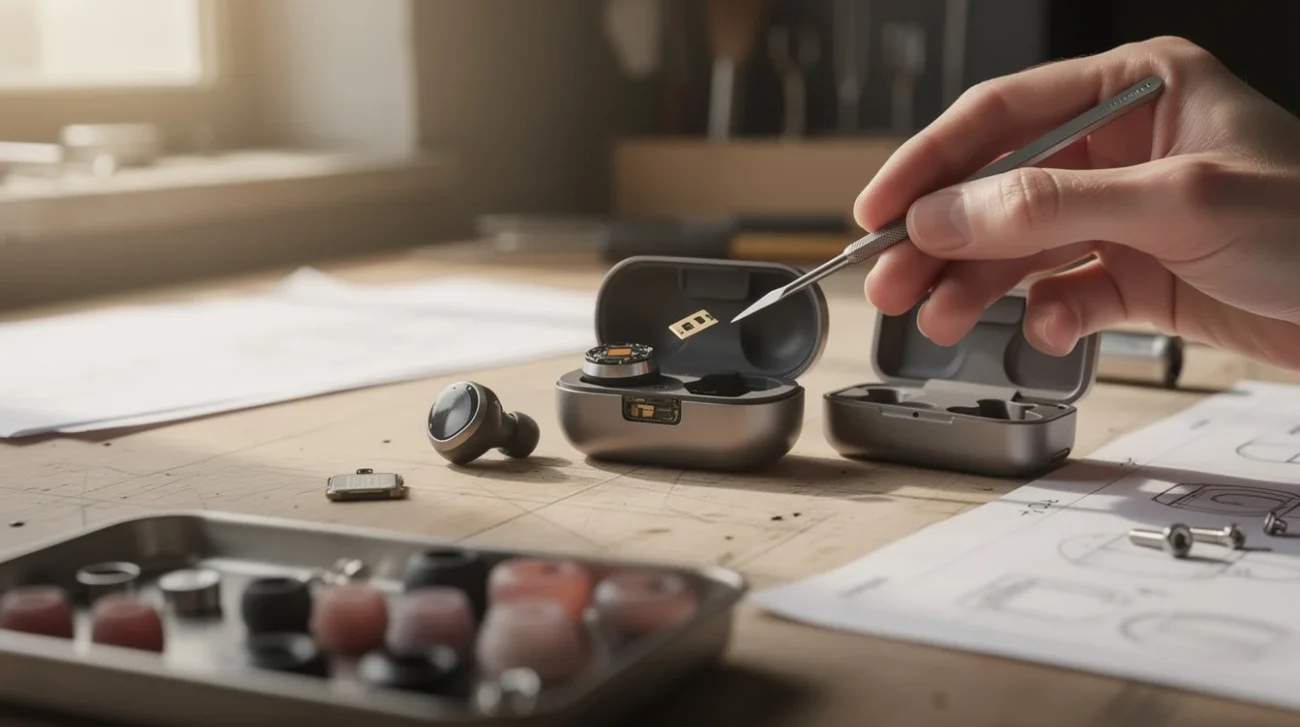
The most consequential feature of an earbud might be the one you never hear: a way inside. Wallpaper’s roundup of new earbuds places repairable Fairbuds alongside products competing through fit, finishes and features, including smart note-taking cases. That juxtaposition exposes a fault line in product design. One direction adds capabilities; another questions why a sophisticated object should become waste when its battery deteriorates. Neither miniaturisation nor convenience is the enemy. But treating a predictable component failure as the death of an entire product is a design decision, not a law of physics.
PRO: A battery should not determine an earbud’s lifespan
Fairphone’s Fairbuds, introduced in 2024, make an unusually direct proposition: the batteries in both the earbuds and their charging case can be replaced. The company identifies seven replaceable parts and provides repair guidance and spare parts. This is not an abstract commitment to circularity. It changes what an owner can do when a product that still sounds perfectly good no longer lasts through a commute.
Battery ageing is particularly consequential in true-wireless audio. Small cells have limited energy reserves, and frequent charging gradually reduces their usable capacity. The drivers, housing and much of the electronics may remain functional after the battery becomes frustrating. Permanently bonding those elements together makes their service lives artificially dependent on the shortest-lived component. Replaceable batteries separate maintenance from replacement.
This belongs to a longer design argument. Dieter Rams’s principle that good design is long-lasting should apply to the internal architecture, not merely a restrained exterior. Framework’s modular laptops offer a contemporary parallel: access matters because it gives working components a chance to survive another component’s failure. Earbuds compress that argument into an object smaller than a thumb.
The achievement is not that every part becomes endlessly repairable. It is that a common failure stops being terminal. For a category built around sealed, polished surfaces, that modest shift is genuinely disruptive: the product acquires a future beyond its first battery.
PRO: Access can become a design discipline, not an apology
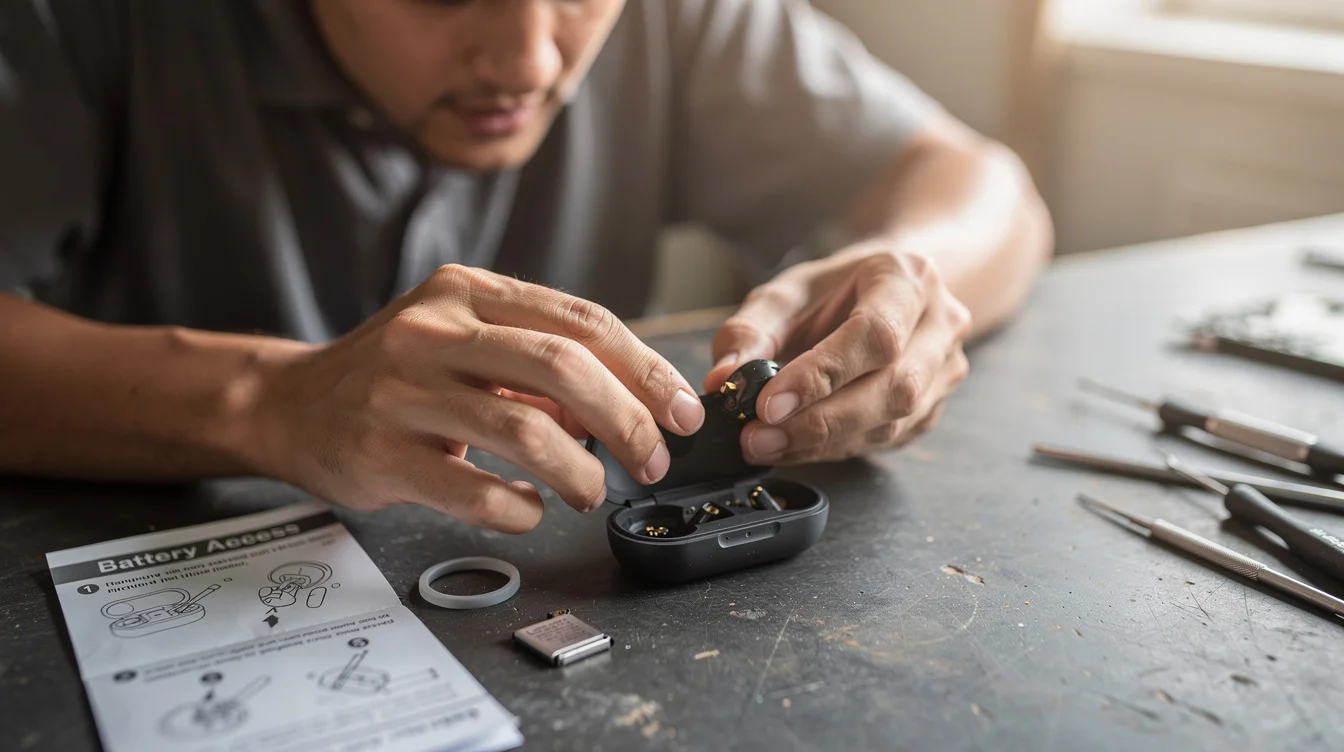
Repairability does not require making an earbud resemble workshop equipment. It requires deciding early where access belongs. Fairbuds use a removable silicone ring as part of the route to their battery compartment. That is a different architectural starting point from enclosing everything first and treating disassembly as somebody else’s problem. The interface for maintenance becomes part of the product.
Moisture protection is not automatically incompatible with this approach. Fairbuds carry an IP54 rating for the earbuds: protection against dust ingress sufficient to avoid harmful interference, and against splashing water, rather than immersion. The important lesson is coexistence, not invulnerability. A product can offer both a defined level of environmental protection and access to a replaceable battery.
Designers have several tools for negotiating that coexistence: protected access points, replaceable sealing elements, controlled fastening pressure and clear assembly instructions. Each requires space and validation. But engineering caution should not become design paralysis. None should be dismissed simply because adhesive creates a cleaner-looking seam. A hidden seam is not inherently better design than a legible, dependable one.
There is also an aesthetic opportunity. The Fairphone smartphone programme has already challenged the assumption that maintainability must remain invisible to consumers. Earbuds could do the same through understandable joints and maintenance instructions that feel as considered as the charging animation. The provocative proposition is that opening a product successfully should count as a premium experience, not evidence that its original design has been compromised.
CONTRA: The ear is not an empty space for modularity
The opposing case deserves more than dismissal as corporate convenience. An earbud is a battery-powered acoustic system worn against irregular, sensitive anatomy. Its enclosure must accommodate a driver, microphones, antenna, processing electronics and charging contacts while managing weight, retention and pressure. A battery door, contact assembly and sealing arrangement consume volume that cannot simply be wished away.
More volume can change how far the housing protrudes or where it presses against the outer ear. Greater mass can affect stability during movement. Those consequences vary between users, which makes a single claim of comfortable fit suspicious. Apple’s AirPods Pro use interchangeable silicone tips, while Sony’s LinkBuds introduced an open-ring driver to keep the ear connected to surrounding sound. These are different responses to a stubborn fact: the body resists standardisation.
Acoustic performance complicates matters further. Internal air volumes, vents and the seal at the ear help determine bass response and isolation. A service opening does not inevitably damage sound, but it becomes another feature whose geometry and assembly tolerances must be controlled. An incorrectly reseated part could introduce rattles, leakage or an unreliable electrical connection.
Repair advocates should therefore reject easy equivalence. A maintainable earbud that causes discomfort after twenty minutes has not solved the category. It has exchanged one reason for abandonment for another. Service life begins with a product people can actually bear to use.
CONTRA: A removable battery is only the beginning
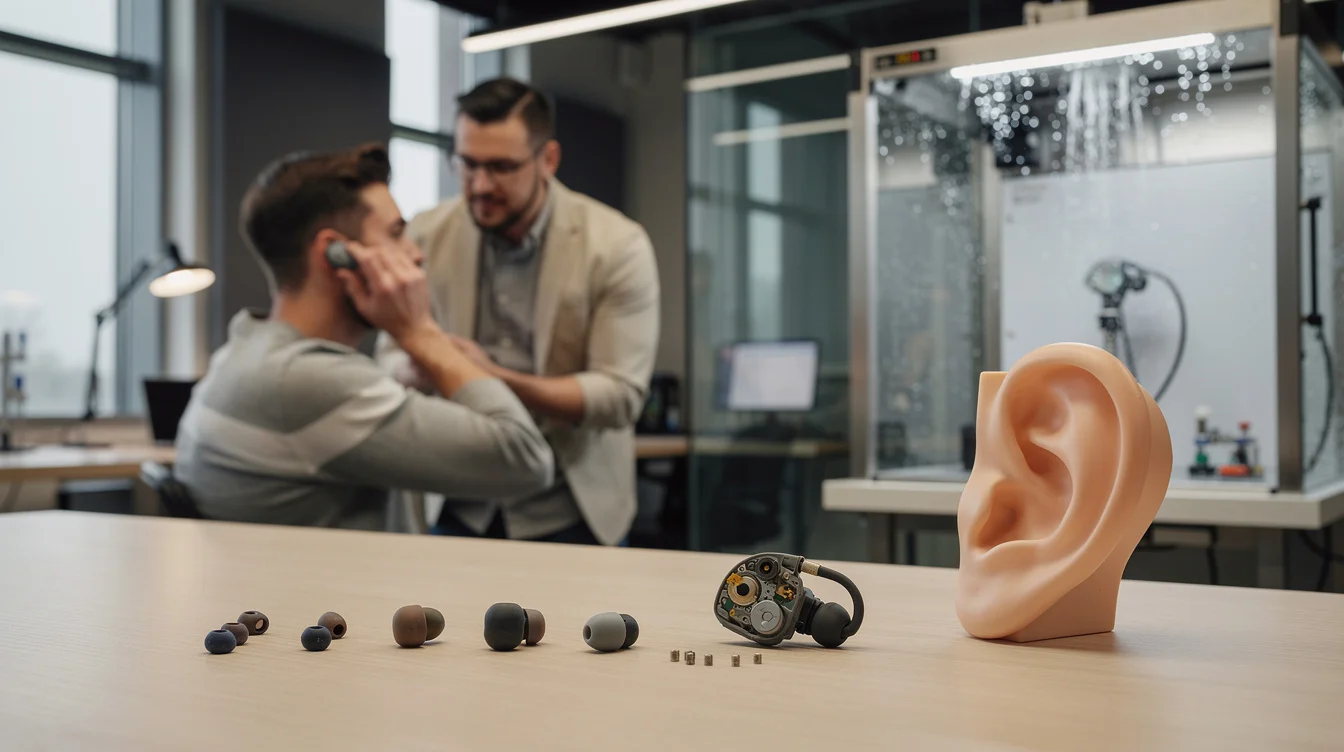
Access is an engineering property; successful repair is an entire service system. A replaceable battery means little if the correct spare is unavailable, shipping costs overwhelm its value or instructions make a delicate procedure intimidating. Fairbuds establish a useful architecture, but their long-term achievement must be judged through continuing parts availability and support, not just an impressive launch proposition.
Moisture protection also demands scrutiny after maintenance. A laboratory ingress rating describes performance under specified test conditions; it is not a promise that every user-reassembled product will retain that protection indefinitely. Sweat, dirt and repeated handling create additional challenges. Designers should make seating and closure easy to verify, and explain when a sealing component needs inspection or replacement.
Repairability itself needs precise language. iFixit’s teardown of Samsung’s Galaxy Buds Live showed that their batteries could be accessed and replaced, demonstrating that construction choices vary across the category. But technical accessibility is not equivalent to a manufacturer-supported consumer repair programme. Tools, skill, replacement-part sourcing and the risk of damage all matter.
Nor does modularity automatically establish environmental superiority. Extra housings, connectors, packaging and spare-part logistics have impacts. Their value depends partly on whether maintenance actually extends use. Fairbuds deserve credit for changing the terms of competition, not exemption from evidence. The demanding benchmark is years of comfortable, supported operation, including software compatibility—not the mere presence of an opening. Right-to-repair design must prove that access becomes longevity.
FAQ: What repairable earbuds really change
What makes Fairbuds different from conventional wireless earbuds?
Fairbuds provide replaceable batteries in both earbuds and the charging case, alongside spare parts and repair instructions. The key distinction is supported maintenance: owners have a route to address battery deterioration without replacing the complete audio system.
Can repairable earbuds still resist sweat and rain?
Yes, repair access and moisture protection can coexist. Fairbuds have an IP54 rating for the earbuds, covering splashing water rather than immersion. Correct reassembly matters, and owners should follow the manufacturer’s care instructions rather than interpret the rating as permission to swim or shower.
Does a replaceable battery necessarily make earbuds uncomfortable?
No. It introduces packaging constraints, but comfort depends on the complete design: weight distribution, housing shape, tip selection and individual anatomy. The meaningful comparison is an extended fit test across different ears, not an assumption that either smaller or more repairable is automatically better.
How should buyers judge long-term value?
Check battery and spare-part prices, repair instructions, warranty terms and the manufacturer’s stated support commitments. Also consider fit and software dependence. A product is a stronger long-term purchase when it remains comfortable and functional, and its likely failures can be addressed affordably.
If a slightly larger earbud could stay useful through several battery replacements, how much compactness would you trade for the right to keep it?
Get the Mainifesto weekly — curated design debates, speculative ideas and the week's best articles every Saturday.
Editorial Perspectives
Questions and counterpoints developed by the Mainifesto editorial desk to extend the discussion.
Perspective 1
I’ll take a slightly larger earbud over another sealed unit headed for the bin. But repairability needs a supply chain: if replacement batteries can’t reach Beirut affordably, the removable cover is only half a solution.
Perspective 2
I wouldn’t trade fit and moisture protection for a replaceable battery; extra volume matters when the enclosure sits against your ear for hours. Why accept that compromise before exhausting enclosure geometry and component layout as ways to make repairability fit?
Perspective 3
The industry has made a Faustian bargain on our behalf: exquisite miniaturisation in exchange for an expiry date. I’d accept a little more bulk, but spare me the moral halo until the replacement battery is as easy to buy as the earbuds.