Cunningham Pier: Waterfront Renewal or Pay-to-Stay?
A Waterfront Destination—or a Waterfront You Have to Buy Into?
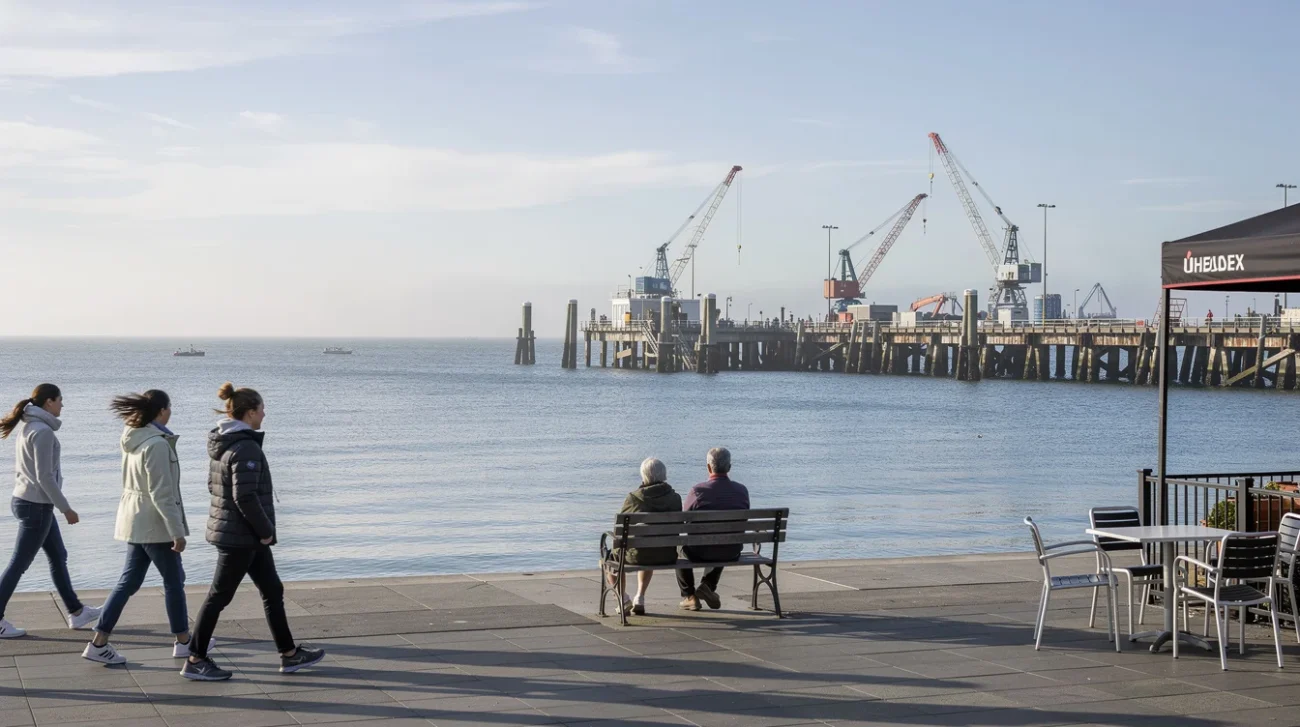
A waterfront can welcome you in a rendering and discourage you in real life. The difference is rarely the paving. It is whether you can arrive without a reservation, stay without ordering and return after the restaurants close. SOM’s proposed redevelopment of Cunningham Pier in Geelong, Victoria, deserves to be judged against precisely that distinction.
Dezeen’s 4 November 2026 report describes a luxury waterfront development on the historic pier, culminating in a rounded high-rise. That establishes the architectural proposition, not the public bargain. The supplied reporting does not establish binding access rights, operating hours or how much space would remain available without spending. Those are unresolved questions here, not evidence that access has already been denied.
The argument has two credible sides: investment could rescue and extend a waterfront asset; it could also turn the shoreline into an amenity whose public character lasts only as long as it suits the operator.
PRO: Private Investment Can Fund a Public Waterfront
The strongest case for the Cunningham Pier redevelopment is not that Geelong needs another luxury destination. It is that marine infrastructure is expensive, exposed and unforgiving. Piles, decks, corrosion protection and accessible routes require sustained expenditure. A pier cannot survive indefinitely on affection for its industrial past. As with the question of whether rebuilding after floods delivers lasting recovery, renewal should be assessed against future risks, not just present repair needs. Private development can create a revenue stream capable of supporting renewal and long-term maintenance—provided that obligation is actually secured.
There are useful precedents for treating commercial value and public landscape as mutually supporting rather than automatically antagonistic. Sydney’s Barangaroo pairs substantial commercial redevelopment with a major public headland landscape, designed by PWP Landscape Architecture with Australian collaborators. Its lesson is not that premium property guarantees civic generosity. It is that a recognisable, substantial public landscape can be established as a distinct component of a larger development, rather than left as the leftover space between entrances.
For Geelong, the opportunity would be a continuous route to the water, comfortable places to stop, accessible toilets and seating that belongs to no business. Wind protection matters on Corio Bay; so does somewhere to sit outside a restaurant’s service area. A family eating food brought from home should be as legitimate a user as a guest buying dinner.
The rounded tower could help finance that offer. But its contribution would need to be demonstrated through a funded maintenance plan and enforceable delivery commitments—not inferred from the prestige of SOM’s name.
PRO: A Destination Can Add Civic Life, Not Just Consumption
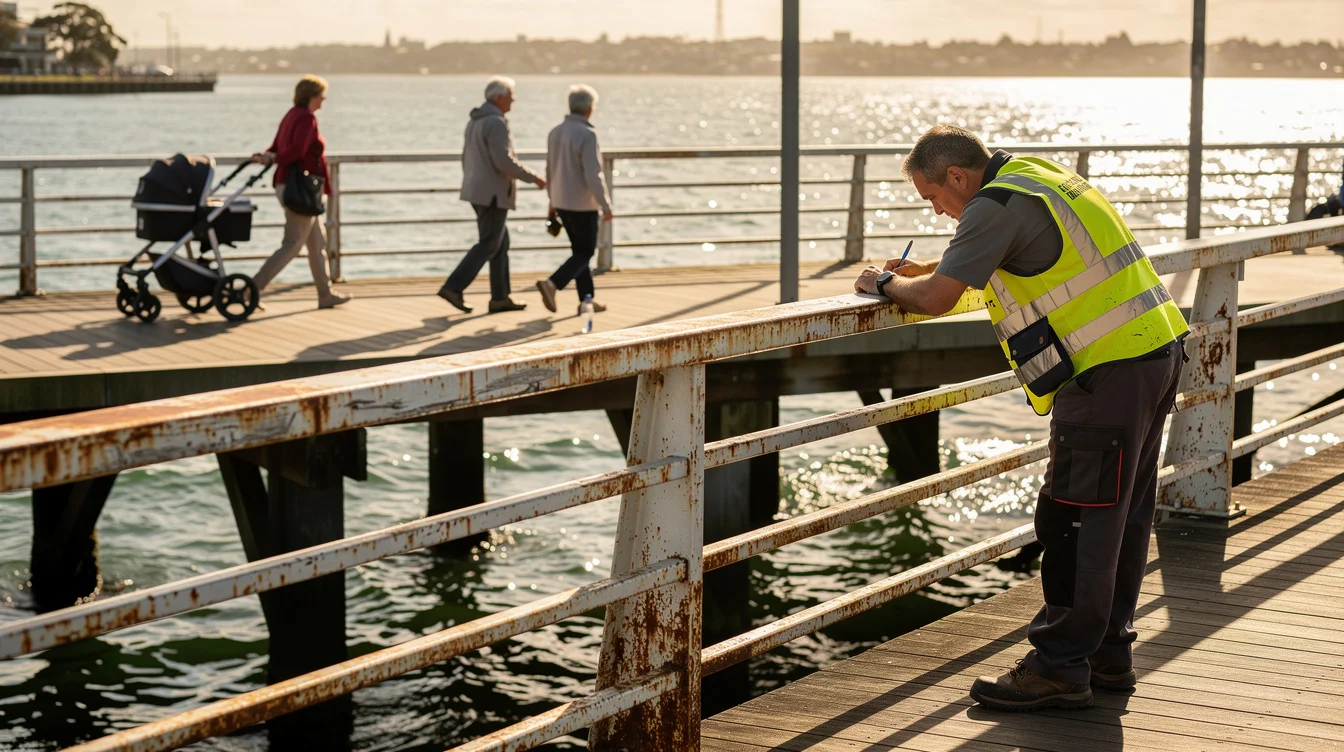
A pier with activity throughout the day can be more useful than an isolated walkway that empties after lunchtime. Commercial uses can bring lighting, staff presence and foot traffic. They can support the ordinary confidence that makes a waterfront attractive to older residents walking alone or parents returning with children at dusk. None of those benefits is automatic, but neither should they be dismissed as marketing by definition.
Snøhetta’s Oslo Opera House offers a relevant design principle, despite being a very different institution and funding model: a major destination can provide an experience that does not require purchasing its principal product. Walking its roof is not the same transaction as attending a performance. Cunningham Pier should face an equivalent test. Can someone enjoy its most compelling waterfront experience without becoming a customer?
A strong approval package could make the answer yes. It could secure the public route before commercial occupation, require maintenance funding and identify the noncommercial spaces on approved plans. An easement, binding agreement or another appropriate instrument could protect access through future ownership changes, subject to Victorian legal and planning advice.
Opening hours should also be a negotiated civic asset. A presumption of round-the-clock access to the principal route, with narrowly defined safety exceptions, would be stronger than vague promises of extended availability. The pro-development position becomes persuasive when investment buys Geelong durable public rights, not merely a more attractive invitation.
CONTRA: A Promenade Is Not a Public Right
The opposing case begins with a distinction architecture publicity habitually blurs: being allowed somewhere is not the same as having a protected right to be there. A broad deck populated with casually dressed figures can still operate as private circulation. Its owner might control opening hours, introduce event closures or interpret quiet, non-paying occupation as undesirable. Whether that could happen at Cunningham Pier depends on the eventual legal arrangements; a rendering cannot answer it.
New York’s privately owned public spaces demonstrate why the distinction matters. Developed through a planning system that exchanges additional development capacity for public amenities, these spaces range from genuinely useful urban rooms to environments whose public purpose is difficult to recognise. Jerold S. Kayden’s research on the system made a crucial point: the existence of an obligation and the quality of its delivery are separate questions.
At Geelong, scrutiny should therefore extend beyond whether a promenade appears on a site plan. Who must keep it open? Who can enforce that obligation? Can access rules be changed unilaterally? Does a purchaser inherit the same duties? What happens when maintenance costs rise or a waterfront event becomes commercially attractive?
A public route that disappears whenever private revenue offers a better return is not a reliable civic asset. Approval conditions need precise closure rules, a complaints mechanism and consequences for noncompliance. Otherwise, the city risks exchanging an enduring development entitlement for a public benefit that is negotiable every weekend.
CONTRA: Luxury Can Exclude Without Installing a Gate
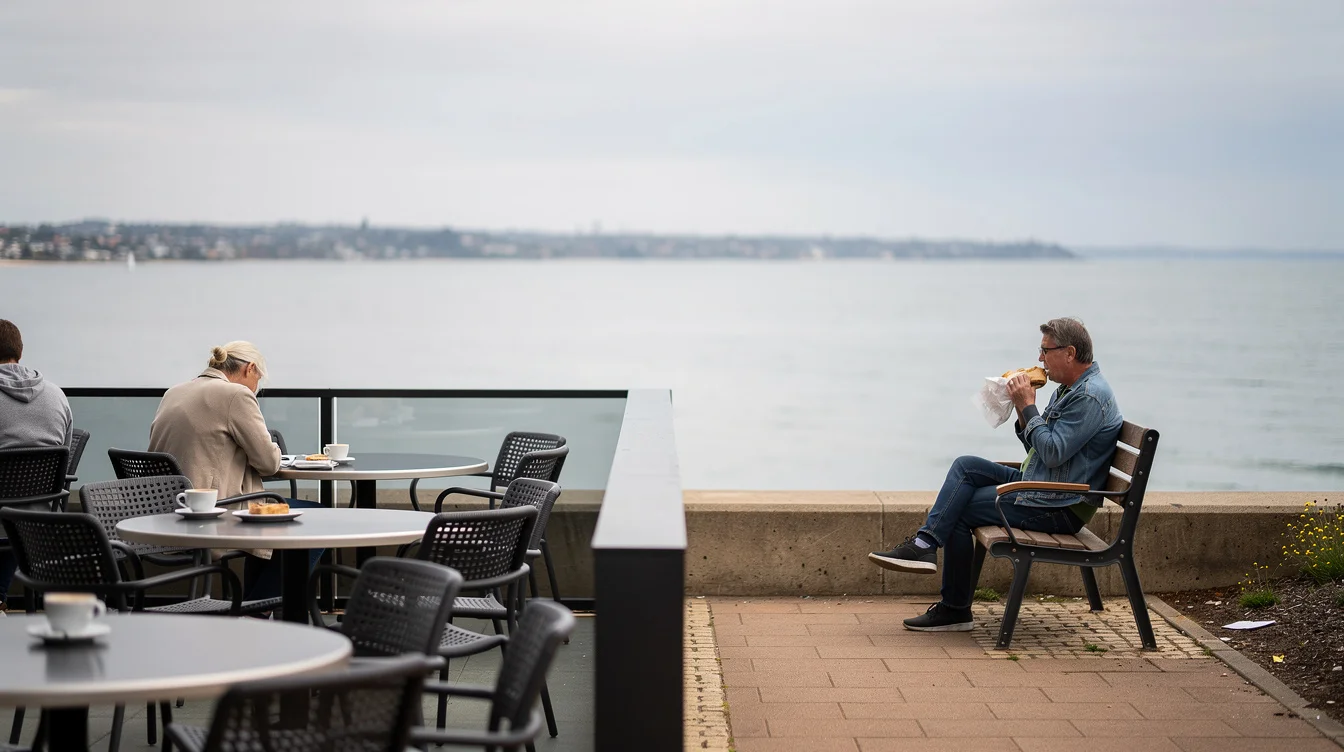
Even legally open space can make noncustomers feel unwelcome. Restaurant tables can consume the best-protected edge. Host stations can make circulation resemble an entrance queue. Security patrols can treat a teenager sitting alone differently from a hotel guest. These are potential operating risks, not established features of SOM’s proposal. They deserve attention because exclusion often arrives through management rather than architecture.
London’s South Bank offers a useful counterpoint: its civic value comes partly from the possibility of walking, watching and lingering between cultural and commercial destinations. That experience is not reducible to the number of establishments along the route. At Cunningham Pier, measuring public benefit by promenade length alone would similarly miss the point. A narrow corridor past premium terraces is not equivalent to a generous place to spend an afternoon.
The assessment should publish the usable area reserved for noncommercial occupation, excluding circulation bottlenecks, service access and hospitality seating. It should show where free seating receives shelter and views, whether toilets require a purchase, and how people using wheelchairs reach the same destinations as everyone else. Comfort should also include sensory choice for neurodivergent users, with quieter places to pause away from busy hospitality areas. Access to a lesser edge is not equal access.
The tower also needs scrutiny beyond its rounded silhouette: wind conditions, shadows, servicing and crowd management can determine whether the deck is comfortable. Historic character matters too. Geelong should not accept the pier’s maritime identity repackaged as atmosphere while its everyday civic role becomes subordinate to premium consumption. Luxury is a market position, not a public-access policy.
The Verdict: Approve Rights, Not Renderings
The pro case succeeds if private capital produces public benefits that are spatially generous, legally durable and independently enforceable. The contra case wins if access remains discretionary, noncommercial space is residual or operating rules quietly privilege customers.
Before endorsement, Geelong should be able to inspect an access plan that identifies routes, hours, permitted closures, free facilities, enforcement responsibilities and maintenance funding. It should distinguish what is guaranteed from what is merely intended. Consultation should include people who use the waterfront without spending: walkers, teenagers, anglers, carers and residents on limited incomes.
SOM can design an appealing destination. The harder task belongs to the developer and public authorities: making sure the waterfront remains somewhere you can belong without buying anything. That is not an obstacle to good architecture. It is one of its tests.
FAQ
What is proposed for Cunningham Pier?
According to Dezeen’s 4 November 2026 report, SOM proposes transforming the historic pier in Geelong, Victoria, into a luxury waterfront destination culminating in a rounded high-rise. The supplied source context does not establish binding public-access terms or opening hours.
Does private ownership prevent genuine public access?
No. Private ownership can coexist with enforceable public-access obligations. What matters is the legal instrument, its duration, who can enforce it and whether it survives changes of ownership. Attractive landscaping alone provides none of those protections.
Should the whole development be open 24 hours?
Not necessarily. Businesses and internal facilities can have their own hours. The principal public waterfront route should be assessed separately, with a presumption of continuous access and any safety-related restrictions clearly defined, justified and monitored.
How should noncommercial waterfront space be measured?
Assess usable area, comfort and location—not just total deck size. Count places where people can sit and linger without purchasing, then examine shelter, accessible routes, free facilities and whether commercial furniture or events can displace those uses.
What should Geelong refuse to trade away, even if protecting it makes the Cunningham Pier redevelopment less profitable?
Get the Mainifesto weekly — curated design debates, speculative ideas and the week's best articles every Saturday.
Editorial Perspectives
Questions and counterpoints developed by the Mainifesto editorial desk to extend the discussion.
Perspective 1
I’m in favour of SOM’s proposal: private capital can help build a civic waterfront, and purity about funding is a rather sterile position. But Lefebvre’s right to the city is not a right to browse boutiques—Geelong should insist on enforceable public access, including the freedom to linger without buying anything.
Perspective 2
I’m against making luxury investment the organising principle of Cunningham Pier; I’ve seen enough Gulf waterfronts where public space functions as a customer-acquisition funnel. Geelong should refuse any deal that lets an operator control opening hours, exclude non-customers or close the waterfront for private events.
Perspective 3
Show me where a family can sit out of the wind, use a clean toilet and spend an afternoon without opening a wallet. Those are non-negotiables, not amenities to cut when the spreadsheet gets uncomfortable; if the hospitality offer can’t make money alongside them, fix the offer.
Perspective 4
A pier’s history is in its structure, its repairs and the ways people have used it—not just a few maritime objects arranged beside a hotel lobby. Geelong should refuse a redevelopment that keeps the heritage image while pricing out ordinary users, even if retaining awkward old fabric and inexpensive uses complicates the business plan.