
After the Flood, Is Rebuilding Always Recovery?
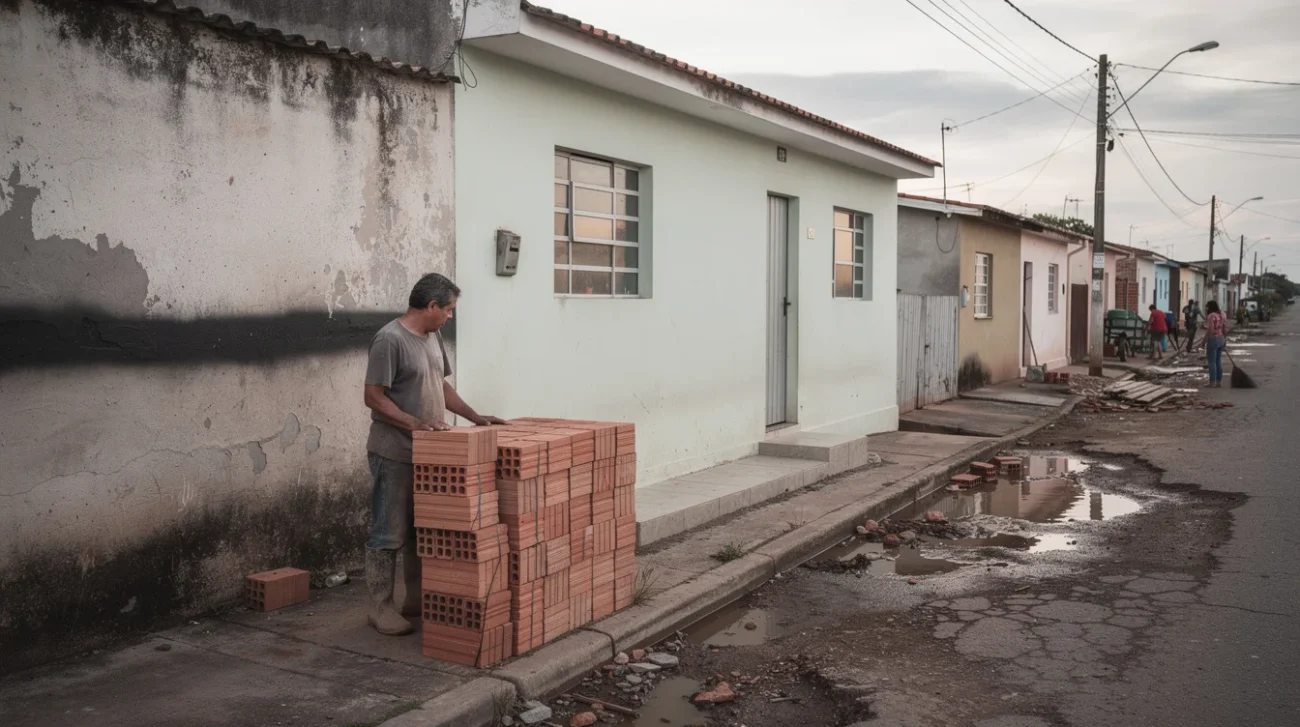
A repaired house can be a victory. A repaired house in the path of the next flood can also be an institutional failure disguised as progress. The May 2024 floods in Rio Grande do Sul exposed this contradiction across southern Brazil: settlements shaped by rivers had spent decades treating water as something infrastructure could permanently contain. As reconstruction advances, the architectural question is not simply how quickly buildings return. It is whether their return makes everyday life safer—or merely makes the previous disaster harder to see.
There are two compelling positions here. Rebuilding in place can defend communities against displacement. Relocation can prevent attachment to place from becoming compulsory exposure to danger. Neither deserves public support without a credible account of who benefits, who carries the remaining risk, and who gets to refuse.
PRO: Rebuilding Protects More Than Property
The strongest argument for rebuilding in place is not nostalgia. It is that a neighborhood is working infrastructure. Childcare circulates between households; informal employment depends on proximity; a familiar bus route connects a resident to treatment, school or wages. Moving a household can preserve its walls while dismantling the arrangements that make those walls habitable.
In metropolitan Porto Alegre, including flood-affected Eldorado do Sul, recovery cannot be measured only in replacement housing units. A resident offered a safer dwelling far from employment may inherit higher transport costs, longer days and weaker support networks. Tenants and people without formal title are especially vulnerable when compensation follows property ownership rather than actual residence.
Architecture has precedents for taking these relationships seriously. The Favela-Bairro upgrading program in Rio de Janeiro pursued infrastructure and public-space improvements within existing settlements rather than treating wholesale clearance as the default. It was not a flood-recovery template, and its limitations matter. Its relevant proposition was nevertheless powerful: an existing community is something to invest in, not simply an obstacle to an improved plan.
Rebuilding in place deserves priority where risk can be credibly reduced and the social costs of displacement are substantial. That requires examining an entire neighborhood, not declaring an individual plot safe because its replacement house sits slightly higher.
PRO: Staying Can Mean Reconstructing Differently
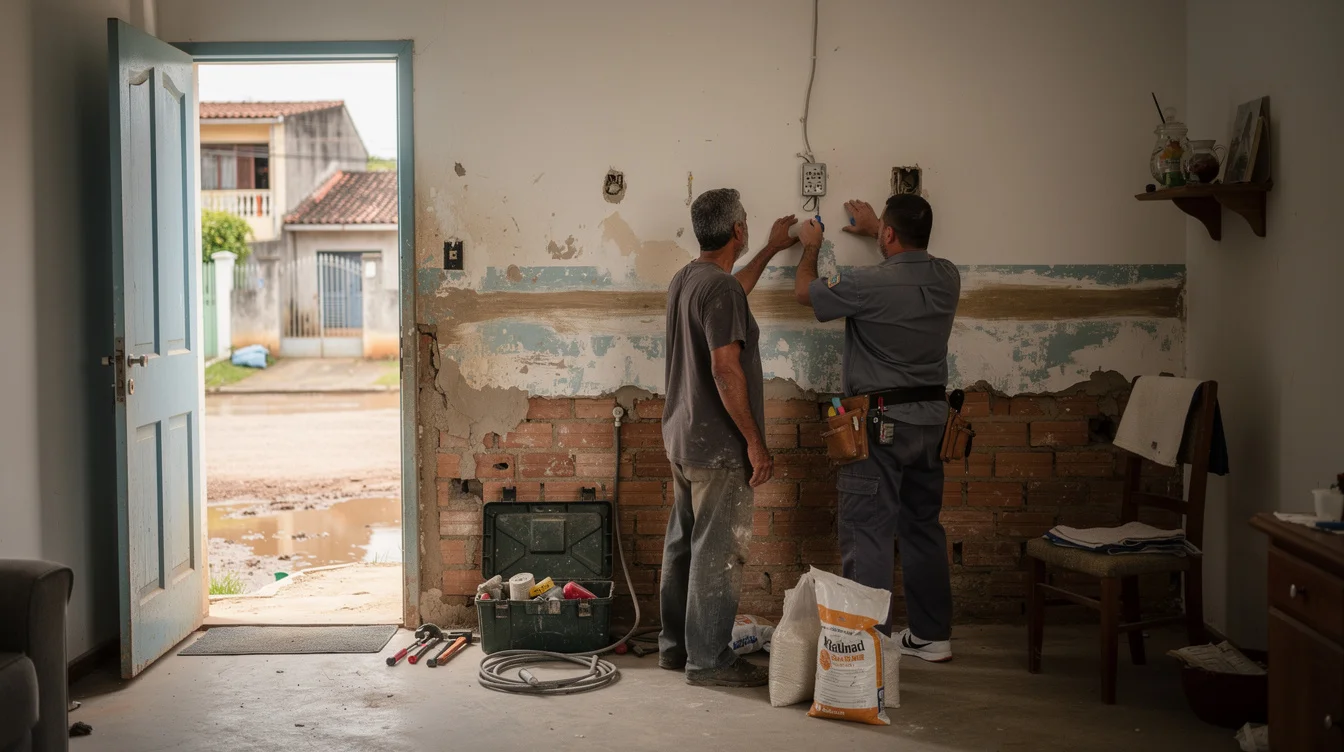
Defending continuity does not mean defending the previous ground floor. In suitable locations, reconstruction can elevate electrical equipment, introduce flood-compatible lower levels, improve drainage, protect drinking-water systems and establish accessible evacuation routes. Schools, clinics and emergency shelters need particular scrutiny: a protected dwelling is not enough if the services supporting it become unreachable.
Porto Alegre’s system of barriers, gates and pumping infrastructure illustrates why the unit of design must extend beyond the building. Protection depends on operation, maintenance, power and institutional coordination as much as on concrete. A reconstruction budget that funds visible structures but neglects their upkeep buys reassurance rather than dependable protection.
The Netherlands’ Room for the River program offers a useful reference, not a ready-made Brazilian solution. Projects including the river intervention at Nijmegen combined changes to flood defenses with additional space for water. The lesson is that keeping urban life in place may require changing the surrounding landscape rather than endlessly reinforcing the same boundary.
For Rio Grande do Sul, this could mean retaining viable residential areas while restoring selected flood-storage spaces, adapting streets and moving especially vulnerable services. Each intervention requires local hydraulic assessment; raising a site or adding a barrier can redirect water toward someone else.
The case for rebuilding is therefore conditional but robust: stay where a publicly accountable, funded adaptation strategy can support staying. Community continuity should be treated as an asset in that calculation, not an inconvenient sentiment outside it.
CONTRA: Returning Can Reproduce the Disaster
The strongest argument against rebuilding in place is equally uncomfortable: public authorities can turn the urgency of recovery into permission to avoid changing anything. Roads reopen, houses reappear, and reconstruction totals climb. Yet the exposure that made the disaster possible remains embedded in the settlement pattern.
Some locations may face flood depths, velocities, isolation or repeated disruption that ordinary building adaptations cannot adequately address. Elevating a house does not protect a resident who cannot evacuate, nor does it guarantee functioning sanitation. Stronger defenses can reduce risk without eliminating it; their failure may still have severe consequences. These distinctions must be communicated before residents invest compensation and savings in returning.
Valmeyer, Illinois, provides a reference for another trajectory. After the 1993 Mississippi River flood, much of the village relocated to higher ground nearby. It demonstrates the possibility of moving a community rather than merely dispersing individual households. It does not prove that relocation is easy, universally accepted or transferable without substantial public resources.
In Rio Grande do Sul, relocation deserves serious consideration where credible assessments show that continued occupation would depend on protection that cannot realistically be delivered or maintained. Rebuilding becomes indefensible when the state restores exposure while withholding an achievable alternative. Calling that arrangement resident choice confuses attachment, financial constraint and consent.
CONTRA: Relocation Must Not Become a Land Grab
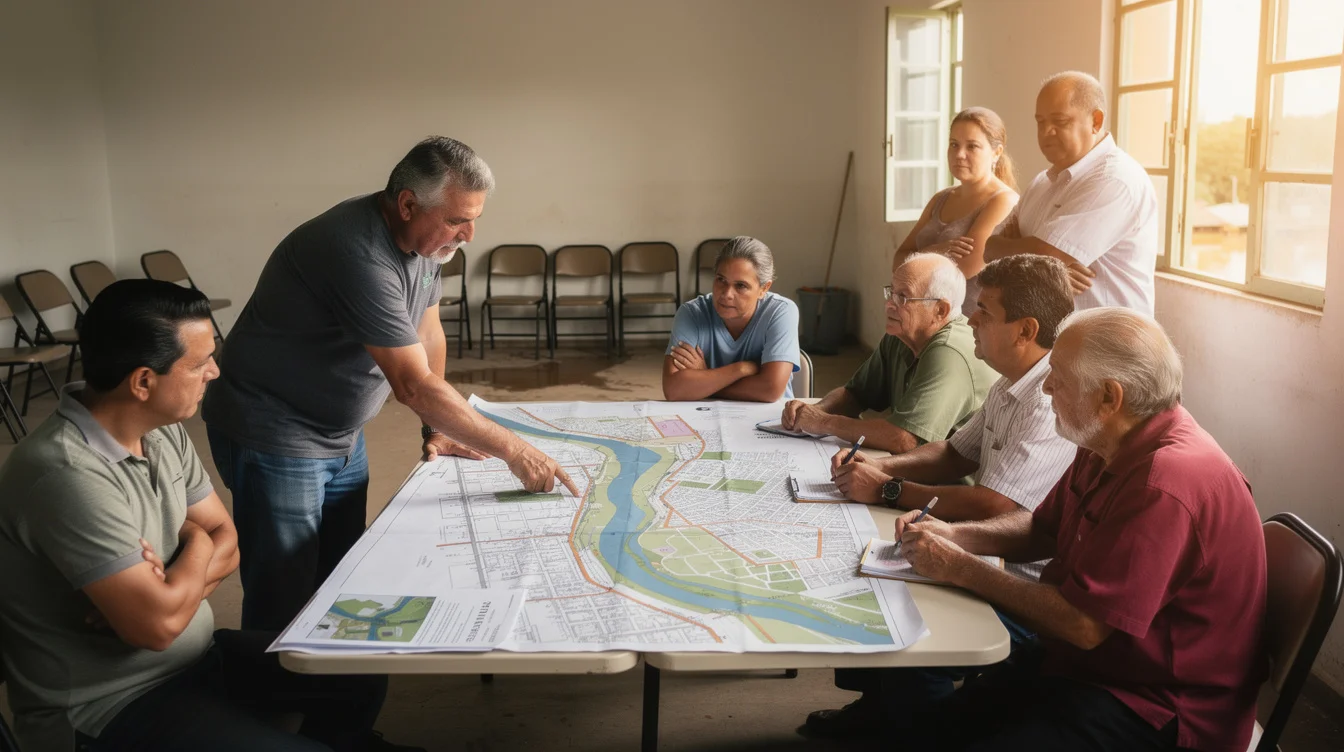
Relocation has its own architecture of failure. Cheap peripheral land can produce expensive lives. Standardized housing can disregard home-based businesses, multigenerational households and disability access. Meanwhile, cleared waterfront land may become attractive to investors once its former residents have been removed. A safety argument must never become a convenient instrument for transferring valuable urban territory.
The voluntary buyouts undertaken in parts of Staten Island after Hurricane Sandy offer a different reference: participating properties were acquired to remove residential exposure, with land retained as open space rather than simply prepared for replacement development. Such programs also expose a difficult question: owners can be compensated through property acquisition, but what equivalent route exists for renters?
A credible relocation offer in southern Brazil would therefore begin with destination quality, not demolition targets. Residents need to know the location, tenure, service connections, transport costs and delivery timetable before deciding. Nearby land, collective moves and support for livelihoods should be evaluated alongside individual compensation. Independent advice and an appeal process are essential when authorities designate areas as unsafe.
Officials remain responsible for evidence-based safety limits; residents must have meaningful power over the alternatives within those limits. Where continued habitation is untenable, permanent housing and transition support must accompany restrictions, not follow years later.
The case for relocation succeeds only when moving expands security without stripping away citizenship. Otherwise, reconstruction and resettlement become rival methods of abandoning the same people.
FAQ: Who Gets to Define Recovery?
When is rebuilding in place a defensible choice?
When site-specific assessment shows that risk can be reduced to an explicitly justified level, essential services can function, and protection has reliable funding and maintenance. Residents must understand the remaining risk. Household attachment matters, but it cannot substitute for a functioning neighborhood safety strategy.
When should relocation enter the discussion?
Early—not only after another flood—where repeated inundation, dangerous flood conditions or isolation make continued occupation difficult to protect. Discussion should include nearby and collective relocation options. An unsafe site does not justify an inadequate destination.
Who should decide whether a neighborhood stays or moves?
Public authorities must establish transparent safety requirements using independent technical evidence. Residents, including tenants and informal occupants, need decision-making power over housing options, destinations and timing, with representation and appeal rights. Neither an engineering report nor a public meeting alone settles the question.
How can residents retain meaningful choices?
Provide accessible risk information, secure temporary accommodation, independent advice and funded alternatives before demanding commitments. Where feasible, offer both supported adaptation and relocation. Assistance should recognize occupancy and livelihood losses, not only ownership, so that choosing safety is not a privilege reserved for property holders.
If recovery is supposed to restore a future rather than a footprint, who should decide when the right to remain gives way to the need to move?
Get the Mainifesto weekly — curated design debates, speculative ideas and the week's best articles every Saturday.
Editorial Perspectives
Questions and counterpoints developed by the Mainifesto editorial desk to extend the discussion.
Perspective 1
I’m for relocation when rebuilding means signing people up for the same disaster again—getting the old footprint back isn’t a return on investment. Residents need a real say, but public authorities have to draw the safety line and deliver somewhere people can actually live, work and get their kids to school.
Perspective 2
I’m against making relocation the default answer: a flood-risk model can test exposure, but it can’t decide what losing a neighbourhood is worth. Have we tested drainage, upstream retention and flood-adapted housing with the same rigour as retreat? Residents should have binding power over that choice, not just an invitation to comment.
Perspective 3
Price both options honestly: rebuilding includes future repairs, insurance and infrastructure upkeep; relocation includes land, transport and lost livelihoods. Residents and public authorities need to make the call together, with funded alternatives on the table—not a cheap housing scheme miles from anyone’s job.