
Should Ownership Include the Right to Demolish a Home?
Should Ownership Include the Right to Demolish a Perfectly Good Home?
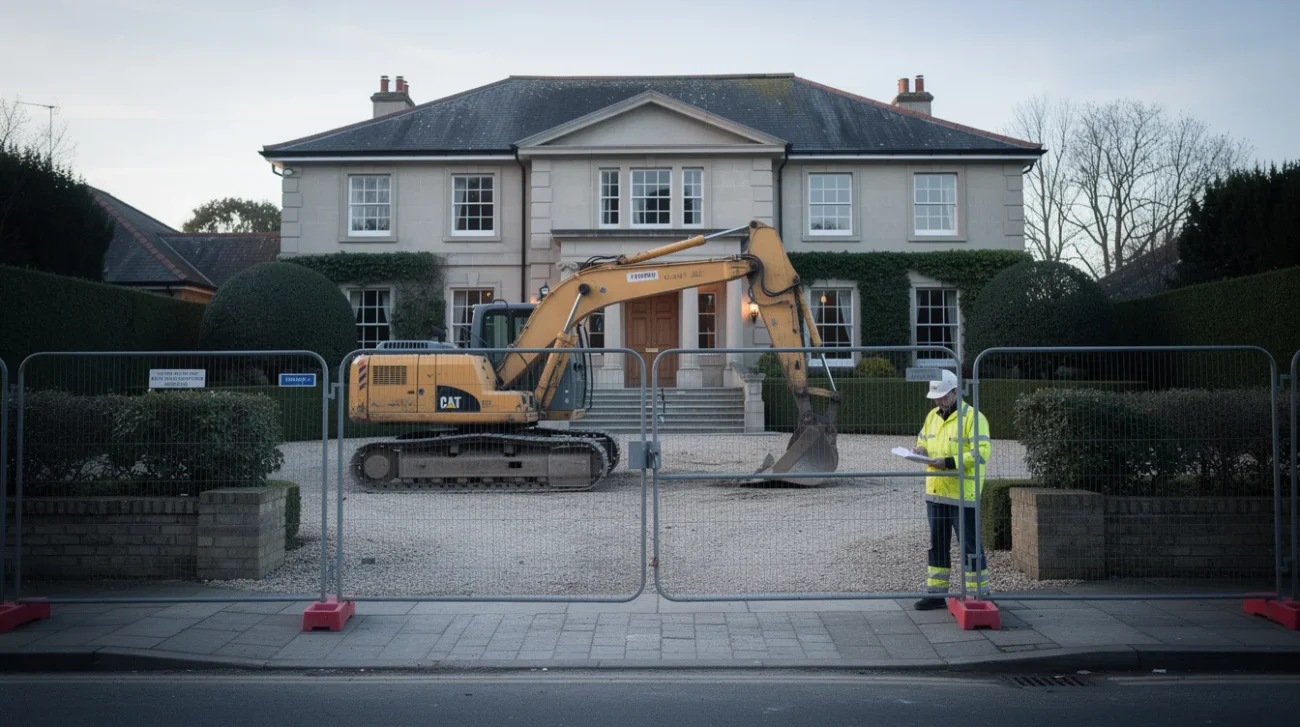
A mansion becomes unfashionable. Its owner wants different proportions, a larger basement, a cleaner architectural signature. An excavator arrives. Dwell’s reporting on wealthy owners bulldozing usable mansions puts a particularly extravagant face on a much broader problem: property law assigns buildings to individuals, while demolition’s environmental consequences spill beyond the boundary fence. The provocation is not that rich people have questionable taste. It is that we still routinely treat functioning buildings as disposable private possessions rather than material resources with public consequences. The sale of Lovell Beach House raises a related question about private ownership and the public interest.
Should an owner have to demonstrate why adaptation will not work before receiving permission to demolish? There are serious arguments on both sides. Neither deserves the comfort of a slogan.
PRO: Ownership Must Include the Freedom to Replace

The strongest case for demolition rights begins with an uncomfortable distinction: a home can be habitable without being useful for the people who need to occupy it. A staircase can make half a house inaccessible. Deep floor plates can frustrate daylight and ventilation. A structure can accommodate one wealthy household while preventing several ordinary ones from living on the same land. “Perfectly good” is not an engineering assessment. Sometimes it is simply a judgment made from the street.
Consider California’s efforts to enable accessory dwelling units and, through SB 9, qualifying lot splits and two-unit development. These reforms do not establish an unrestricted right to demolition; local rules and statutory protections still matter. But they expose the political danger of treating the existing detached house as untouchable. Preserving every building can also preserve exclusionary patterns of land use.
Peter Barber Architects’ Donnybrook Quarter in London offers a useful architectural reference, not a universal demolition precedent. Its low-rise, tightly arranged homes demonstrate how density can be achieved without defaulting to towers. An oversized house and its grounds might accommodate a similarly inventive housing proposition. A policy that asks only how much fabric survives could miss the benefits of accommodating more households near jobs and transport.
Ownership should therefore retain a meaningful right to propose replacement. Otherwise, environmental protection risks becoming a sophisticated language for defending scarcity.
PRO: A Permission System Must Not Become a Preservation Trap
Mandatory adaptation studies sound reasonable until their scope becomes limitless. Must an owner investigate three retrofit schemes, or ten? Who decides that an awkward conversion is practical? An approval process with no clear stopping point advantages precisely the wealthy applicants it appears designed to restrain: they can purchase more studies, retain better lawyers, and wait out uncertainty. Small owners and community housing groups cannot.
Replacement can also deliver genuine performance gains. A building with extensive structural defects, hazardous materials, and difficult flood exposure may demand interventions that undermine the supposed simplicity of retention. Yet a new home’s efficient heat pump or solar array is not sufficient evidence on its own. The relevant comparison is between credible alternatives over a stated period, including construction emissions, operational energy, maintenance, and the amount of accommodation delivered.
The RICS whole-life carbon assessment standard provides a framework for making such comparisons more disciplined. It does not produce a universal demolition verdict. Outcomes still depend on assumptions about service life, future electricity, materials, and occupancy.
From this side, architects should accept replacement commissions when they can defend them, rather than adopt a blanket refusal. Their responsibility is to test the brief, disclose alternatives, and prevent inflated environmental claims. A defensible approval regime would have published thresholds, proportionate evidence requirements, and an appeals process. The right to replace should be conditional, but it must remain a real right—not permission available only after an impossible exercise in proving a negative.
CONTRA: A Title Deed Is Not a Licence to Waste
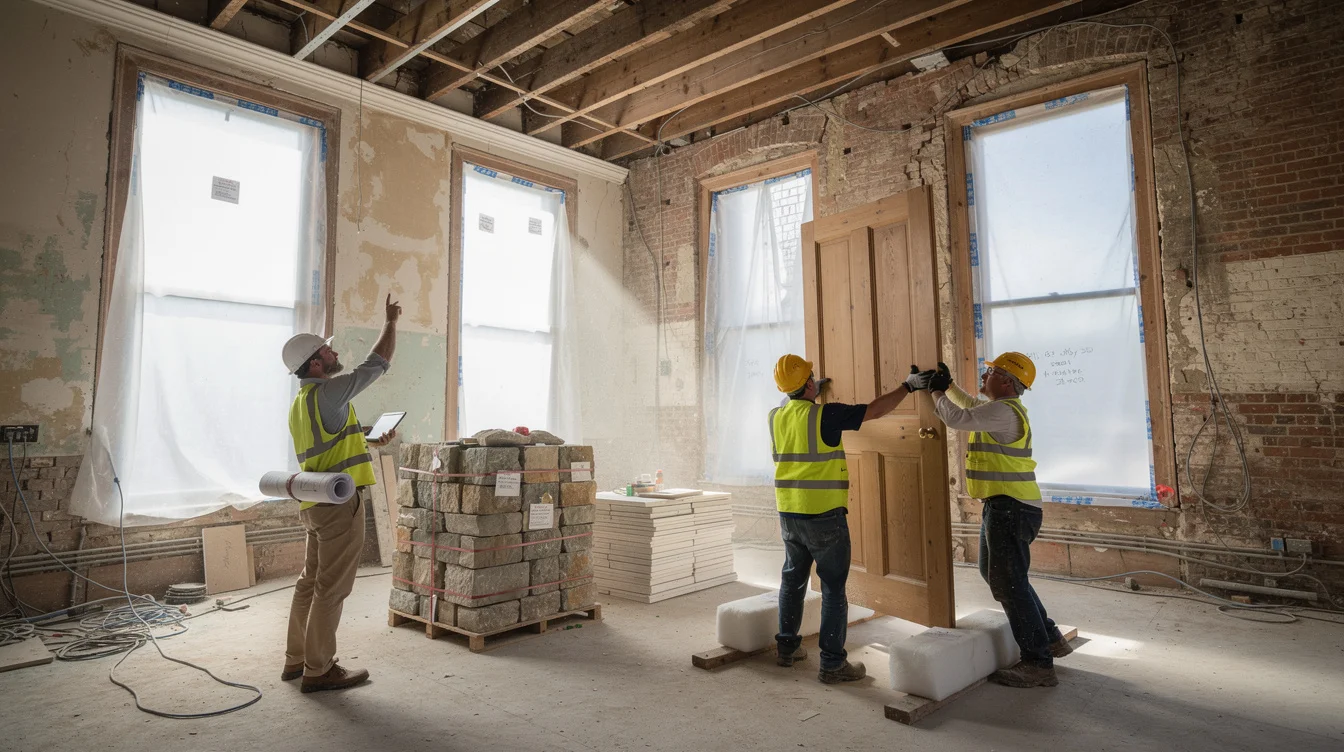
The strongest objection starts where the ownership argument stops: the boundary fence does not contain carbon emissions. Demolition discards the future usefulness of foundations, frames, roofs, and finishes, while replacement usually requires another round of extraction, manufacturing, and transport. The emissions from constructing the original house are already in the atmosphere; demolition does not release them all again. The avoidable burden is the new work demanded when serviceable fabric is thrown away.
This is why the mansion teardown deserves special scrutiny. Replacing one usable luxury house with another generally lacks the public-interest defence of adding homes or essential facilities. An owner’s preference for taller ceilings or a different façade is real. It is not automatically important enough to justify the associated environmental cost.
Lacaton & Vassal, working with Frédéric Druot and Christophe Hutin, demonstrated the architectural potential of retention at Grand Parc in Bordeaux. Their transformation of 530 apartments added generous winter gardens and balconies while keeping the existing residential blocks. The project was not a mansion conversion, and its construction strategy cannot simply be transplanted into every house. Its significance is more challenging: spatial generosity and dramatic architectural change did not require a cleared site.
Adaptation is not the timid alternative to architecture. It is architecture. A profession that treats an existing structure chiefly as an obstruction has confused authorship with replacement.
CONTRA: Make the Case Against Adaptation First
On this side, demolition should require a rebuttable presumption in favour of retention. An applicant would submit a structural condition survey, a material inventory, and a realistic adaptation option alongside the replacement design. The comparison should use the same functional brief and disclose total emissions as well as emissions per square metre. Otherwise, a much larger replacement can advertise efficiency while increasing its overall impact.
The test must also challenge the brief itself. If adaptation “fails” only because the owner demands twice the floor area and a cavernous underground leisure suite, that is not evidence of a defective building. It is evidence of an environmentally expensive preference. Safety-critical cases need an expedited route; ordinary aesthetic dissatisfaction does not.
London’s planning framework already provides a partial precedent through circular-economy statements and whole-life carbon assessments for specified major applications. Extending proportionate scrutiny to substantial residential teardowns would require additional local powers or rules in many jurisdictions, not merely a sternly worded design guide.
Architects bear responsibility before the application reaches a planner. At Park Hill in Sheffield, successive refurbishment phases involving practices including HawkinsBrown, Studio Egret West, and Mikhail Riches show how existing structures can support substantial reinvention. Those projects are not uncomplicated social or financial models, but they undermine the claim that retention excludes ambition. Architects should contract for an adaptation study at appointment, explain the carbon consequences of replacement, and be prepared to decline commissions whose principal achievement is avoidable waste. A replacement fee does not absolve professional judgment.
FAQ: Demolition, Adaptation, and Architectural Responsibility
Is renovating a home always better for the environment?
No. Structural condition, the extent of new work, energy demand, and anticipated service life all matter. Retention often avoids substantial new material production, but a credible decision requires a whole-life comparison of realistic options rather than a blanket claim.
What should a case against adaptation include?
It should include a condition survey, an achievable adaptation design, a replacement proposal, and comparable assessments of carbon, cost, accessibility, and usable accommodation. The applicant should explain why retention cannot meet reasonable needs, not simply why a new building is preferred.
Does salvaging materials make demolition sustainable?
Salvage can reduce waste and displace some new production, but it does not cancel demolition’s impacts. Reusing an intact structure generally preserves more of its practical value than crushing concrete into aggregate. Any claimed benefit should account for recovery rates, transport, and actual reuse.
Should architects refuse every residential replacement commission?
No. Replacement can address serious hazards or deliver meaningful additional housing. Architects should first investigate retention, document the trade-offs, and refuse to market discretionary destruction as environmental progress merely because the new house includes efficient equipment.
If a usable home stands on privately owned land, how much environmental harm should its owner be entitled to impose for the freedom to start again?
Get the Mainifesto weekly — curated design debates, speculative ideas and the week's best articles every Saturday.
Editorial Perspectives
Questions and counterpoints developed by the Mainifesto editorial desk to extend the discussion.
Perspective 1
Yes, ownership should include the right to demolish a usable home, but not the right to dump its carbon bill on everyone else. Require a whole-life carbon assessment and charge for the damage; blanket preservation rules can freeze low-density privilege in cities that need housing.
Perspective 2
No, a title deed should not confer the right to erase a usable house merely because its owner wants a different backdrop. From Haussmann onward, we have been remarkably good at dressing private ambition as progress; architects need not keep supplying the costume.
Perspective 3
Show me the comparison: retrofit, extension, replacement, including construction emissions and realistic operating savings. A usable house isn't necessarily a good house, but a more efficient replacement can take decades to repay the carbon cost of demolishing it.
Perspective 4
In Mexico City, keeping the façade can still mean gutting a building's social life and pricing out everyone who sustained it. Make owners demonstrate why repair and adaptation won't work, but don't mistake a luxury conversion for an environmental or civic victory.
Perspective 5
I'd rather retain a sound structure than pay to knock it down and build another, provided it can deliver homes people actually need. Put a predictable carbon charge into the appraisal and make adaptation approvals workable; you can't demand reuse while making it the slowest, riskiest option.