Lovell Beach House Sale: Who Pays for Heritage?
A Modernist Landmark for Sale—and a Public Interest Without a Bid
A masterpiece enters the property market, and architectural culture reaches for its familiar vocabulary: rare opportunity, extraordinary provenance, once-in-a-generation acquisition. Missing from that language is the party that cannot make an offer: the public whose architectural history is being sold.
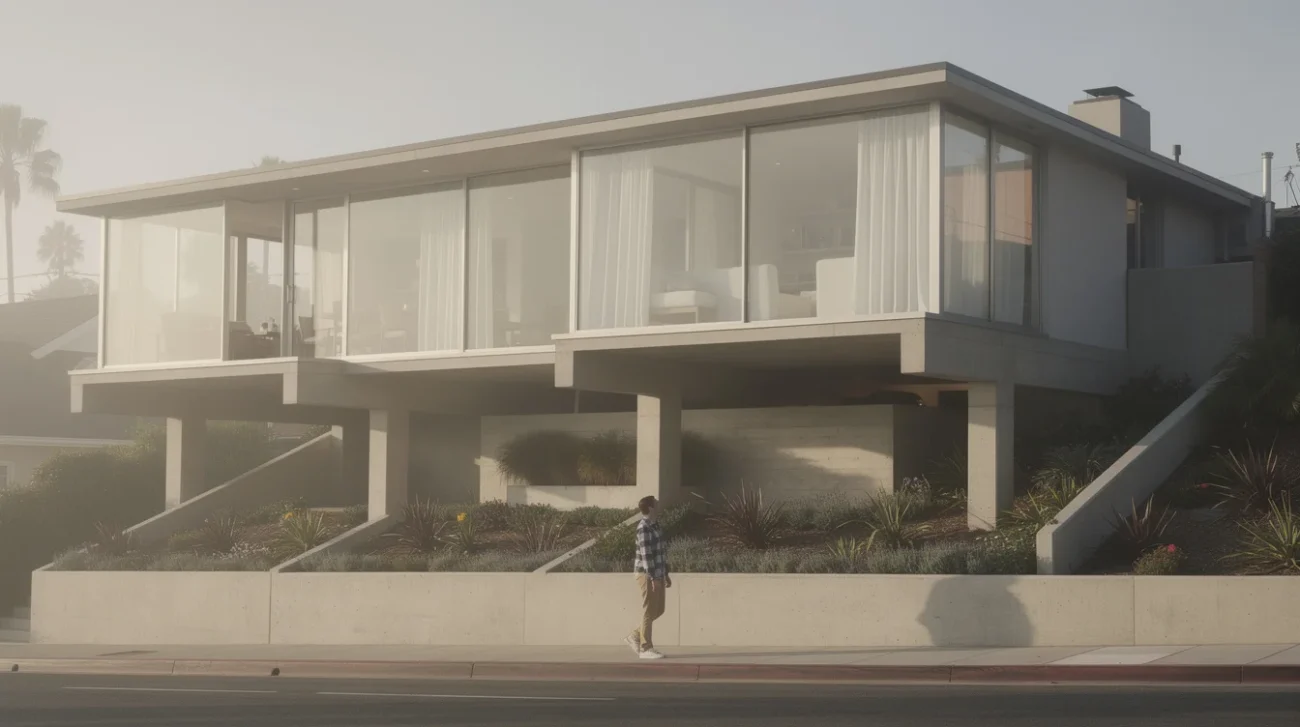
As reported by Wallpaper, the Lovell Beach House in Newport Beach, California, has been offered for sale for the first time since its construction in 1926, following a century of Lovell family ownership. Designed by Rudolph M. Schindler for Leah and Philip Lovell, the glass-and-concrete house is not simply desirable coastal real estate. Its five exposed concrete frames, elevated living spaces and spatial experimentation helped establish a different idea of domestic architecture.
The sale is a trigger, not evidence of an impending disaster. A new owner could become an exemplary steward. But that possibility reveals the weakness of the arrangement: a building of collective cultural significance depends on the preferences, resources and patience of whoever can afford the deed.
The scandal is not that someone might live in a masterpiece. It is that public institutions can celebrate its importance without accepting a durable share of responsibility for its survival.
A Home Is Not a Failed Museum
Schindler’s beach house belongs to a moment when the home became a laboratory for new relationships between bodies, structure, sunlight and air. Its concrete skeleton lifts domestic life above the ground, while its glazing and sectional arrangement challenge the conventional stack of enclosed rooms. This is architecture understood through occupation, not just a frontal photograph.
It should not be confused with Richard Neutra’s later Lovell Health House in Los Angeles, completed in 1929 for the same clients. Together, the commissions demonstrate how private domestic ambitions helped finance modernism’s experiments. The patron was never incidental to the project.
That history complicates the demand to open every important house to everyone. Turning a residence into a museum changes its circulation, staffing, security and maintenance requirements. Visitors require supervision; fragile surfaces acquire footfall; bathrooms and entrances become operational problems. The house may remain visually intact while its domestic logic disappears.
Mies van der Rohe’s Villa Tugendhat in Brno shows what public stewardship and carefully managed visits can achieve. It does not prove that museum conversion is the correct destination for every modernist home. A lived-in building can retain forms of continuity that an immaculate exhibition cannot. Privacy is not automatically the enemy of heritage.
The Market Prices Prestige, Not Public Obligations
The property market can assign a premium to architectural authorship. It is much less reliable at financing everything that makes that authorship publicly valuable: measured surveys, conservation research, archival documentation and access for people who will never be buyers.
A landmark owner may inherit expensive technical questions alongside the prestige. At a coastal concrete building, specialists might need to investigate moisture penetration, reinforcement corrosion or the compatibility of previous repairs. Those are general conservation risks, not claims about the Lovell Beach House’s present condition. Establishing what actually needs intervention requires evidence, not anxious speculation from photographs.
The Getty Conservation Institute’s work with the Eames House in Pacific Palisades offers a useful reference: conservation planning can connect material investigation with decisions about long-term care. The lesson is methodological. Diagnose first; establish significance; distinguish necessary repair from convenient replacement.
Yet expecting one household to fund every research benefit is as intellectually lazy as expecting taxpayers to subsidise an expensive address without conditions. Ownership brings maintenance responsibilities, but scholarship and public education produce benefits beyond the property boundary.
The useful distinction is not private versus public money. It is ordinary ownership costs versus the additional costs of conserving and sharing an exceptional cultural asset. That boundary must be negotiated and independently tested.
Public Money Should Purchase Public Value
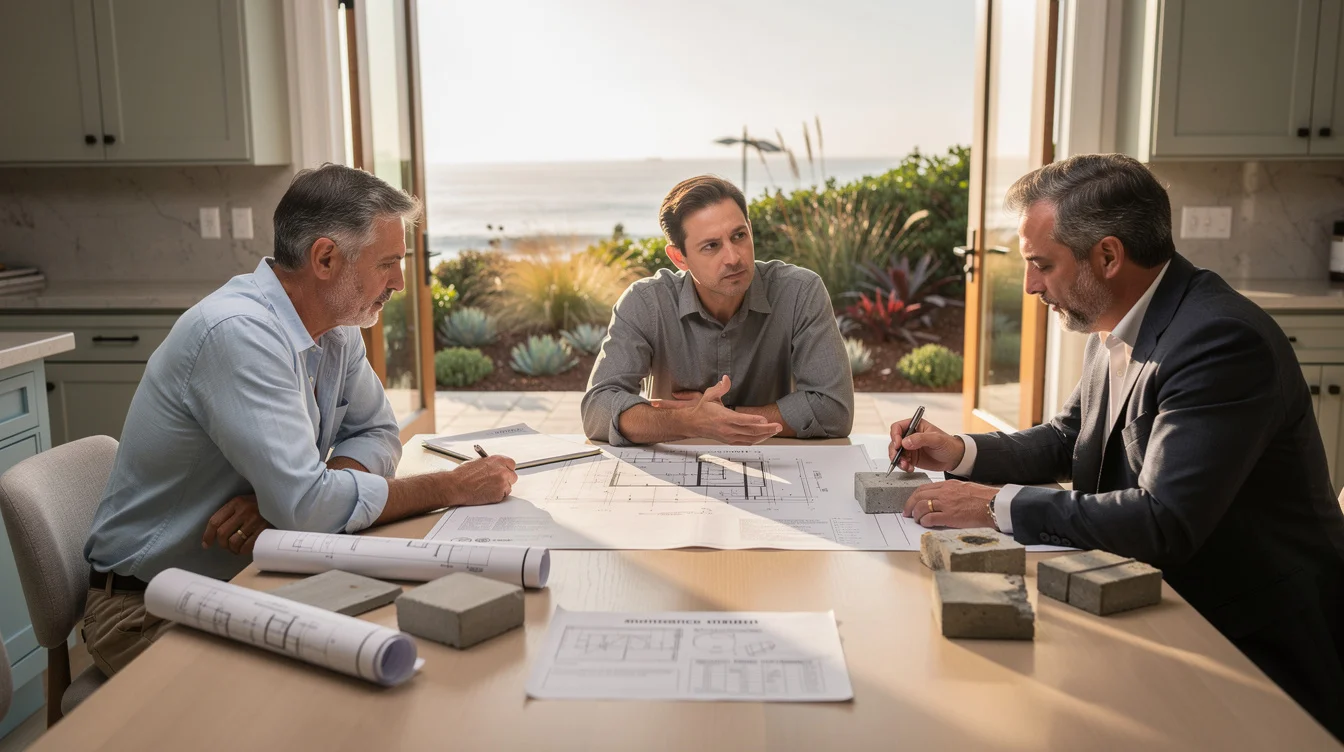
A defensible funding model would begin with a conservation management plan, prepared by qualified specialists and costed over time. It should identify significant fabric, assess condition, establish repair priorities and explain which adaptations could support continued residential use. A comfortable home and a conserved building are not mutually exclusive, but neither happens through reverence alone.
The owner should normally meet ordinary domestic expenses and improvements undertaken for personal convenience. Heritage grants or philanthropic contributions could support demonstrable conservation premiums: specialist analysis, appropriate repair trials or documentation that would otherwise be lost. Independent review should prevent a heritage label from becoming a blank cheque for luxury renovation.
In return, funding agreements should specify enforceable public benefits. These might include depositing surveys in an accessible archive, sharing conservation findings, retaining agreed architectural features or providing a limited programme of research visits. Where appropriate and legally available, a preservation easement held by a qualified organisation could bind defined protections beyond one owner’s tenure.
None of these mechanisms should be presumed to exist at the Lovell Beach House. They are options for negotiation, not descriptions of the sale.
Crucially, a capital grant is not a maintenance strategy. A dedicated reserve or endowment, with clear oversight, can make routine care less vulnerable to changes in household wealth, institutional fashion or philanthropic enthusiasm.
Access Is a Negotiation, Not an Open Door
The access debate becomes more productive when it stops treating admission as a binary. A conservation engineer inspecting a junction, a doctoral researcher studying spatial organisation and a busload of architectural tourists make radically different demands on a home.
An agreement could establish several access levels: publicly available drawings and approved photographs; scheduled scholarly visits; and a small number of guided tours confined to agreed spaces. Residents would retain private rooms, advance notice and reasonable blackout periods. Photography rules should protect personal possessions and security-sensitive information without becoming an excuse to suppress legitimate architectural research.
The Eames Foundation’s reservation-based visiting arrangements demonstrate that architectural access can be managed rather than unrestricted. At Schindler’s Kings Road house in West Hollywood, MAK Center programming shows another possibility: a modernist residence can support exhibitions and cultural discussion. These are distinct institutional models, not templates to impose wholesale on an occupied beach house.
Any access commitment needs an operator, insurance, staffing and a budget. Asking homeowners to become unpaid museum attendants is not a serious public policy. Nor is publishing a virtual tour an adequate substitute for every encounter with space, scale and movement.
Access should be proportionate to the support received, the building’s capacity and the disruption imposed. The agreement must also establish what happens when commitments are breached or ownership changes.
Negotiate Before the Next Crisis
The first sale after a century of family ownership presents a useful moment to assemble these responsibilities. Not because a purchaser should be publicly presumed hostile, but because a transfer creates an opportunity to clarify expectations before a repair emergency or contested alteration.
A local heritage organisation, a university architecture programme, conservation specialists and public agencies could offer a prospective owner a practical partnership: assistance with documentation, credible technical advice and a funding framework tied to explicit benefits. The buyer would receive something more useful than admiration followed by outrage.
Such an arrangement must be transparent about who gets a say and who decides. A conservation architect can assess proposed repairs; an archive can manage research material; an independent body can monitor funded commitments. Residents should help shape access conditions. Neighbours also deserve consideration when visits affect parking and the everyday use of a residential street.
Modernism was built through alliances among designers, clients, engineers and industry. Its conservation requires an equally deliberate alliance, not faith in an unusually benevolent millionaire. The Lovell Beach House’s market debut exposes a public interest that is culturally articulate but financially underorganised.
The answer is neither unrestricted ownership nor automatic museum conversion. It is a negotiated stewardship structure with money, limits and obligations attached. Calling a house priceless does not pay for its care.
FAQ
Why is the Lovell Beach House architecturally significant?
Completed in 1926 in Newport Beach, Schindler’s house combines an exposed concrete frame with an experimental arrangement of domestic space. It is a major work of early Californian modernism, distinct from Neutra’s later Lovell Health House in Los Angeles.
Does architectural significance automatically guarantee public access?
No. Significance alone does not turn a private residence into a public attraction. Access depends on applicable legal requirements, ownership arrangements and negotiated agreements. Heritage protections and visitor rights are separate questions.
Who should pay to conserve a privately owned landmark?
Owners should normally fund ordinary upkeep. Public or philanthropic support can help cover verified conservation premiums and research, provided enforceable agreements secure proportionate public benefits and independent oversight.
Can meaningful access coexist with residential privacy?
Yes. Scheduled research appointments, limited guided visits, restricted photography and accessible archives can share architectural knowledge while protecting domestic life. These arrangements need funding, clear boundaries and commitments that address future ownership changes.
If we expect a private owner to preserve a building for everyone, what should the public pay—and what should that contribution entitle us to?
Watch the Mainifesto Short
Get the Mainifesto weekly — curated design debates, speculative ideas and the week's best articles every Saturday.
Editorial Perspectives
Questions and counterpoints developed by the Mainifesto editorial desk to extend the discussion.
Perspective 1
Keeping Lovell standing takes more than restoring its best-known façade; the unglamorous repairs need funding too. Public help should buy enforceable conservation commitments and some scheduled access, not turn a lived-in house into a museum or give the owner a publicly funded bump in resale value.
Perspective 2
Could public funding cover a documented maintenance plan, with condition surveys and repair records made openly available? Scheduled visits would matter too, but access should also let students study how the house was built and how it ages—not just photograph it.
Perspective 3
If the public helps pay, the obligations need to survive the next sale: maintenance standards, agreed visiting hours, and repayment if the owner breaks the deal. Otherwise we're subsidizing a private asset and hoping for generosity. And any subsidy has to compete honestly with the less famous buildings a city can't afford to lose.