

Simple Trucks: Which Complications Are Worth Keeping?
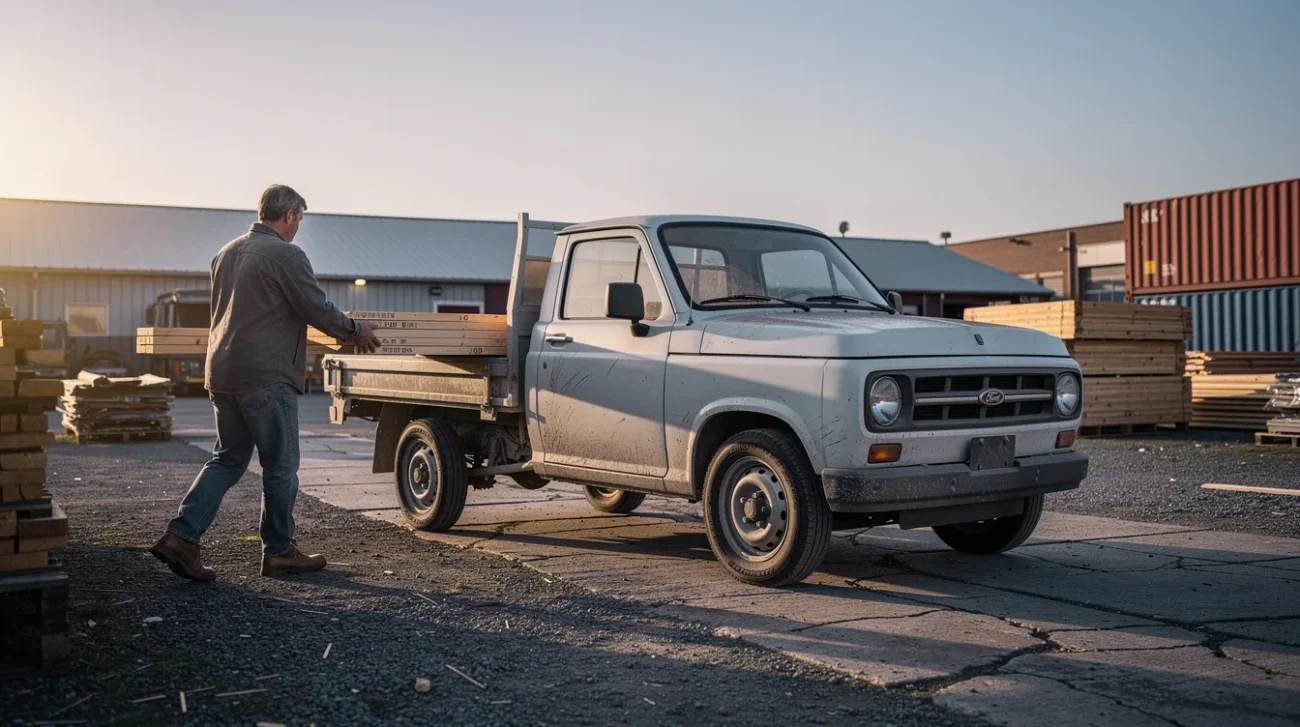
The Simple Truck Returns. Which Complications Are Worth Keeping?
The pickup has become an unlikely monument to excess: a working vehicle increasingly sold through luxury interiors, enormous screens and the promise that every ordinary manoeuvre requires another proprietary system. REO’s proposed Runabout challenges that trajectory. As Wallpaper reports, the revived marque wants to build a low-cost, design-led truck range centred on mechanical simplicity. Its provocation is stronger than another promise of technological disruption: perhaps the useful vehicle needs less.
But subtraction is not automatically progress. A sparse dashboard can conceal an expensive electronic architecture; a mechanically straightforward engine can impose unacceptable pollution costs. The Runabout remains a proposal, not proof of an affordable, durable production vehicle. The design question is therefore not whether complexity is bad. It is which complications earn their place—and who pays for the ones that do not.
PRO: Stop Designing the Working Truck as a Luxury Purchase
The strongest argument for simple trucks is economic, not nostalgic. Every feature carries more than a purchase price. It can add assembly operations, diagnostic requirements, replacement parts and opportunities for downtime. For a gardener, carpenter or municipal maintenance team, a truck awaiting a specialised component is not an inconvenience. It is stranded earning capacity. A simpler vehicle should be judged by its ability to keep working, not by how convincingly it photographs beside a weathered barn.
Toyota’s IMV 0, sold in Thailand as the Hilux Champ, offers a useful reference. Its utilitarian platform and provision for different rear bodies put commercial adaptation ahead of passenger-car theatre. It is not a ready-made answer for the American market, whose certification requirements and operating conditions differ. But it demonstrates a valuable hierarchy: establish the load-carrying tool first, then accommodate particular jobs.
REO’s opportunity lies in that hierarchy. A straightforward load bed, accessible tie-downs and replaceable work surfaces would matter more than decorative toughness. Ford’s Maverick has already shown that a smaller pickup can attract buyers without copying the dimensions of full-size trucks. Utility does not require maximum vehicle.
PRO: Repairability Is a Design Feature, Not an Afterthought
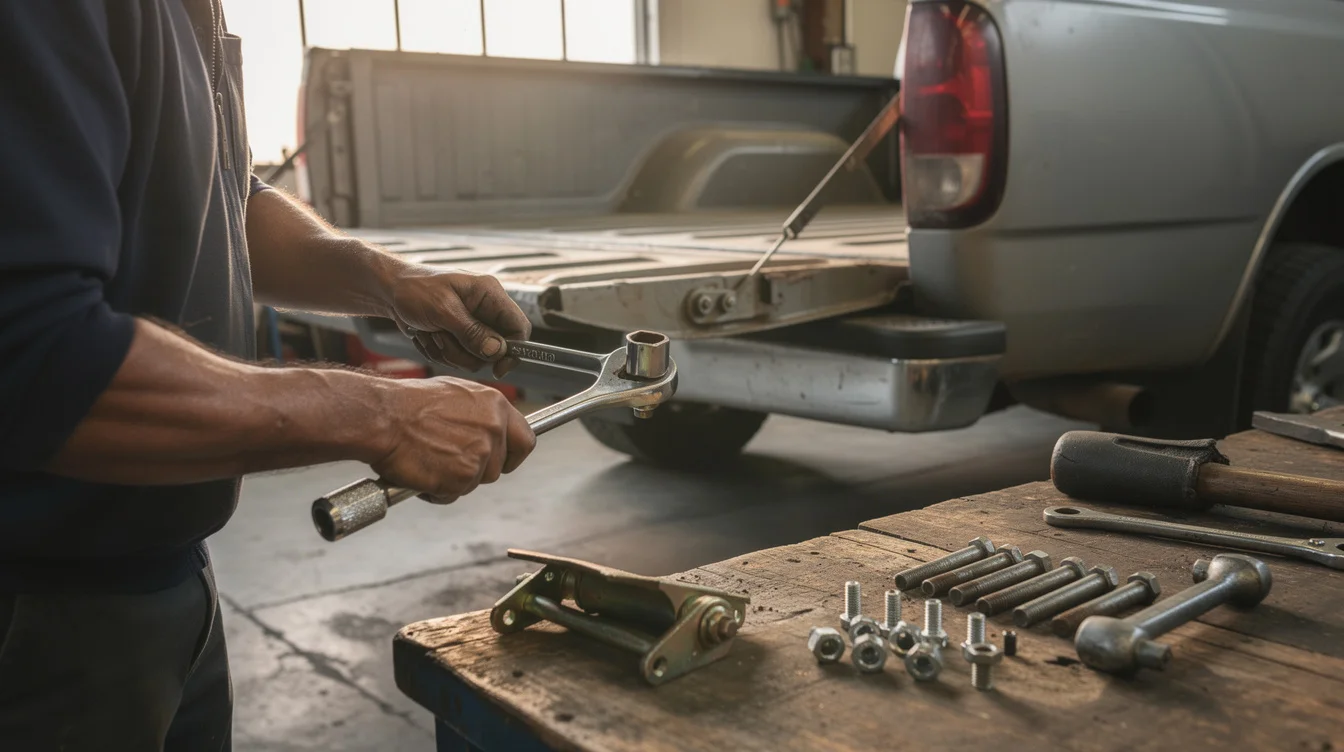
Dieter Rams’s principle of “as little design as possible” is routinely reduced to an aesthetic of tidy surfaces. Applied seriously to a truck, it would concern access, interfaces and the number of dependencies between components. Can a damaged mirror be replaced without disturbing several unrelated systems? Can a workshop reach a service item without removing half the front end? Does a minor collision demand a costly assembly where a smaller part would suffice?
Older Land Rover utility vehicles illustrate both the appeal and the limits of exposed, comprehensible construction. Their reputation for field repair should not be confused with modern crash protection or freedom from faults. Nevertheless, the underlying lesson survives: equipment becomes more useful when the owner can understand how it comes apart.
A credible Runabout programme should publish service procedures, support independent diagnostics and price common replacement parts transparently. Standardised fasteners and separately replaceable wear components would be more consequential than retro styling. The question of whether products can be kept working extends well beyond vehicles, down to the right-to-repair test facing tiny earbuds. Physical heating controls would also let drivers adjust familiar functions without negotiating screen menus. These are not declarations of war against electronics. They are demands that the vehicle remain intelligible after its launch presentation ends.
PRO: A Lower Price Can Support a Longer Life
Affordability becomes meaningful when it survives ownership. Dacia’s long-standing emphasis on essential equipment offers a relevant industrial-design reference: prioritisation can be a coherent product strategy rather than an apology for missing features. That does not mean importing its passenger-car formula wholesale into a truck. It means distinguishing durable usefulness from the costly performance of being premium.
Consider a powered tailgate. For some users it offers genuine accessibility benefits; for others, it adds mechanisms to a component that will regularly encounter grit, impacts and heavy loads. The intelligent response is neither compulsory luxury nor ideological deletion. It is a straightforward standard arrangement with carefully justified alternatives. The same logic applies to elaborate seat adjustment, panoramic roofs and decorative lighting.
REO could make subtraction persuasive by treating the truck as a platform for long service: a restrained options catalogue, surfaces chosen for cleaning rather than showroom softness, and components supported well beyond the initial sale. Yet even this requires discipline. Too many configurations undermine the manufacturing simplicity that makes a low price possible. The best basic truck would offer fewer decisions at purchase and fewer unpleasant surprises afterwards.
CONTRA: Simplicity Can Become an Alibi for Missing Protection
The counterargument begins wherever the truck meets another person. Buyers may accept fewer comforts, but their preferences do not settle what protection passengers, pedestrians and other road users deserve. Electronic stability control, airbags and well-engineered crash structures are not luxury clutter. Their purpose is to intervene when judgement, traction or the vehicle’s physical limits fail. Some protective systems are largely invisible until the moment they matter most.
Volvo’s introduction of Nils Bohlin’s three-point seat belt in 1959 is a useful corrective to romantic thinking. It made the vehicle more complicated and imposed a new action on occupants. That additional apparatus was progress. Today’s equivalent cannot be identified simply by counting buttons or control units.
Automatic emergency braking introduces sensors, software and potential calibration costs, but it also addresses a real collision mechanism. Its effectiveness and repair implications deserve scrutiny, not reflexive dismissal. Meanwhile, a tall, blunt front end may communicate mechanical honesty while worsening visibility close to the vehicle and creating risks for vulnerable road users. A genuinely rational truck must interrogate its proportions as rigorously as its equipment list. Cheapness purchased through someone else’s exposure is not good design.
CONTRA: Emissions Equipment Is Not Optional Clutter
Mechanical simplicity is especially seductive under the bonnet, where modern powertrains can look like a dense negotiation between hoses, wiring and sensors. But much of that equipment exists because combustion produces harmful emissions. Electronic fuel management, catalytic converters and, where applicable, particulate filters and selective catalytic reduction are not merely opportunities for manufacturers to complicate repairs. They serve measurable public-health objectives.
Older diesel utility vehicles make the distinction painfully clear. An engine that can be repaired with basic tools may still emit far more harmful pollution than a newer, more tightly controlled equivalent. The driver sees the repair bill; the street absorbs the exhaust. Moving costs outside the vehicle does not eliminate them.
Electrification complicates the simplicity argument in another direction. An electric drivetrain has fewer moving parts than a combustion drivetrain, yet battery packs, power electronics and thermal management can be expensive and difficult to service. Renault’s small Twizy demonstrated a radically pared-back electric vehicle, but not a solution to American pickup duties. REO’s proposition needs to be tested against payload, range, energy use and serviceability together. Component count alone cannot tell us which powertrain is the simpler ownership proposition.
CONTRA: A Sparse Truck Can Still Be an Expensive System
The most dangerous assumption is that a modest specification guarantees a modest bill. Established manufacturers spread development, tooling and compliance costs across large production volumes. A revived brand must establish supply chains, parts distribution and warranty support as well as assemble vehicles. An inexpensive launch price means little if a failed component leaves an owner waiting weeks for a replacement. It also raises a broader question about who pays for design experimentation when a compelling proposal meets the demands of everyday use.
Nor does a screen-free cabin establish independence. Software access, electronic component pairing and subscription-dependent functions can determine whether an apparently basic product remains usable. The John Deere right-to-repair debate demonstrates that the crucial boundary is often not between mechanical and digital, but between owner control and manufacturer permission. A work vehicle can look old-fashioned while remaining institutionally difficult to repair.
That is the proper challenge for REO: demonstrate lifetime affordability rather than merely advertise restraint. Publish what can be serviced, by whom, with which tools and at what indicative cost. Explain the parts-support strategy. Validate safety and environmental performance. The Runabout’s proposed direction deserves attention because excess has become normalised, but nostalgia deserves no regulatory discount. Keep complexity that prevents harm; redesign complexity that creates dependence. Everything else should have to argue for its place.
FAQ: What Should a Simple Truck Actually Keep?
What is REO’s proposed Runabout? The Runabout is part of the revived REO brand’s proposed low-cost, design-led truck offering, presented around mechanical simplicity. That positioning should not be mistaken for independently demonstrated production pricing, durability or ownership costs.
Which complications are worth keeping? Effective crash protection, stability control and emissions-management systems earn their place through protective or environmental functions. Driver-assistance features should be assessed by their demonstrated benefits, usability and repair requirements, rather than accepted or rejected as a category.
Does fewer equipment mean lower ownership costs? Not necessarily. Removing equipment can reduce failure points, but parts availability, fuel or electricity consumption, insurance, service access and downtime also determine cost. A common component in a well-supported vehicle may be cheaper to own than a simpler but scarce alternative.
What should buyers ask a manufacturer promising simplicity? Ask for service information, independent diagnostic access, replacement-part prices, warranty terms and a credible support plan. Also examine payload, loading ergonomics and safety performance. A plain interior is evidence of a styling decision, not proof of a repairable vehicle.
If we designed a working truck around the people who use, repair and encounter it—not the equipment that helps sell it—which complications would you refuse to give up?
Watch the Mainifesto Short
Get the Mainifesto weekly — curated design debates, speculative ideas and the week's best articles every Saturday.
Editorial Perspectives
Questions and counterpoints developed by the Mainifesto editorial desk to extend the discussion.
Perspective 1
I’m for a simpler working truck, especially if simplicity means a smaller footprint and a bonnet the driver can actually see over. Keep pedestrian-detecting emergency braking and emissions controls; lose the oversized bodywork that makes everyone outside the cab pay for the styling.
Perspective 2
I don’t buy simplicity as the guiding promise here; a stripped-back truck can sell nostalgia just as efficiently as a touchscreen sells the future. Keep cameras, collision warnings and accessible diagnostics, even when they complicate the electronics—the fight should be against locked software and subscription features, not digital tools themselves.
Perspective 3
For a maintenance crew, the expensive feature is the one that puts the truck out of service. I’d keep a reversing camera, proper climate control and physical controls you can use with gloves, then judge the rest by downtime and repair cost—not how clean the dashboard looks in a pitch deck.
Perspective 4
Carrying ceramics teaches you to care about suspension and tie-down points more than the shape of the dashboard. I’d keep the engineering that steadies a fragile load, and insist that worn handles, hinges and seat covers can be replaced individually. A plain-looking truck is not necessarily a well-made one.