
Smart Toilet Health Monitoring: Who Defines Normal?
When the Toilet Becomes a Health Monitor, What Counts as Normal?
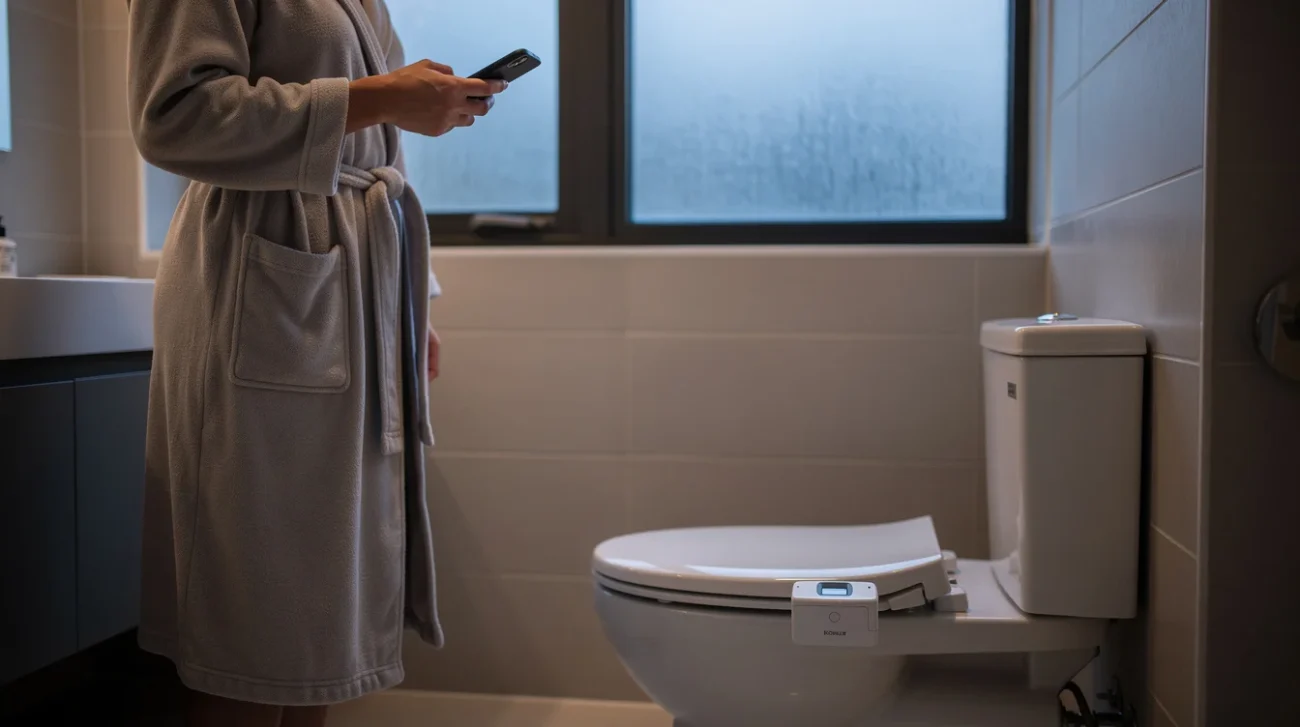
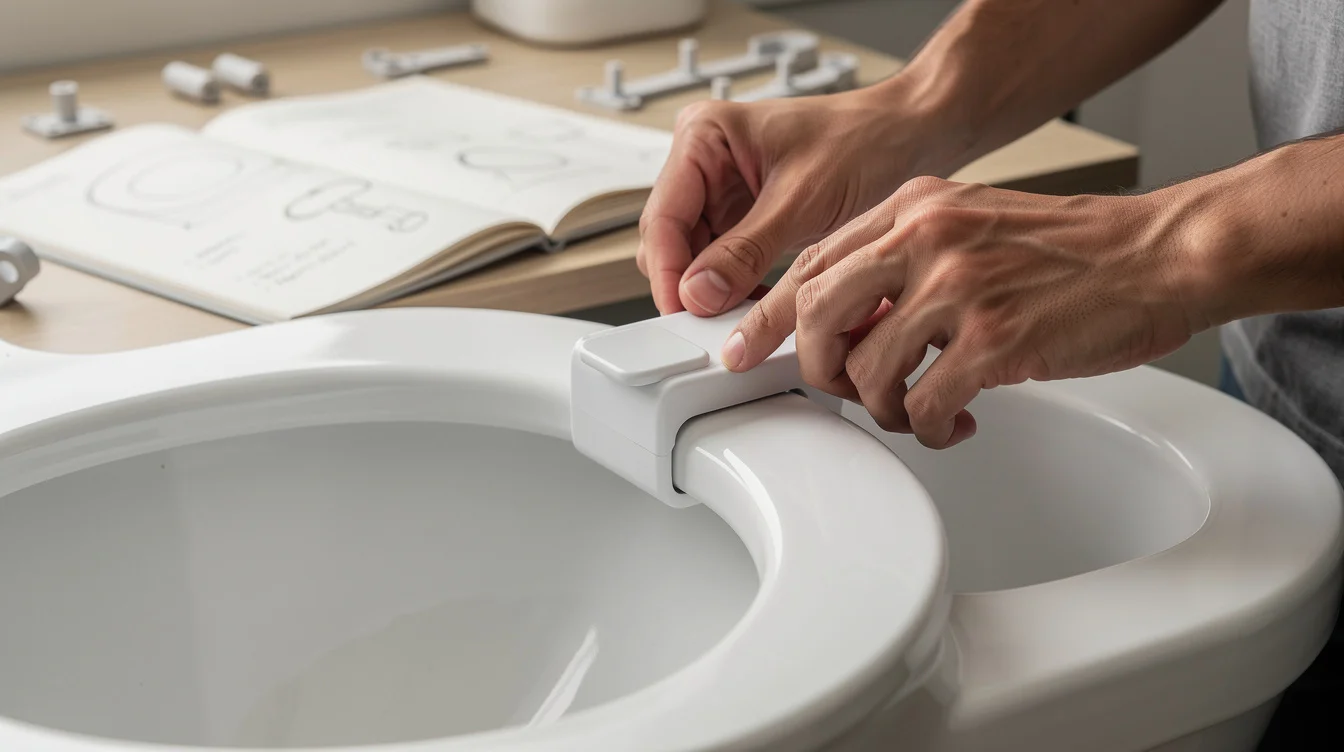
The bathroom is becoming a place where the body produces not just waste, but evidence. As reported by Dezeen, American bathroom brand Kohler has created Dekoda, a health tracker that clips onto the toilet bowl, through its spin-off venture Kohler Health. That modest physical intervention carries an immodest proposition: an unavoidable daily routine can become an ongoing health observation.
The available source establishes the product’s purpose and attachment format, not its clinical accuracy, sensing capabilities or notification behaviour. Those distinctions matter. The design question is not whether a toilet can collect information. It is whether the resulting system can explain what that information does—and does not—mean. Convenience makes monitoring attractive. It does not automatically make monitoring useful.
PRO: The best interface may be the routine you already have
Most self-tracking asks people to become administrators of their bodies. Charge the wearable. Record the meal. Remember the symptom. A toilet-mounted tracker proposes something more compelling: observation embedded in an activity that already happens. Its strongest design argument is not futuristic technology but reduced effort.
Consider someone trying to describe intermittent bowel changes during a short medical appointment. Memory compresses an uneven month into “often” or “sometimes.” A reliable record, if the device can produce one, might help that person establish when a change began and whether it persisted. It could support a conversation without pretending to settle it.
The Bristol Stool Form Scale offers a useful precedent. Developed by clinicians Kenneth Heaton and Stephen Lewis, its seven illustrated categories give people a shared vocabulary for describing stool. Its value is partly communicative: it makes an awkward subject easier to discuss. A bathroom tracker should aspire to that clarity before aspiring to diagnostic authority.
Withings’ U-Scan, another toilet-based health-monitoring project, demonstrates the broader interest in relocating measurement from a dedicated testing ritual into domestic infrastructure. But a location is not a validation study. The opportunity lies in making relevant observations easier to obtain, not in assuming that everything measurable deserves a dashboard. As with the limits of touchscreen interfaces, adding interaction is not automatically an improvement.
The progressive case for Dekoda’s format is accessibility through less work. People should not need the discipline of a laboratory technician to notice a potentially meaningful pattern.
PRO: Uncertainty can become a designed feature
A well-designed system could distinguish three statements that consumer technology too often collapses: “we recorded something,” “it differs from previous observations,” and “it may warrant professional assessment.” These are different claims, requiring different evidence and different language. Giving each a distinct visual and verbal treatment would be more valuable than another reassuring green ring.
Imagine a hypothetical interface that says: “Several observations differ from your recent pattern. The cause cannot be determined from this record.” Alongside it, a plain-language note explains whether the comparison uses an individual history or a reference population. Missing or unreliable measurements remain visible rather than disappearing into a deceptively continuous graph. This is a design proposal, not a description of Dekoda’s announced interface.
Dieter Rams’ principle that good design is honest becomes unusually consequential here. Honesty means not making an uncertain estimate look like a laboratory result. It also means acknowledging when the device cannot distinguish between plausible explanations. A categorical label such as “poor gut health” would demand evidence far beyond the mere detection of variation.
The useful output might be deliberately modest: a dated summary that a user can export, annotate with relevant context and choose to share with a clinician. Not a score to improve every morning, but a record that helps answer a specific question.
That restraint is commercially unfashionable. It is also where bathroom-product design could become genuinely mature: making information available without insisting that every observation become an event.
CONTRA: The dashboard can manufacture the abnormal
The opposing case begins with the same convenience. When measurement requires almost no effort, it can become almost impossible to stop thinking about. An occasional curiosity becomes an ambient judgment. The toilet, previously indifferent to its user, acquires an opinion.
“Normal” is particularly unstable territory. Bowel habits can vary with food, medication, illness, travel and other circumstances. A population reference range is not the same thing as an individual’s usual pattern. Equally, an established personal pattern is not proof of health. Software that confuses these categories risks offering both unnecessary alarm and false reassurance.
A speculative example exposes the problem. Someone returns from a trip with a changed routine. A dashboard marks several observations amber. Nothing on the screen explains how much variation is expected, how reliable the measurements are or whether the change has any established clinical significance. The person has acquired data but lost perspective.
Sleep researchers have used the term “orthosomnia” to describe a preoccupation with achieving tracker-defined ideal sleep. It is a warning by analogy, not evidence that Dekoda causes a comparable condition. Yet the mechanism is relevant: a metric can become a target, and the target can displace the experience it supposedly clarifies.
Bathroom design should not import the moral machinery of the fitness streak. Red badges, daily grades and improvement prompts would turn bodily variation into apparent personal failure. The body does not owe an interface a consistent performance.
CONTRA: A bathroom brand must earn medical trust
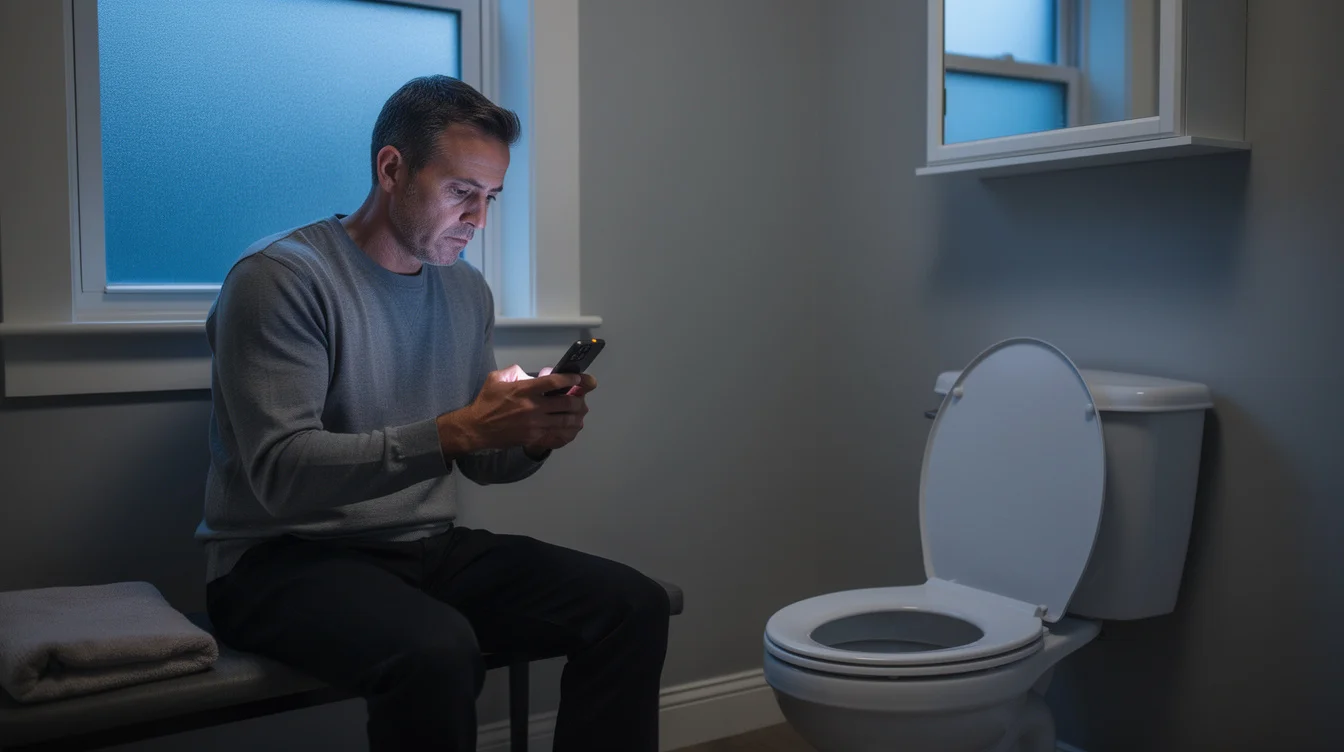
Kohler’s expertise in bathroom products does not, by itself, establish clinical validity. That is not an accusation against Dekoda; it is the boundary every company entering health technology must respect. Claims require evidence appropriate to the intended use, including clarity about the populations and conditions in which a system has been evaluated.
Design must preserve the distinction between wellness observation and clinical interpretation. If an output is only descriptive, the interface should say so where the result appears—not hide the limitation behind a settings menu. If it recommends seeking care, the recommendation needs a defensible basis and an appropriate pathway. A reassuring reading must never imply that symptoms can be ignored.
The shared bathroom adds another boundary: consent. A domestic fixture serves partners, children, visitors and carers. As with the privacy challenges of home security cameras, the purchaser is not necessarily the only person being observed. Any monitoring system must explain whether and how observations are associated with individuals, what happens when identification is uncertain, and how someone can use the toilet without being monitored. Where applicable, a clear pause control is not a luxury feature. It is basic hospitality.
Architect Cedric Price’s famous challenge—“Technology is the answer, but what was the question?”—lands sharply here. Was the question how to help someone communicate a persistent change, or how to create another recurring engagement metric?
The decisive test is whether users gain agency. Data minimisation, understandable retention periods and meaningful deletion matter as much as a discreet housing. The most responsible product may sometimes conclude that its observation offers no useful action, and resist inventing one merely to keep the user engaged.
FAQ
What is Kohler’s Dekoda?
Dekoda is a toilet-mounted health tracker created through Kohler Health, a spin-off venture of bathroom brand Kohler. According to the supplied Dezeen report, it clips onto the toilet bowl. That source context does not establish its specific measurements, clinical performance or interface features.
Can a toilet health tracker diagnose a gut condition?
A record of bodily observations is not automatically a diagnosis. Diagnostic claims require appropriate clinical validation and, where applicable, regulatory authorisation. A device might support a medical conversation, but users should not assume that a wellness output identifies or rules out disease.
How should a tracker communicate what counts as normal?
It should identify whether a comparison uses the user’s previous observations or a population reference, explain measurement limitations and distinguish detected change from established clinical significance. An individual baseline is useful context, not a certificate of health. Uncertain readings should be labelled uncertain.
When should users seek clinical interpretation?
Persistent unexplained changes or concerning symptoms deserve professional advice regardless of a tracker’s score. Blood in stool, severe abdominal pain or unexplained weight loss should not be reduced to dashboard trends. A responsible interface supports appropriate care rather than presenting itself as a substitute for it.
If the toilet becomes a health monitor, who should define when an ordinary difference becomes a problem: the user, the clinician or the company selling the sensor?
Watch the Mainifesto Short
Get the Mainifesto weekly — curated design debates, speculative ideas and the week's best articles every Saturday.
Editorial Perspectives
Questions and counterpoints developed by the Mainifesto editorial desk to extend the discussion.
Perspective 1
I’m for a toilet that makes useful health checks part of everyday life, rather than another wearable to charge and forget. Let clinicians set evidence-based thresholds and users choose how they’re notified—and make the sensor replaceable, so a useful upgrade doesn’t turn a durable bathroom fixture into electronic waste.
Perspective 2
I don’t want the bathroom turned into another dashboard telling us we’re slightly wrong. When the company selling the sensor also defines the warning, ordinary variation can become a reason to keep checking—and keep paying.
Perspective 3
A threshold is a design decision, not just a number: does the system compare me with my own baseline or with a population average? I’d want clinically validated rules that account for uncertainty, with an interface that can say ‘not enough information’ instead of forcing every reading into normal or abnormal.
Perspective 4
An alert is only useful if there’s somewhere affordable to take it. Clinicians should define medical concern, but whoever installs these systems also needs to answer who controls the data—especially in rented or shared housing, where the person using the toilet may not be the customer.