Can a Global Museum Alliance Protect Curatorial Freedom?
Can a Global Museum Alliance Protect Curatorial Freedom?
A museum alliance can move paintings across borders. Moving the freedom to interpret them is considerably harder. Monocle’s account of the partnership between Hong Kong’s M+, New York’s Museum of Modern Art and Paris’s Centre Pompidou places that contradiction at its centre: M+ director Suhanya Raffel discusses profitability and censorship battles as the institution celebrates its fifth birthday amid an Asian art boom.
The attraction is obvious: three influential institutions, different collections, wider audiences. The danger is less photogenic. International cooperation can distribute cultural authority—or distribute instructions about what must remain unsaid. The question is not whether these museums should collaborate. It is whose limits become the collaboration’s operating system. The reported partnership should not itself be mistaken for evidence of enforceable protections for curatorial independence.
PRO: A Network Can Make Isolation More Difficult
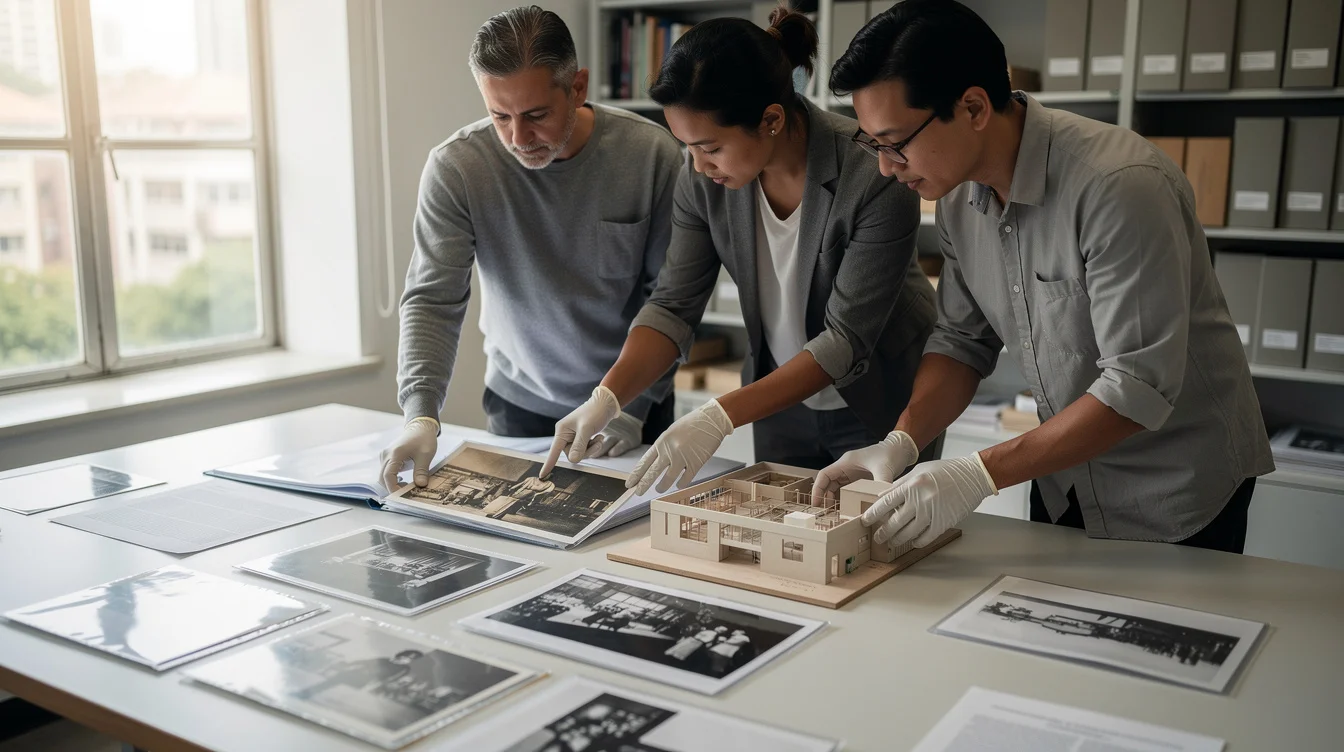
The strongest case for the alliance is not the blockbuster exhibition. It is institutional leverage. A curator working alone can be overruled quietly. A project developed with colleagues in Hong Kong, New York and Paris creates more witnesses, professional commitments and opportunities to challenge an intervention. Suppressing a jointly researched exhibition could become a diplomatic and reputational problem rather than an invisible internal adjustment.
M+ brings more than access to an expanding market. Its remit spans visual art, design, architecture and moving image, allowing it to question the divisions that Western museums helped establish. The M+ Sigg Collection, built around Chinese contemporary art, provides a substantial historical resource rather than an optional regional supplement. Read alongside MoMA’s collections, it can complicate the familiar story in which artistic innovation travels outward from Europe and the United States.
Consider a hypothetical exhibition connecting the experimental practices of China’s 1980s avant-garde with international conceptual art. Shared research could prevent Chinese artists from being reduced either to dissident symbols or to auction-market trophies. The benefit would be intellectual as well as political: more specialists, more competing interpretations and less dependence on a single institution’s preferred narrative. Distributed expertise can make simplification harder to sustain.
PRO: Exchange Can Build Infrastructure for Disagreement
There is precedent for a major museum using its collection to contest official policy. In 2017, following President Donald Trump’s travel restrictions targeting several Muslim-majority countries, MoMA installed works by artists from affected countries within its permanent-collection galleries. These included work by Iraqi-born architect Zaha Hadid and Sudanese artist Ibrahim El-Salahi. The intervention demonstrated that collection display is not merely housekeeping: placement, attribution and context can constitute a public argument.
An alliance could give such arguments longer lives. If one venue cannot present a work, another might exhibit it, publish the research or host the discussion. Shared conservation and archival projects could also preserve material beyond the lifespan of a politically vulnerable exhibition. These are potential mechanisms, not safeguards established by the announcement.
For the promise to become credible, partners should negotiate protections before a controversy arrives: preserve independently authored catalogue essays, record significant changes to agreed presentations and establish procedures for supporting artists whose work is challenged. Some negotiations would require confidentiality, especially where individuals face personal risk. Confidentiality, however, should protect people rather than conceal institutional convenience.
The architecture of cooperation matters more than its branding. An alliance designed around the right to disagree could make international exchange a defence against isolation. That would be a public service worth more than another prestigious loan.
CONTRA: The Strictest Boundary Can Become Everyone’s Brief
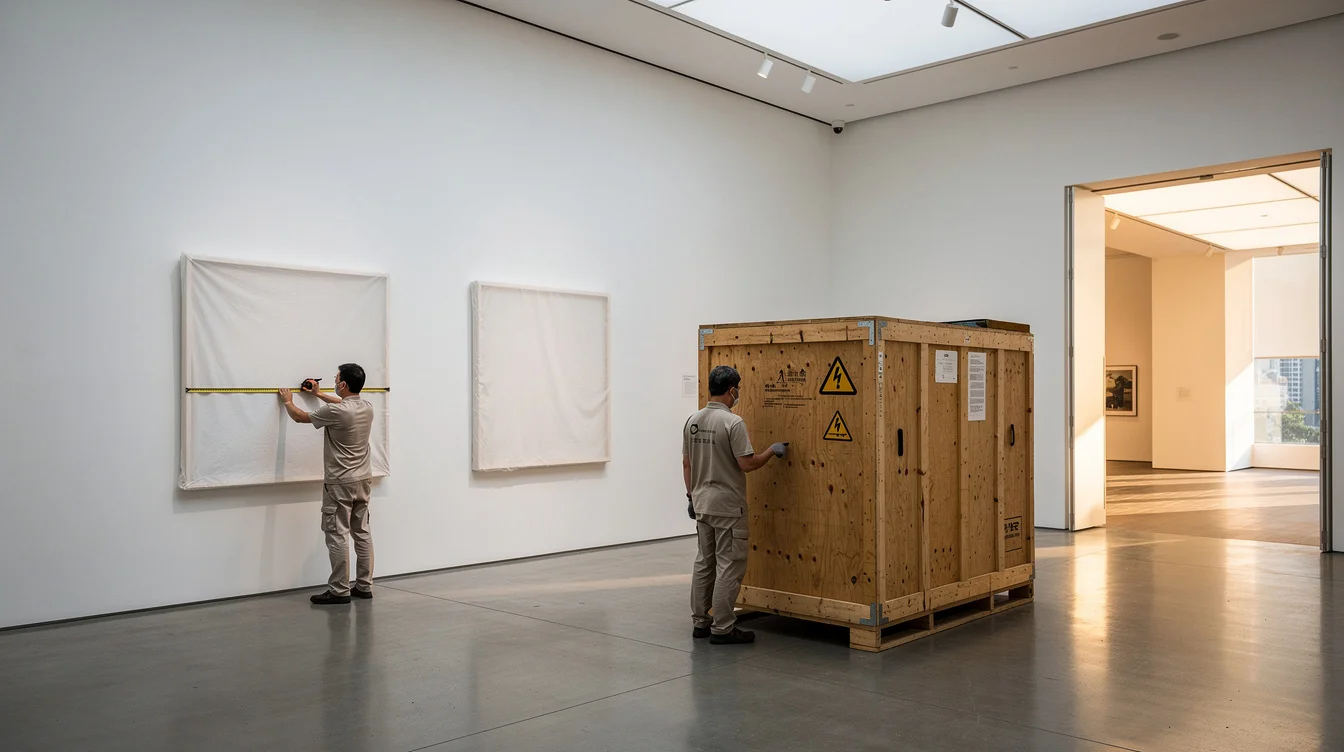
The opposing case is equally serious: partnership can turn censorship from a visible prohibition into an invisible design constraint. A touring exhibition must negotiate different laws, lenders, insurers and political expectations. The simplest administrative solution is to select works that encounter the least resistance everywhere. Nobody needs to issue a dramatic ban. Difficult material can disappear before a checklist exists.
Hong Kong’s national security framework makes the stakes particularly acute. Its effects should not be confused with ordinary disagreements over exhibition quality. Around M+’s 2021 opening, Ai Weiwei’s photograph showing a raised middle finger toward Tiananmen Square became a flashpoint over what the museum could display. The episode exposed a crucial distinction: possessing a work does not guarantee the freedom to show it, contextualise it or defend its inclusion.
Imagine an alliance exhibition about public space. Architecture models, transport diagrams and attractive street photography could travel comfortably while material addressing protest, surveillance or contested sovereignty is excluded as impractical. The result might look sophisticated and international while evacuating the subject’s central conflicts.
This is the danger of lowest-common-denominator programming. Censorship succeeds most efficiently when it is mistaken for good project management. Once curators anticipate objections across three institutions, the range of imaginable projects may shrink rather than expand.
CONTRA: Prestige Can Launder Compromise
Neither New York nor Paris supplies a politically innocent counterweight. Museums everywhere negotiate state priorities, trustee interests, donor influence and commercial exposure. The Guggenheim’s cancellation of Hans Haacke’s planned 1971 exhibition, which included his investigation of New York property ownership, remains a warning against treating Western institutional autonomy as an accomplished fact. That example concerns a different museum, but the governance problem travels.
Centre Pompidou’s collaboration with Shanghai’s West Bund Museum, inaugurated in 2019, also demonstrates that international museum exchange predates this alliance and already operates across different political systems. It does not, by itself, prove either capitulation or independence. It shows why the operative questions concern contracts, editorial responsibility and the treatment of disputed material—not the prestige of the participating names.
Raffel’s discussion of profitability adds another pressure point. Financial performance is not evidence of curatorial compromise. Yet when international partnerships are justified through attendance, sponsorship or market expansion, challenging exhibitions must compete against predictable audience products. A recognised artist, an immersive installation or a survey of modernist furniture can become attractive partly because its conflicts seem manageable.
The alliance therefore deserves conditional scrutiny, not automatic applause. Its test will be whether partners can acknowledge disagreement, preserve different interpretations and explain consequential omissions. If international prestige merely makes restrictions look like consensus, the partnership will not protect curatorial freedom. It will give its erosion a world-class visual identity.
FAQ: What Would Meaningful Independence Require?
What is the M+, MoMA and Centre Pompidou alliance intended to do?
The reported alliance connects three major museums around international cultural exchange. Its significance lies in their different collections, audiences and institutional contexts. The source context does not establish detailed contractual commitments or specific protections for curatorial independence.
Can an international partnership override local censorship laws?
No. Each institution remains subject to the laws governing its activities. Partners can nevertheless negotiate alternatives, including publication, discussion or presentation elsewhere, while assessing risks to artists and staff. International visibility is leverage, not legal immunity.
Does showing different works at different venues necessarily mean censorship?
No. Conservation requirements, space, lending conditions and curatorial arguments routinely produce different displays. The warning sign is an unexplained omission driven by political pressure, especially when institutions present the resulting selection as an unrestricted shared vision.
How should audiences judge whether the alliance protects curatorial freedom?
Look beyond attendance and celebrated loans. Ask whether artists retain meaningful input, contested interpretations remain accessible and substantial changes receive explanations. A credible alliance should demonstrate how it handles disagreement, not simply advertise how well its partners agree.
If a museum alliance can circulate artworks but cannot openly defend the ideas attached to them, is it expanding cultural exchange—or designing a more elegant form of silence?
Watch the Mainifesto Short
Get the Mainifesto weekly — curated design debates, speculative ideas and the week's best articles every Saturday.
Editorial Perspectives
Questions and counterpoints developed by the Mainifesto editorial desk to extend the discussion.
Perspective 1
I’m in favour of the alliance: sustained exchange can share conservation knowledge and help museums care for what already exists, rather than constantly commission more. But its value needs evidence—shared research, lower-impact loans and public backing for curators when an exhibition becomes politically difficult.
Perspective 2
I’m against an alliance that connects collections while leaving curatorial freedom outside the agreement. In a shared system, the tightest constraint can shape every output; what stops one partner’s restrictions becoming everyone else’s exhibition brief?
Perspective 3
A vessel can travel safely in a crate while the history of the hands that made it gets left behind. I’d judge this exchange by what a curator can say beside the object, not by how many famous works arrive.
Perspective 4
Before calling this a defence of curatorial freedom, I’d want to see who can veto a show, whether withdrawals are disclosed and what happens when a partner comes under pressure. Shared programming is useful, but without those rules the alliance is a logistics agreement, not a safeguard.