
Can a Conservation Wall Protect Without Dividing?
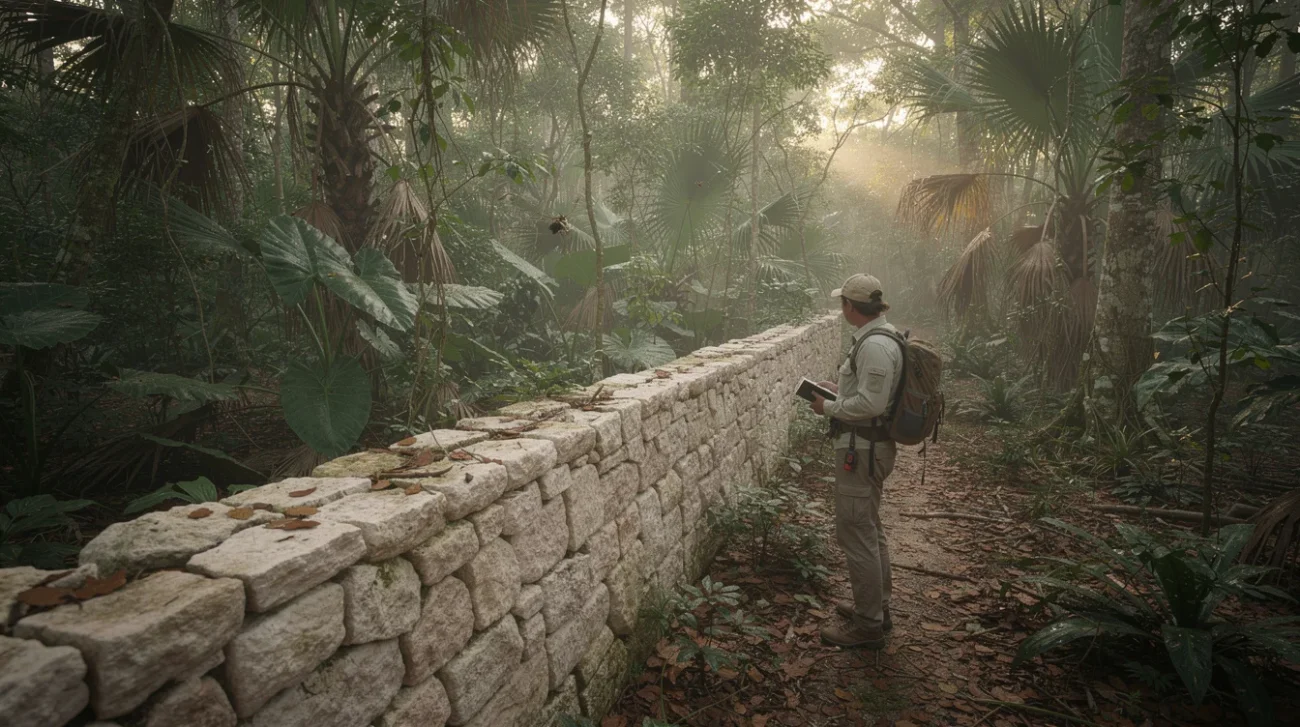
A wall is architecture’s bluntest declaration: this side belongs to something different from that side. Conservation complicates the declaration. The forest needs protection from destructive access, yet the animals it shelters cannot be expected to respect a property line. At Parque del Jaguar in Tulum, Mexico, that contradiction stretches across 18 kilometres of limestone.
According to Dezeen’s report of 14 November 2026, Colectivo C733 designed the wall to protect more than 1,000 hectares of forest while allowing wildlife to pass through. That establishes the project’s ambition, not proof of its ecological performance. The supplied account does not specify passage dimensions, species-level monitoring results or maintenance arrangements. The architectural question is therefore not whether the enclosure looks convincing. It is whether selective permeability can work on the ground—and keep working after construction crews leave.
PRO: A Boundary Can Defend the Habitat That Movement Requires
The strongest argument for a conservation wall is uncomfortable but practical: connectivity means little if the habitat being connected disappears. Where a boundary helps prevent vehicle intrusion, dumping or incremental land clearance, it can defend the conditions wildlife movement depends on. These are potential functions, not documented outcomes at Parque del Jaguar. A protected forest is not automatically a connected forest, but an unprotected corridor can become a road, a building plot or a promise on an obsolete map.
The architectural opportunity is to separate access types rather than prohibit movement indiscriminately. Human entry can be directed towards supervised points while animal routes remain distributed according to ecological evidence. That requires more than leaving occasional holes. Passage locations should respond to existing trails, vegetation cover, drainage and the landscape beyond the wall. An opening that delivers an animal into traffic is not connectivity; it is a badly placed invitation.
Costa Rica’s La Selva–Braulio Carrillo biological corridor offers a useful counterpoint to the monumental boundary: its value lies in the relationship between protected habitats across a larger landscape. Applied to Tulum, that logic makes the wall a supporting instrument rather than the conservation project itself. Colectivo C733’s enclosure deserves architectural credit only insofar as it helps maintain a functioning territory. Its length is a construction statistic. The continuity of habitat on either side is the more consequential design brief.
PRO: Passage Design Can Make Protection More Intelligent
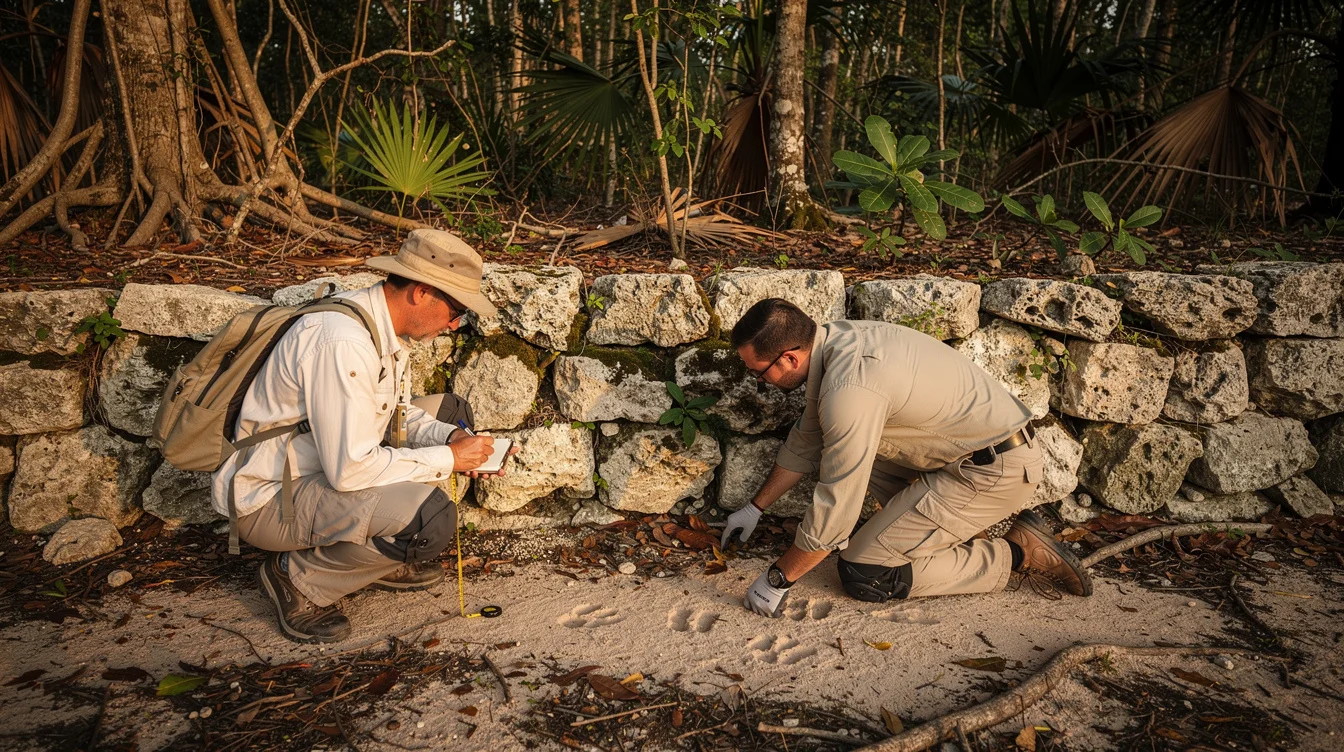
Selective permeability is not inherently contradictory. Architecture already sorts movement through thresholds, screens and controlled entrances. The difference here is that the users cannot read signs, request assistance or explain why a route feels unsafe. Designers must learn from behaviour instead of demanding compliance.
Banff National Park’s wildlife crossings in Canada demonstrate the value of treating barriers and passages as a coordinated system. Fencing helps guide animals towards crossings, while long-running research examines which species use which structures. Highway infrastructure is not directly equivalent to a limestone forest boundary, but the methodological lesson travels: provision is a hypothesis; recorded use is evidence.
For a Tulum conservation wall, a credible design process would test different opening conditions rather than assume one aperture suits every animal. Large terrestrial mammals may require generous clearance and concealed approaches; smaller animals may need protected ground-level routes. Arboreal movement raises a separate question about canopy continuity. These are design requirements to investigate, not verified features of the built wall.
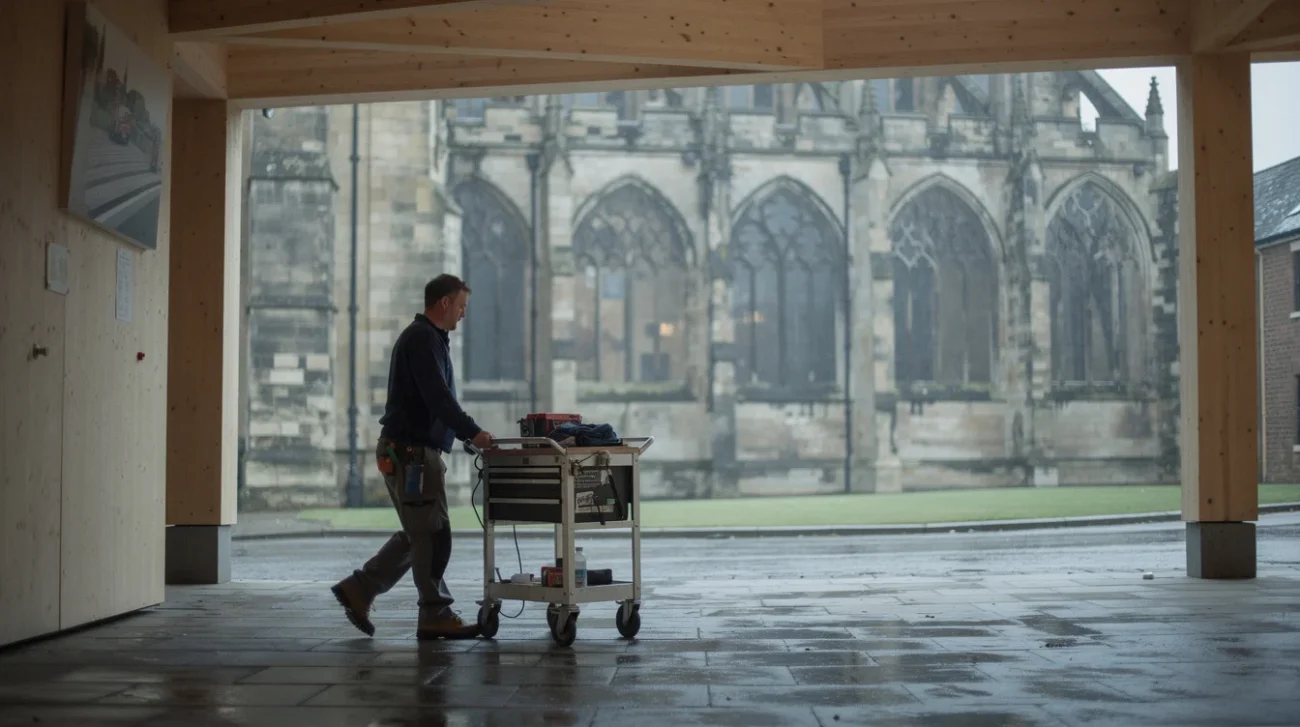
Maintenance then becomes part of the architecture. Inspections should identify sediment, fallen branches, damaged edges and human modifications that obstruct a passage. Vegetation management must distinguish between a blockage and useful shelter. Local ecological knowledge should guide both siting and upkeep. A funded inspection schedule is less photogenic than limestone stretching into the trees, but it may contribute more to the boundary’s actual performance. In a different conservation context, York Minster’s timber workshops likewise put the infrastructure of ongoing care at the centre of the architectural brief.
CONTRA: A Permeable Wall Can Still Fragment a Living Landscape
The opposing case begins with a warning: a passage does not cancel a barrier. It concentrates movement into selected locations, potentially forcing detours and exposing animals to conditions they would otherwise avoid. A wall can remain functionally impermeable to some species even when photographs show openings at its base.
Those openings may also serve unwanted users. Domestic dogs, invasive animals or people seeking unauthorised access can exploit routes intended for wildlife. Meanwhile, repeated animal movements through narrow bottlenecks could create predictable opportunities for disturbance or hunting. These are risks to assess, not allegations about Parque del Jaguar. They expose a basic limit to the rhetoric of selective permeability: architecture cannot perfectly sort living bodies into desirable and undesirable categories.
Ecologist Paul Beier’s work on wildlife corridors emphasises that connectivity depends on the requirements of particular species and on the surrounding landscape. A corridor drawn on a plan is not necessarily a corridor an animal will use. The same applies to an opening drawn in an elevation.
The jaguar is a powerful public emblem, but it is an insufficient sole client. Evidence that one large mammal crosses would not establish permeability for smaller mammals, reptiles or other forest inhabitants. Nor would it show that movement beyond the boundary remains safe. The project’s territorial protection could be locally effective while the wider landscape continues to fragment. No wall detail can compensate for the loss of habitat outside it.
CONTRA: Without Monitoring, Permeability Becomes a Design Alibi
The deeper objection is institutional. Architecture is often commissioned as a finished object; ecological connectivity is an ongoing condition. Once a wall is handed over, responsibility can fragment between park management, maintenance contractors, researchers and security teams. A passage can be blocked for operational convenience without anyone formally declaring the ecological concept abandoned.
The Wallis Annenberg Wildlife Crossing in California offers a useful comparison in ambition: its purpose is to reconnect habitat across a major freeway, not simply to deliver a recognisable structure. For any such intervention, construction completion and ecological success are different milestones. Tulum should be judged by the same distinction.
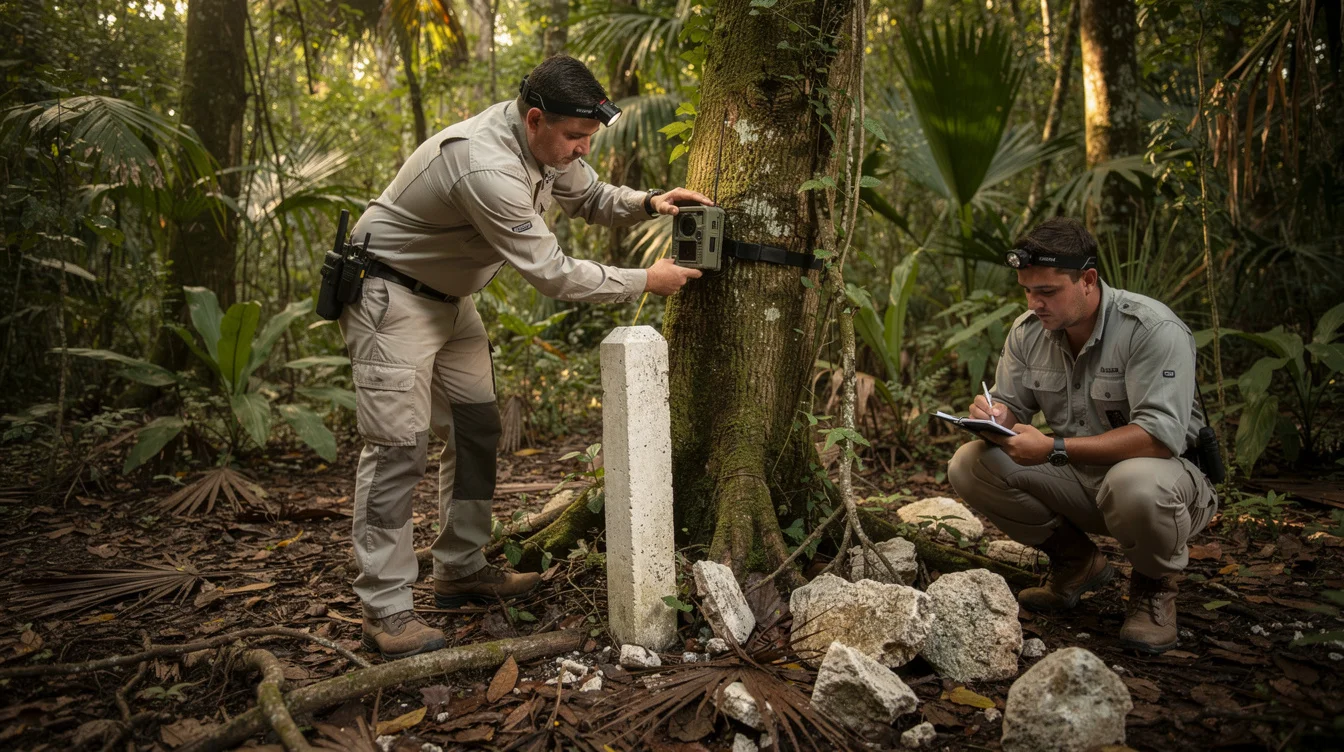
A serious monitoring programme would establish movement patterns before intervention where possible, then compare passage use across seasons and against suitable reference locations. Camera traps on both approaches could help distinguish animals investigating an opening from animals completing a crossing. Track surveys and, where justified and permitted, telemetry could add context. Counts alone are inadequate: repeated photographs of one individual do not demonstrate broad population connectivity.
Management should publish targets, limitations and corrective actions. If animals consistently refuse particular passages, managers must be able to widen, relocate or redesign them—not defend the original detail as architectural intent. Budgets must support that revision. The conservation wall’s strongest justification is also its hardest obligation: it must remain negotiable. If its form is fixed while animal movement fails, protection has become an aesthetic claim rather than a demonstrated ecological achievement.
FAQ: Judging a Conservation Wall by What Crosses It
What is known about the wall at Parque del Jaguar?
Dezeen reports that Colectivo C733 created an 18-kilometre limestone wall at the Tulum park to protect more than 1,000 hectares of forest while allowing wildlife passage. The supplied source account does not establish passage specifications or measured ecological outcomes.
What makes a wildlife passage effective?
Its location, dimensions, surface, shelter and approaches must suit the animals expected to use it. Safe habitat must continue beyond the opening. Effectiveness requires evidence of completed movements, not simply the presence of a gap in a wall.
How should wildlife passages be maintained?
Managers need scheduled inspections and checks after disruptive events such as storms. They should remove harmful obstructions, retain appropriate cover, repair damage and prevent informal closures. Every intervention should be recorded so maintenance decisions can be compared with changes in animal use.
How should success be measured?
Monitor completed crossings, species diversity, seasonal patterns, avoidance and injuries, using baseline or reference data where available. Longer-term research should investigate whether movement supports population connectivity. Neither wall length nor a single jaguar photograph is an adequate performance measure.
If a conservation wall cannot demonstrate sustained animal movement, should we redesign its openings—or question the decision to build the wall at all?
Get the Mainifesto weekly — curated design debates, speculative ideas and the week's best articles every Saturday.
Editorial Perspectives
Questions and counterpoints developed by the Mainifesto editorial desk to extend the discussion.
Perspective 1
From the walled garden onward, enclosure has been a tool of care as well as control; treating every boundary as an offence is rather thin criticism. I favour keeping the wall and redesigning its passages around observed animal movement—the architectural task is to make protection permeable, not abandon it.
Perspective 2
If sustained animal movement cannot be demonstrated, the wall itself—not just its openings—belongs under review. I oppose treating an 18-kilometre barrier as the fixed premise while wildlife does all the adapting; compare it with less obstructive ways to control clearing and development.
Perspective 3
In restoration, keeping a structure is not automatically a virtue; you keep what still serves and alter what causes harm. At Tulum, I would assess animal movement alongside who gains access, who loses it, and whether conservation becomes a selling point for development that prices residents out. Redesigning openings and questioning the wall are not mutually exclusive.