
When Mass-Produced Architecture Becomes a Collectible
When Mass-Produced Architecture Becomes a Collectible
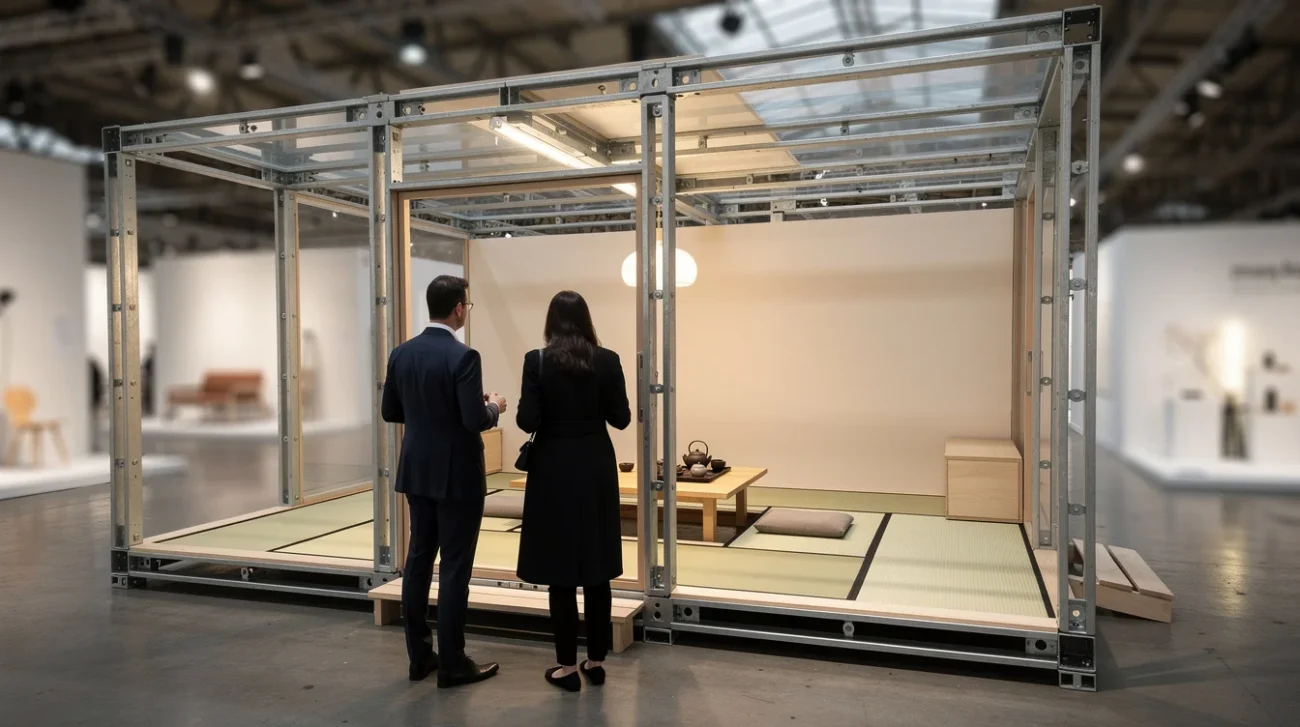
A house designed to come apart has acquired another detachable component: its original social meaning. According to Dezeen’s report, Galerie Patrick Seguin brought a 1944 house by Jean Prouvé to Design Miami.Paris, reinterpreting it as a Japanese pavilion with a tea-room interior. The collision is irresistible: industrial construction meets ceremonial domesticity, while a structure associated with repeatable production enters a marketplace organised around distinction.
But the easy accusation—that luxury has simply swallowed modernism—misses something important. Collectors can preserve buildings that conventional heritage institutions struggle to accommodate. They can also preserve the shell while deleting the argument. The question is not whether a prefabricated house deserves to be collected. It is whether collecting keeps its construction intelligence in circulation. That distinction separates an architectural archive from a beautifully staged dead end.
PRO — A Collection Can Keep a Building’s Intelligence Alive
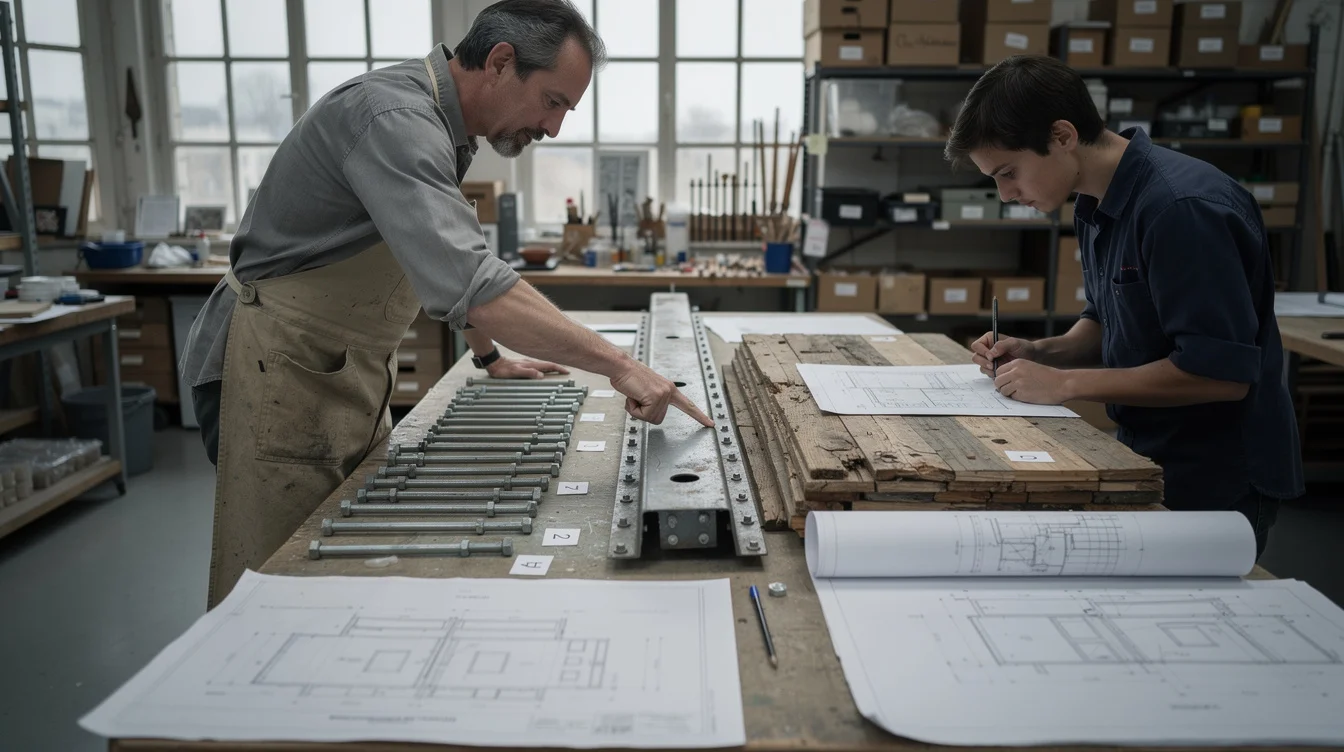
Prouvé’s architecture is particularly vulnerable to being misunderstood through photographs. A lightweight envelope can look unremarkable until its assembly becomes legible: the relationship between structural supports, interchangeable elements, joints and the sequence of erection. His demountable houses of the 1940s emerged from an industrial culture concerned with rapid construction and material economy. Their significance lies not only in silhouette, but in how the building becomes a manageable set of parts.
Preserving an actual structure therefore protects evidence that drawings cannot fully contain. A surviving connection records tolerances. A repaired panel reveals the consequences of weathering. Assembly marks can explain how components were identified and handled. Specialist conservation, when properly documented, turns an object into a working technical archive rather than a sacred image.
There is a useful parallel in the Eames House of 1949. Charles and Ray Eames demonstrated that industrial components could support an intensely personal domestic environment. Its conservation matters because the architecture joins material systems to lived experience; neither alone explains the achievement. Prouvé deserves that same refusal of the false choice between engineering and atmosphere.
A commercial gallery can contribute here. It can finance research, stabilise vulnerable components and arrange encounters at architectural scale. Those possibilities are real, although the supplied account of the Paris presentation does not establish which technical records were publicly available. Preservation earns its intellectual authority through evidence, not through the price or prestige of the preserved object.
PRO — Reinterpretation Can Test Whether a System Still Works
The Japanese tea-room treatment need not automatically betray the house. A demountable system makes a proposition about adaptability: architecture should accommodate changing circumstances without demanding total reconstruction. Giving an industrial enclosure a markedly different interior programme can test that proposition. Does its structural order support another arrangement of movement, enclosure and occupation? Can new layers be introduced without destroying the original components?
The distinction is between adaptation and costume. A tea room treated merely as shorthand for serenity would flatten a complex spatial tradition into marketable mood. An installation that makes the encounter legible, however, could reveal how two approaches to standardisation differ. Japanese domestic traditions have long employed dimensional coordination, including relationships between tatami and room proportions, without reducing every interior to an identical experience. Repeatable parts do not necessarily produce monotonous space. The relationship between coordination and uniformity also underlies the question of whether timber construction could work with a tree’s natural form rather than straightening it.
Konrad Wachsmann and Walter Gropius’s Packaged House system offers another reference. Developed in the 1940s, it pursued flexibility through coordinated panels and a sophisticated connector. Its limited commercial success does not erase the knowledge embedded in its joints. Exhibiting such experiments can recover alternatives that the construction industry failed to adopt.
On this reading, Design Miami.Paris becomes more than a sales platform. It can act as an unusually visible classroom for architectural systems. But the lesson requires assembly diagrams, component histories and a clear account of what the new interior changes. Reinterpretation is productive when it exposes the rules of construction, not when it merely refreshes the styling.
CONTRA — The Market Rewards the Exception, Not the System
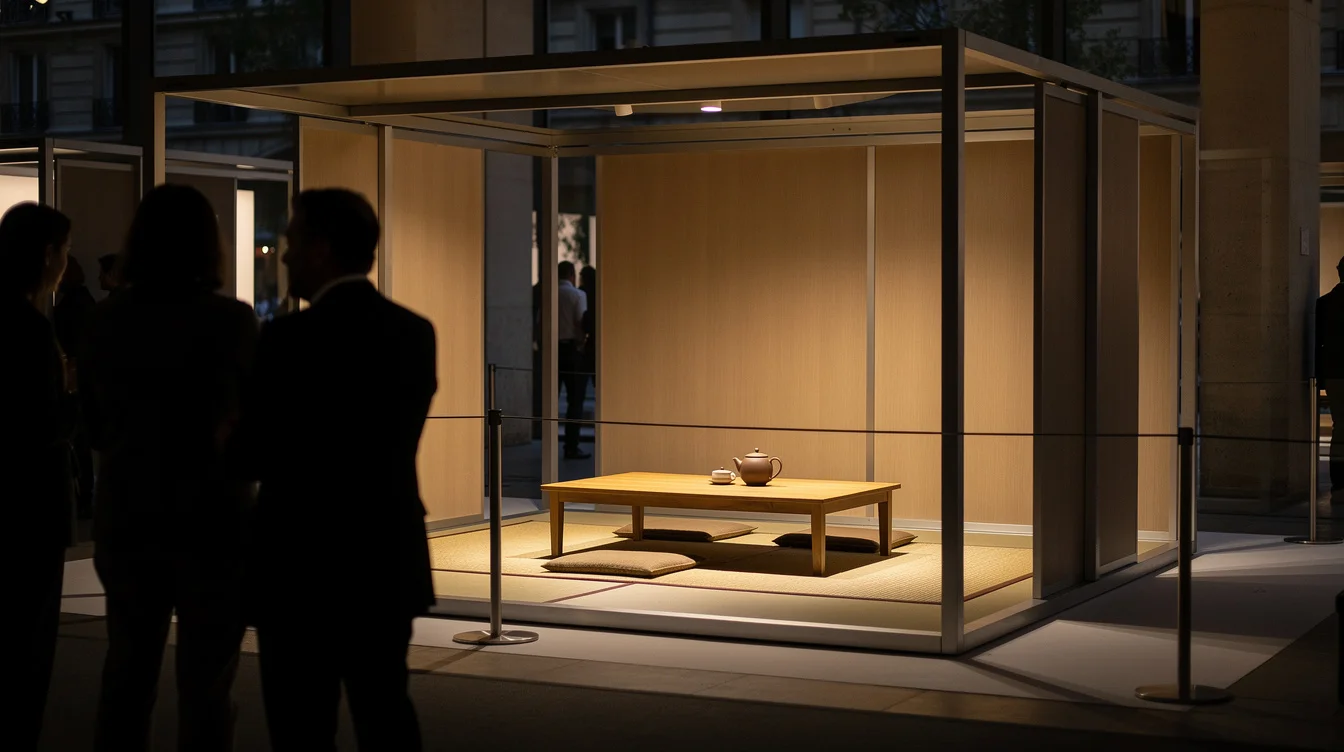
The collectible market nevertheless has a structural conflict with prefabrication. A production system gains value through repetition: more units, better coordination, lower costs and lessons carried into the next iteration. A collectible gains much of its desirability from distinction: provenance, condition, historical importance and limited availability. The same house can participate in both histories, but the incentives point in opposite directions.
Consider Lustron, the American manufacturer that produced porcelain-enamelled steel houses in the late 1940s. A surviving Lustron is valuable evidence of a broader attempt to industrialise housing, including its manufacturing and distribution difficulties. Restore one as an exquisite isolated artefact, however, and the factory, financing and delivery network can disappear from view. The object survives while the system becomes a footnote.
Prouvé’s name is especially susceptible to this reversal. Industrial decisions can be recoded as signatures of individual genius. A joint becomes a recognisable visual motif; a lightweight panel becomes a desirable patina. The very features developed to make construction economical acquire value as markers of rarity. Neither conservation nor collecting is inherently responsible for that shift, but the exhibition can accelerate it.
The Japanese pavilion framing adds another layer of differentiation. It gives this presentation an identity beyond the historical house itself. That may enrich interpretation, but it also makes the exhibit more singular and more memorable within a competitive fair. The danger is not that the structure becomes beautiful. It is that beauty becomes the only part of its industrial argument the market needs.
CONTRA — Saving the Parts Can Conceal the Failure to Repeat
Architectural salvage can also produce a misleadingly optimistic story. The dismantling of Kisho Kurokawa’s Nakagin Capsule Tower in Tokyo in 2022 generated preservation efforts around individual capsules. Those saved units retain extraordinary historical value. Yet an isolated capsule cannot reproduce the tower’s central proposition: a building whose accommodation units would be replaced over time. Component preservation and system continuity are not the same achievement.
The distinction applies to collectible prefab architecture. Moving a demountable house demonstrates that it can move. It does not establish that its construction method remains affordable, readily reproducible or suitable for contemporary housing needs. Current fire safety, thermal performance, accessibility and servicing requirements introduce questions that a fair installation need not answer. An elegant exhibition can make those unresolved issues feel irrelevant. A similar need to distinguish ingenuity from proven performance arises when asking whether ocean plastic can safely become a building’s skin.
Nor should a temporary tea-room interpretation be mistaken for proof of universal adaptability. A display programme may impose fewer demands than year-round habitation. Without a clear explanation of interventions, visitors cannot judge whether the historic system accommodates the new use or merely frames it.
The stronger curatorial approach would connect the restored object to openly accessible measured drawings, repair records, assembly sequences and critical accounts of its production economics. These are proposed standards, not documented features of this presentation. They would allow students and builders to learn beyond the fair. Without such transfer, industrial experimentation risks becoming an aesthetic detached from industrial consequences. The house is rescued, but the ambition to make its intelligence available to many is quietly abandoned.
FAQ — What Collecting Prefab Architecture Actually Preserves
Why is Jean Prouvé important to prefabricated architecture?
Prouvé brought metalworking and industrial production into architectural design. His demountable buildings explored how coordinated components, economical material use and planned assembly could reshape construction. Their importance extends beyond appearance to the practical organisation of building.
Does prefabricated mean the same thing as mass-produced?
No. Prefabrication means components are made before installation on site. A prefabricated building can remain a prototype or a small-series product. Mass production requires sustained repetition at scale. Confusing the two turns an industrial ambition into an achievement that may never have occurred.
Can a collectible house still be a useful architectural resource?
Yes, if preservation includes access to its construction knowledge. Measured surveys, repair documentation, assembly records and opportunities for study can make a privately owned structure useful beyond its ownership. Public visibility alone is not equivalent to technical accessibility.
Does the tea-room reinterpretation undermine the original house?
Not necessarily. A clearly explained, reversible intervention can reveal spatial flexibility. It becomes problematic when atmosphere replaces historical context or when visitors cannot distinguish the original construction from contemporary additions.
If a house conceived for repeatable construction survives only as a singular luxury object, have we preserved its architecture—or merely its remains?
Get the Mainifesto weekly — curated design debates, speculative ideas and the week's best articles every Saturday.
Editorial Perspectives
Questions and counterpoints developed by the Mainifesto editorial desk to extend the discussion.
Perspective 1
I would rather see Prouvé’s house collected than demolished in the name of fidelity to its social mission. Its joints and assembly logic remain architectural evidence, even at Design Miami.Paris; to call them merely ‘remains’ is to confuse a changed use-value with the disappearance of knowledge.
Perspective 2
Saving one house is worthwhile, but luxury collecting does not preserve the repeatable building system Prouvé was proposing. Show me accessible drawings, documented assembly methods and evidence that someone can build from them; otherwise, we’ve protected an asset, not a construction model.
Perspective 3
A relocated house can retain extraordinary evidence in its panels, repairs and connections, so I wouldn’t dismiss it as a corpse. But restoration also has to account for what relocation removes: the site, the occupants and the history of use that doesn’t fit neatly into a sales catalogue.
Perspective 4
I’d want to know whether the exhibition lets us understand the tolerances, connections and assembly sequence, not just admire the finished shell. Could collecting one house fund an open construction archive that lets others test and adapt the system? That would preserve its capacity to generate architecture, rather than just its shape.