
When a Prison Becomes a Luxury Hotel, What Should Survive?
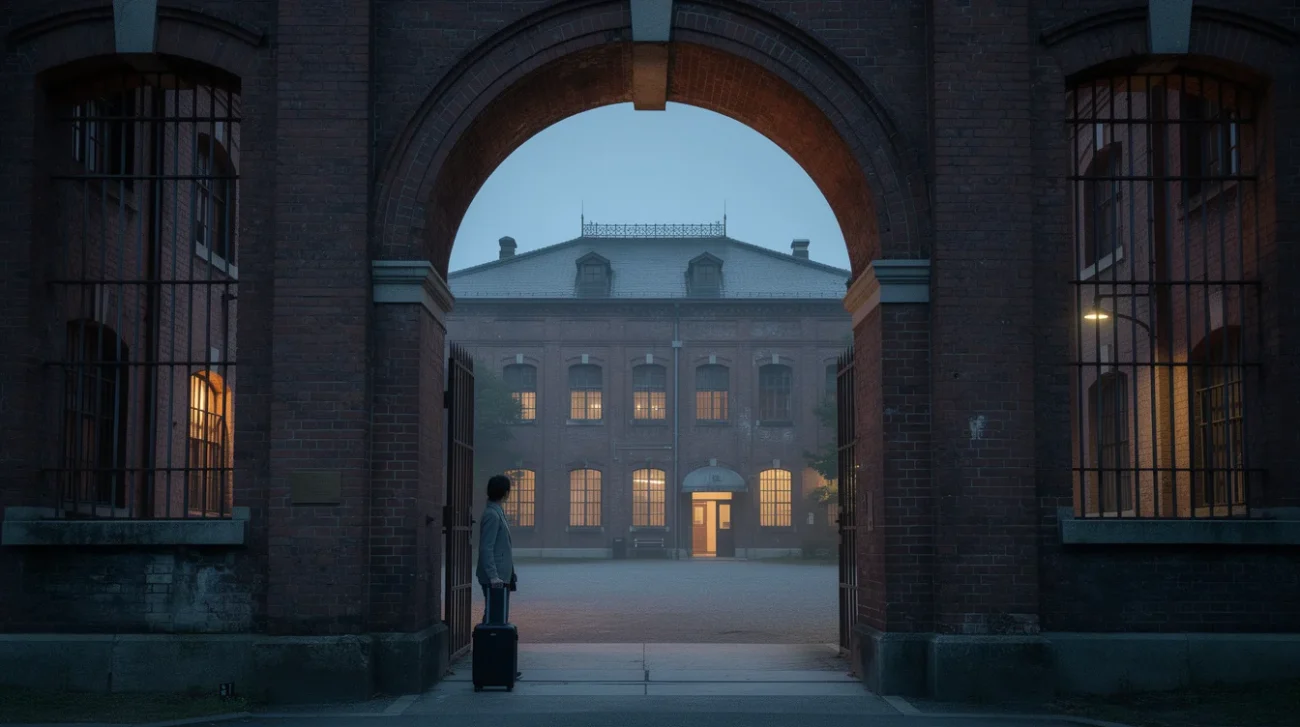
A prison can lose its purpose without losing its power. Its corridors still direct bodies; its barred windows still divide those who can leave from those who cannot. According to Wallpaper’s account, Hoshinoya Nara’s conversion of a landmark Meiji-era prison into a 48-suite hotel retains cells, barred windows and Romanesque architecture. That creates an extraordinary architectural proposition—and an ethical problem no amount of sensitive brickwork can resolve alone.
The strongest case for the project is that occupation protects buildings better than abandonment. The strongest case against it is that luxury can preserve every wall while erasing what those walls did. The question is not whether a prison may become a hotel. It is what the hotel owes the prison’s history.
PRO: A New Use Can Protect What a Monument Cannot
Adaptive reuse begins with an unromantic fact: buildings need maintenance, and maintenance needs durable funding. Large institutional complexes are particularly difficult inheritances. Roofs, masonry, drainage and extensive circulation space impose costs long after their original function disappears. Hospitality can give these liabilities an operating budget. At Nara, a 48-suite programme offers a route to continued occupation rather than treating the former prison as a picturesque object awaiting its next rescue. As with a new skyline that threatens an existing view, the value of development must be weighed against what a place stands to lose.
There is precedent for this bargain. The Liberty hotel in Boston occupies the former Charles Street Jail, retaining its monumental central volume within a hospitality conversion. Malmaison Oxford incorporates accommodation within a former Victorian prison at Oxford Castle. Neither project settles the ethics of incarceration-themed luxury. Both demonstrate that a building type designed for confinement can accommodate a radically different programme without wholesale demolition.
Nara’s retained cells and barred windows matter in that context. They resist the developer’s familiar demand for a frictionless shell. A prison’s repetitive openings and restrictive spatial organisation are not incidental decoration: they are evidence of its original operation. Keeping them can preserve the possibility of future understanding, even if today’s interpretation proves inadequate. Demolished evidence cannot be recovered by a better exhibition later. Material survival is not the whole ethical task, but it is a substantial first achievement.
PRO: Discomfort Can Be an Architectural Asset
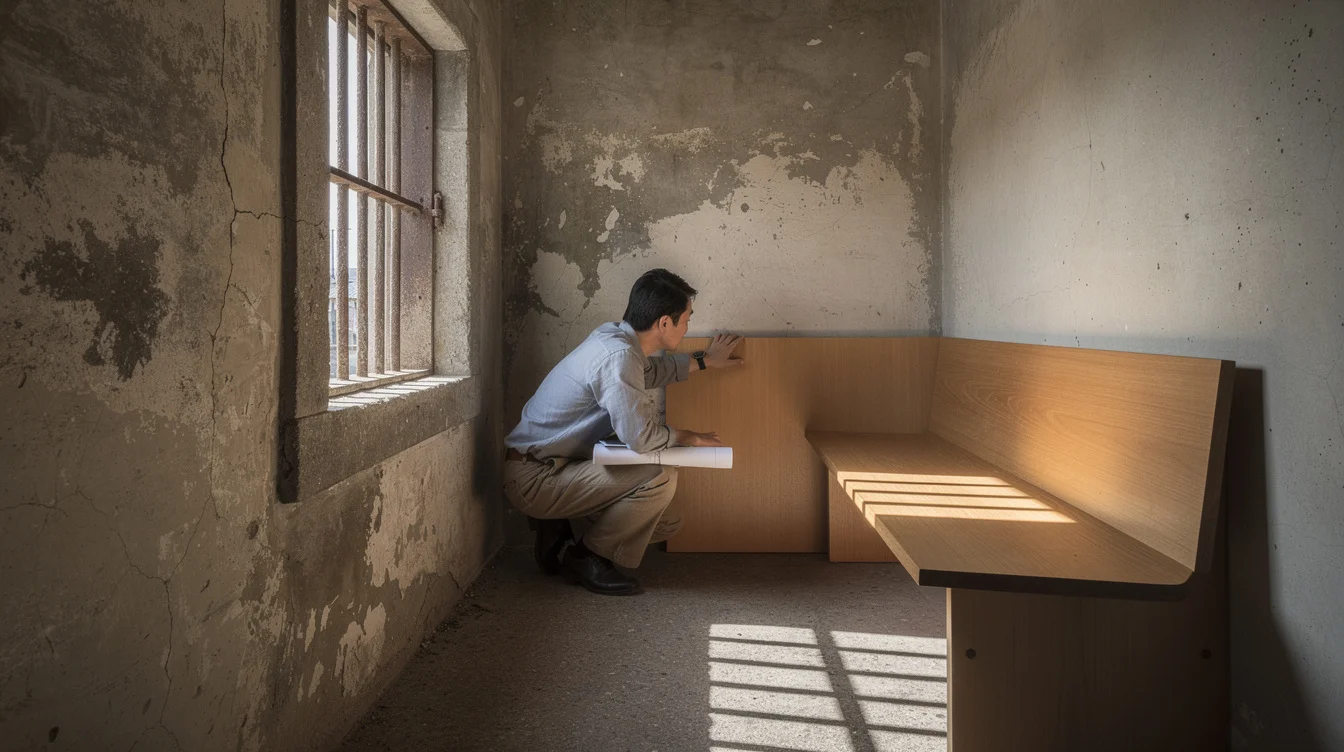
The preservation argument becomes stronger when it refuses to equate luxury with historical smoothness. A barred window need not be sold as a charming oddity. It can interrupt the guest’s assumption that a room exists solely for pleasure. Likewise, a retained cell can make the difference between voluntary retreat and enforced confinement spatially legible. Architecture sometimes communicates through dimensions and thresholds more forcefully than a panel of text.
David Chipperfield Architects’ restoration of Berlin’s Neues Museum offers a useful methodological reference, not a direct ethical equivalent. Old fabric, damage and new interventions remain distinguishable rather than being dissolved into a seamless historical fantasy. A prison conversion can adopt that discipline: make alterations readable, identify original elements and resist invented period atmosphere. The new use should announce itself as a new layer, not pretend the building was always waiting to become luxurious.
Nor must every former prison become a museum in its entirety. That position risks preserving a category of building while denying communities viable ways to sustain it. A hotel could support conservation, publicly accessible interpretation and research within one operating model. At Nara, these should be understood as possibilities to assess, not amenities established by the source summary. The architectural opportunity is nevertheless real: reuse can keep difficult heritage physically present in everyday life, rather than isolating it behind occasional opening hours.
CONTRA: Preserved Bars Can Become Luxury Scenery
The problem is that hospitality is exceptionally good at absorbing discomfort and selling it back as distinction. A cell becomes intimate. A surveillance corridor becomes dramatic. Bars become graphic shadows across expensive bedding. The building’s disciplinary apparatus survives, but its meaning is reversed: what once deprived people of choice now certifies the guest’s freedom to purchase an unusual experience.
This is why retained fabric cannot stand in for institutional memory. A barred window tells us that confinement occurred; it does not tell us who was confined, under which laws, how daily life was organised or how conditions changed. Those questions require research into this prison specifically. They cannot be answered by importing a generic narrative of suffering, any more than they can be answered by admiring Romanesque arches. Architectural style does not explain institutional practice.
Eastern State Penitentiary in Philadelphia provides a revealing counterpoint. Its interpretation addresses incarceration as a system, including histories extending beyond the monument itself. The lesson is not that Nara must reproduce an American prison museum. It is that interpretation can challenge the visitor’s relationship to the institution rather than merely explain its construction.
Without that challenge, architectural authenticity becomes a powerful alibi. The hotel can accurately claim to have preserved the prison while making incarceration almost impossible to encounter except as atmosphere. The masonry remains truthful; the experience does not necessarily follow.
CONTRA: Memory Needs Space, Authority and a Budget
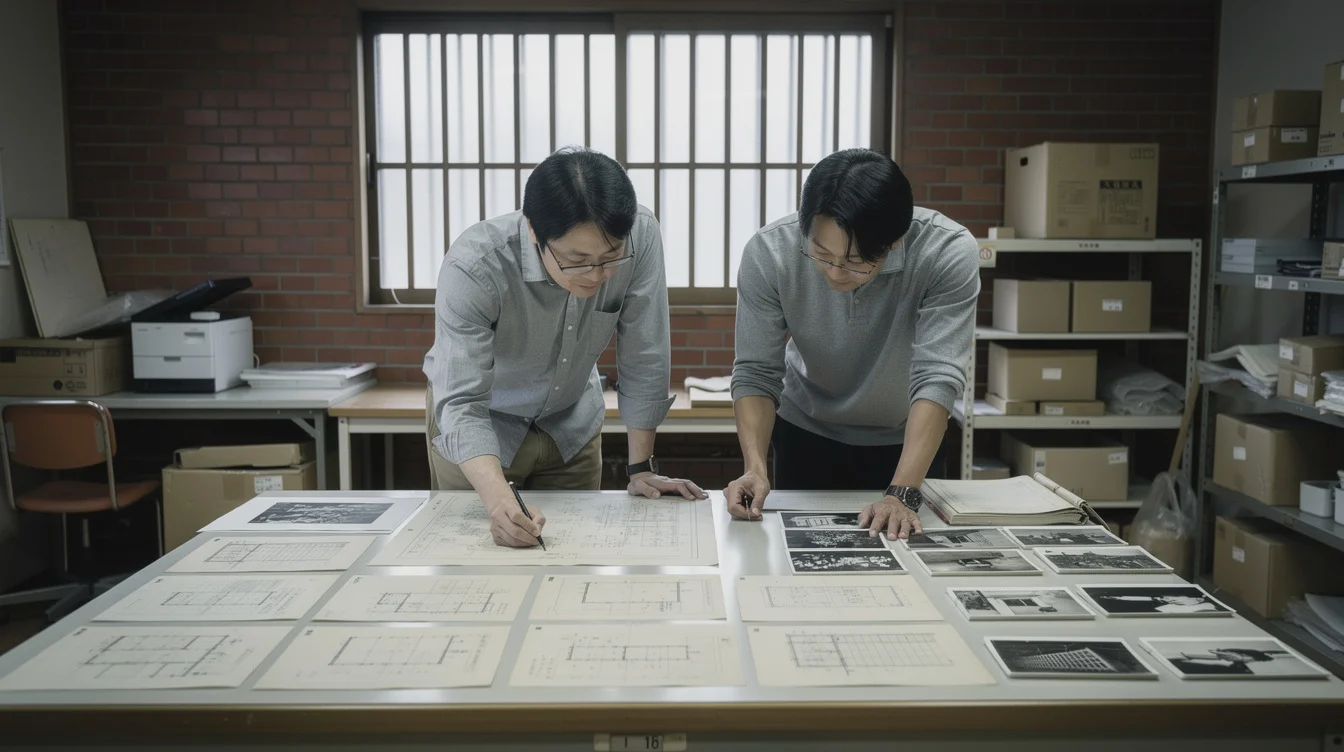
Responsible reuse therefore demands an interpretation brief as rigorous as the hospitality brief. Designers routinely choreograph arrival, lighting, privacy and service. Historical access should receive the same precision: where visitors encounter it, how long they can stay, what languages are available and whether they must buy a room to enter. A discreet plaque beside reception is not an adequate counterpart to an elaborately designed guest journey.
Constitution Hill in Johannesburg demonstrates another relationship between former incarceration and contemporary occupation. Its former prison buildings sit within a precinct that includes South Africa’s Constitutional Court and museum interpretation. Its particular political history cannot be transplanted to Japan. What can travel is the principle that a new programme should engage the institution’s past explicitly, rather than allowing architectural conservation to carry the entire burden.
For Nara, an appropriate standard would include an independently researched chronology, properly contextualised records and testimony where available, and a clear account of what remains unknown. Historians and relevant communities should have meaningful editorial authority, not merely a consultation credit. Original spaces should be documented, with some available for interpretation outside the purchase of accommodation. As with open-source housing, meaningful access depends on sharing knowledge, not simply making a building available. Funding should cover ongoing research and revision, not just opening-day exhibition graphics.
These are proposed tests, not claims about facilities confirmed in the supplied account. They expose the decisive issue: if historical interpretation disappears whenever it inconveniences the guest experience, preservation has become subordinate to the product. Luxury can finance memory. It should not own the right to edit it.
FAQ: Prison Hotels and Responsible Adaptive Reuse
What is being preserved at Hoshinoya Nara?
The supplied Wallpaper summary describes a Meiji-era prison converted into a 48-suite Hoshinoya hotel, with cells, barred windows and Romanesque architecture retained. It does not establish the full extent of historical interpretation or public access.
Do original cells and barred windows preserve institutional memory?
They preserve important physical evidence, including the spatial mechanisms of confinement. Institutional memory also requires researched accounts of people, rules and everyday operations; fabric alone cannot explain those histories.
Is converting a prison into a hotel inherently unethical?
No. Reuse can fund conservation and prevent demolition. The ethical test is whether the project acknowledges confinement honestly, avoids trivialising it and provides meaningful access to history beyond the paid guest experience.
What should responsible historical interpretation include?
Site-specific research, contextualised records, testimony where available, clearly identified uncertainties and accessible original spaces. Independent expertise and continuing funding are essential if interpretation is to remain more than a marketing accessory.
If a former prison’s history disrupts the comfort its hotel promises, which obligation should determine the design?
Watch the Mainifesto Short
Get the Mainifesto weekly — curated design debates, speculative ideas and the week's best articles every Saturday.
Editorial Perspectives
Questions and counterpoints developed by the Mainifesto editorial desk to extend the discussion.
Perspective 1
I’m in favor of the conversion: a prison need not remain frozen in its original function to retain historical force. But Foucault’s disciplinary space does not disappear beneath good linen; preserve the routes of surveillance and confinement, not merely a picturesque cell. Otherwise, this is scenography, not architecture.
Perspective 2
I’m not convinced a luxury hotel is the right reuse here: 48 suites make private comfort the organizing brief for a site whose history deserves public access. Before celebrating preservation, I’d want to see which spaces remain accessible without a booking and who controls the historical interpretation. Keeping the walls is the easy part.
Perspective 3
I’d want to map how the suite layouts change the prison’s original relationships between visibility, movement, and control. You could preserve every cell wall and still erase the spatial experience that made this a prison. Could the design let guests read those relationships without turning confinement into an immersive attraction?
Perspective 4
The operator gets revenue from the prison’s identity, so historical interpretation cannot be an optional amenity. Put public access, independent oversight of interpretation, and a funded archive into the operating agreement, rather than hoping a sensitive interior will do the job. If that disrupts the luxury promise, change the promise.