

Who Decides Which Phone Apps Are Essential?
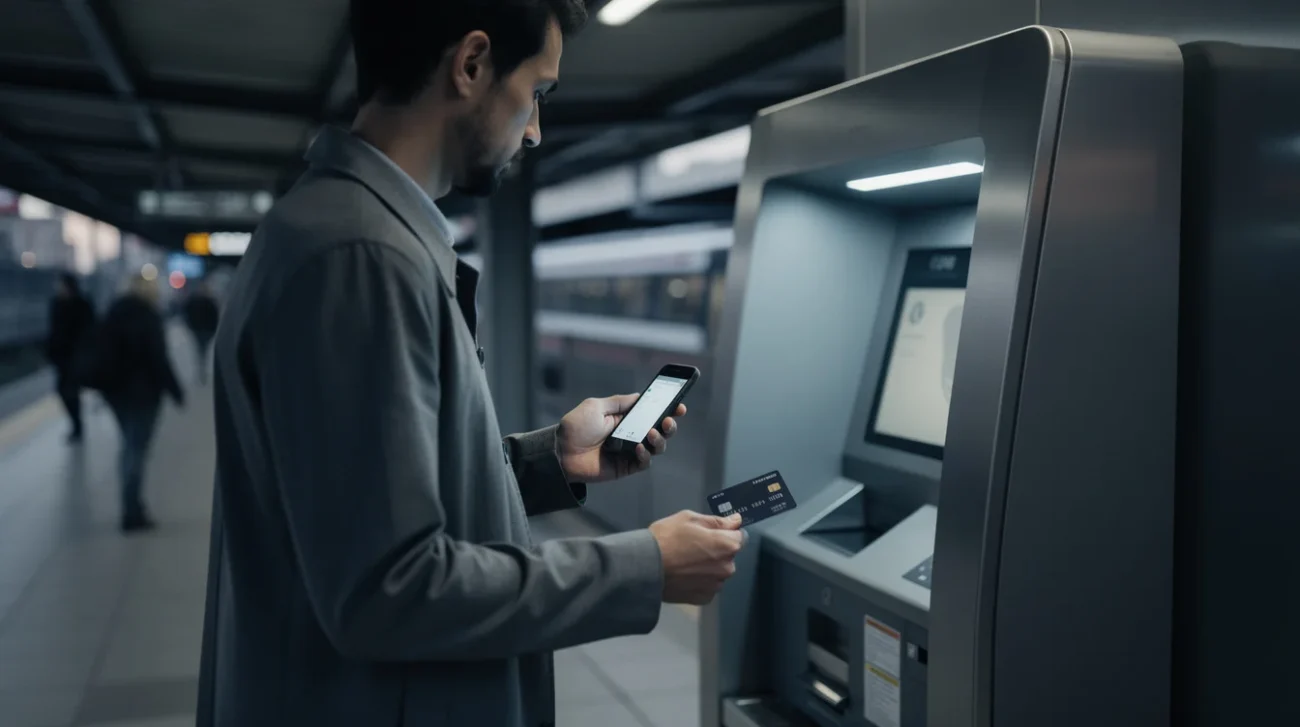
A phone can become smaller without making digital life simpler. Meadow, the three-inch device described by designboom as packing maps, music and messaging into a stripped-down alternative to the smartphone, offers an appealing proposition: leave the attention machine behind without becoming unreachable. It belongs to a growing design conversation about how much computing a person actually needs to carry.
But “essential” is not a neutral product category. Music might be essential to your commute; a banking app might be essential to paying for it. Messaging connects you to friends; an authenticator may connect you to your job. Meadow makes the question tangible, but the argument extends beyond any one device: should designers curate a smaller digital life, or should institutions stop making a full smartphone the price of participation?
PRO: A Smaller Phone Can Make a Bigger Boundary
The strongest case for Meadow is not nostalgia for buttons. It is the value of a boundary that does not require constant negotiation. A smartphone places the bus timetable beside the social feed, the camera beside the shopping platform, and a message from your partner beside a stream of algorithmic recommendations. Every practical action can become an invitation to stay.
A restricted device changes that arrangement. Instead of asking someone to exercise self-control repeatedly, it removes some of the decisions. This is the distinction between a screen-time warning and a product that cannot offer the same distractions in the first place. The Light Phone II, with its deliberately limited toolset and E Ink display, and Punkt’s MP02, centred on communication rather than an app marketplace, make related arguments through different hardware.
Dieter Rams’s principle of “less, but better” is useful here, provided “less” describes fewer competing demands rather than simply fewer features. A small phone that gets someone to a meeting, plays an album and keeps a family conversation available can be more coherent than a technically superior device that constantly redirects its owner.
Constraint can be a genuine service, not a moral punishment. For an evening walk, a concert or a weekend away, not carrying every platform is a legitimate preference. Design should support that preference without insisting that the user first become unusually disciplined.
PRO: Curated Essentials Can Expose Bad Service Design
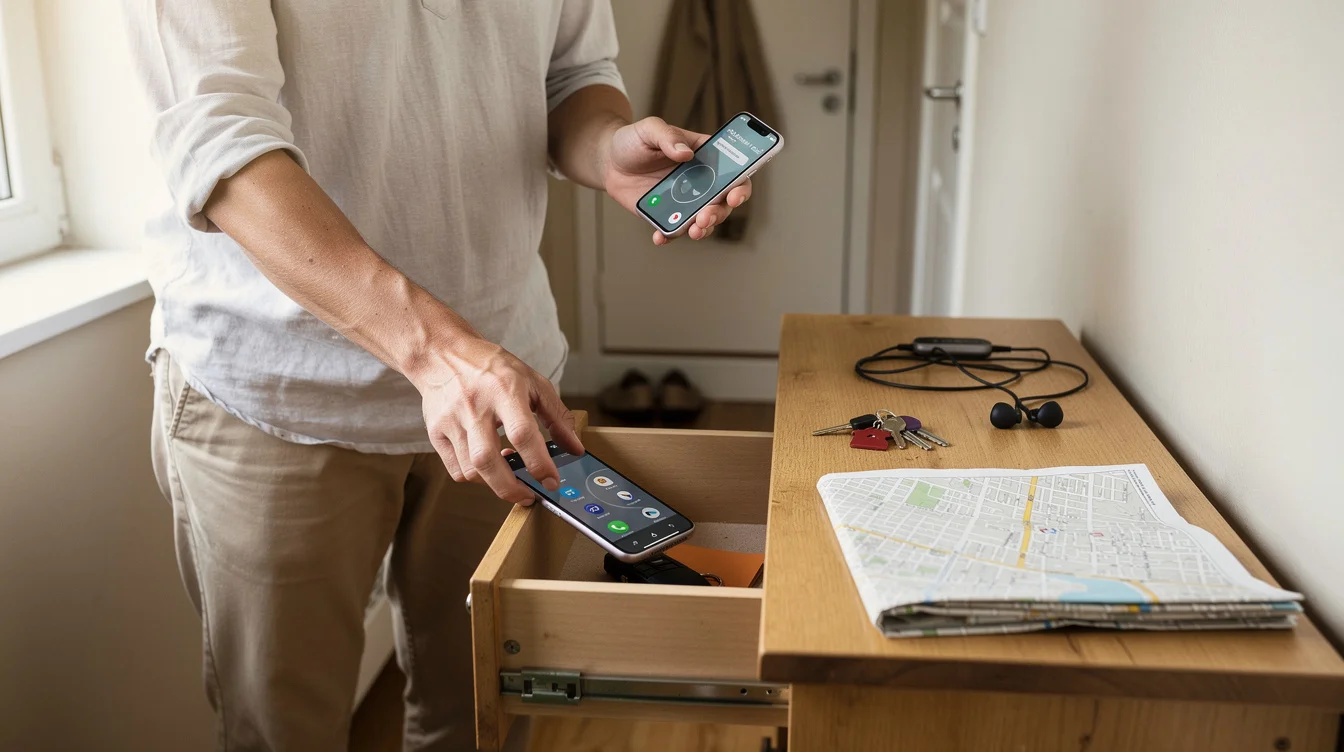
A minimalist phone also offers a useful stress test for the world around it. Imagine leaving home with messaging, maps and music, plus a payment card. If that combination cannot support an ordinary journey, the problem may lie less in your device than in the services you encounter. The product’s limits expose dependencies that a conventional smartphone quietly absorbs.
Transport for London provides a partial counterexample to compulsory app use: Oyster and contactless bank cards allow many journeys without presenting a phone. The system is not free of complexity, and fares and eligibility still matter, but the interaction demonstrates something important. A traveller can access the transport service without installing the operator’s interface on a personal device.
Banking can follow the same principle. Where institutions support them, browser access, telephone assistance and standalone security readers let customers choose different routes into the same service. None is automatically perfect. Together, however, they prevent one handset configuration from becoming a universal admission requirement.
Victor Papanek’s insistence that design answer real human needs sharpens the opportunity: treat minimalist hardware as a probe, not a complete solution. Testing a service with a limited phone can uncover barriers that also affect people with flat batteries, incompatible operating systems or no smartphone at all.
The pro position is therefore larger than digital detox. A deliberately limited device can make excessive digital requirements visible. Its inconvenience can be politically useful, provided institutions are expected to respond rather than merely congratulate the user for opting out.
CONTRA: Essentials Are Determined by Obligations, Too
The opposing case begins where product photography usually stops: at the moment an institution demands a capability the phone does not provide. The source description establishes Meadow’s emphasis on maps, music and messaging; it does not establish compatibility with every bank, ticketing system or authentication method. That uncertainty is central. No attractive shortlist can stand in for a person’s actual access requirements.
Consider a bank transfer requiring approval inside a registered banking app. A customer may be able to view an account in a browser but still need another device to authorise a transaction. Or consider an employer using Microsoft Authenticator or Duo Mobile. Alternative verification methods may exist, but whether workers can use them depends on the organisation’s configuration and policies, not simply on the worker’s preference.
Ticketing creates another trap. Ticketmaster’s SafeTix uses a moving barcode, making a saved screenshot an inadequate substitute for the live ticket. Delivery methods and alternatives vary by event. “Just print it” is not a universal answer, particularly when arrangements must be negotiated before arrival.
These are not edge cases to dismiss as failures of commitment. They are examples of delegated infrastructure: banks, employers and venues place part of their access system inside a privately owned handset.
A phone manufacturer can define its product’s essentials; it cannot define everyone’s essential obligations. When those categories diverge, the supposedly liberated user must carry a second device, arrange exceptions or accept exclusion.
CONTRA: Disconnection Becomes a Privilege Without Alternatives

A minimalist phone used alongside a full smartphone may still improve someone’s life. But that is selective separation, not independence from the smartphone system. It can also mean buying and maintaining more hardware to experience less software. The burden becomes especially visible when work, care responsibilities involving shared family health data or unpredictable travel make it difficult to decide in advance which device will be needed.
The right response is not to demand that Meadow become another conventional smartphone. It is to judge public and commercial services by the quality of their alternatives. A paper ticket is not meaningful access if it requires a costly journey to a distant office. A telephone option is not equivalent if it is unavailable during the transaction window. A browser route is not independent if its final step sends users back to an app.
The GOV.UK Service Standard offers a relevant benchmark through its emphasis on joined-up experiences across channels and making services usable by everyone. Applied rigorously, that means testing complete tasks rather than celebrating the existence of an alternative link. Can someone purchase, authenticate, change a booking and recover access without installing an app?
Alternatives must also preserve security. Printed recovery codes, physical security keys and staffed verification each have appropriate uses and limitations; none should be bolted on carelessly.
The decisive design question is who carries the burden of choice. If the user must negotiate every exception, minimalism remains a private workaround. If institutions preserve usable, secure channels, disconnection becomes an ordinary option rather than a privilege requiring spare devices and spare time.
FAQ: Essential Apps and the Right to Disconnect
What does Meadow’s minimalist phone offer?
According to the supplied designboom summary, Meadow puts maps, music and messaging into a three-inch phone intended for leaving a smartphone behind. That description does not establish support for particular banking apps, ticketing platforms or workplace authentication tools. Those requirements need checking separately.
Can a minimalist phone replace a smartphone completely?
For some people, yes; for others, only during selected activities. The practical test is to list recurring obligations, including payments, travel, work logins and account recovery, then verify that each has a workable route without the smartphone. A feature list alone cannot answer that question.
Are app-free alternatives necessarily less secure?
No. Physical security keys and dedicated authentication devices can offer strong protection when properly supported. But methods are not interchangeable: SMS has different vulnerabilities, and account recovery needs careful design. The goal is secure choice, not removing safeguards for convenience.
What should organisations provide for people without smartphones?
They should provide appropriate alternative channels and test them from start to finish. Depending on the service, that could mean physical tickets, payment cards, accessible websites or staffed assistance. Alternatives should not impose disproportionate costs, delays or reduced access merely because someone cannot use an app.
If a service requires an app to participate, who should have to redesign their choices: the person trying to disconnect, or the institution refusing to let them?
Watch the Mainifesto Short
Get the Mainifesto weekly — curated design debates, speculative ideas and the week's best articles every Saturday.
Editorial Perspectives
Questions and counterpoints developed by the Mainifesto editorial desk to extend the discussion.
Perspective 1
I like Meadow’s promise of leaving more room for attention, but no beautiful device can deliver that if your bank demands a different phone. Institutions should provide secure, app-free ways in; disconnecting shouldn’t mean losing access to your money or your train.
Perspective 2
I’m skeptical of calling a phone minimalist when it leaves necessary tasks to a second device—that’s more hardware, not less. If I choose Meadow, adapting my routine is partly my responsibility; banks and transit systems shouldn’t have to redesign around my preferred object without evidence that the alternatives work better for their users.