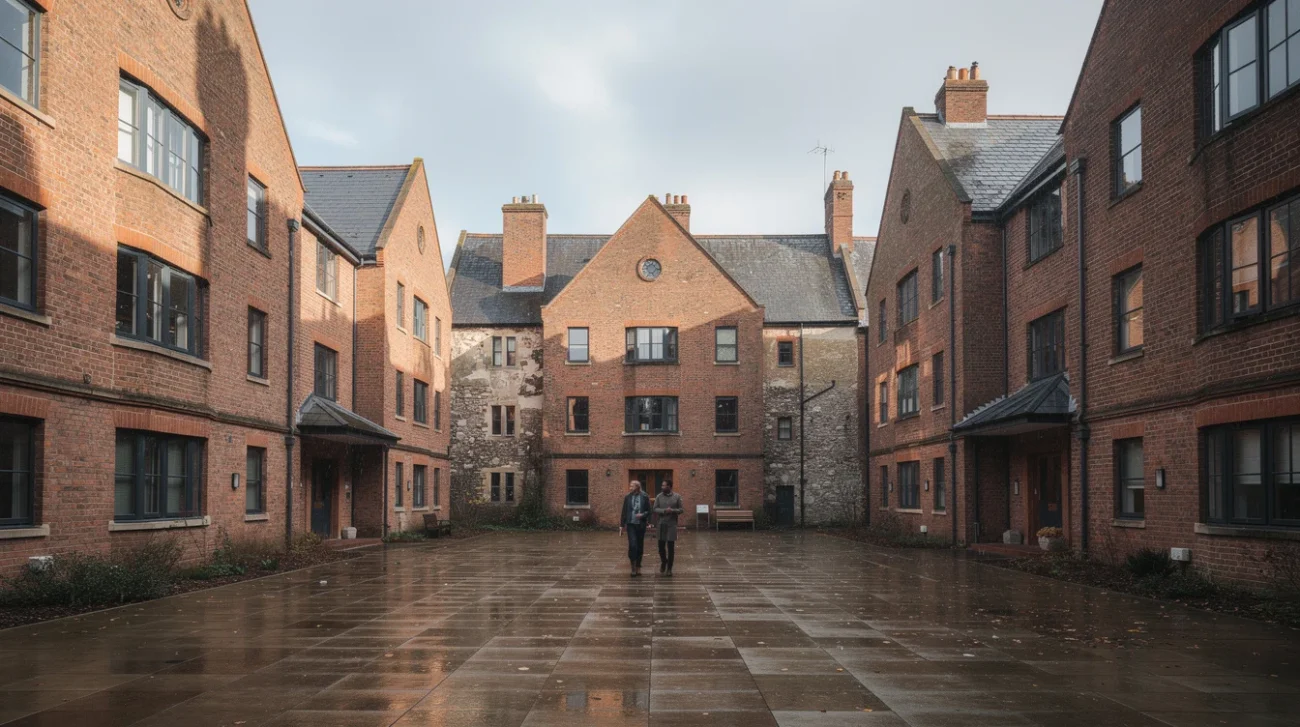

When Every Home Listing Becomes AI Fiction
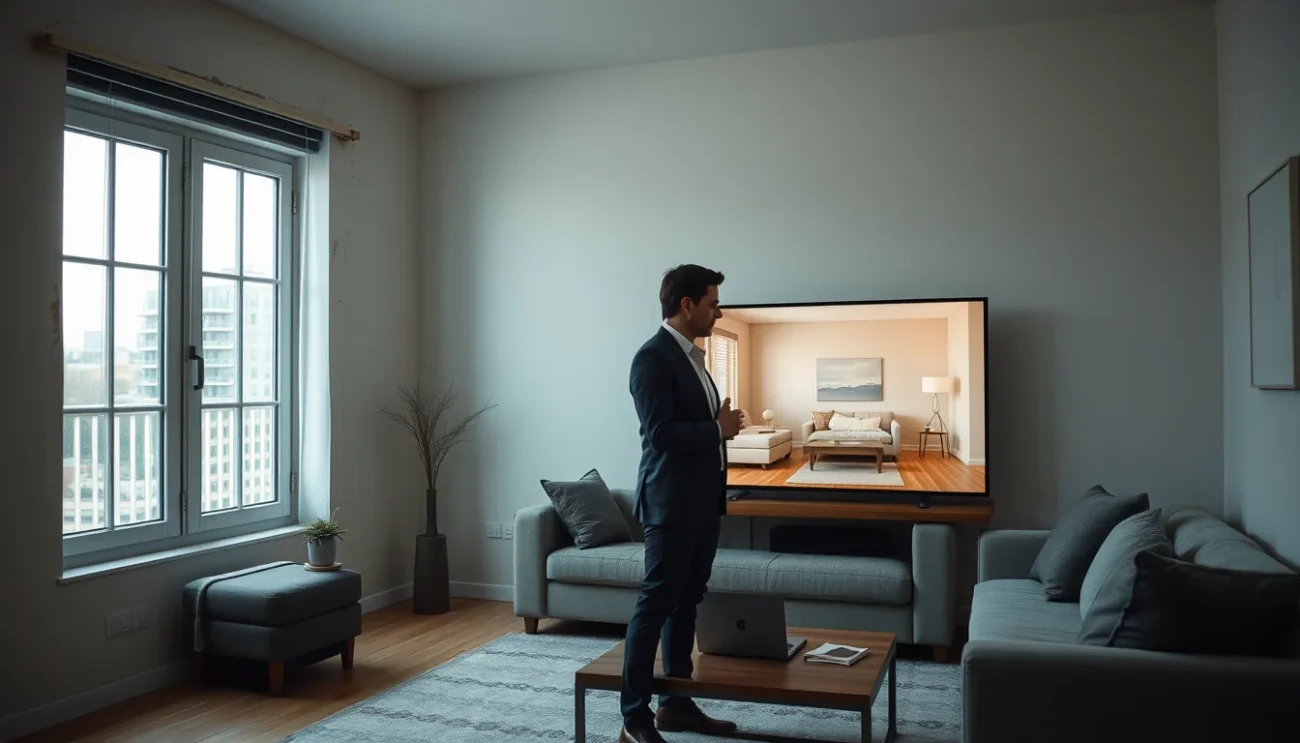
The house that exists only on screen
A real-estate listing used to be a fairly blunt instrument: a wide-angle photograph, a floor plan with questionable dimensions, a paragraph about natural light, and perhaps an agent standing in the kitchen. Today, the listing is becoming something more ambitious—and more dangerous. Generative AI can remove clutter, furnish empty rooms, brighten gloomy windows, sharpen skies, enlarge apparent spaces, and produce copy in seconds. The result is faster marketing, lower production costs, and images calibrated to trigger desire before a buyer has even booked a viewing. The broader shift reflects how AI is becoming the craft in design, not merely a tool behind the scenes.
It is also producing what home seekers increasingly call housefishing: the presentation of a property that lures the buyer with an image of a home that does not actually exist. The term captures a familiar digital-era frustration. A living room photographed as a dark, narrow rectangle appears online as a sunlit salon with linen seating, sculptural lighting, and immaculate proportions. A modest backyard becomes a lush retreat. An unfinished basement acquires a cinematic home-office treatment. The address is real. The evidence is not.
The problem is not that technology can make a listing attractive. Architecture has always relied on representation. Frank Lloyd Wright’s drawings, the persuasive perspectives of Hugh Ferriss, and the carefully staged interiors of modernist magazines all turned buildings into ideas before they became experiences. But those images generally declared their status as proposals, illustrations, or editorial visions. The contemporary listing often performs fiction while wearing the legal and commercial costume of fact.
Efficiency is the seduction

There are legitimate reasons agents are adopting these tools. A property may need to go live on a Tuesday morning, while the photographer is unavailable until Friday. An empty room can be difficult for non-specialists to read; virtual furniture gives scale and suggests possible use. AI can transcribe a walkthrough, summarize comparable sales, draft social posts, translate descriptions, and remove the visual noise left by a hurried occupant. For smaller agencies, this can close a production gap that once separated them from large brokerages.
That convenience changes the economics of the image. Traditional staging, photography, retouching, and copywriting take time and cost money. A prompt can now generate a sequence of polished alternatives before lunch. The software does not ask whether the sofa blocks the radiator or whether the apparently expansive kitchen could actually accommodate the island shown in the image. It optimizes for a recognizable emotional outcome: aspirational domesticity.
This is where the logic of platforms becomes architectural. Listings are sorted, ranked, and consumed through thumbnails. A home is no longer encountered first as a place but as a competitive visual unit in an endless scroll. The image that wins attention is the image that promises the most life, not necessarily the one that records the most truth. The work of designers such as Patricia Urquiola or John Pawson is often reduced online to a palette of warm minimalism: oak, travertine, boucle, greenery. AI can reproduce that vocabulary instantly, detached from the structure, climate, budget, or culture that gave it meaning.
What counts as a photograph?
The crucial distinction is not between edited and unedited images. Almost every professional property photograph is edited. Exposure is corrected; color is balanced; a lamp may be switched on; a stray cable may disappear. The question is whether the intervention changes a material condition that would affect a buyer’s judgment.
There is a meaningful difference between removing a coffee mug and inserting a window. There is a difference between brightening a shadow and making a room appear twice as deep. A digitally furnished interior can be useful when the label is unmistakable and the original view remains available. Without that disclosure, the buyer is asked to perform forensic work: Is the marble real? Is the pool present? Does the bedroom contain a door, or only an algorithm’s idea of one?
Even small distortions accumulate. A widened lens can turn a circulation route into a living area. A generated view through the window can imply a park where there is a neighboring wall. A synthetic sunset can suggest orientation and daylight conditions that the property never receives. For architects, these are not decorative discrepancies. They concern proportion, site, ventilation, privacy, and the daily performance of a building—the very things that make a home more than a mood board.
The famous modernist image has always been selective. Julius Shulman’s photographs of Case Study Houses made postwar domestic experiments feel luminous and inevitable, but they were still photographs of actual structures, occupants, and landscapes. The contemporary AI listing borrows the authority of that photographic tradition while quietly removing its obligation to the physical world.
The buyer is paying for evidence
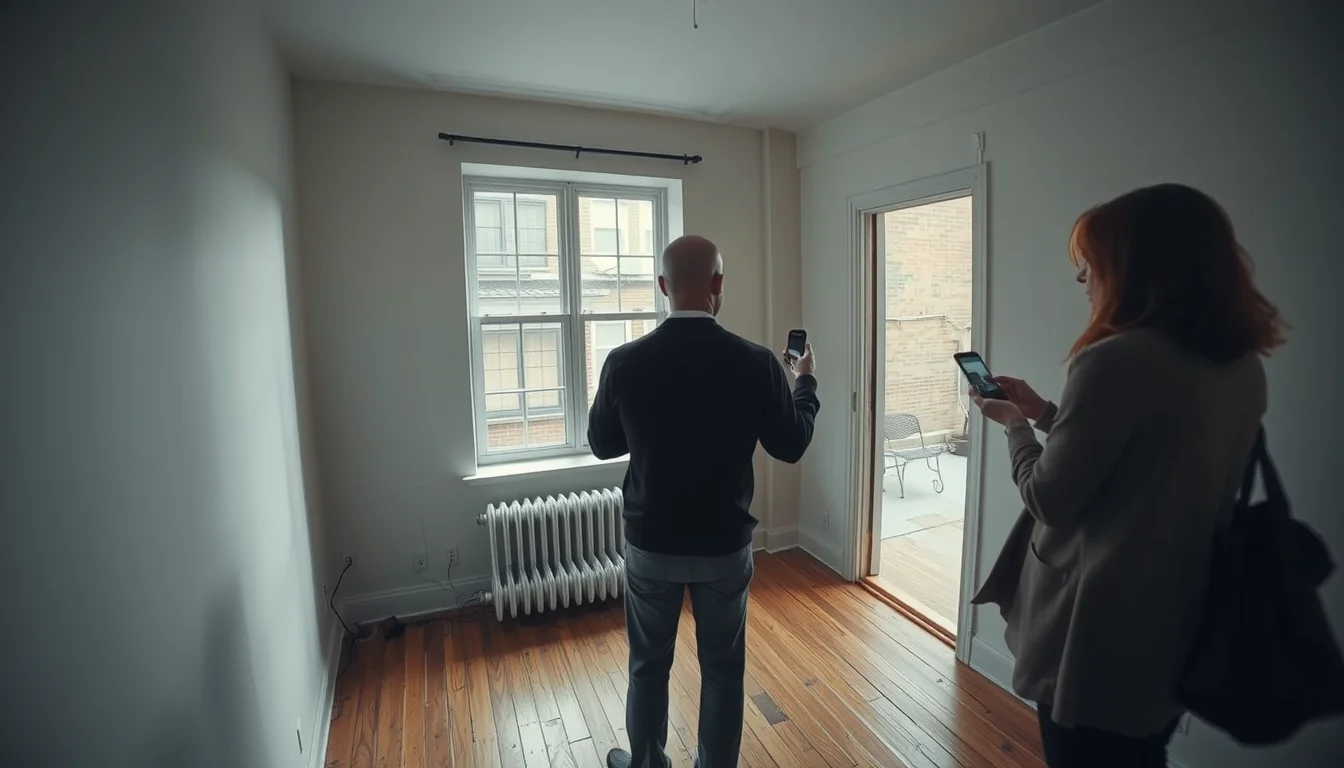
Real-estate marketing likes to describe the first viewing as an emotional moment. It is. But the buyer is not purchasing an emotion; they are purchasing a costly, long-term set of material conditions. Roof age, drainage, ceiling height, noise, mold, solar exposure, access, and the relationship to neighboring buildings matter more than whether a generated image produces a pleasant feeling in a feed. These concerns increasingly overlap with the questions raised by homes becoming risk objects shaped by data, insurance, and climate exposure.
That makes accurate representation a consumer right, not a matter of aesthetic taste. A buyer should be able to distinguish the current condition from a proposal, staging from architecture, and an agent’s description from a verified fact. The industry already understands this principle in other forms. Floor plans should not invent rooms. Square footage should not casually include unusable areas. A listing should not imply amenities that are unavailable, unbuilt, or merely imaginable.
There is also an equity issue. Wealthier buyers may have the time and expertise to investigate a suspicious listing, commission inspections, and revisit a property at different times of day. First-time buyers, renters competing in overheated markets, and people relocating across cities are more dependent on the initial image. Deceptive visual polish therefore does not distribute its harm evenly. It makes the market more legible to insiders and more treacherous to everyone else.
Design culture should resist the idea that visual literacy is a substitute for honest documentation. Not everyone can read a plan like an architect, identify a suspicious vanishing point, or recognize when a window has been generated rather than photographed. The burden should sit with the platform and the professional publishing the image—not with the exhausted person trying to find a home.
Disclosure cannot be a footnote
The obvious remedy is labeling, but a tiny disclaimer buried beneath a carousel is not enough. Platforms need a visual grammar for intervention. One mark could indicate light retouching; another could identify virtual staging; another could signal a proposed renovation or an entirely generated image. The original photograph should remain one click away, not be replaced by a fantasy because the fantasy performs better.
Agents also need a code of practice that distinguishes operational uses of AI from representational uses. Summarizing a property disclosure is not equivalent to generating a new kitchen. Translating a listing is not equivalent to inventing a view. Automating scheduling is not equivalent to deciding which defects are aesthetically inconvenient enough to erase.
Architectural visualization offers a useful precedent. Serious renderings identify whether they depict an existing building, a design under construction, or a speculative proposal. Studios such as BIG, Zaha Hadid Architects, and Foster + Partners routinely use seductive images, but their professional context makes the image’s status legible: it is a representation of a project at a particular stage. Real-estate portals should demand the same clarity from an image whose purpose is to trigger a financial commitment.
The strongest listings may eventually be those that show more, not less: an unretouched room, a measured plan, a short video from the street, photographs at different times of day, and a clear record of what has been digitally altered. Accuracy can be designed as an experience. It does not have to be visually dull.
Build trust or automate suspicion
The industry’s defenders will say that buyers know marketing is aspirational. That argument misunderstands the scale of the shift. Conventional exaggeration still operated within a shared physical reference. AI can produce a plausible visual alternate reality at negligible cost and industrial volume. When every listing has access to the same infinite improvement engine, the baseline of apparent perfection rises—and the unedited home begins to look defective simply because it is real.
This is not an argument for banning generative tools. It is an argument for assigning them a boundary. Use AI to organize information, improve access, and show clearly labeled possibilities. Do not use it to counterfeit space. A proposed renovation can help a buyer imagine potential; it becomes a trap when it is presented as the property being sold.
Real estate has always been a technology of belief. The sign, the brochure, the open house, the glossy photograph: each translates physical space into a promise. AI has made that translation almost frictionless, which is precisely why the industry must add friction back in the form of provenance, disclosure, and accountability. If the listing cannot tell us what is there, what is imagined, and what has been removed, it is not marketing a home. It is marketing uncertainty.
FAQ
What is housefishing in real estate?
Housefishing describes a listing that attracts buyers with images or descriptions that materially misrepresent the property. It can include undisclosed virtual staging, digitally enlarged rooms, invented views, or renovations shown as if they already exist.
Is virtual staging illegal?
Virtual staging is not automatically illegal, but rules vary by jurisdiction and platform. The central issue is whether the alteration is clearly disclosed and whether it creates a misleading impression about the property’s current condition.
How can buyers identify AI-manipulated listing photos?
Compare images with the floor plan, look for inconsistent lighting or reflections, inspect repeated furniture details, and request original photographs. A live or in-person viewing and an independent inspection remain more reliable than any listing image.
Can AI improve real-estate marketing without deceiving people?
Yes. AI can help with translation, accessibility, scheduling, transcription, search, and clearly labeled design visualization. It should support factual documentation rather than replace it with an unmarked fantasy.
Should a listing show both the original and edited image?
Yes, whenever an edit changes the apparent size, layout, condition, view, or amenities of a space. Showing the original alongside the edited version gives buyers context and makes the technology accountable.
When an AI-generated home looks better than the real one, is the platform selling possibility—or selling a lie?
Get the Mainifesto weekly — curated design debates, speculative ideas and the week's best articles every Saturday.
Editorial Perspectives
Questions and counterpoints developed by the Mainifesto editorial desk to extend the discussion.
Perspective 1
A render can communicate a home's potential, but it should not erase the constraints that make the space what it is: light, materials, proportions, and repair history. If the listing hides those variables, it is not visualization anymore; it is a misleading product specification.
Perspective 2
I am excited by tools that let buyers imagine adaptive reuse instead of rejecting imperfect homes at first glance. But possibility only works when the baseline is visible, otherwise we are encouraging people to consume an image rather than invest in a real place.
Perspective 3
This is not just an ethics problem between an agent and a buyer; it is a platform-governance problem. The companies controlling the listing interface decide what counts as reality, and without mandatory labels, audit trails, and original images, the market will reward deception.
Perspective 4
AI staging is already a new image genre, and I do not think every intervention should be treated as fraud. The trouble starts when the language of real estate borrows the authority of documentary photography while quietly inserting fiction.
Perspective 5
A better question is whether the image preserves the home's measurable conditions or merely optimizes its emotional appeal. We need listings that separate existing geometry, proposed changes, and speculative atmosphere, so the buyer can understand both the building and the algorithm's contribution.