
Can a City Get Smaller Without Leaving People Behind?
Architecture knows how to celebrate an opening. It is much less comfortable defending a closure. A new station becomes a civic achievement; a discontinued bus route becomes an administrative footnote. Yet in a city losing residents, both decisions design the future. The uncomfortable question is whose future survives the redesign.
According to ArchDaily’s account of the planned Korean Pavilion at the 2027 Venice Architecture Biennale, curator Janghwan Lee will confront this problem through Catabolism. Commissioned by the Arts Council Korea, the project brings together architects Bae Yoonkyung, Kyo Suk Lee and Jaehyub Ko to examine South Korea’s condition of “hyper-shrinkage”: accelerated population contraction combined with societal aging.
Catabolism describes the breakdown of complex molecules into simpler units, releasing energy. Applied to cities, it suggests that contraction might reorganize relationships rather than simply register failure. But a biological metaphor cannot settle a political dispute. Consolidating infrastructure can protect public services—or make them effectively inaccessible. Both arguments deserve more than a masterplan’s reassuring arrows.
PRO: Concentrate services before the system fails
The strongest case for consolidation begins with a blunt distinction: keeping infrastructure open is not the same as keeping it useful. Water pipes, roads and public buildings require maintenance even when the population supporting them declines. A municipality can preserve every address on its service map while quietly reducing opening hours, postponing repairs and allowing staffing levels to collapse.
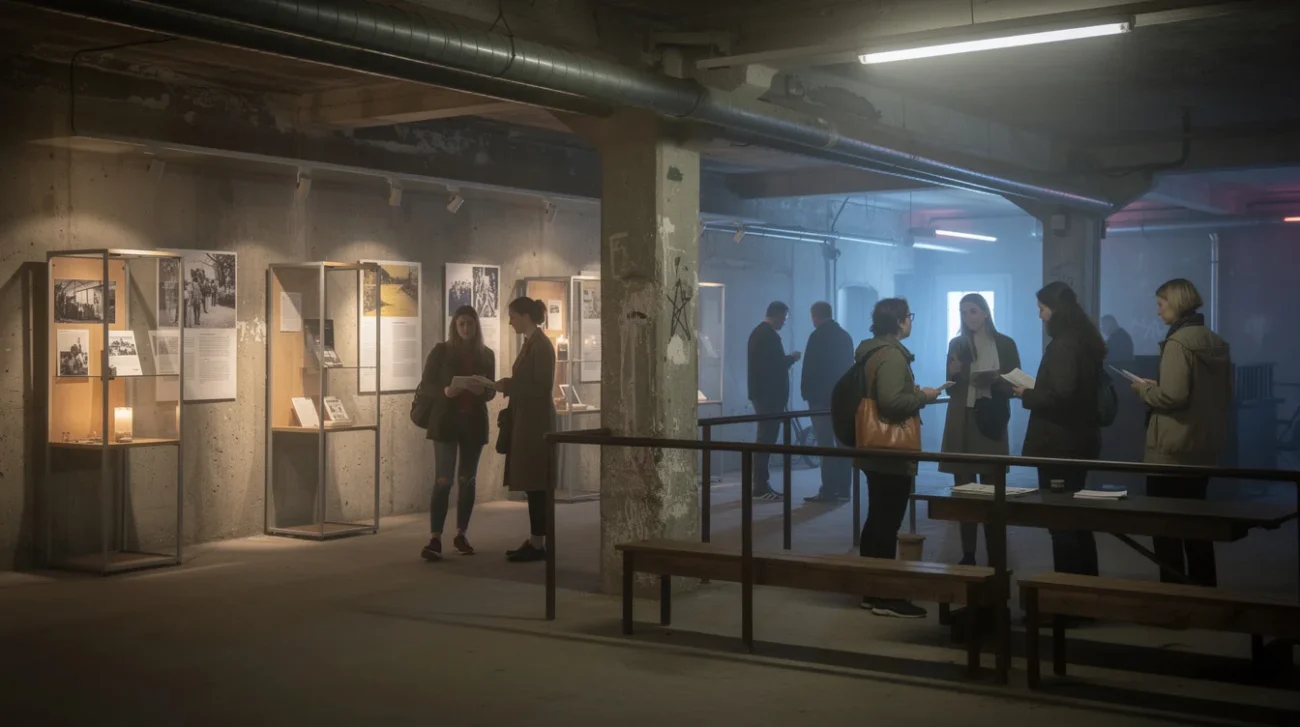
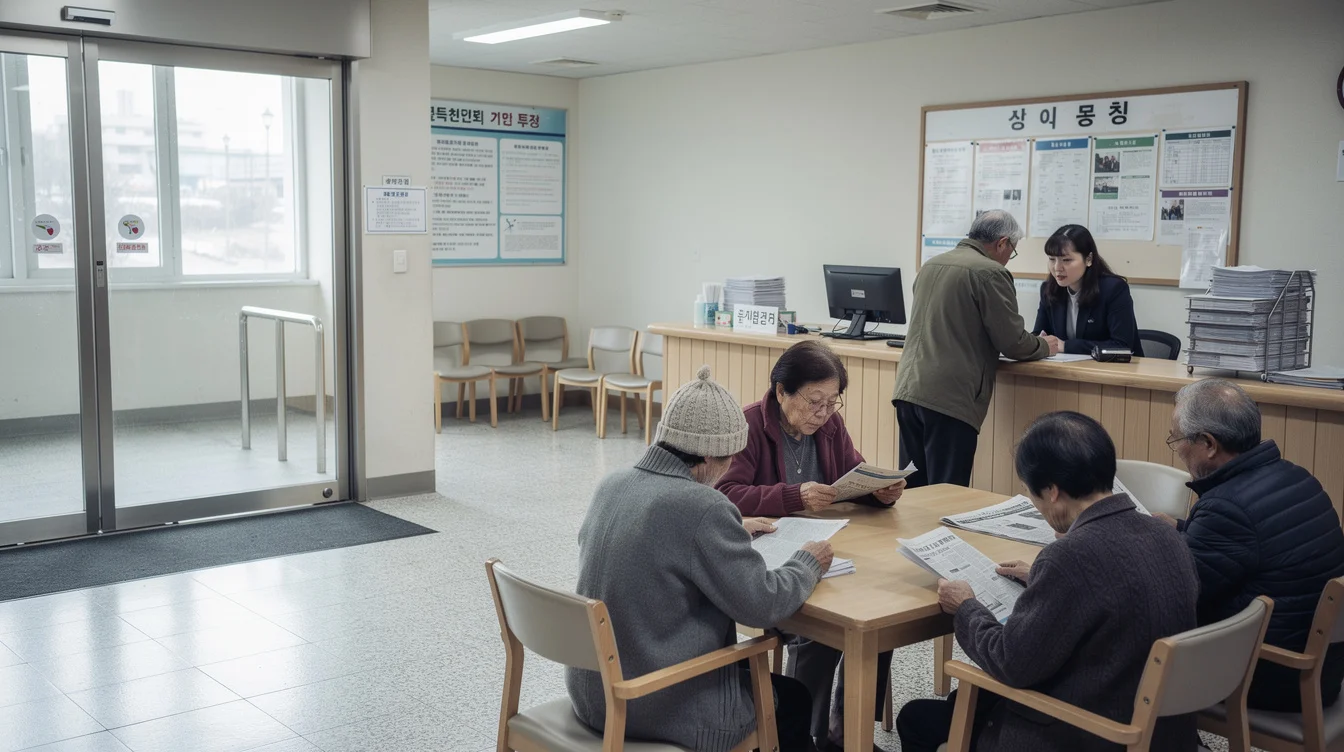
Concentration can reverse that hollowing-out. Imagine three underused public buildings, each expensive to heat and difficult to staff, reorganized into one accessible hub containing a clinic, library, welfare desk and shared dining room. This is an illustrative scenario, not a proposal announced for the pavilion. Its architectural challenge is substantial: entrances, acoustics, waiting areas and schedules must accommodate different users without turning shared space into institutional congestion. As with rebuilding a town hall around public access, the test is whether civic space remains welcoming and usable.
Toyama, Japan, offers a relevant reference. Its compact-city strategy links investment in public transport, including the Toyama Light Rail opened in 2006, with efforts to concentrate housing and services around transit corridors. It demonstrates an alternative to scattering new facilities across an increasingly thin population. The lesson is not that every resident should be moved into a tower. It is that proximity must be designed as a connected system.
For aging communities, a dependable journey to several services in one location may outperform a collection of nominally local facilities that are rarely open. Consolidation earns legitimacy when it improves that everyday journey, not merely the municipal balance sheet.
PRO: Build less, but take transformation seriously
Urban shrinkage also exposes architecture’s most persistent professional bias: success is supposed to produce more floor area. Catabolism proposes a different intellectual starting point. Existing buildings, materials and land become resources to redistribute, rather than evidence that yesterday’s growth forecast must somehow be revived.
Eastern Germany provides a sobering precedent. The Stadtumbau Ost program, launched in 2002, combined demolition of surplus housing with efforts to stabilize and upgrade urban districts. Leipzig’s experience included both large-scale housing removal and the reuse of vacant land. Its subsequent population recovery also supplies a warning: contraction is not necessarily permanent, and demolition can eliminate options that later become valuable.
The defensible response is therefore selective, not indiscriminate. A city might retain adaptable buildings near transport, remove structurally dangerous properties, and turn some cleared plots into managed green space. Materials can be recovered where feasible, though choosing between architectural reuse and material recycling requires its own scrutiny. But every intervention needs an operating plan: who maintains the landscape, who funds the retained building, and what happens if demand changes?
Smaller should mean more deliberate, not simply less. Architects can contribute through phased plans, reversible adaptations and careful deconstruction. A half-empty municipal building might accommodate several agencies before anyone commissions a replacement. Redundant road space might support safer walking routes rather than another speculative development parcel. Under this argument, refusing unnecessary construction is not professional surrender. It is architecture finally recognizing that stewardship can be a more demanding design task than expansion.
CONTRA: Efficiency can disguise a transfer of costs
The opposing case starts where the spreadsheet stops. A service does not remain accessible simply because it still exists somewhere within the municipality. Close a neighborhood clinic and its costs do not disappear: some migrate into longer journeys, family caregiving, missed appointments and private taxi fares. What looks efficient to the institution may be punishingly inefficient for the resident.
Detroit’s debates over “right-sizing” reveal the political volatility of treating low-density neighborhoods as infrastructure problems. The Detroit Future City framework, released in 2013, explored different futures for areas with extensive vacancy, including landscapes less dependent on conventional development. Such approaches raise a question no attractive land-use diagram can answer alone: what obligations remain to the people whose homes sit inside the proposed transition zone?
Density is not a moral ranking. Residents may remain because their housing is affordable, their relatives live nearby, their property cannot command a useful sale price, or their social networks are irreplaceable. A policy that makes staying progressively harder can become displacement without a formal eviction notice.
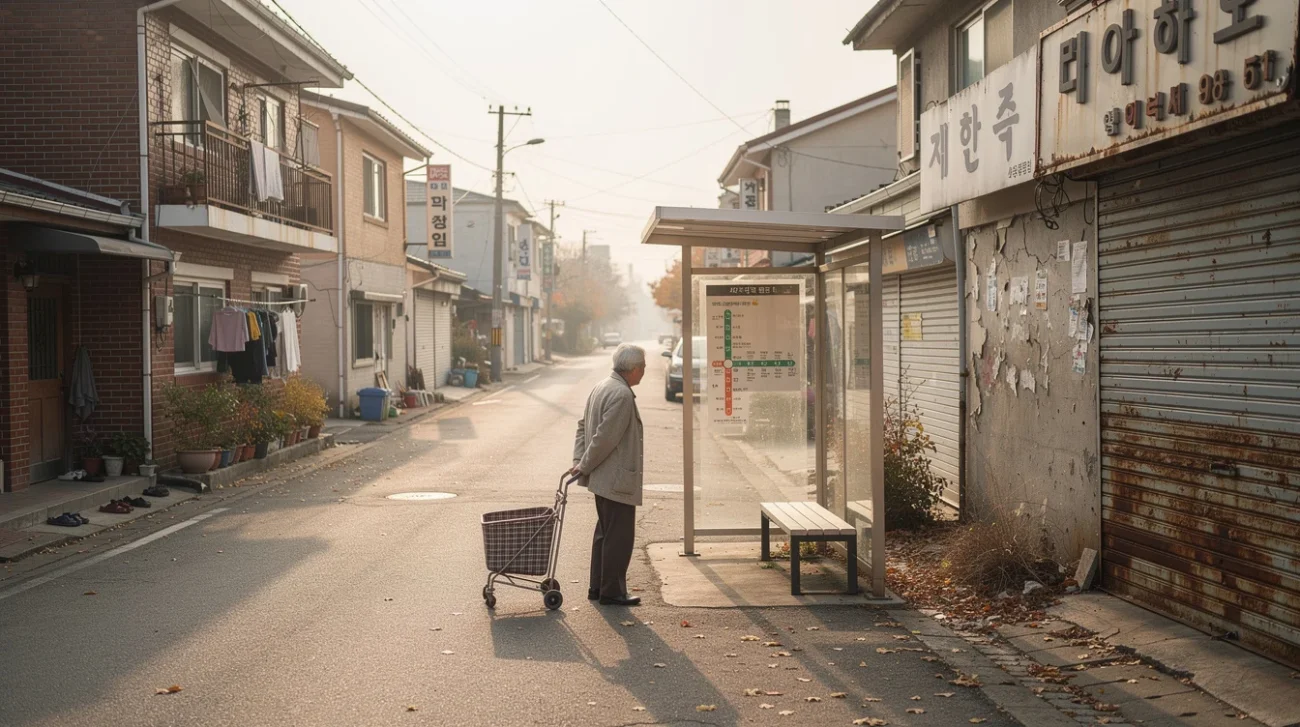
That danger is acute in aging communities. An extra transfer on public transport is not a trivial inconvenience for someone using a walking aid. Nor can an online portal substitute automatically for a staffed counter. Consolidation is unjust when it saves public money by demanding unpaid mobility, digital competence or care work from residents least able to provide them. Its benefits must be measured after those transferred costs are counted.
CONTRA: A neighborhood is more than its occupancy rate

Consolidation can also destroy relationships that are difficult to see and expensive to rebuild. A lightly used community room may sustain a daily lunch group. A small shop may provide informal welfare checks. A school may serve as a meeting place beyond teaching hours. None of these functions makes every building untouchable, but each complicates the claim that low utilization equals redundancy.
The transformation of 530 dwellings at Grand Parc in Bordeaux by Lacaton & Vassal, Frédéric Druot and Christophe Hutin offers an important architectural counter-reference. The project is not a shrinking-city policy model. Its relevance lies in its method: improving existing homes through generous additions and refurbishment rather than treating demolition and replacement as the default. Residents’ continued occupation became a design condition, not an obstacle to clear away.
Depopulating neighborhoods need that same presumption of attention. Before closing a local facility, a city should investigate shared staffing, shorter but reliable opening hours, mobile services and satellite provision connected to a larger hub. These measures will not work everywhere. Mobile healthcare cannot replace every specialist service; demand-responsive transport can be costly and unreliable if poorly funded. Alternatives must be tested, not romanticized.
The point is procedural and architectural: residents should not have to prove that their lives are efficient enough to deserve access. Designers must document actual routines, routes and dependencies before drawing consolidation boundaries. Otherwise, the apparent clarity of a compact plan simply conceals the complexity it has expelled.
The verdict: Guarantee access, not every building
The two positions are not equally convincing in every place. Keeping every facility indefinitely can bankrupt a shrinking municipality; concentrating everything can bankrupt the daily lives of those left outside the center. The defensible position is to guarantee access while allowing the buildings and networks delivering it to change.
That requires explicit standards: maximum realistic journey times, affordable fares, step-free access, dependable opening hours and workable options for people who cannot travel independently. Measure journeys door to door, not stop to stop. Trial replacement transport before closing the neighborhood service. Where relocation is offered, assess replacement housing costs and continuity of care—not just a one-time payment.
The Korean Pavilion’s planned Catabolism framework matters because it challenges the assumption that growth is architecture’s natural purpose. Its harder test will be whether reconfiguration can be understood as an obligation to residents, rather than a sophisticated vocabulary for withdrawal. A city need not preserve every pipe, classroom or square meter. It does need to explain, publicly and concretely, how each person will still reach what matters.
FAQ: Urban shrinkage and the right to remain
What is urban shrinkage?
Urban shrinkage is a sustained reduction in a city’s population, often accompanied by vacancy and changing demand for infrastructure. Its causes vary, including low birth rates, aging, migration and economic restructuring. Population loss does not mean every neighborhood declines in the same way.
What does Catabolism mean for the planned Korean Pavilion?
The planned 2027 exhibition uses a biological process—breaking complex molecules into simpler units and releasing energy—as a lens for urban transformation. Led by Janghwan Lee, it proposes examining shrinkage through reconfigured relationships, new uses and ways of living rather than expansion alone.
Can consolidating infrastructure improve public services?
Yes, if combining facilities produces better staffing, longer opening hours and more dependable provision. Those improvements must be weighed against travel time, cost and accessibility. A stronger central facility is not an improvement for someone who can no longer reach it.
How can cities protect residents who remain?
Cities can establish enforceable access standards, maintain suitable local or mobile provision, fund accessible transport and involve residents before decisions are fixed. Voluntary relocation needs adequate support; remaining should not trigger deliberate service deterioration designed to force a move.
If a city must get smaller, who should decide which distances become acceptable—and whose right to stay outweighs the savings?
Watch the Mainifesto Short
Get the Mainifesto weekly — curated design debates, speculative ideas and the week's best articles every Saturday.
Editorial Perspectives
Questions and counterpoints developed by the Mainifesto editorial desk to extend the discussion.
Perspective 1
I’m for consolidation if it buys residents better service rather than just a smaller budget. Measure the actual trip to a clinic or grocery store, including the wait for a bus; if those trips get worse, the savings aren’t delivering.
Perspective 2
I’m against planned consolidation when the map treats a sparsely populated neighborhood as expendable. A home sits within decades of care, trade, and memory; adapt vacant buildings to keep services nearby before asking residents to surrender those ties.
Perspective 3
Keeping every pipe and public building running for fewer people isn’t a credible long-term plan. But any savings calculation should include accessible replacement homes, moving costs, and reliable transport—not quietly hand those bills to residents.
Perspective 4
An acceptable distance for whom—a healthy commuter or someone using a walker? Set access standards with the residents most affected, test them against actual routes and service hours, and make closures conditional on alternatives working first.
Perspective 5
Lefebvre’s right to the city was not a promise that every street would remain unchanged; it was a claim to participate in making urban life. Venice hardly needs another elegant map of managed decline: the pavilion should show who has the power to refuse a closure.