
Can a Pan-African Architecture Festival Redraw the Map?
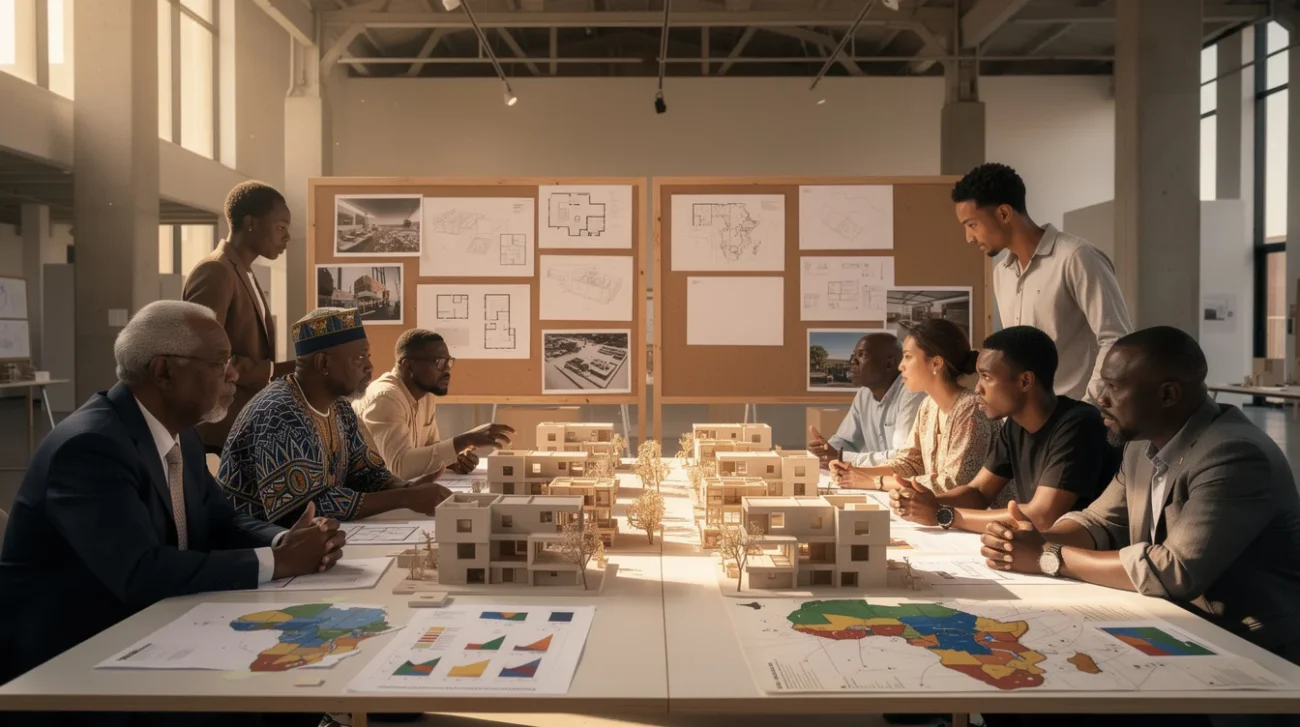
A continent does not become a conversation simply because someone builds it a stage. The Pan-African Biennale 2026, introduced by Wallpaper as the first architecture festival of its kind and curated by architect Omar Degan to “belong to all of Africa”, sets itself a more difficult task than assembling an exhibition. It proposes that architecture can be discussed across the continent without treating national borders as the natural boundaries of culture.
That proposition deserves enthusiasm. It also demands suspicion. A shared platform can challenge the institutions that have long decided which African buildings count as architecture. It can just as easily create a new centre of authority, selecting a handful of recognisable practices to represent an impossibly varied territory.
The real question is not whether Africa needs greater architectural visibility. It is who will control the terms of that visibility. The projects discussed here are critical reference points, not a confirmed account of the biennale’s programme. They indicate what its continental ambition should be tested against.
A continental platform is not a continental style
The most productive reading of “Pan-African” is political rather than aesthetic. It describes an infrastructure for exchange, not a family resemblance between buildings. There is no useful architectural formula that makes a courtyard in Tunis, an apartment block in Nairobi and a flood-adapted settlement in coastal Benin expressions of one coherent style.
Consider Francis Kéré’s Gando Primary School in Burkina Faso. Its compressed-earth construction, elevated roof and community participation make architecture inseparable from climatic performance and the organisation of building work. Compare that with the modernist architecture of Asmara, Eritrea, whose celebrated urban fabric cannot be separated from Italian colonial rule. Both belong in a discussion of African modernity. They do not tell the same story, and making them do so would destroy their value.
National narratives are insufficient too. Colonial borders cut across languages, trading routes and ecological systems. The Sahel offers architectural connections that do not stop at a passport checkpoint; Swahili coastal building traditions connect African cities to histories of Indian Ocean exchange.
A serious continental festival should therefore organise encounters around relationships: shade, migration, land tenure, extraction, maintenance. Shared questions can connect places without pretending their answers are interchangeable.
Who gets to declare a building modern?
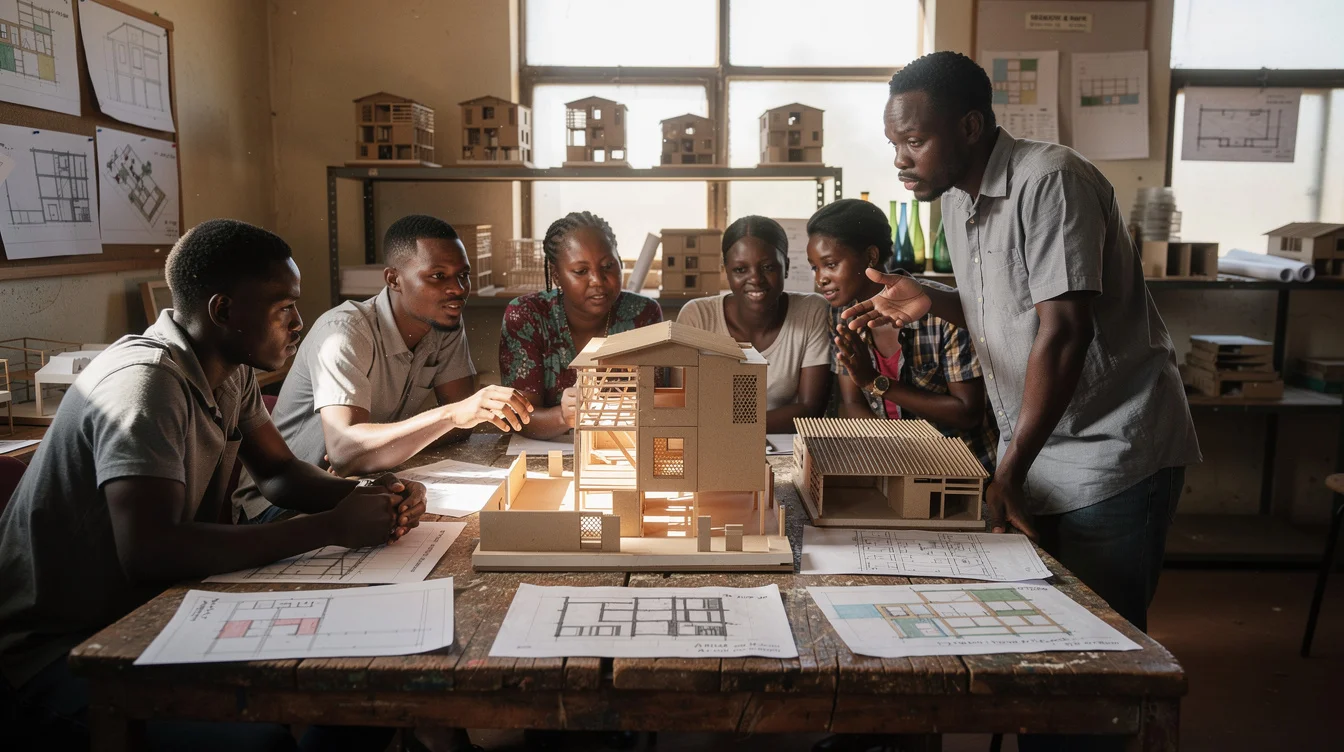
African architecture has repeatedly been trapped between two external expectations. It must either demonstrate that it has caught up with an international modernity or perform enough visible tradition to remain culturally identifiable. Glass towers satisfy the first demand. Earth walls, woven screens and photogenic craft often satisfy the second. Neither test is adequate.
The architectural record already dismantles this binary. The research assembled in Manuel Herz’s edited volume African Modernism: The Architecture of Independence documents how post-independence states used architecture to project new political futures. Those buildings were not simply late arrivals at someone else’s modernity. They were instruments within contested projects of nation-building.
More recently, Lesley Lokko’s 2023 Venice Architecture Biennale, The Laboratory of the Future, placed Africa and its diaspora at the centre of an established international platform. That intervention changed the frame of discussion. A Pan-African biennale raises a different challenge: can the conversation acquire institutional weight without requiring European validation?
The answer depends on what gets admitted as architectural knowledge. An unfinished housing block, a market rebuilt through incremental negotiation or a carefully repaired school may reveal more about contemporary life than a polished cultural landmark. Modernity is not a finish applied to a building. It is a struggle over how people will live.
Difference needs power, not a place on the guest list
Representation is the easy part to announce and the difficult part to fund. A programme can include numerous countries while leaving its actual decision-making concentrated among internationally connected curators, English-speaking institutions and practices able to finance their own participation.
Regional difference survives when it has bargaining power. That means paid research, translation, travel support and meaningful curatorial authority beyond a central committee. Interpretation between Arabic, English, French, Portuguese and relevant local languages is not an optional audience service. It changes who can argue, teach and disagree.
Architecture itself demonstrates why these differences matter. In Dandaji, Niger, the Hikma complex by atelier masōmī and Studio Chahar combines the adaptation of an existing mosque into a library with a new mosque. Its significance lies in the relationship between religious life, education, inherited construction and contemporary intervention—not simply in the appearance of its earthen surfaces.
In South Africa, Peter Rich Architects’ Mapungubwe Interpretation Centre offers another discussion through its earth-tile vaulting and construction skills. Bringing these projects into dialogue could illuminate labour, engineering and material economies. Filing both under “African vernacular”, however, would replace inquiry with branding. A continental platform succeeds when it makes distinctions sharper, not when it makes everything look related.
The exhibition must show who pays for architecture
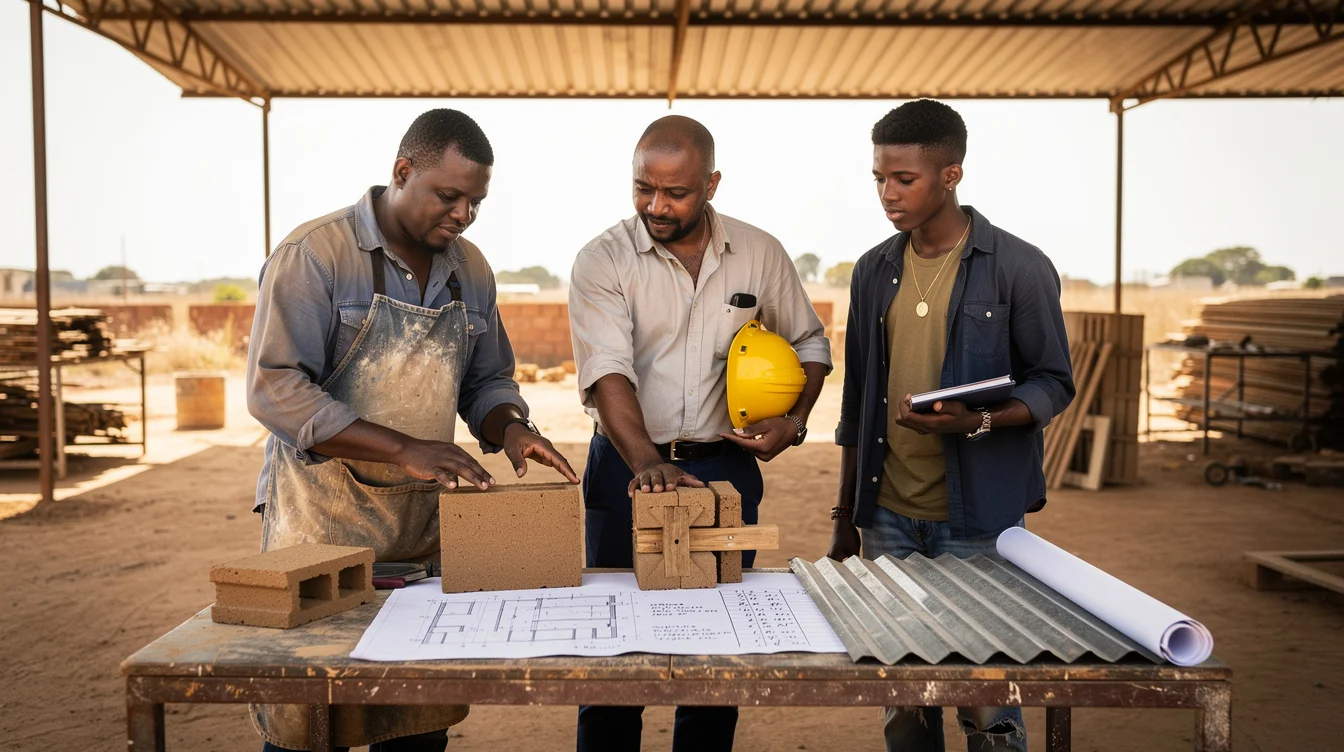
Architecture festivals are exceptionally good at presenting objects and less reliable at exposing the arrangements that produce them. Drawings, models and atmospheric films can make a building intelligible while leaving its land ownership, financing, procurement and labour conditions almost invisible.
This is where the biennale could become genuinely disruptive. Beside the architectural model, show the maintenance budget. Beside the material sample, identify the supply chain. Beside the architect’s portrait, credit the contractor, mason, engineer and client body. A beautiful passive-cooling strategy means little if replacement components cannot be obtained locally or the building’s users cannot afford its upkeep.
Lagos-based architect Kunlé Adeyemi’s Makoko Floating School makes the stakes especially clear. The prototype explored buoyancy, timber construction and educational space in a waterfront settlement; it also collapsed in 2016. Its architectural afterlife should neither erase that failure nor reduce an entire line of experimentation to it. The useful discussion concerns testing, responsibility, maintenance and the distance between global circulation of an image and local consequences.
Such scrutiny is not hostility towards African architectural innovation. It is the respect of taking it seriously. A platform that permits only inspirational stories would reproduce the promotional machinery it ought to challenge.
Redraw the routes, not just the map
A festival’s cultural geography is measured less by the countries named on its walls than by the relationships that remain after those walls come down. Can a student access its research without an expensive journey? Can a regional school host part of its programme? Can a builder participate as a teacher rather than appear as an anonymous pair of hands in a film?
Existing institutions suggest possible routes. Lokko’s African Futures Institute in Accra positions architectural education and public exchange as an institutional project, not merely an exhibition theme. The Canadian Centre for Architecture’s African Modernism research and collection initiatives offer another point of comparison: documenting a field changes what future scholars can see, although the location and governance of that documentation remain important questions.
For Degan’s ambition to “belong to all of Africa” to become more than an expansive invitation, the biennale needs mechanisms that outlast its launch. Rotating editorial responsibility, accessible archives, transparent selection criteria and properly paid local partnerships would matter more than a perfectly unified visual identity.
The strongest Pan-African architecture festival would not crown a continental aesthetic. It would make cultural authority harder to monopolise. Its achievement would be a network capable of sustaining disagreement—not a group photograph in which everyone appears to agree.
FAQ
What is the Pan-African Biennale 2026?
Wallpaper introduces it as the first architecture festival of its kind, curated by architect Omar Degan with the ambition to “belong to all of Africa”. Its continental framing opens a debate about architecture beyond separate national narratives.
Does Pan-African architecture mean a single design style?
No. It is more useful here as a framework for exchange across different climates, histories and building cultures. Shared concerns such as housing, land, labour and environmental adaptation do not require identical architectural solutions.
How could the festival avoid flattening regional differences?
By distributing curatorial authority, funding participation, providing translation and allowing local contributors to define their own questions. Geographic variety on a guest list is not enough if money and decision-making remain concentrated.
What would count as success beyond the exhibition?
Durable educational partnerships, accessible research, paid opportunities and collaborations that continue after the event. Success should also include room for criticism of celebrated projects, rather than measuring impact only through attendance, publicity or landmark commissions.
If a Pan-African architecture festival is to belong to everyone, who must be willing to give up the power to define it?
Watch the Mainifesto Short
Get the Mainifesto weekly — curated design debates, speculative ideas and the week's best articles every Saturday.
Editorial Perspectives
Questions and counterpoints developed by the Mainifesto editorial desk to extend the discussion.
Perspective 1
Degan’s challenge to national narratives is worth backing, but let’s not replace national flags with a single curator’s signature. Give repair collectives, informal builders and young practices control of commissions and budgets—not just invitations to speak—and this festival could change what gets built next.
Perspective 2
African modernity cannot mean treating everything already inhabited as a rough draft. The festival’s curators and property backers must be willing to let residents reject a regeneration scheme, even when that leaves them without a photogenic success story.
Perspective 3
A festival that claims to belong to everyone should make us nervous: Borges could have invented that map, vast enough to conceal the territory. Who gets to refuse the label ‘Pan-African’ and still receive a commission? That would tell us more about its openness than the breadth of its guest list.
Perspective 4
I’d look closely at the exhibition credits: does the person who laid the earth floor get named alongside the architect? Craft knowledge includes knowing where a material cracks, how it weathers and who can repair it. The people holding that knowledge need paid authority over the work, not a demonstration slot.
Perspective 5
Crossing national narratives is promising, but materials still cross borders through customs, freight networks and uneven production capacity. Publish who wins commissions, where fabrication happens and how much of each budget reaches local workshops. If sponsors and curators won’t let those findings change procurement, they haven’t given up much power.