
The Hand-Made Future Against Infinite Automation
The hand returns a pulse to the machine age
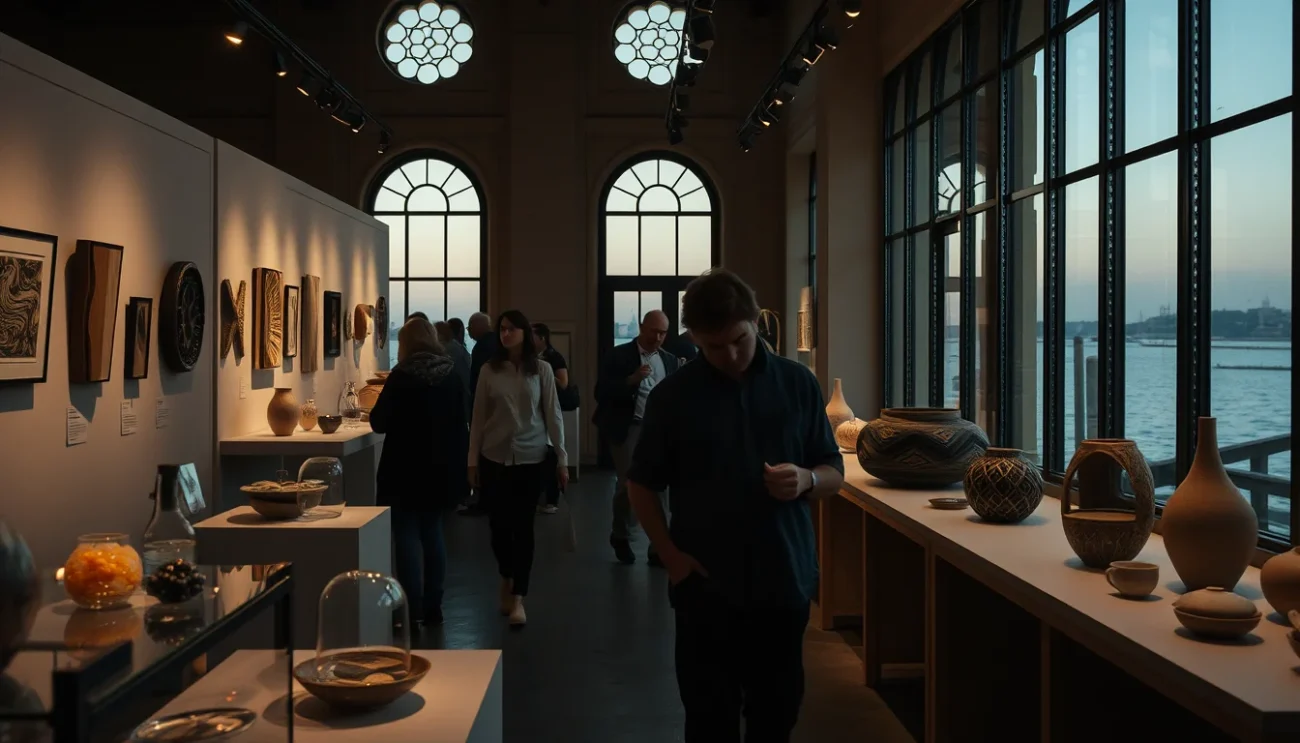
In Venice, where every stone seems to have survived several technological revolutions, craft has found an unusually forceful stage. Homo Faber, the exhibition organised by the Michelangelo Foundation, presents contemporary making not as nostalgia but as a living argument. Its makers work with glass, wood, metal, leather, ceramics and textiles, insisting that the hand still has something to say in a culture increasingly trained to accept the frictionless output of software.
That insistence matters now. Generative artificial intelligence can produce a convincing chair, a plausible textile pattern or a complete interior mood board in seconds. Automated factories can manufacture customised objects at industrial speed. The visual language of design is becoming abundant, searchable and infinitely reproducible. Against that flood, Homo Faber proposes the value of the singular gesture: the cut that cannot be repeated, the glaze that shifts in the kiln, the joint that records a maker’s judgement. It also raises the question of whether AI art can earn a permanent museum place when its origins are bound to automated systems.
The exhibition’s 2024 edition, The Journey of Life, curated by Luca Guadagnino with Nicolò Rosmarini, treated craft as a sequence of human thresholds. Birth, school, work, celebration, illness and death became prompts for objects and installations. The point was not that hand-made things are automatically better. It was that objects can retain biography. A tool can show where a hand paused; a vessel can embody risk; a garment can make time visible.
Venice amplifies this proposition. The city itself is an argument against total automation: built on unstable ground, maintained through repeated acts of repair, and navigated through local knowledge that no single interface can fully explain. Homo Faber is buoyant because it understands that craft is not merely a category of goods. It is a method of keeping culture materially accountable.
Craft is not the opposite of technology
The lazy version of this debate places a warm human hand on one side and a cold machine on the other. Homo Faber deserves a sharper reading. Many contemporary craftspeople use digital modelling, CNC milling, laser cutting, robotics and advanced material research before returning to the bench. The issue is not whether technology enters the studio. It is whether technology dictates the terms of value.
Consider the work of Formafantasma, whose research-led practice has repeatedly examined extraction, industry and ecological consequence. Or the experiments of Studio Swine, which turn waste and industrial processes into sensory encounters. These practices do not romanticise pre-industrial purity. They use technology to expose systems, then ask what remains irreducibly human within them.
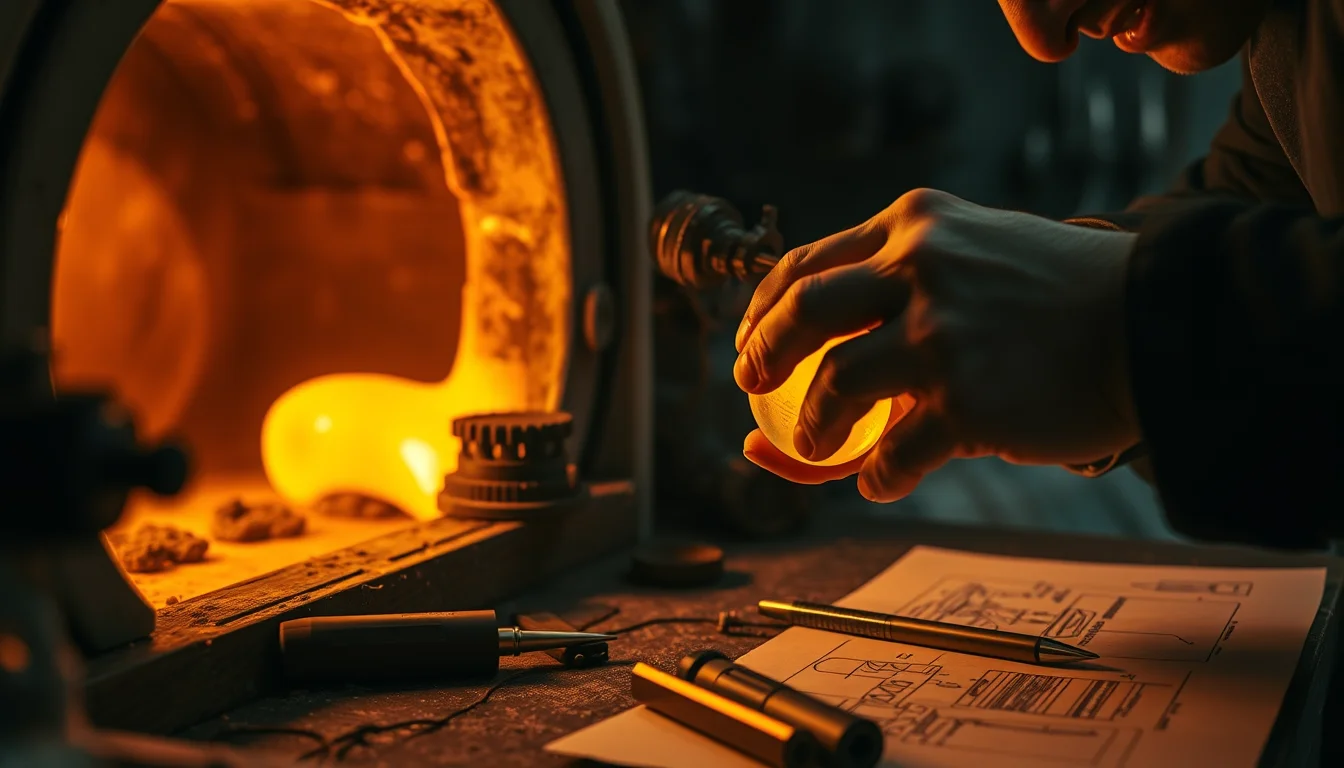
Even traditional disciplines are hybrid. A glassmaker may use a digital drawing to plan a form before relying on breath, heat and timing. A furniture maker may use parametric software to calculate a complex joint, then spend days refining the result with hand tools. A ceramicist may formulate clay bodies through laboratory testing but accept the kiln’s unruly evidence. The hand-made future is therefore not a retreat from innovation. It is a demand that innovation remain answerable to material behaviour.
This is where craft can influence mainstream design. It can reintroduce repair into product development, encourage designers to work with local materials, and replace the fantasy of perfect consistency with calibrated variation. The Japanese concept of shokunin, often translated as an artisan’s disciplined responsibility, offers a more useful model than the lifestyle branding attached to artisanal goods. It describes a social obligation to improve a practice and serve its users, not simply to charge more for visible labour.
The danger of turning slowness into status
Yet the celebration of slowness has a serious blind spot: not everyone can afford it. A hand-thrown vessel made over several weeks may be an extraordinary object, but if craft discourse presents its price as proof of moral superiority, it becomes a luxury performance. The polished exhibition, the immaculate workshop photograph and the language of heritage can easily transform labour into an aesthetic for wealthy consumption.
Homo Faber operates inside this tension. It gives deserved visibility to makers whose skills are threatened by industrial cost-cutting, while also placing those skills within the circuits of collectors, cultural tourism and high-end design. The Venetian setting is both a powerful civic context and a reminder of access. Visitors who can travel to an island exhibition, buy its catalogues and commission its objects are already participating in a narrow economy of attention.
There is also a gendered and geographical question. European craft institutions have historically elevated certain ateliers while treating domestic, Indigenous and non-Western making as anonymous tradition. A future of craft cannot simply canonise more master artisans from familiar cultural capitals. It must recognise repair workers, community workshops, informal makers and production knowledge held by women and migrant labourers. Otherwise, the hand becomes a symbol stripped from the hands that have always carried the material burden of society.
Scale is the harder problem. The world cannot furnish every home through slow bespoke production, nor should it. Housing, medical equipment, public infrastructure and everyday tools require dependable systems capable of serving millions. Craft’s political value will be measured not by whether it replaces industry, but by whether it changes industry’s priorities. Can a manufacturer design products for disassembly because a craftsperson demonstrated the intelligence of repair? Can a public school teach material literacy alongside coding? Can a digital platform credit the people whose tacit knowledge its automation has absorbed?
From precious object to public practice
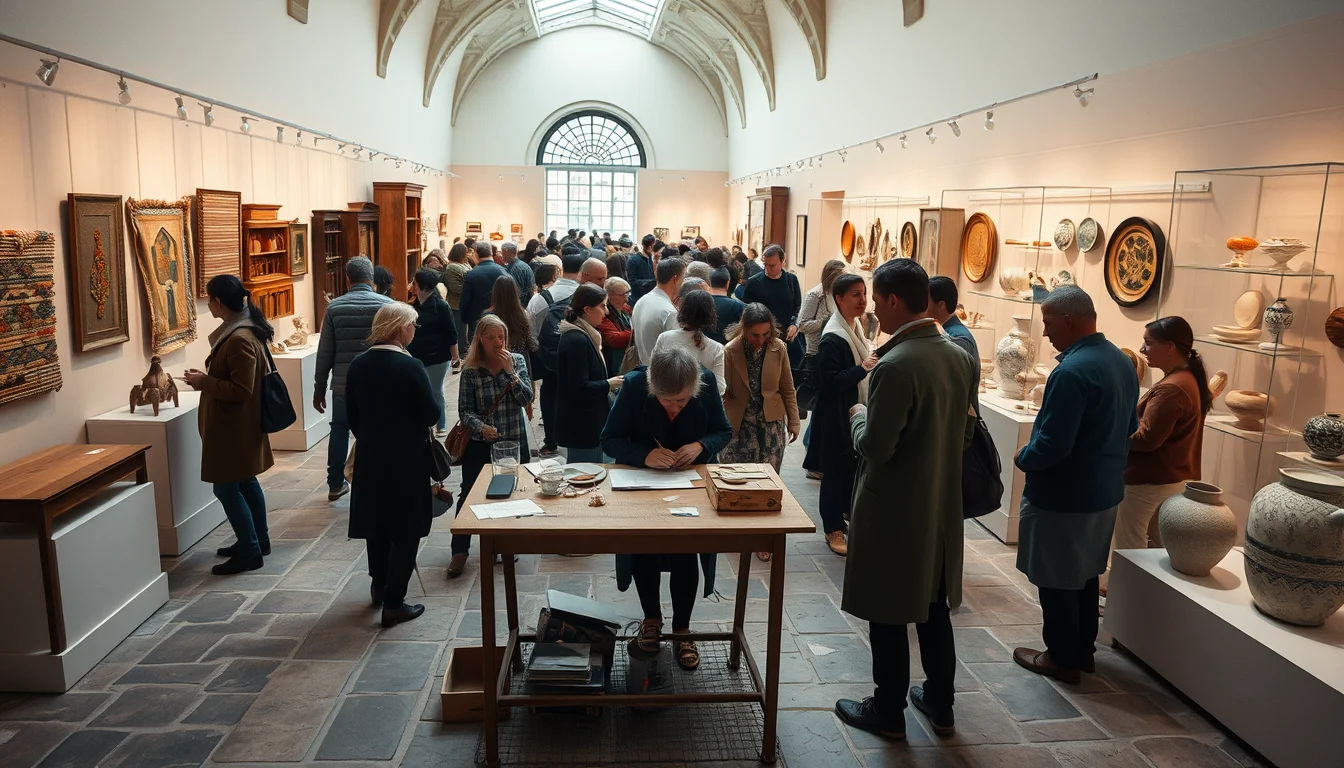
The most compelling future for craftsmanship is less about owning a unique object than about expanding the ability to make, maintain and understand objects. Open-source furniture plans, neighbourhood fabrication labs, apprenticeship programmes and publicly funded repair centres can distribute craft’s agency beyond the gallery and the collector’s apartment. The question is not whether everyone should become a master cabinetmaker. It is whether more people can participate in material decisions rather than consuming the results of invisible systems.
Designers such as Faye Toogood have shown how material experimentation can move between furniture, sculpture and architecture, while projects such as Assemble’s community-led work demonstrate that making can be a form of civic organisation. In a different register, the continuing influence of Enzo Mari’s Autoprogettazione lies in its refusal to treat the user as a passive buyer. Its simple furniture instructions made construction itself part of design. That spirit is more radical than a limited-edition object whose handmade status merely confirms scarcity.
Homo Faber’s strongest lesson is therefore not that hand-making is slow. It is that making creates a relationship between action and consequence. The automated image has no splinter, heat, weight or fatigue. The hand encounters all four. That encounter produces knowledge that can guide more responsible industrial design, from material sourcing to end-of-life repair.
But this influence will not happen automatically. Cultural institutions must publish supply chains, support makers beyond the market for collectables and commission work for ordinary civic spaces. Design schools must teach maintenance as seriously as form. Manufacturers must stop using craft as a surface language while preserving disposable business models underneath. If hand-making becomes only a premium finish applied to mass-produced inequality, it will have lost the argument before the machine has even entered the room.
A future worth touching
Craft is not innocent, and automation is not inherently evil. The real conflict is between systems that conceal consequences and practices that make them legible. Homo Faber offers a beacon because it gives that conflict a body: a heated furnace, a carved edge, a woven tension, a maker’s exhausted concentration. It reminds design that intelligence is not only what can be computed. It is also what can be felt, transmitted and repaired.
The hand-made future should not be a museum of beautiful exceptions. It should be a broader culture in which human judgement shapes automated tools, materials are treated as partners rather than inert resources, and access to making is considered a public good. Venice does not prove that slowness can defeat speed. It proves something more useful: that fragile systems can endure when people keep choosing to care for them. This vision connects with broader debates about whether spectacle can become public architecture rather than remain a temporary display.
Open question: Can craftsmanship become a genuinely democratic design force, or will the hand-made future remain an expensive spectacle for those who can afford to slow down?
Watch the Mainifesto Short
Get the Mainifesto weekly — curated design debates, speculative ideas and the week's best articles every Saturday.
Editorial Perspectives
Questions and counterpoints developed by the Mainifesto editorial desk to extend the discussion.
Perspective 1
Hand-making is not automatically ecological: a beautifully crafted object can still consume rare materials, long-distance shipping, and vast amounts of time. Its democratic potential depends on repair, local resource cycles, and teaching practical skills—not simply making fewer, more expensive things.
Perspective 2
The exhibition risks turning slowness into a luxury aesthetic, a kind of Veblen good with better lighting. William Morris wanted useful beauty within reach of ordinary people; the real test is whether craft can leave the gallery and enter the workshop, classroom, and street.
Perspective 3
I reject the idea that automation and craftsmanship are natural enemies; the interesting future is where digital tools extend what skilled hands can do. In Lagos, distributed fabrication and open-source making could make bespoke, repairable products more accessible rather than reserving craft for collectors.
Perspective 4
Craft becomes democratic only when the infrastructure around it is democratic: affordable training, shared workshops, procurement, and time. Otherwise we are celebrating a production model that cities cannot scale, while ignoring the housing, mobility, and maintenance systems where design affects most lives.
Perspective 5
The hand-made future should begin with what already exists, not with a new market for nostalgic objects. Restoration and adaptive reuse show that craft can be socially useful, but only if we resist the familiar pattern in which artisanal language arrives just ahead of displacement.