
The Greenbelt Has Become America’s Building Site
The Greenbelt Has Become America’s Most Contentious Building Site
Every housing crisis eventually becomes a land question. Every land question eventually becomes a values question. On the American West Coast, that sequence has reached its most uncomfortable stage: cities searching for affordable housing sites are increasingly looking at the spaces that make urban life bearable in the first place.
A vacant lot is politically convenient. A parking garage can be redesigned. An obsolete office block can be converted. But a park, a greenbelt, a community garden, or a wooded edge is not merely an underused parcel. It is public infrastructure: a cooling system, a storm-water sponge, a mental-health resource, a habitat corridor and, often, the only landscape available to residents without private gardens.
Yet shelter is also public infrastructure. A family paying half its income in rent does not experience an abstract failure of zoning; it experiences displacement, overcrowding and the constant threat of eviction. The West Coast cannot preserve every open space while treating every new home as an intrusion. Nor can it call construction “social justice” when new units are unaffordable and existing communities lose their shade. The idea of social housing as social infrastructure makes that broader obligation visible.
PRO: Build where the city already has land
The strongest argument for building on selected green spaces is brutally practical: land is the price of housing, and West Coast cities have very little of it. Los Angeles is hemmed in by mountains, coastlines and municipal borders. San Francisco is constrained by water and geography. Seattle is shaped by steep slopes, shorelines and a limited supply of buildable urban land. In these markets, refusing to discuss publicly owned open space can mean accepting permanently unaffordable housing.
That does not make every park a building site. It does mean that the category of “open space” requires scrutiny. A fenced-off utility reserve, an oversized lawn beside a transit station, a former military landscape or a privately controlled golf course is not equivalent to a mature neighborhood park. Treating them all as sacred produces a lazy politics in which the most vocal property owners defend greenery while renters are pushed farther from jobs, schools and transit.
Seattle’s redevelopment of Fort Lawton, a former military site beside Discovery Park, shows what a more precise conversation can look like. The proposal has involved affordable housing, supportive housing and community services on land that was already publicly controlled and institutionally transformed. Its controversies are real, but the site demonstrates that “open” does not automatically mean “untouchable,” and that dense housing can be paired with landscape rather than simply replacing it.
PRO: Density can protect the larger landscape
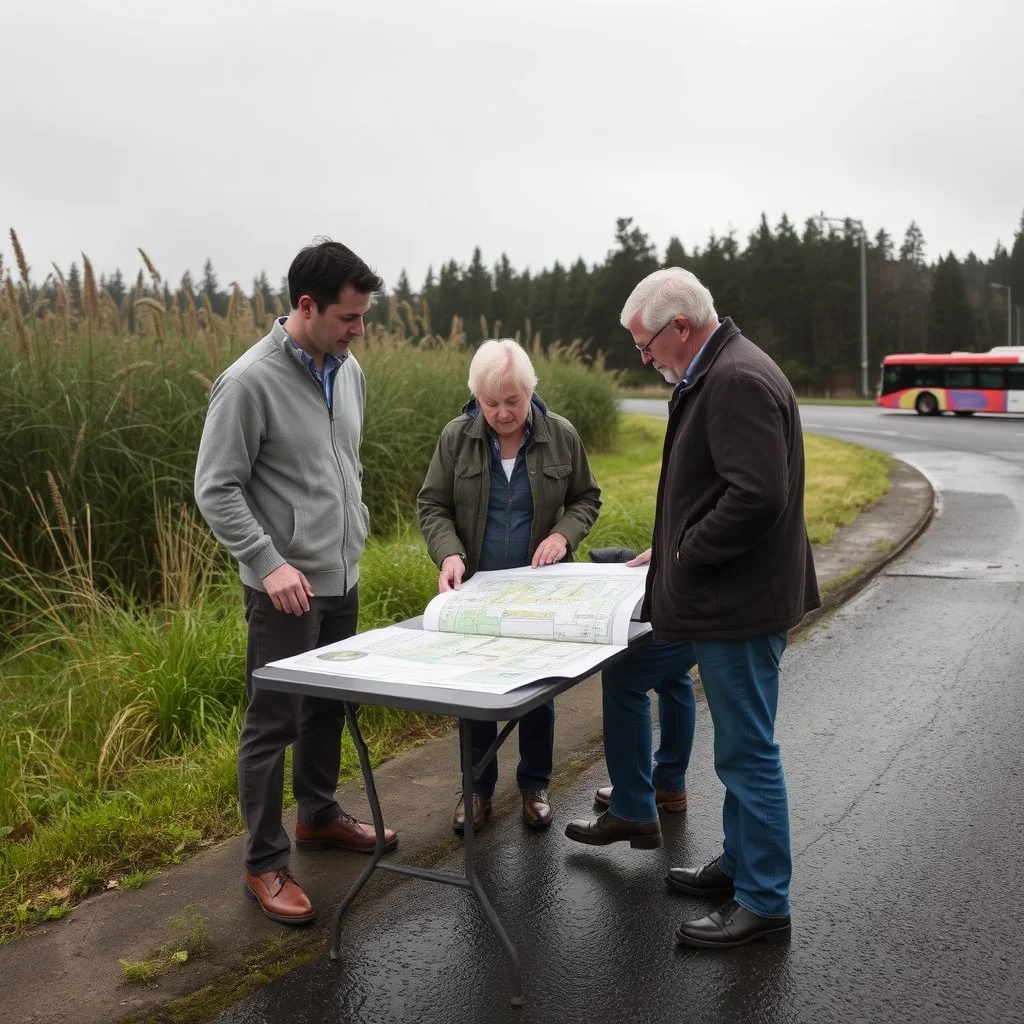
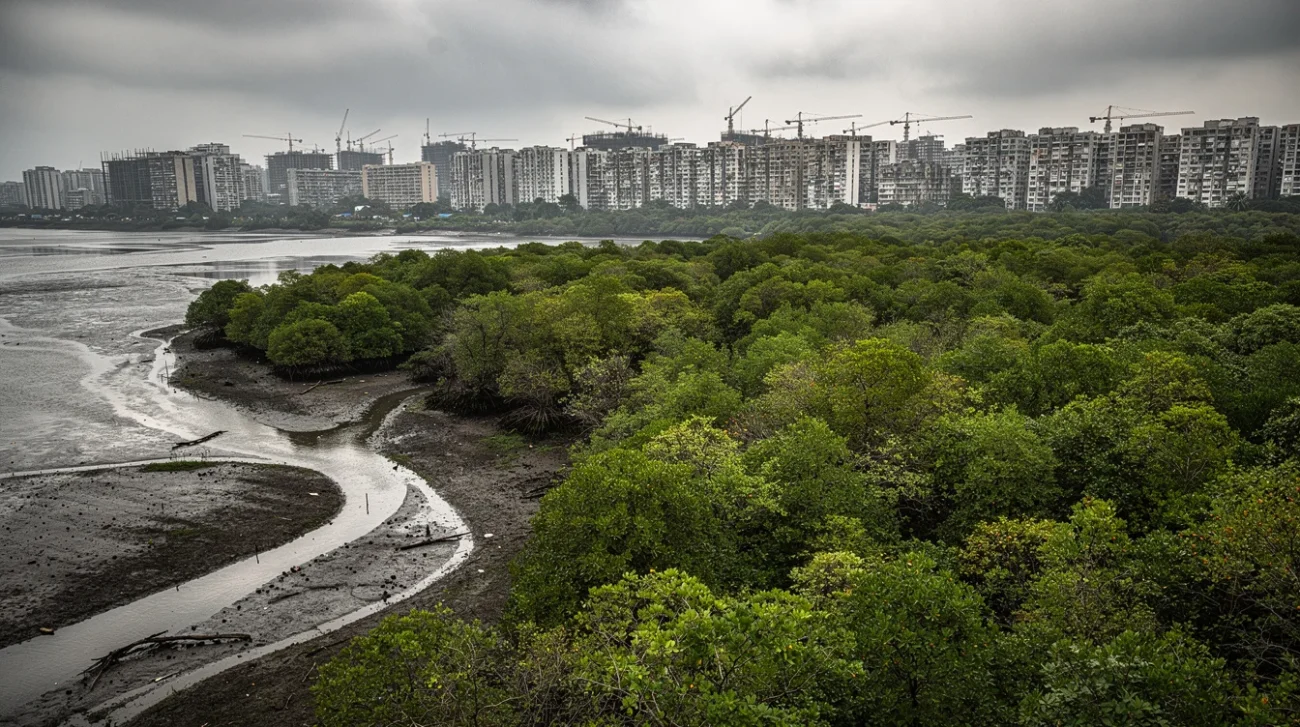
There is also an ecological argument for building compactly in strategic locations. When housing is pushed outward, the consequences do not disappear; they become exurban subdivisions, longer commutes, road expansion and pressure on forests, farms and watersheds. A six-story building near frequent transit may consume less land per household than a low-density development at the metropolitan fringe.
This is the logic behind many urbanist arguments associated with designers and thinkers such as Jan Gehl, who has insisted that the quality of public life depends on the relationship between density, walkability and human-scale streets. It also echoes the regional planning principles of Portland’s urban growth boundary, even though Portland’s system has never eliminated housing pressure or development conflict. Concentrating growth can be environmentally preferable, but only when the concentration is designed with daylight, trees, public space and services rather than treated as a spreadsheet exercise.
A well-designed project can replace some lost landscape with a more useful one. A housing scheme might preserve mature trees, restore a creek, create a public courtyard, add a green roof and connect fragmented habitat. The work of landscape architects such as Kongjian Yu, whose “sponge city” thinking treats ecological systems as essential urban infrastructure, offers a more ambitious model than the familiar choice between untouched lawn and hard-edged construction. It also aligns with the principles of architecture that refuses to consume the site.
PRO: The moral cost of doing nothing is not neutral
Opposition to building in open space often presents itself as environmental stewardship, but it can conceal a distributional choice. Homeowners who already possess stable shelter may defend neighborhood greenery while supporting zoning rules that prevent apartments nearby. The result is a city that protects amenities for insiders and exports housing demand to lower-income communities, distant suburbs and increasingly precarious rental markets.
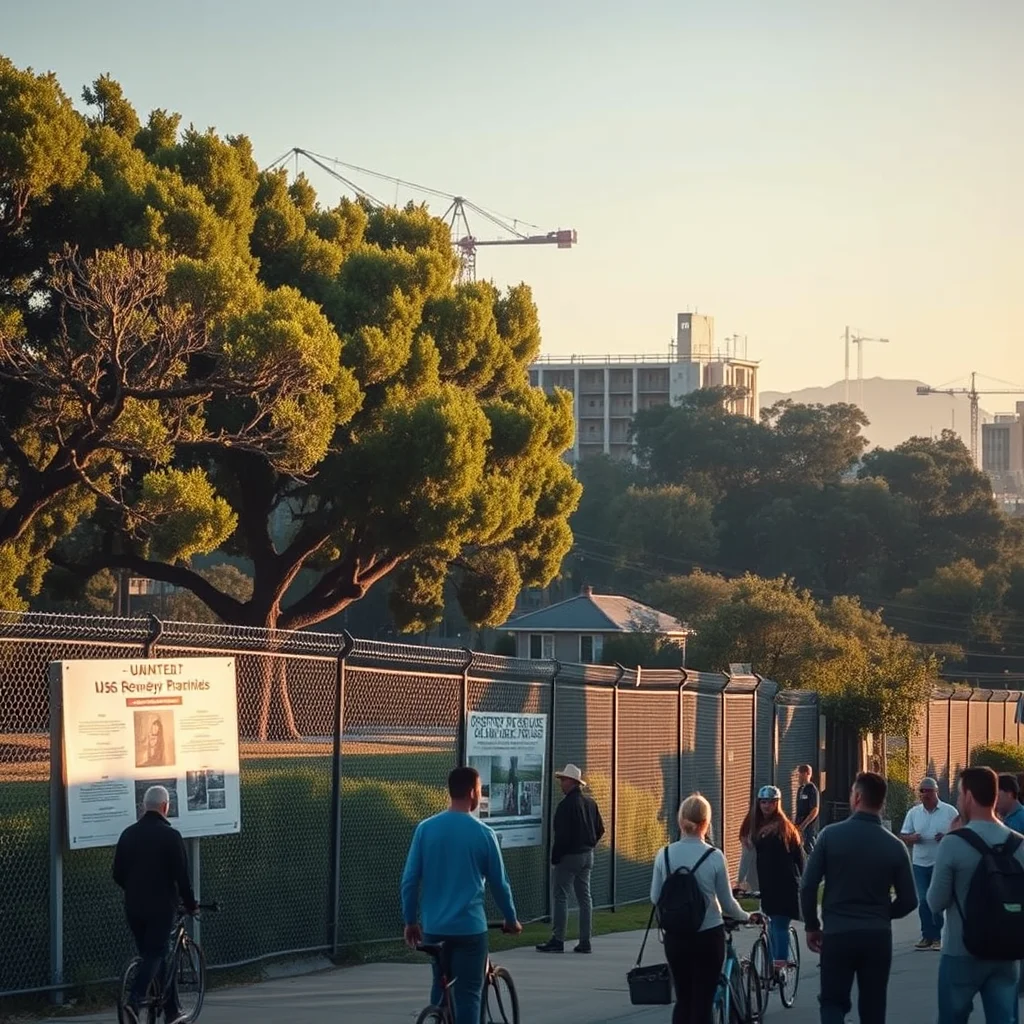
Berkeley’s People’s Park makes the conflict unusually visible. The University of California has pursued a housing plan on the historic site, including student housing and affordable homes, while opponents have defended its trees, social history and role as a rare open gathering space. The dispute is not reducible to “housing versus trees.” It asks who gets to use the land, who benefits from the university’s expansion, and whether a replacement landscape can carry the same social meaning as the original.
For the pro-development side, the lesson is clear: preservation cannot be an excuse for scarcity. Cities should begin with already disturbed land, parking lots, publicly owned parcels and underused institutional grounds. But after that inventory is exhausted, refusing all trade-offs is not a plan. It is a decision to ration shelter through price.
CONTRA: A park is not empty land
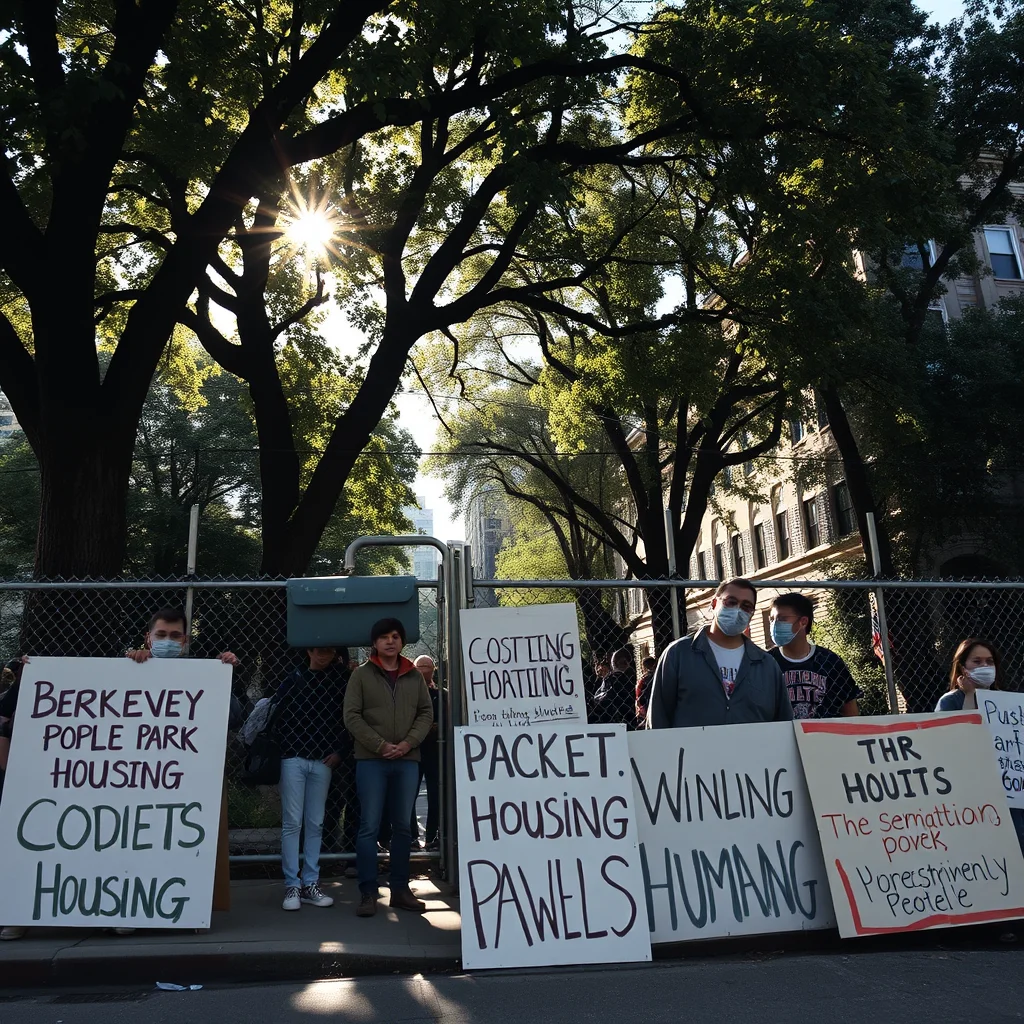
The case against greenbelt development begins with a basic correction to the language of real estate. A park is not vacant. Its value may not appear on a tax assessment, but it is doing work every day. Trees reduce heat, absorb storm water and filter air. Open ground supports pollinators and birds. A path through a grove offers exercise and psychological relief. For residents in small apartments, the public landscape may function as an additional room.
These benefits are not distributed equally. Low-income neighborhoods and communities of color frequently have less canopy and fewer high-quality parks than affluent districts. If cities take the remaining open land in those neighborhoods for housing, they compound an existing environmental injustice. The promise that a new plaza or rooftop garden will replace a mature ecosystem is often a developer’s rendering, not a measured ecological claim.
Frederick Law Olmsted understood that public landscapes were civic machinery, not decorative leftovers. His parks were intended to offer relief from congestion and to produce shared encounters across class lines. The contemporary greenbelt inherits that democratic purpose. Once it is fragmented by roads, podiums and private courtyards, it may remain technically green while losing the continuous habitat and collective freedom that made it public.
CONTRA: Affordable housing is too often a rhetorical shield
The phrase “affordable housing” should not end the argument. A project can be located on a former green space and still fail the people most in need if its rents are tied to middle-income formulas, if public subsidies are weak or if existing residents are displaced during construction. Housing production matters, but so do tenure, price, permanence and access to transit.
There is a dangerous political shortcut at work when officials present park development as the only route to affordability. Cities control zoning, parking requirements, public land, permitting and infrastructure investment. They can legalize apartments near transit, convert obsolete offices, require inclusionary units, acquire distressed properties and tax vacant land. If the first serious site considered is a neighborhood park, the city may be demonstrating not necessity but a failure of imagination.
The design history of public housing also warns against simplistic density. High-rise experiments from the mid-century often delivered units without maintenance, social infrastructure or dignified public space. The problem was not height alone; it was the separation of housing from care, employment, schools and civic belonging. A greenbelt project that maximizes units while minimizing landscape may repeat the same error in a greener visual language.
CONTRA: The replacement myth cannot be trusted
Developers and public agencies frequently promise “no net loss” of open space. But area is not experience. A small lawn placed above a parking structure does not replace a connected woodland. A private courtyard with controlled access does not replace a public commons. A newly planted tree does not immediately provide the canopy of a fifty-year-old one.
There is also a time problem. Housing benefits are often promised in the future, while environmental losses begin on the first day of demolition. Construction dust, noise, traffic and the removal of mature vegetation affect current residents. Climate change makes this asymmetry more severe: during heat waves, the shade lost today cannot be compensated by saplings that may mature decades from now.
The answer is not a blanket ban. It is a higher burden of proof. Before a park or greenbelt is considered, a city should publish a genuine alternatives analysis, protect equivalent or greater ecological value, guarantee deeply affordable units, involve affected communities and establish permanent public access. It should also ask the forbidden question: why are private parking fields, speculative vacant lots and low-density commercial corridors not being transformed first?
A conflict that demands better design
The greenbelt debate is ultimately a contest between two forms of wellbeing, neither of which deserves to be dismissed as an amenity. Shelter protects people from exposure, instability and displacement. Landscape protects people from heat, isolation and ecological breakdown. A city that sacrifices either entirely becomes less humane.
Design cannot make the conflict disappear, but it can expose whether a compromise is serious. The best proposals would be compact rather than sprawling, mixed-income rather than nominally affordable, transit-oriented rather than car-dependent, and ecologically restorative rather than merely landscaped. They would preserve mature trees where possible, build around existing habitat, provide generous public space and give residents real power over the outcome.
What must end is the idea that every debate is solved by a taller building or a preserved lawn. The West Coast needs a land policy capable of distinguishing a beloved civic commons from a redundant tract of grass, and capable of admitting that affordable homes require public investment, not only access to whatever land is easiest to politically sacrifice.
The greenbelt has become America’s most contentious building site because it makes the hidden bargain of the housing crisis visible. The question is no longer whether cities will change their landscapes. It is whether they will change them deliberately, equitably and with enough courage to protect both the right to dwell and the right to breathe.
Watch the Mainifesto Short
Get the Mainifesto weekly — curated design debates, speculative ideas and the week's best articles every Saturday.
Editorial Perspectives
Questions and counterpoints developed by the Mainifesto editorial desk to extend the discussion.
Perspective 1
If a greenbelt can deliver thousands of genuinely affordable homes near transit, I’m prepared to lose some lawn. The test is practical: show me the housing numbers, commute reduction, operating costs, and a funded plan for replacement habitat—not another gesture about preserving views.
Perspective 2
I’m against treating greenbelts as the easiest land bank simply because the public cannot fight back as effectively as a private owner. Build denser, reuse commercial sites, and fix the planning bottlenecks first; sacrificing functioning landscape without proving those options are exhausted is bad development, however noble the housing brief.
Perspective 3
The familiar modernist bargain is being replayed: erase the landscape in the name of social progress, then discover that the replacement city is less generous to everyone. I would trust evidence only when it measures daily life, biodiversity, and public access together—otherwise “affordable housing” becomes a moral alibi for ordinary land speculation.
Perspective 4
This is not a choice between shelter and nature; it is a failure to map the whole system, from vacant parcels and transit capacity to flood risk and heat islands. Before approving a greenbelt sacrifice, publish the alternatives, the carbon and water budgets, and who captures the land value—otherwise the city is subsidising a short-term fix with irreversible infrastructure.