
A Wildlife Refuge Is Not a Replacement for the Wild
A Wildlife Refuge Is Not a Replacement for the Wild
A building can keep a frog alive after its forest becomes lethal. It cannot, by that achievement alone, replace the forest. The distinction should govern every architectural proposal that promises sanctuary from environmental collapse. As designboom’s discussion of architecture for extinction observes, buildings are increasingly being asked to shelter nature from changes outside. That is a legitimate emergency brief—and a dangerous permanent settlement.
Wildlife refuge architecture deserves support when it preserves possibilities for ecological recovery. It deserves suspicion when managed survival becomes the definition of success. The argument is not captivity versus abandonment. It is whether architecture buys time for habitat repair or supplies an attractive excuse to stop attempting it.
PRO: An Emergency Room Can Prevent an Irreversible Loss
Extinction does not wait for landscape restoration, emissions reductions or a better planning regime. Where a population faces an immediate threat, an engineered refuge can preserve animals, plants and genetic diversity that would otherwise disappear. Rejecting such facilities because they are artificial mistakes aesthetic purity for ecological responsibility.
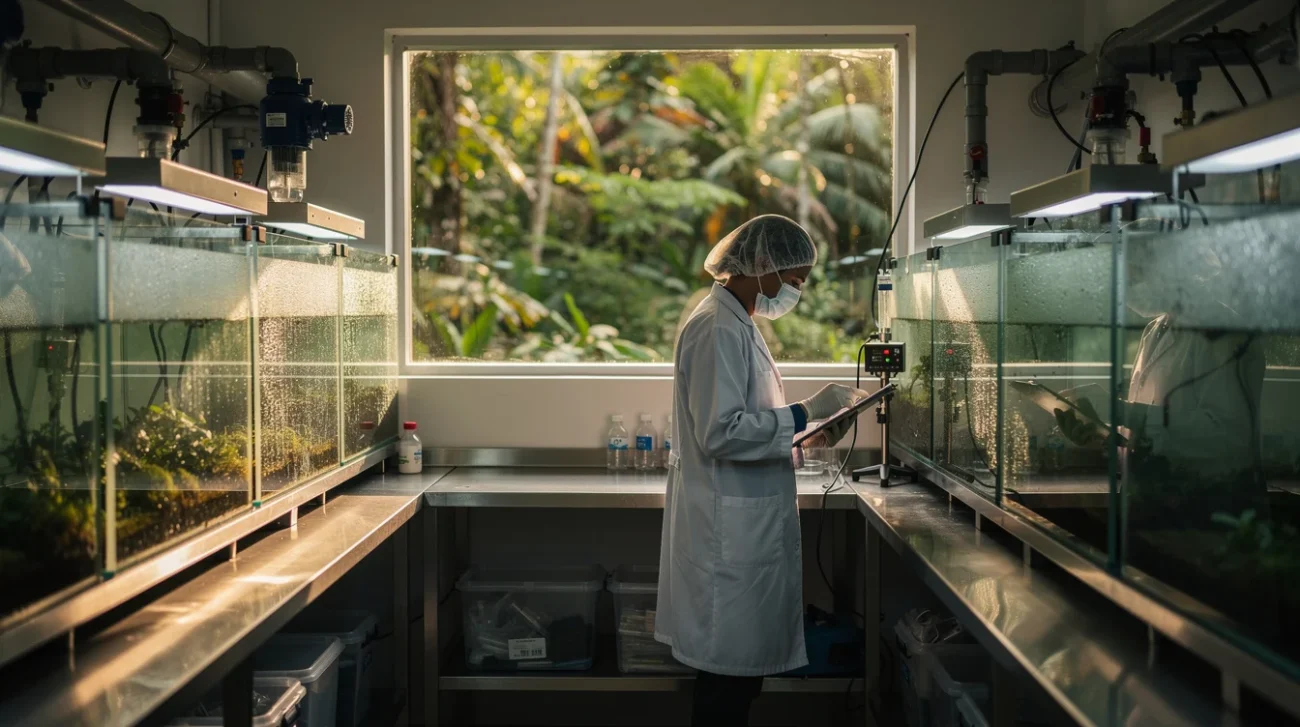
The Panama Amphibian Rescue and Conservation Project, with facilities in Gamboa, offers a concrete example. Its conservation breeding work responds in part to chytridiomycosis, the fungal disease that has devastated amphibian populations. Quarantine, controlled environmental conditions and carefully managed husbandry provide protection that an apparently intact forest may no longer offer. Habitat preservation remains essential, but it cannot instantly neutralize a pathogen.
Here the consequential architecture is rarely the photogenic enclosure. It is the separation of clean and contaminated circulation, the reliability of water treatment, the capacity to isolate an infected animal and the availability of backup systems. A drain can matter more than a façade. So can a maintenance budget that survives beyond the opening ceremony.
The California condor recovery programme makes the broader case for temporary managed protection. Captive breeding enabled releases into the wild after the remaining wild birds were brought into captivity in 1987. Recovery still requires intensive intervention, notably against lead poisoning, but the alternative was not a self-sufficient wild population waiting patiently outside. It was likely extinction. A refuge should be judged against the actual emergency, not an imaginary undamaged baseline.
PRO: Good Refuges Preserve More Than a Headcount
The strongest argument for these buildings is not that they store living objects. It is that they can conserve the biological capacities needed for future recovery: genetic variation, breeding behaviour, appropriate development and, where feasible, relationships with other organisms. That ambition changes the architectural brief from display to preparation.
Condor conservation illustrates the difference. Techniques including puppet-rearing have been used to reduce human imprinting, while release preparation and social management help birds navigate life beyond the breeding facility. Architecture must accommodate that work: screened working areas, appropriate flight spaces and separation from visitor pressure. The visitor’s perfect view may be the animal’s worst preparation.
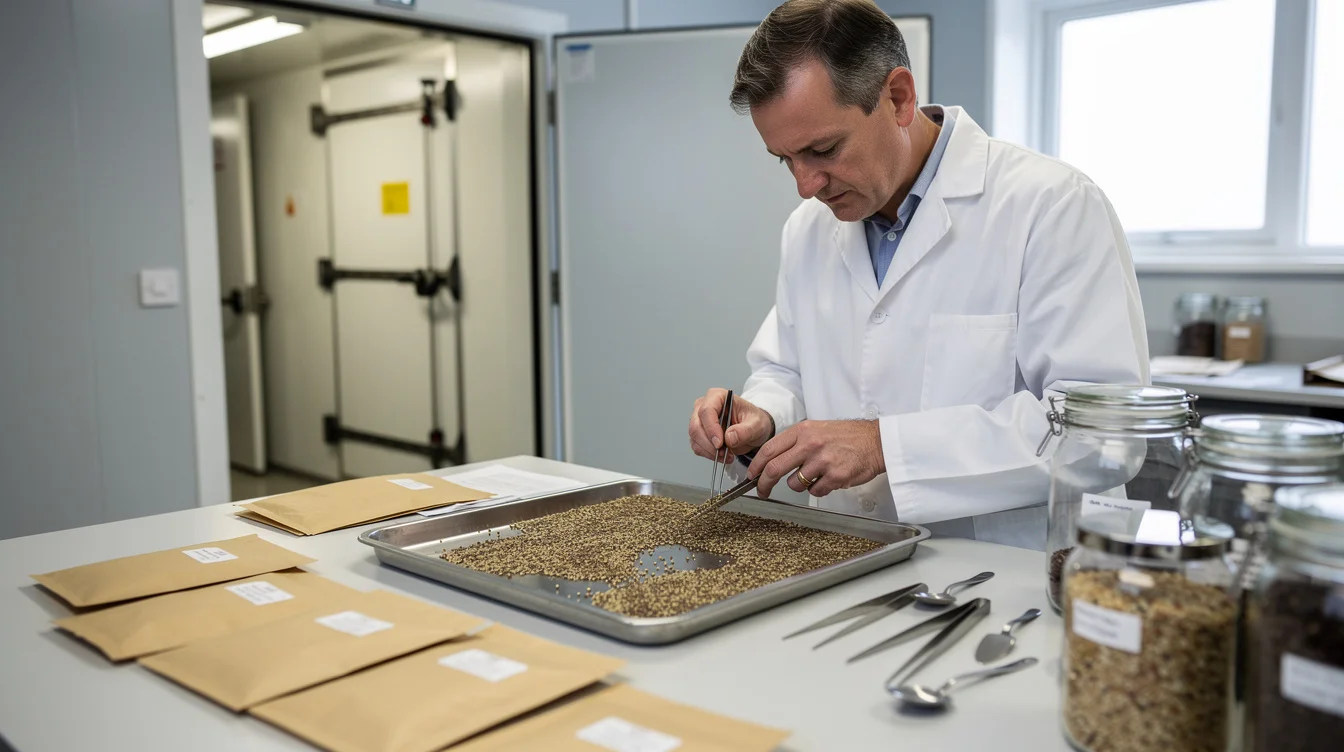
Plant conservation offers another model. The Millennium Seed Bank at Wakehurst, housed in a building designed by Stanton Williams, protects seed collections through controlled storage and scientific infrastructure. Its value lies less in the visibility of its architecture than in the collections, documentation, viability testing and partnerships that can support conservation and restoration. A seed without reliable provenance is a weaker restoration resource than one connected to a known population and collection history.
Seed banking is not universally applicable: some species have seeds that cannot tolerate conventional drying and freezing. Living collections and other conservation techniques remain necessary. That limitation is instructive. There is no universal refuge typology because there is no universal organism. A defensible project begins with species-specific biology, then connects the facility to field research, suitable recipient habitats and the people responsible for their long-term care.
CONTRA: A Collection Is Not an Ecosystem
The counterargument begins where architectural imagery usually stops: beyond the enclosure’s edge. A surviving species does not necessarily retain its ecological role. A captive amphibian may reproduce without participating in the food webs, seasonal movements and nutrient transfers of its original habitat. A stored seed preserves potential, not a functioning plant community. The same distinction underlies the argument that coastal defence needs land, not just trees: protecting living systems requires space for their processes, not merely preserving selected organisms.
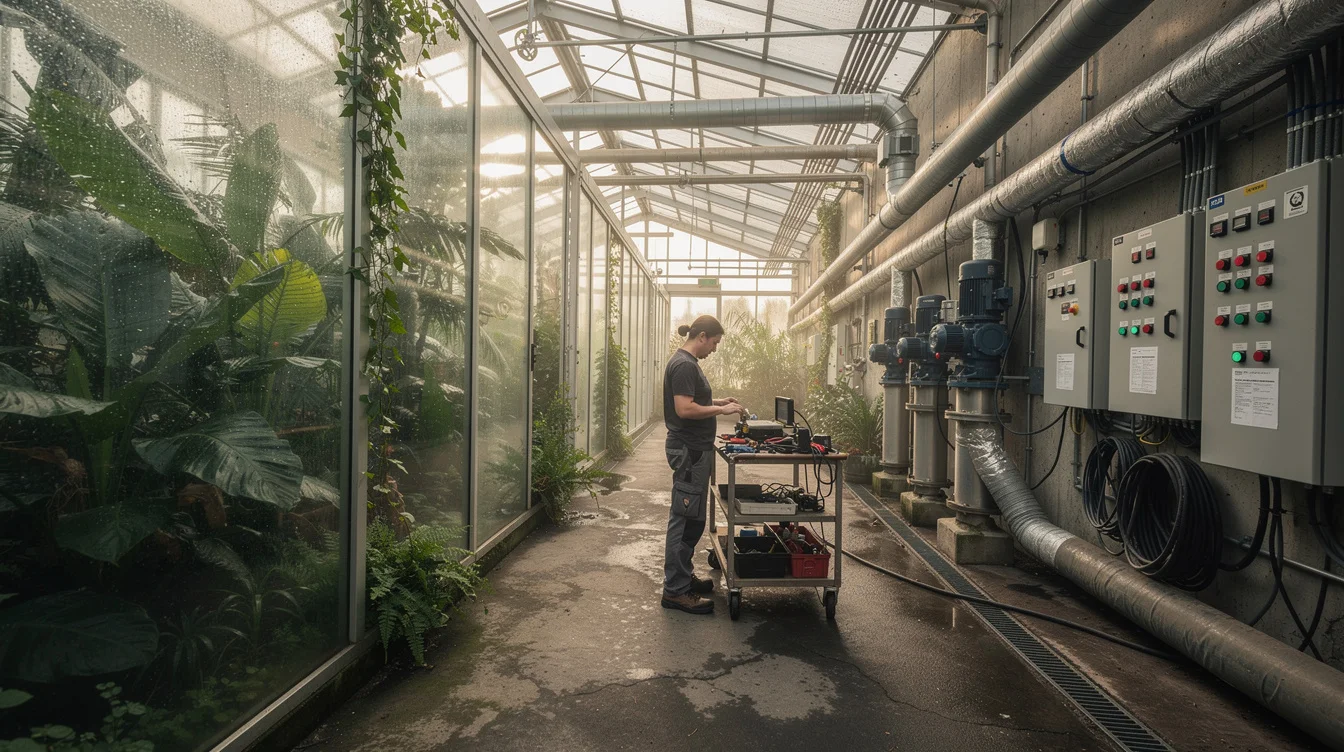
The Eden Project’s biomes, designed by Grimshaw in Cornwall, demonstrate architecture’s power to sustain and communicate climatic environments. They are remarkable educational landscapes. But their value should not be confused with replacing the forests whose conditions they evoke. Neither a convincing canopy nor a humid atmosphere reproduces the evolutionary histories and extensive relationships of a tropical ecosystem. Eden is not a failed reintroduction facility; it is evidence that these categories must remain distinct.
Biosphere 2 in Arizona supplies a sharper warning about ecological completeness. During its first sealed human mission, oxygen levels fell substantially and supplemental oxygen was introduced. The experiment was not a wildlife rescue programme, but its difficulties expose the gap between assembling organisms and stabilizing their collective processes. Microbes, soils and material chemistry can overturn the environmental script.
For architects, this means abandoning the seductive claim that enough sensors can make a habitat whole. Environmental controls can manage selected variables; they do not guarantee ecological equivalence. Refuges may also favour species that breed reliably, attract funding or tolerate captivity. The resulting collection can be viable on its own terms while remaining a radically incomplete representation of the living system that was lost.
CONTRA: Permanent Rescue Can Normalize Permanent Damage
The greater danger is political. Once survival indoors is presented as compensation for destruction outdoors, the refuge becomes an instrument of lowered expectations. A developer can point to a conservation building; a government can celebrate a breeding milestone. Neither achievement demonstrates that the conditions causing decline have been reversed. The question of who gets a say before a luxury resort is built belongs upstream of any promise to compensate for habitat loss.
The condor’s continuing exposure to lead illustrates this unresolved dependency. Breeding and release can produce birds capable of living outside, yet environmental hazards keep pulling recovery back toward treatment and management. The programme is necessary precisely because the wider landscape remains unsafe. Its success should strengthen the demand to remove that danger, not make the danger acceptable.
Reintroduction is also more demanding than opening a door. The IUCN’s guidelines for conservation translocations emphasize assessing risks, addressing threats and evaluating whether releases can achieve conservation benefits. Suitable climate, sufficient habitat, disease risks, community involvement and long-term monitoring all matter. Where environmental change makes a historical range unsuitable, proposals to establish populations elsewhere introduce additional ecological and governance questions.
Meanwhile, an enclosed refuge acquires its own vulnerabilities: electricity costs, equipment failure, disrupted supply chains and institutional funding cycles. A precisely controlled interior may protect organisms from one crisis while exposing them to another. These liabilities do not invalidate rescue. They invalidate the fantasy of a self-contained architectural solution.
The ethical failure is not indefinite care when no safe release is possible. It is disguising indefinite care as completed conservation. Institutions should say plainly when their animals or plants constitute an insurance population, what prevents release and what work is being funded to change those conditions.
The Verdict: Design the Connection Back to Habitat
Architecture should accept the emergency commission without claiming the ecosystem’s job. Every refuge brief should specify which ecological functions it can support, which it cannot, and how its occupants contribute to a wider recovery strategy. Survival and breeding figures need companions: genetic representation, behavioural competence, habitat readiness and evidence from monitored releases where those are appropriate.
Not every refuge will become unnecessary. Some may require decades of care, and some species may never have a safe route back. Honesty about that prospect is indispensable. The best refuge is not necessarily the one that closes first; it is the one whose existence never becomes an alibi for abandoning the wild.
FAQ
What is wildlife refuge architecture?
Here, the term means buildings and controlled environments used to protect threatened organisms, including conservation breeding centres, specialized greenhouses and seed banks. Unlike a landscape-scale wildlife refuge, these facilities depend heavily on managed indoor conditions.
Can an indoor refuge replace a natural habitat?
No. It can reproduce selected conditions and support particular relationships, but it cannot be assumed to replace an ecosystem’s food webs, migrations, evolutionary processes or landscape connections. Its strongest role is supporting conservation beyond its boundaries.
How should architects measure a refuge’s success?
Through species-appropriate welfare, genetic diversity, breeding outcomes, operational resilience and contributions to recovery. Where reintroduction is feasible, behavioural preparation, recipient-habitat quality and post-release monitoring matter more than visitor numbers or architectural recognition.
What if reintroduction is not currently possible?
Long-term managed care may still prevent extinction and preserve future options. Institutions should disclose the barriers, review prospects regularly and connect care to threat reduction rather than implying that a surviving captive population resolves habitat loss.
If we can finance a building that keeps a species alive but not a landscape where it can live independently, what exactly have we chosen to conserve?
Get the Mainifesto weekly — curated design debates, speculative ideas and the week's best articles every Saturday.
Editorial Perspectives
Questions and counterpoints developed by the Mainifesto editorial desk to extend the discussion.
Perspective 1
If the visitor experience is thriving but the species has nowhere to go, we’ve funded an attraction, not a recovery strategy. Build the refuge, but judge its return by what it enables beyond the enclosure—not ticket sales or opening-day coverage.
Perspective 2
I don’t think a credible release plan should be the test of whether a refuge counts as conservation. A building that supports breeding and preserves genetic diversity buys time while habitats remain unsafe; why dismiss that as merely keeping animals indoors?
Perspective 3
A building has a defined site, a contract and a handover date; restoring a landscape means negotiating land rights and funding management for decades. That makes the building easier to finance, not necessarily the better investment. I’d want to see the operating budget and who’s paying for habitat recovery before signing off on the architecture.