
Who Controls a Monument Once It Becomes Digital?
Who Controls a Monument Once It Becomes a Digital Experience?
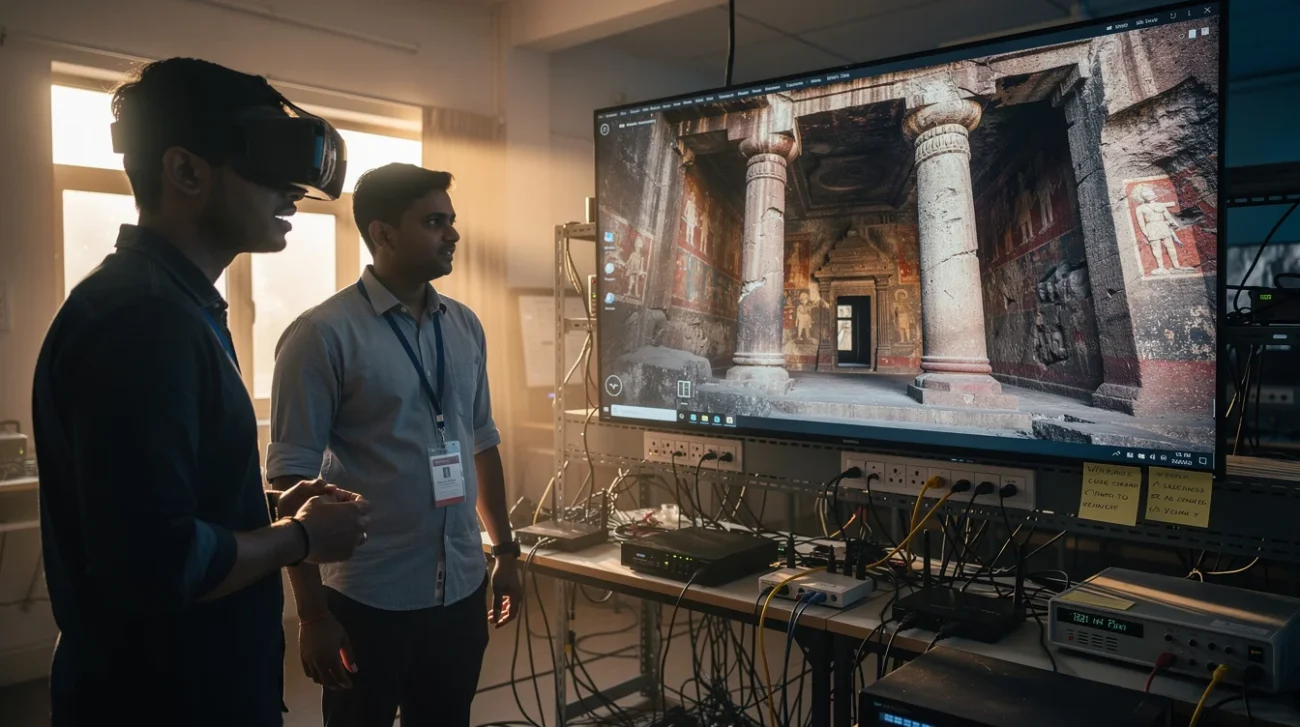
A cave in Maharashtra can now be entered without travelling to it. IITM Pravartak’s Digital Ajanta project uses 3D scanning, filming, modelling and virtual reality to translate the caves into an immersive experience. As the ArchDaily account describes, documentation becomes something visitors can move through, rather than simply look at.
The consequential question is not whether the headset delivers the right shiver of authenticity. It is who acquires authority when a monument becomes an interface. Someone selects the route, reconstructs missing information, writes the explanations and determines what can circulate. Virtual heritage can redistribute access while concentrating control. That contradiction deserves a governance debate, not another demonstration of rendering quality.
PRO: Access Is a Public Good, Not a Consolation Prize
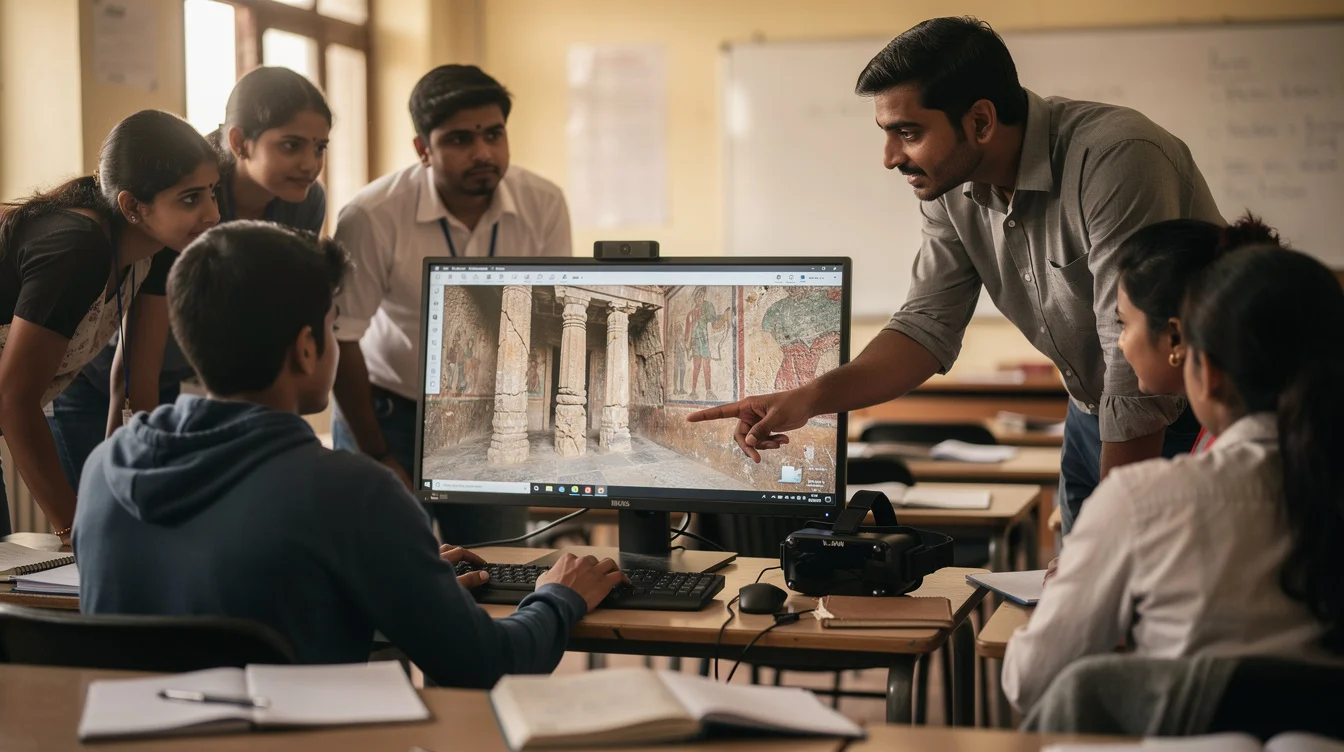
Physical access to heritage has never been equally distributed. Distance, visa restrictions, travel costs and bodily mobility decide who gets to encounter an architectural site. A digital reconstruction can loosen those constraints. For a student in Chennai or a classroom outside India, a navigable model of Ajanta could make spatial relationships legible in ways that a textbook photograph cannot.
Architecture is more than an image. The transition from a compressed entrance to an expansive interior, the relationship between columns and painted surfaces, and the sequence of spaces all structure understanding. Digital movement can support that understanding without pretending to reproduce temperature, material presence or the social experience of visiting.
There are useful precedents outside VR. The physical facsimiles associated with Lascaux and Chauvet separate public encounter from access to vulnerable originals. Their lesson is not that copies are equivalent to sites, but that access and conservation need not occupy the same physical space. Whether a virtual experience actually reduces pressure on a monument, however, requires visitor evidence; it might also stimulate tourism.
CyArk’s digital documentation work and its Open Heritage collaboration with Google Arts & Culture demonstrate another possibility: records can reach audiences far beyond a specialist archive. The public benefit is real when the encounter teaches people how architecture works, rather than merely allowing them to collect another destination.
PRO: Reconstruction Can Make Interpretation More Accountable
A physical monument does not explain its own history. Guidebooks, conservation decisions, lighting and tour routes already mediate what visitors understand. Digital reconstruction could make those interventions unusually visible. A viewer might switch between a measured surface, a proposed reconstruction and an annotated account of the evidence behind it.
Consider a damaged painted passage. Rather than silently completing it, an interface could distinguish captured material from inferred geometry and hypothetical colour. Competing scholarly interpretations could sit alongside one another. The London Charter for computer-based visualisation of cultural heritage and the Seville Principles provide established reference points for documenting evidence, methods and uncertainty. Their importance is political as well as technical: they challenge the authority of a seamless image.
For Digital Ajanta, such features should be understood as governance proposals, not claims about its current implementation. A credible public model would give the responsible heritage authorities and conservators approval over the official conservation record, while giving historians, regional educators and relevant religious and community representatives a defined role in interpretation.
Control need not mean a single institution possessing the final word. It can mean an explicit division of responsibilities: technicians document capture methods; scholars justify reconstructions; custodians authorize official releases; users can inspect revisions. With accessible non-headset versions and usable research exports, the reconstruction becomes public infrastructure rather than a spectacular room with a digital turnstile.
CONTRA: The Interface Can Become the New Gatekeeper
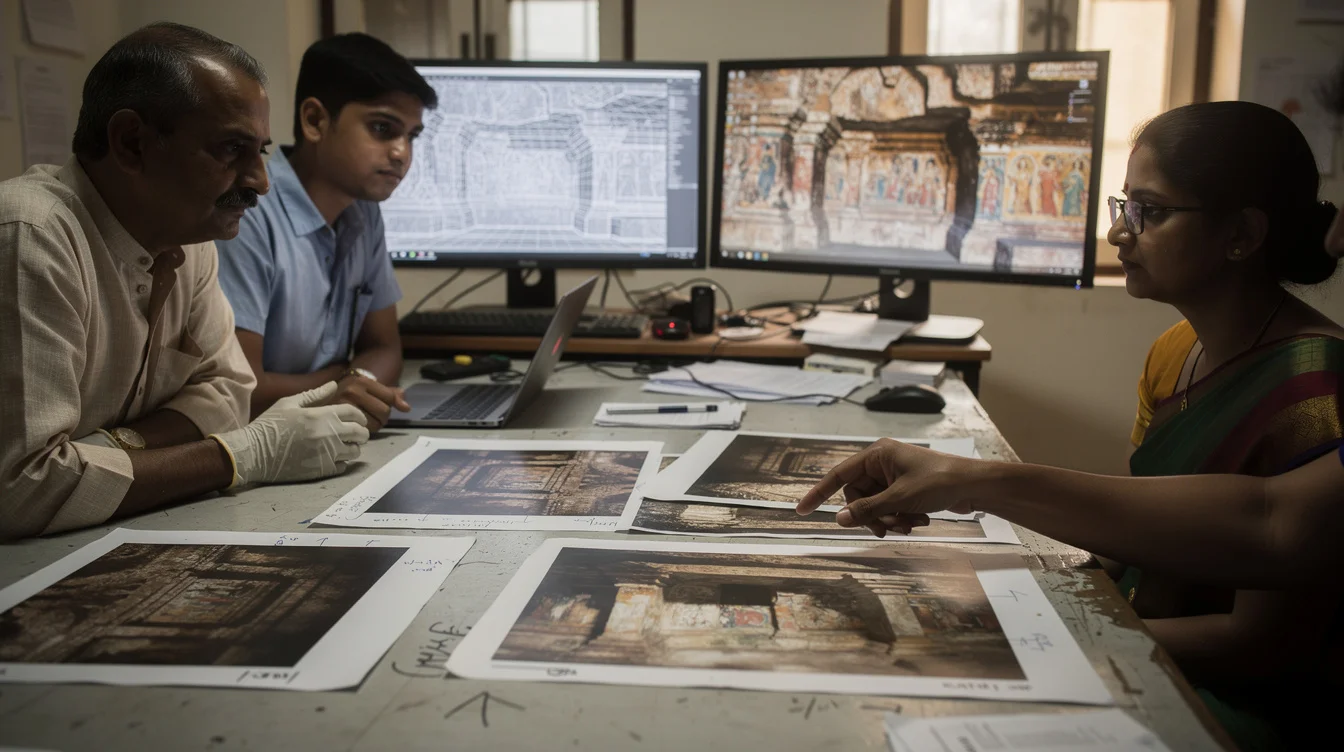
The same technologies can produce the opposite outcome. A monument may be publicly protected while its most widely encountered digital representation depends on proprietary software, commercial distribution and hardware that becomes obsolete. Public access then survives only for as long as a chain of contracts and products remains intact.
Google Arts & Culture illustrates the productive tension: a platform can give cultural material extraordinary visibility while also mediating how people discover and encounter it. That is not evidence of misconduct. It is a structural reminder that reach and institutional independence are different assets. A freely viewable experience is not necessarily downloadable, reusable or independently preservable.
Imagine a school licensed to stream an Ajanta reconstruction but unable to retain a local copy. A subscription change, discontinued application or unreliable connection could remove its access overnight. Meanwhile, the institution holding the original scan might lack the software or contractual rights needed to rebuild the experience elsewhere. The monument remains; its public interface disappears.
Digital exclusion also has an ergonomics problem. Headsets cost money, require maintenance and can cause discomfort. Interfaces may neglect low vision, limited mobility or local languages. Calling an experience universal because it travels digitally is a category error. Unless accessibility, migration rights and long-term maintenance are funded from the beginning, virtual heritage risks replacing the geographical barrier with a technological one.
CONTRA: A Reconstruction Can Launder Power as Evidence
A scan records surfaces under particular conditions. It does not settle what those surfaces meant, which historical moment should dominate or how absent elements should appear. Yet a polished reconstruction can make interpretation look measured. The more convincing the image, the easier it becomes to mistake a modelling decision for an archaeological fact. As with AI-generated property imagery, visual plausibility is not proof.
Ajanta’s Buddhist context makes interpretive authority especially consequential. A visitor route might foreground religious practice, painting techniques, patronage or an account of national heritage. Each emphasis can be defensible; none is neutral. An English-first experience circulated internationally may also privilege an audience different from the people living near the site. Consultation without meaningful influence simply decorates an already settled script.
Then comes the money. Tickets, exhibition licences, educational packages and derivative imagery can generate value around a digitised monument. Technical contractors deserve payment, but production expertise should not automatically confer indefinite control over cultural interpretation or exclusive commercial reuse. Nor should every hypothetical revenue stream be attributed to Digital Ajanta without evidence of its actual agreements.
The remedy is a public governance contract, not a promise of sensitivity. It should disclose who controls source files, who may authorize an official revision, how independent reinterpretations must be labelled, and how commercial income supports conservation and locally defined priorities. Sensitive information may require restricted access. But secrecy around ownership and licensing protects gatekeepers, not heritage.
FAQ: Who Gets to Decide?
What is Digital Ajanta?
Digital Ajanta is an IITM Pravartak project using 3D scanning, filming, modelling and virtual reality to document the Ajanta caves in Maharashtra and create an immersive experience. It provides a concrete starting point for debating how architectural records become mediated public encounters.
Who should authorize changes to a digital monument?
Official releases should follow a published process involving responsible heritage authorities, conservation specialists and relevant interpretive expertise, with meaningful community participation. Technical corrections, speculative reconstructions and changes to narration should be distinguished. Independent interpretations should remain possible, but clearly labelled rather than presented as the official record.
Does wider digital access require completely open data?
No. Sensitive site information, security risks and legitimate cultural restrictions can justify limits. But public viewing, scholarly access, reuse permissions and preservation rights are separate questions. Restrictions should be specific and explained, rather than used to justify blanket platform exclusivity.
Who should benefit financially from virtual heritage?
Contracts should pay technical contributors fairly while establishing transparent support for conservation, public education and locally determined priorities. Commercial licensing should not quietly transfer permanent interpretive authority. Auditable revenue arrangements matter more than vague assurances that exposure will eventually benefit everyone.
If a monument belongs to public memory, how much control should its custodians be allowed to hand to the companies that make it digitally visible?
Watch the Mainifesto Short
Get the Mainifesto weekly — curated design debates, speculative ideas and the week's best articles every Saturday.
Editorial Perspectives
Questions and counterpoints developed by the Mainifesto editorial desk to extend the discussion.
Perspective 1
Custodians should give companies enough control to build and maintain a usable digital Ajanta, not just deliver a beautiful demo. That means authority over technical updates and room to earn revenue, but contracts should require exportable data, measurable access standards and public approval of changes to the reconstruction.
Perspective 2
I want more people to encounter Ajanta through digital art, but making it visible shouldn't buy a company the right to govern it. Commission the platform, pay for the work and keep reconstruction decisions and licensing under public oversight—otherwise access becomes whatever the business model permits.
Perspective 3
A reconstruction isn't just a scan; it's a chain of decisions about missing geometry, colour and what counts as evidence. Could digital Ajanta expose those decisions as versioned, inspectable layers, so visitors can distinguish the surviving monument from someone's proposed completion?