When Information Design Starts Inventing Memories
When Information Design Starts Inventing Memories
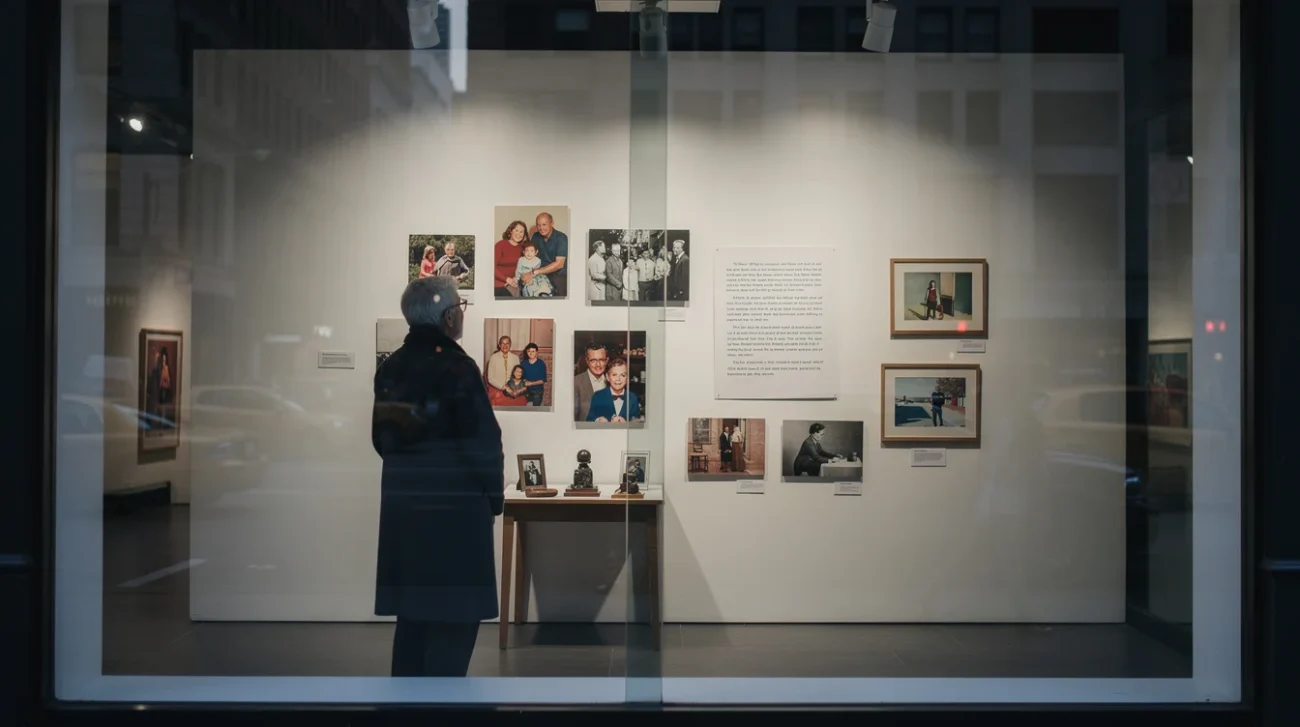
A missing photograph is not necessarily a missing memory. Someone may remember a kitchen, a parent’s gesture or the atmosphere of a childhood afternoon without possessing an image of it. Generative AI offers to fill that gap. The trouble begins when an image that expresses a recollection starts looking like proof.
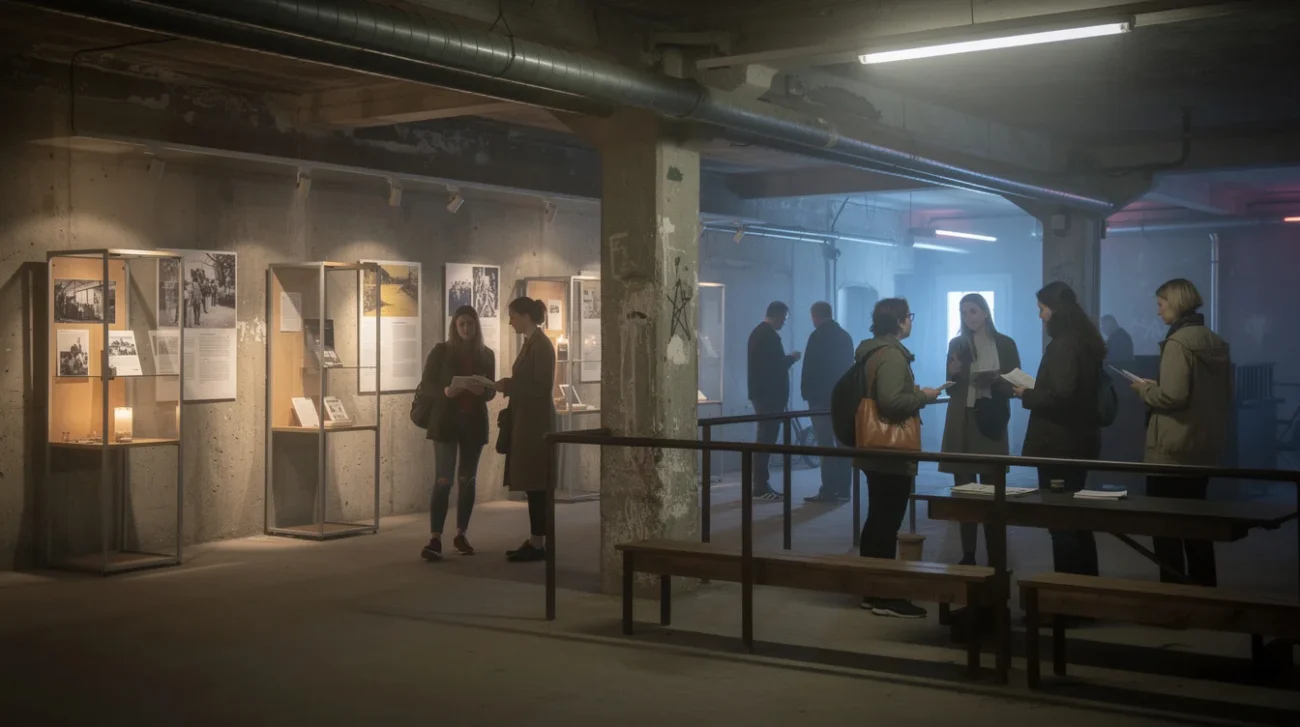
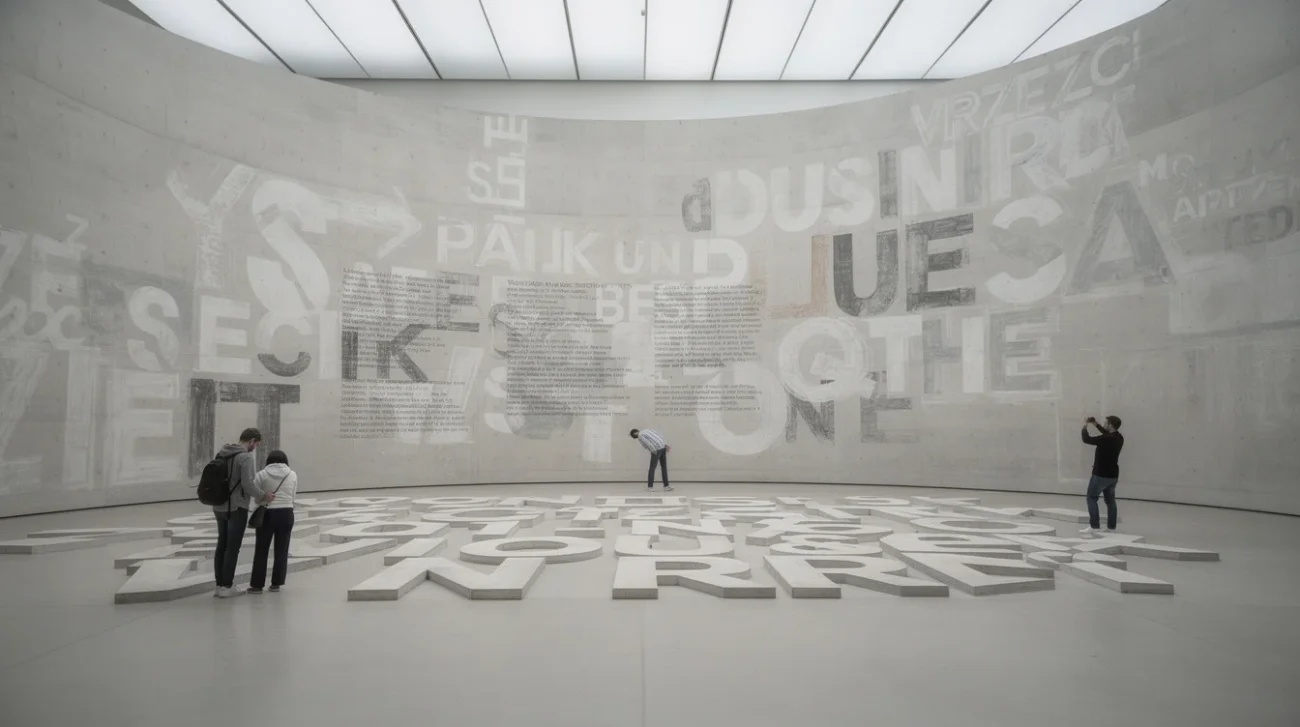
At New York’s Museum of Modern Art, Full Disclosure: The Edge of Information Design, curated by Paola Antonelli, brings that problem into the territory of information design. According to Dezeen’s report, the exhibition occupies a windowed ground-floor gallery and ranges from classic infographics to a project involving missing memories created using AI. That framing is consequential: synthetic recollection appears not simply as imaginative art, but alongside practices associated with making information intelligible.
There are two serious positions here. One sees reconstruction as a legitimate way to give personal experience a visible form. The other sees a machine for laundering plausibility into evidence. Neither can be dismissed with a discreet label saying “AI-generated.”
PRO: An Absent Photograph Should Not Silence a Life

The strongest case for synthetic memories begins with an inequality: not everyone inherits a photographic archive. Migration, displacement, poverty, family estrangement and ordinary loss leave radically uneven records. Treating photographs as the admission ticket to visual history privileges people whose lives were consistently documented and whose documents survived. As in the debate over scarcity in design as resourcefulness or precarity, celebrating an inventive response should not obscure the deprivation behind it.
A reconstruction cannot repair that inequality by becoming evidence. It can, however, offer a different kind of participation. Consider a hypothetical workshop in which someone describes a childhood home demolished decades ago. An image might help them explain the crowded dining table, the relationship between rooms or the particular feeling of waiting by a doorway. Its value lies in supporting that account, not independently verifying it.
A relevant comparison beyond the supplied exhibition description is Synthetic Memories, the initiative by Barcelona-based Domestic Data Streamers that uses generative AI to visualise people’s recollections. The meaningful design question is not whether the software can produce convincing nostalgia. It is whether the person remembering retains authority over what the image is allowed to mean.
Information design already has room for situated experience. In Dear Data, Giorgia Lupi and Stefanie Posavec exchanged hand-drawn postcards recording aspects of everyday life. Their project made selection, interpretation and authorship visible. Synthetic memory deserves that same explicit subjectivity—not the borrowed neutrality of a camera.
PRO: Uncertainty Can Be Part of the Picture
Defending these images does not require defending seamless realism. In fact, the most responsible reconstruction may be the one that refuses to look finished. Designers can give uncertainty a visual language without turning every image into a warning poster.
Imagine a proposed display with three clearly distinguished layers: the narrator’s words, details they explicitly recall and elements supplied to complete the scene. A remembered red coat could remain sharply defined while an unspecified street stays diagrammatic. Several possible room layouts could sit beside one another instead of collapsing into a single persuasive interior. These are design proposals, not descriptions of MoMA’s installation.
The precedent is not merely aesthetic. The Isotype system developed by Otto Neurath and collaborators, including Marie Neurath and Gerd Arntz, made complex social information approachable through a deliberately constructed graphic language. Its relevance here is the insistence that representation has rules. Synthetic memories need rules for degrees of knowledge, not just a recognisable visual style.
Participants should also be able to preserve an emotionally important version without endorsing its incidental details. “This expresses how I remember being there” is a valid statement; “this shows what happened” is a different claim. Good design gives both statements somewhere to stand. It makes room for attachment while preventing attachment from being mistaken for authentication.
CONTRA: The Image Will Outrun Its Disclaimer
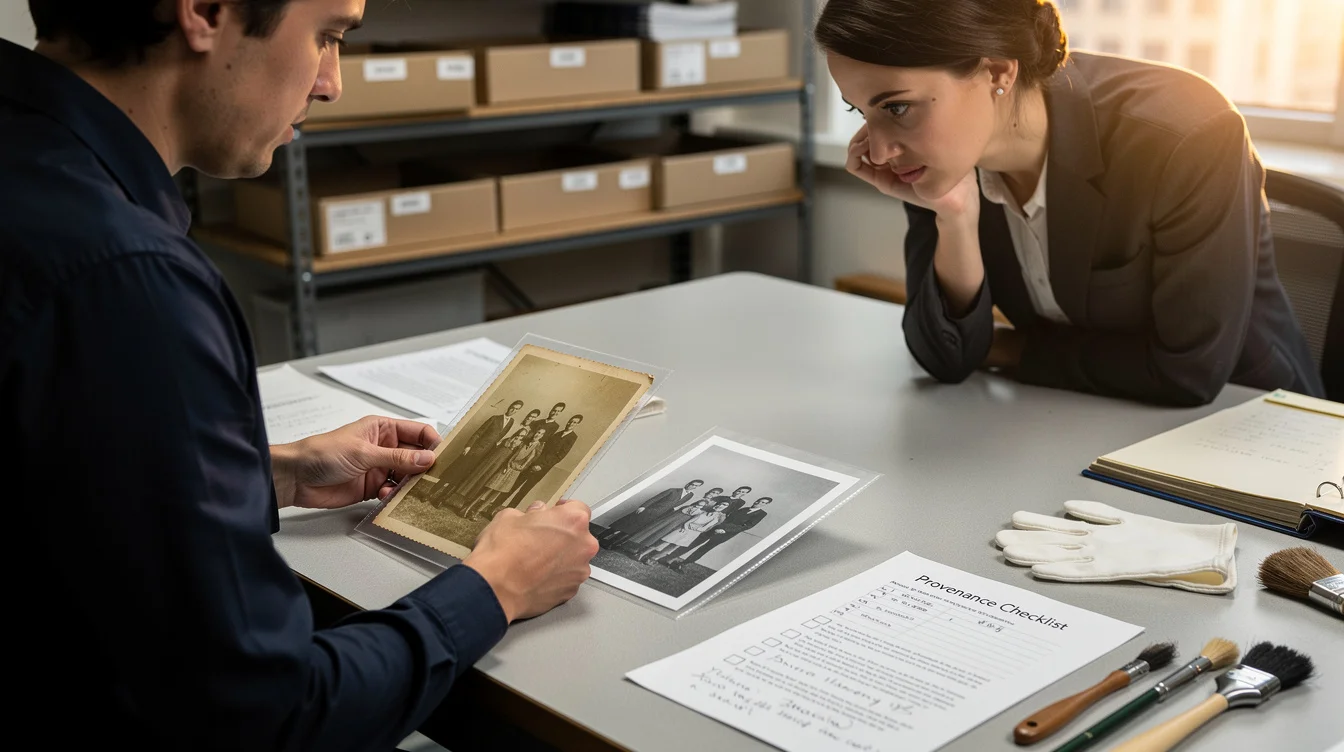
The strongest objection is equally clear: an image does not remain inside the careful interface built around it. It gets cropped, screenshotted, reposted and printed. A wall label stays in the gallery. An accompanying interview disappears from the family chat. What travels is the plausible scene.
That is why placing synthetic recollection within information design raises the stakes. Museum presentation can confer cultural legitimacy even when it does not certify factual accuracy. As with disputes over who owns the view of a monument, the setting helps shape whose account of the past carries authority. Visitors may understand that an image was generated and still leave with its details lodged in their understanding of someone’s past. Disclosure identifies a technique; it does not automatically undo an impression.
Roland Barthes’s Camera Lucida helps explain the collision. His account of photography rests on its peculiar relationship to something that stood before a camera. A generated reconstruction borrows photography’s surface while lacking that relationship to the remembered event. Grain, faded colour and period clothing can perform age without carrying historical provenance.
Specificity makes the problem worse. A model must render something where the testimony says little: a face, a window frame, a street sign. Those completions can then invite recognition. The danger is not only that outsiders will mistake fiction for fact. It is that a narrator may come to use the generated image as a reference for the memory it was meant to serve.
CONTRA: Provenance Is Necessary, but Not an Alibi
A responsible system should record who commissioned the reconstruction, what testimony informed it, which elements were deliberately introduced and when revisions occurred. But a documented fabrication remains a fabrication wherever it asserts unsupported details. Process transparency cannot convert an imagined background into historical evidence.
Forensic Architecture offers a useful counterpoint, rather than a direct equivalent. Its spatial reconstructions show why models used to investigate events must be assessed against identifiable source material and an explicit evidentiary argument. The lesson is not that personal memory should undergo a forensic examination. It is that designers must distinguish the purposes of their outputs before borrowing the appearance of investigative certainty.
Technical provenance has limits too. C2PA standards can support records of an image’s origin and editing history when implemented and preserved. They cannot establish that a depicted childhood incident happened as shown. Metadata may also become unavailable in circulation. Calling an image traceable is not the same as calling it true.
The tougher design response is therefore institutional: keep generated reconstructions distinct from documentary holdings; attach visible, specific status descriptions to exported images; retain testimony separately; and obtain consent for exhibition and subsequent reuse. Some memories may deserve a private image, not a public artefact. Personal value is not a universal licence to circulate convincing scenes involving other people, particularly people who cannot consent or contest them.
FAQ: Reading Synthetic Memories Without Believing Too Much
What does MoMA’s Full Disclosure exhibition have to do with AI-generated memories?
According to the supplied Dezeen report, the Paola Antonelli-curated exhibition places a project involving AI-created missing memories within a broader presentation of information design. That context raises questions about how designed images communicate their relationship to knowledge, interpretation and evidence.
Can an AI-generated memory image be historically accurate?
It can contain details consistent with testimony or surviving records, but visual plausibility does not establish accuracy. A scene may combine well-supported elements with invented ones. Each factual claim needs an independent basis; the generated image cannot authenticate itself.
How can designers communicate uncertainty without ruining personal meaning?
Keep the narrator’s account alongside the image, distinguish recalled details from generated completions and allow alternative versions. Use respectful language such as “interpretive reconstruction from personal testimony” rather than presenting the image as either a recovered photograph or a worthless fake.
Is an AI label enough to prevent a reconstruction becoming misinformation?
No. A generic label explains how an image was made, not which details are supported. Visible status descriptions, accessible source accounts, careful export design and restrictions on misleading reuse work together. Even then, designers cannot guarantee that context will survive circulation.
The opportunity at MoMA is not to settle whether synthetic memories belong in design. They already pose a design problem. The obligation is to stop treating emotional truth and historical evidence as interchangeable outputs.
If a synthetic image becomes someone’s most treasured account of their past, who should decide how visibly it must admit what nobody actually knows?
Watch the Mainifesto Short
Get the Mainifesto weekly — curated design debates, speculative ideas and the week's best articles every Saturday.
Editorial Perspectives
Questions and counterpoints developed by the Mainifesto editorial desk to extend the discussion.
Perspective 1
I welcome synthetic memories as a way to give form to feelings a photograph never caught. The disclosure should be quiet but inseparable from the image: a consistent caption, not a warning that overwhelms the person’s story.
Perspective 2
I don’t trust an invented image to stand in for a missing memory, however comforting it becomes. Working with clay teaches you to respect what the material won’t let you recover; designers should leave some gaps open rather than fill them with convincing detail.
Perspective 3
A synthetic image can become a treasured artwork without becoming evidence, and that distinction gives artists room to work. The person should shape how it’s presented privately, but once a museum or platform circulates it, disclosure can’t be optional—or buried in metadata nobody sees.
Perspective 4
In restoration, a plausible reconstruction can erase history as efficiently as demolition if nobody can tell what was added. The owner’s attachment matters, but so do the other people pictured or implied; a synthetic family scene can quietly rewrite their past too. Keep the invention legible, and let conflicting accounts remain beside it.