
Should an Exhibition Let the Artwork Break the Format?
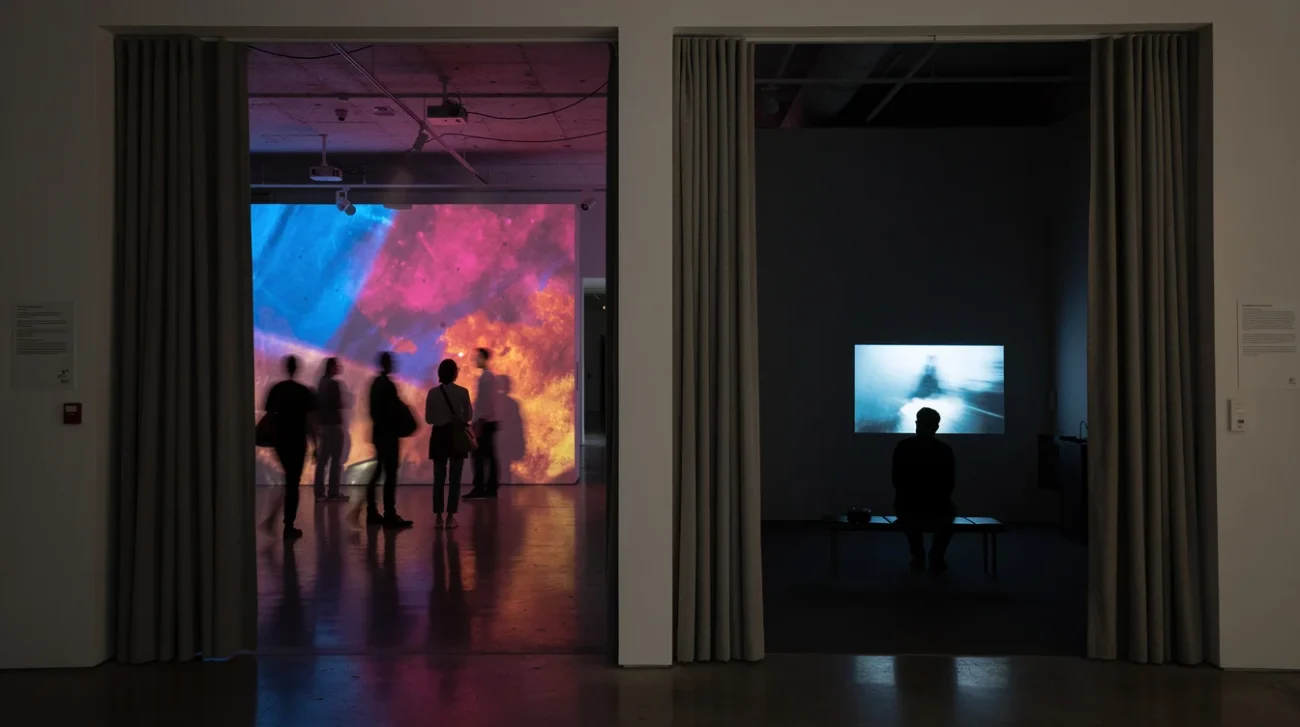
An exhibition can now behave like a well-designed app: immediate feedback, intuitive navigation, a sequence of rewards and a satisfying exit. That is not automatically a cultural disaster. Museums have spent centuries making their conventions look natural while leaving newcomers to decipher them. But frictionless access has a concealed editorial consequence: the work that interrupts the journey can become the work that never gets selected.
The question raised by designboom’s discussion of exhibitions becoming media formats is therefore not whether technology belongs in museums. It is who gets to set the terms of attention. Should the exhibition accommodate the artwork’s demands, or should the artwork submit to an experience that more people can readily enter? Both positions deserve a serious defence.
PRO: Let the Artwork Dictate the Clock
Yes, an exhibition should let an artwork break its format. Otherwise, experience design becomes a commissioning brief disguised as hospitality. Works that deliver an immediate response, photograph cleanly or resolve within a timed admission slot gain a structural advantage. Silence, duration and uncertainty start to look like technical faults rather than artistic decisions.
Christian Marclay’s The Clock makes the conflict unusually concrete. The 2010 video installation assembles film and television clips into a 24-hour montage synchronised with local time. A visitor can watch for ten minutes, but the work’s relationship to waiting, repetition and lived time cannot be reduced to a ten-minute proposition. Presenting it responsibly means considering seating, repeat access and opportunities to encounter it beyond conventional opening hours—not simply advertising its running time.
Marina Abramović’s The Artist Is Present, performed at the Museum of Modern Art in 2010, similarly made duration and an unpredictable human encounter central to the work. Its queues also exposed the practical costs of that proposition: access to an apparently simple encounter was unevenly distributed through time.
These examples are not arguments for making every visit arduous. They establish a more demanding principle: the institution should absorb some of the inconvenience instead of automatically transferring it to the artwork. Staffing, ticketing and opening hours are curatorial materials, too.
PRO: Ambiguity Is Not a Broken Interface
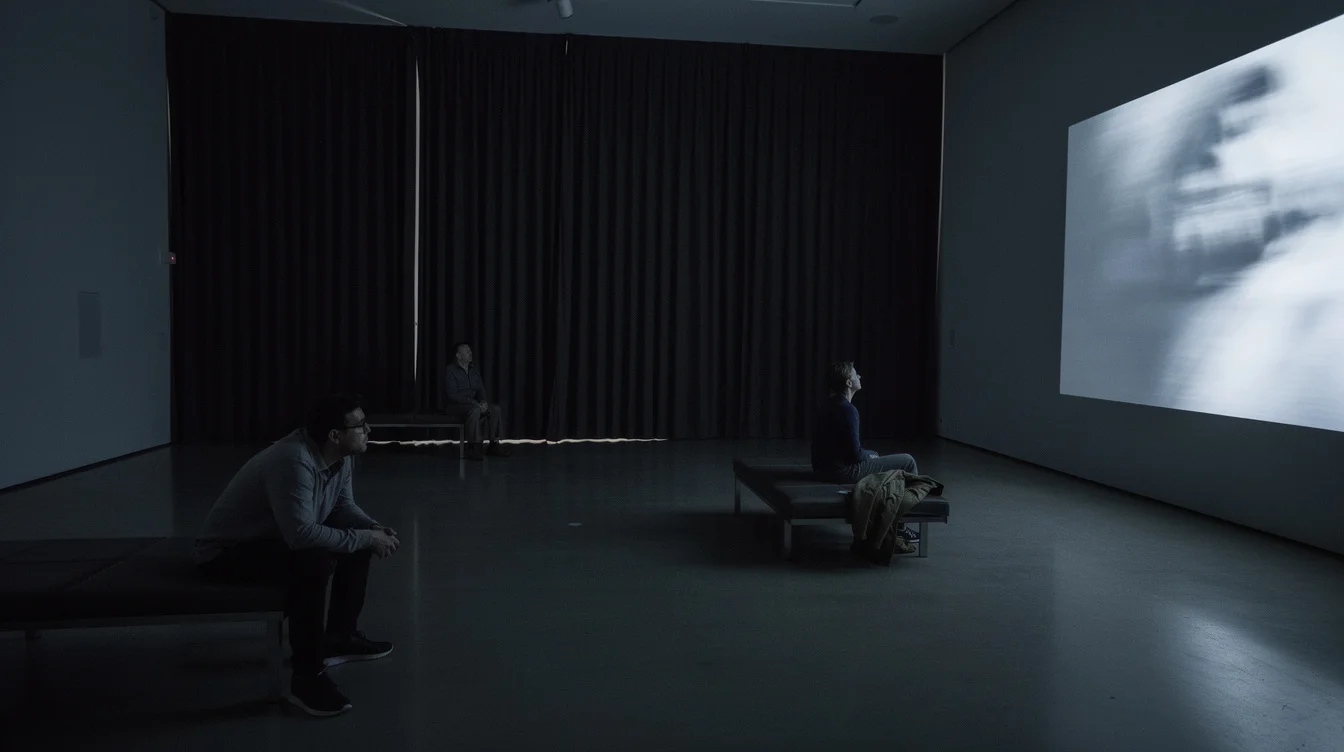
A familiar interface usually helps people understand what an action will produce. Art need not honour that contract. A room can withhold an explanation; a sound can remain difficult to locate; an image can refuse to become a message. If every encounter must provide confirmation that the visitor has successfully participated, ambiguity becomes an endangered resource.
James Turrell’s Skyspaces offer an instructive countermodel to compulsory stimulation. Their apertures frame the sky, making architecture, light and changing perception the substance of the encounter. Some programmes centre on dawn or dusk. The work asks the institution and visitor to negotiate with conditions that cannot simply be accelerated into a highlight reel.
Accommodating such demands requires more than a solemn wall label. It means controlling light spill, separating competing soundtracks and providing somewhere to sit without implying that sitting is an inefficient use of floor space. A quiet work placed beside an exuberant projection environment has not necessarily been included on equal terms. It may have been physically admitted and perceptually erased.
The strongest case for breaking the format is therefore an argument about curatorial diversity. If one dominant sensory grammar governs the entire exhibition, formally different works are forced into unequal competition. A museum that promises discovery must preserve the possibility that an artwork will change the rules of looking, rather than merely supply fresh content for an established routine. The question echoes debates over who controls the view of a monument: the conditions of looking are never merely background.
CONTRA: Familiar Formats Can Dismantle Real Barriers
No, the artwork should not receive an unlimited right to disrupt the exhibition. That position can romanticise difficulty while ignoring who pays for it. Someone visiting between shifts, attending with a child or managing fatigue cannot necessarily surrender an afternoon to curatorial indeterminacy. Time is not an evenly distributed cultural resource.
Nor is the supposedly unmediated gallery actually neutral. Its hushed rooms, sparse labels and behavioural codes constitute a format of their own. For an experienced visitor, those codes disappear into the background. For someone else, they can announce that everybody already knows how to behave except them.
Olafur Eliasson’s The weather project, installed in Tate Modern’s Turbine Hall in 2003, demonstrated that spectacular immersion need not eliminate interpretive freedom. Its artificial sun, mist and mirrored ceiling offered an immediately legible environment, while visitors developed their own ways of occupying it, including lying on the floor. The spectacle established common ground without assigning everyone an identical response.
Predictable orientation can work similarly. Clear entrances, understandable controls and honest information about duration free attention for the art rather than consume it. Confusion about meaning can be productive; confusion about whether a door is an exit usually is not. Defending artistic complexity does not require preserving every institutional obstacle around it.
CONTRA: A Shared Experience Needs a Designed Framework
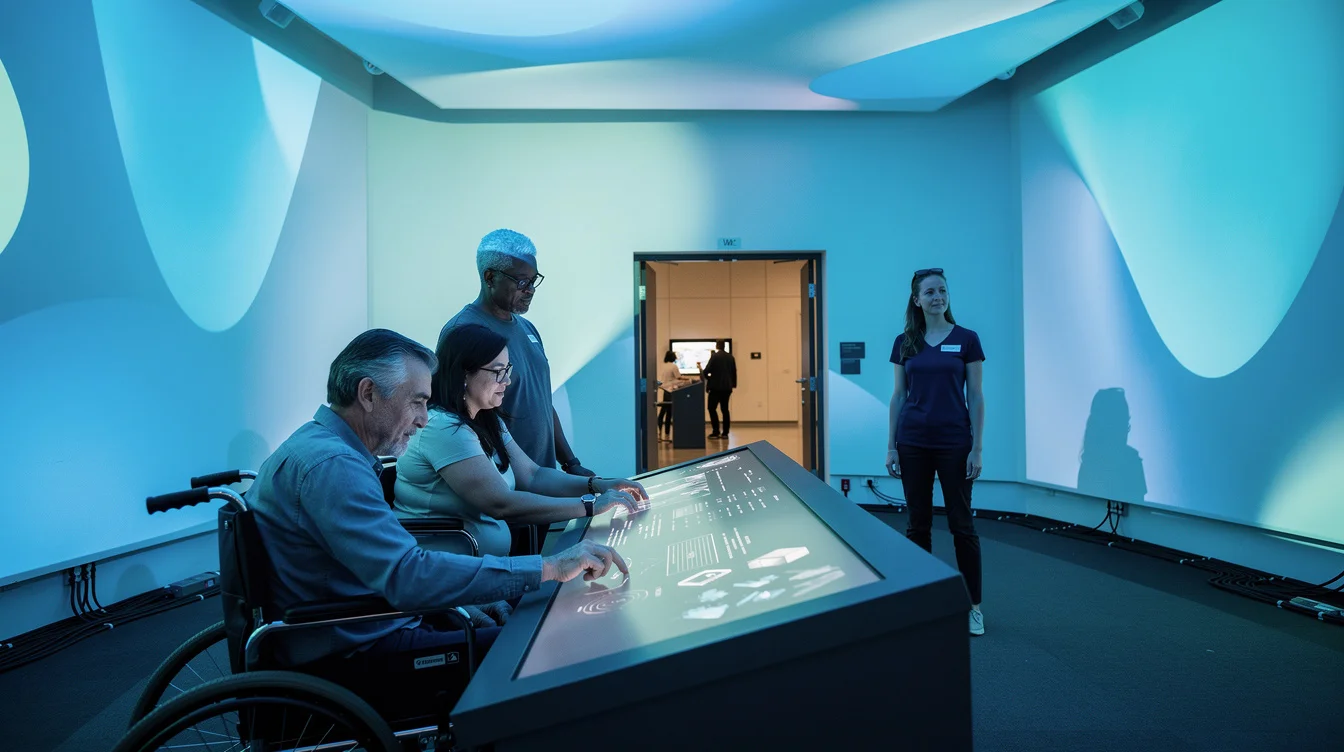
Interactive art also complicates the claim that format is necessarily imposed from outside. In teamLab’s Borderless exhibitions, responsive digital environments and movement between spaces are integral to the artistic proposition. Treating the surrounding experience as merely a commercial wrapper would miss how the work is constituted. The interface can be artistic material, not just a distribution mechanism.
Likewise, Rafael Lozano-Hemmer’s Pulse Room, first developed in 2006, uses a sensor to translate participants’ heartbeats into flashing incandescent bulbs. Its invitation to participate is relatively straightforward; the collective pattern it produces is not exhausted by that instruction. Legibility at the point of entry can support complexity rather than cancel it.
These works still demand careful management. Participation requires working equipment, intelligible instructions and consideration for people unable or unwilling to use the primary interface. Flashing-light warnings and alternative routes do not weaken a work’s authority. They make informed participation possible. Unpredictability is not a licence to disregard bodies.
The strongest defence of format is consequently not that every exhibition should become a repeatable entertainment product. It is that a shared public encounter needs an accountable framework. Curators should specify where uncertainty belongs and where reliability is essential. Keep navigation, access information and consent dependable; allow interpretation and duration to remain open where the work requires it. The real failure is not designing an experience. It is refusing to disclose which artistic possibilities that design excludes.
FAQ
What is immersive exhibition design?
It organises space, light, sound, images and sometimes interaction into an enveloping visitor experience. Immersion is not inherently digital: architecture, atmospheric effects and carefully staged physical objects can also surround and engage an audience. The critical issue is whether that environment serves the artwork or overwhelms it.
Do familiar interfaces make exhibitions more accessible?
They can reduce uncertainty and help visitors participate without specialist knowledge. But familiarity alone is not accessibility. Museums must also address mobility, sensory sensitivities, language, seating and the ability to decline participation. An intuitive touchscreen does not compensate for an inaccessible route or an overwhelming soundtrack.
How can museums accommodate artworks with long durations?
They can provide comfortable seating, publish accurate duration information, offer re-entry and schedule extended hours where feasible. Crucially, they should distinguish between a work’s full running time and any minimum participation requirement, allowing visitors to make informed decisions without presenting a brief encounter as inherently inadequate.
How can curators tell when a format is becoming an editorial filter?
Audit which works are rejected, shortened or isolated because they disrupt circulation, sound levels or admission schedules. If the same artistic qualities repeatedly become operational problems, the format is shaping the programme. Visitor numbers alone cannot reveal that loss; selection decisions and artists’ installation requirements must also be examined.
If an artwork and a frictionless visitor journey cannot coexist, which should the museum be prepared to sacrifice?
Watch the Mainifesto Short
Get the Mainifesto weekly — curated design debates, speculative ideas and the week's best articles every Saturday.
Editorial Perspectives
Questions and counterpoints developed by the Mainifesto editorial desk to extend the discussion.
Perspective 1
A glaze can take twenty minutes to reveal something that a photograph makes look obvious. If the route cannot accommodate that attention, break the route—not the encounter; a museum should offer more than another image to collect.
Perspective 2
Since the Salon, exhibition formats have shaped how art is encountered; pretending otherwise is rather romantic. If a work makes the visitor journey unworkable, show it elsewhere—the curator owes the public a legible exhibition, not unconditional submission to the artist.