
A Bed in Soho, but How Much Room to Stay?
A Bed in Soho, but How Much Room to Stay?
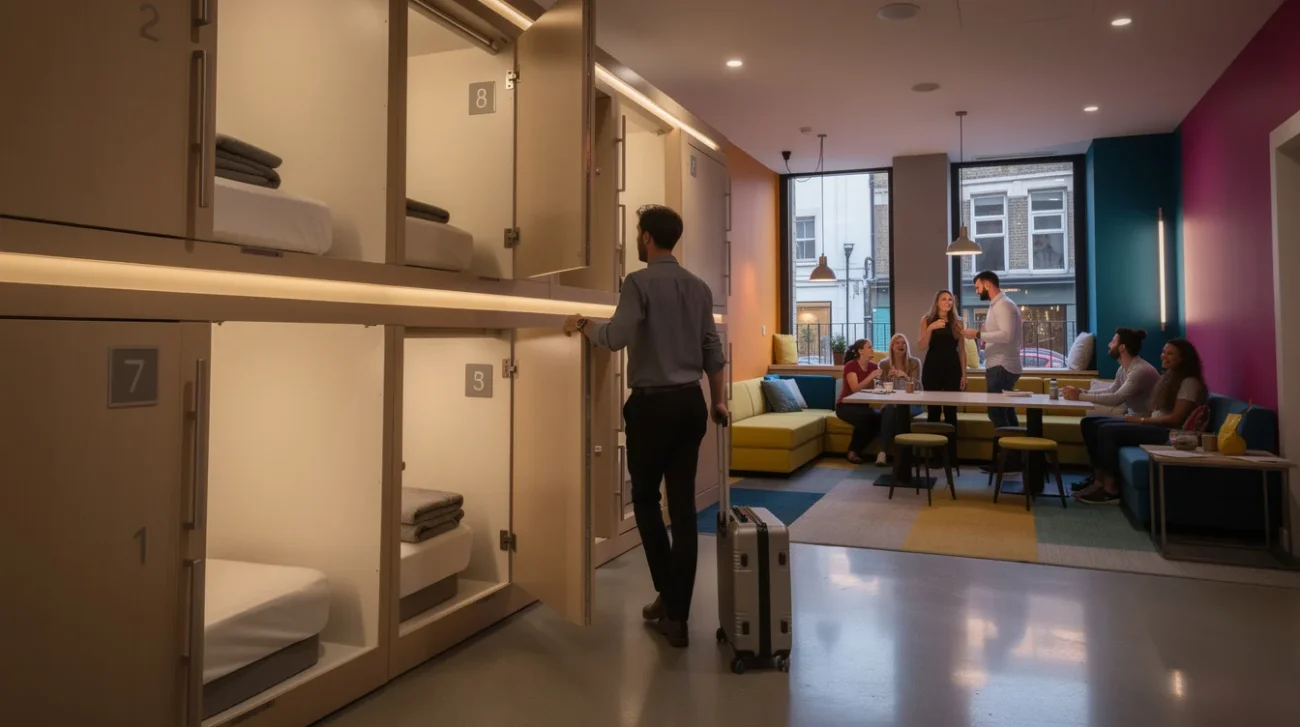
A central London address is a luxury. A good night’s sleep should not be. Otherwander Soho sits precisely on that fault line: London studio SODA has converted a former backpacker hostel into a capsule hotel containing 566 sleeping pods, branded as “nests”, alongside vibrantly coloured communal interiors. The proposition targets young travellers and people seeking budget-friendly accommodation in the city centre.
The question is not whether small can look spectacular. It is whether small can feel fair. The source report establishes the project’s scale and design direction, but it does not establish the lived performance of its beds, bathrooms or booking system. Without verified room dimensions, operating prices or first-hand guest testing, neither praise nor condemnation should masquerade as a review. What follows is a test of the proposition: can shared abundance justify private compression?
PRO: A Small Bed Can Open Up a Large City
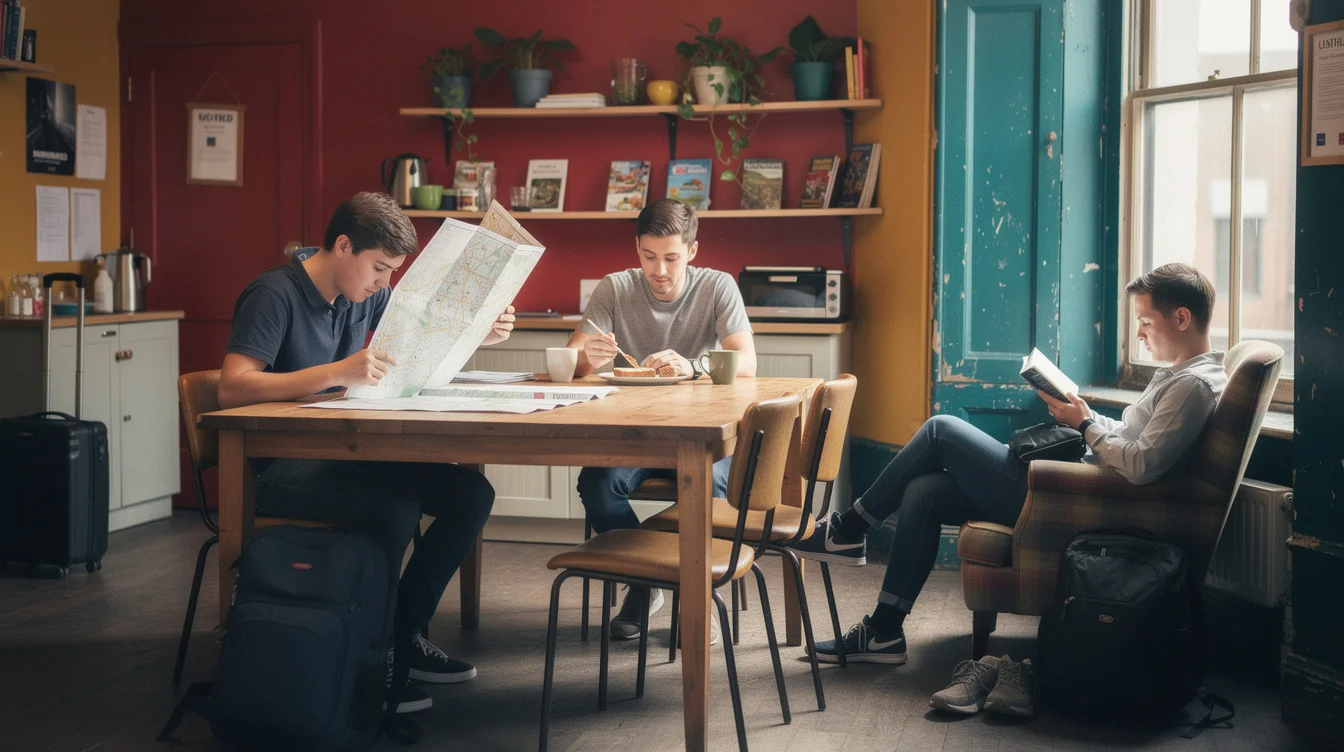
The strongest argument for Otherwander Soho is outside its sleeping quarters. Staying centrally can mean walking back from a performance, taking a break between exhibitions or avoiding a lengthy journey after an evening out. Those advantages are not decorative extras. For a short-stay visitor, location changes how much of London is actually available within a limited budget of money, time and energy.
Capsule hospitality has always asked travellers to distinguish a place to sleep from a room to inhabit. Kisho Kurokawa’s Capsule Inn Osaka, opened in 1979, made that distinction explicit. Later, the nine hours capsule-hotel brand, including design work by Fumie Shibata, treated the sequence of washing, sleeping and departing as a coherent design problem. These precedents matter because they demonstrate that compact accommodation need not be a conventional hotel room with its dignity removed. It can be a different service, designed around different expectations.
Otherwander’s previous life as a hostel is also important. The relevant comparison is not automatically a spacious private suite; it may be a bunk in a shared dormitory. A well-designed pod could offer more visual separation and control than an exposed bunk. That potential must be checked against the actual enclosure, ventilation and access arrangements, but it deserves recognition. Density is not, by itself, a design failure. Density becomes a failure when the savings it creates never reach the guest.
PRO: Shared Space Can Be More Than Compensation
A conventional budget hotel can give guests a door to close while offering almost nowhere worth being beyond it. Pooling some floor area into shared rooms can produce a better social experience: somewhere to eat without balancing food on a duvet, plan a day with friends or meet another traveller without inviting them into a sleeping area. For someone travelling alone, that distinction can be the difference between lodging and hospitality.
CitizenM provides a useful comparison, although it sells compact private rooms rather than sleeping pods. Its living-room-style communal areas, often furnished with Vitra pieces, make a clear proposition: not every activity belongs in the bedroom. The lesson is not to borrow the furniture language. It is to provide genuinely useful alternatives to remaining beside the bed.
SODA’s vivid communal interiors could support this redistribution of space. Colour can distinguish zones, make routes more legible and help an unfamiliar building feel approachable. But its success depends on what guests can do there. A sociable table, a quiet seat and a place to make a private call serve different needs; one photogenic lounge cannot automatically fulfil all three.
The positive case therefore rests on choice. If shared rooms are comfortable, available without compulsory spending and varied enough for different moods, they offer something meaningful beyond square metres. The pod buys access to the city; the common room makes returning feel worthwhile. That is a credible model of budget hospitality, not an inherently inferior one.
CONTRA: Privacy Cannot Simply Be Moved Downstairs
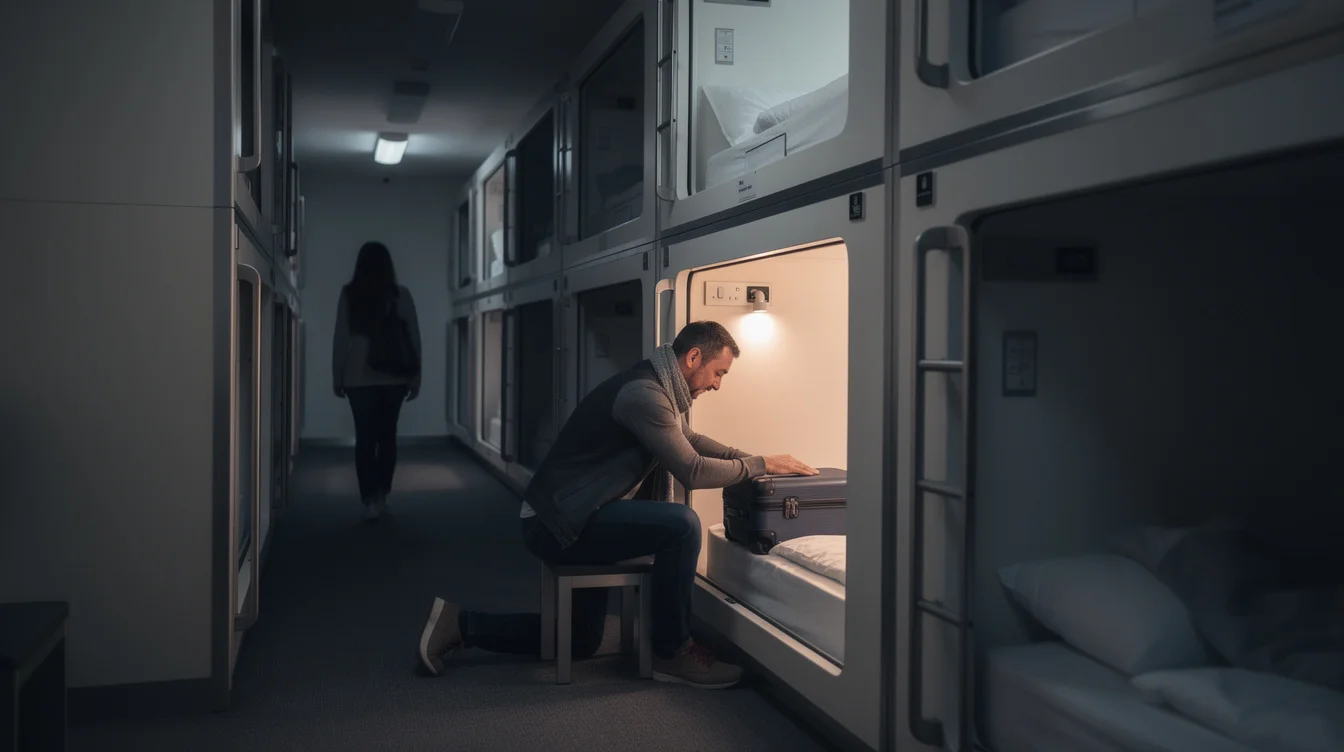
The difficulty is that some experiences cannot be collectivised. Changing clothes, managing medication, dealing with a sleepless night or recovering from an overwhelming day require more than somewhere attractive to sit. A guest may enjoy communal life at breakfast and need complete withdrawal by evening. Designing for the first condition while treating the second as an upgrade is a thin understanding of hospitality.
“Nest” is reassuring language, but reassurance must have a physical basis. Visual screening is not acoustic separation. An enclosure is not necessarily well ventilated. A reading light is not useful if its spill wakes a neighbour. These are questions to investigate at Otherwander, not defects established by the available source. Yet they are exactly the questions that should lead coverage of a 566-pod hotel.
Alvar and Aino Aalto’s Paimio Sanatorium offers a more demanding design reference than another fashionable hotel. Its patient-centred approach considered the room from the perspective of someone resting in bed, including the experience of light, colour and everyday disturbance. A capsule hotel is not a sanatorium, but the principle travels: assess the environment from the position of its most vulnerable occupant, not the photographer standing in the doorway.
A guest-experience audit would follow the entire night: arriving late, finding luggage, reaching a toilet, responding to noise and waking without disturbing others. No communal colour scheme can compensate for repeatedly interrupted sleep. The bed is not the minimum feature to fit into the plan. It is the primary promise the plan must protect.
CONTRA: At 566 Pods, Generosity Is an Operating Question
The headline capacity shifts attention from individual pod design to the systems around it. How many guests can sit comfortably when the weather makes staying indoors attractive? What happens when departures cluster and people need showers, luggage storage and somewhere to wait? A lounge photographed empty reveals almost nothing about those conditions. Its real design test begins when desirable seats are occupied and suitcases have nowhere obvious to go.
Colour can organise a room; it cannot increase bathroom capacity or make a queue disappear. Nor can it guarantee step-free access, suitable sleeping arrangements for different bodies or the confidence to raise a concern with staff. The source context does not provide enough information to judge these provisions. Their absence from the available evidence is a reason to demand disclosure, not to assume failure.
There is also no access argument without a price comparison. “Budget-friendly” is a market position, not a demonstrated bargain. The relevant figure is the total cost for the same dates, including unavoidable fees and essentials, compared with credible alternatives. Compression deserves less credit if its financial benefit accrues mainly to the operator.
Lacaton & Vassal’s work, including the transformation of Grand Parc Bordeaux with Frédéric Druot and Christophe Hutin, provides a useful counter-principle: generosity can be an economy rather than an extravagance. Housing and short-stay hospitality are different, but the challenge stands. Guests should receive a measurable benefit for surrendering private space. Otherwander’s proposition deserves neither automatic dismissal nor a branding-led exemption from that obligation.
FAQ: What Should Budget Hospitality Guarantee?
What is Otherwander Soho?
It is a capsule hotel in central London created by SODA through the conversion of a former backpacker hostel. The reported scheme combines 566 sleeping pods, called “nests”, with vibrantly coloured shared social spaces.
Can communal interiors compensate for small sleeping quarters?
They can provide space for eating, working and socialising that a compact sleeping area cannot. They cannot replace sleep quality, adequate ventilation, secure belongings or opportunities for privacy. Compensation works only when shared space is genuinely usable.
How should a traveller judge whether a pod hotel offers value?
Compare total prices for the same dates, then check enclosure details, luggage arrangements, bathroom provision, accessibility, quiet-hour policies and cancellation terms. Photographs establish atmosphere; practical information and recent guest accounts help establish suitability.
What should designers measure beyond visual identity?
They should assess sleep disruption, air quality, bathroom waiting times, seating availability, wayfinding and guests’ ability to withdraw from social contact. Testing at busy periods matters more than judging an empty interior at its most flattering moment.
If a central address becomes affordable by shrinking private space, what should every guest be guaranteed in return—and what should never be negotiable?
Watch the Mainifesto Short
Get the Mainifesto weekly — curated design debates, speculative ideas and the week's best articles every Saturday.
Editorial Perspectives
Questions and counterpoints developed by the Mainifesto editorial desk to extend the discussion.
Perspective 1
I’m for trading bedroom size for a central address, provided the shared interiors are properly made, not just colourful. Give guests comfortable upholstery, joinery that survives a suitcase knock and somewhere solid to put their things; ventilation and acoustic privacy are the baseline, not upgrades.
Perspective 2
I’m not convinced a bright communal lounge compensates for sleeping in a pod: sociability is an option, but retreat is a need. Guests should be able to sit privately in daylight and sleep without light leaking across their pillow—colour can’t make up for either.
Perspective 3
At 566 pods, the test is what happens when everyone needs a shower, a socket or somewhere to leave a bag at once. Guarantee secure storage, clean bathrooms without long queues and a genuinely quiet night before spending on another photogenic corner. A cheap room that loses you sleep is an expensive way to lose a repeat guest.