

Can Stadium Lighting Make Everyone Feel Close?
Can Stadium Lighting Make Everyone Feel Close?
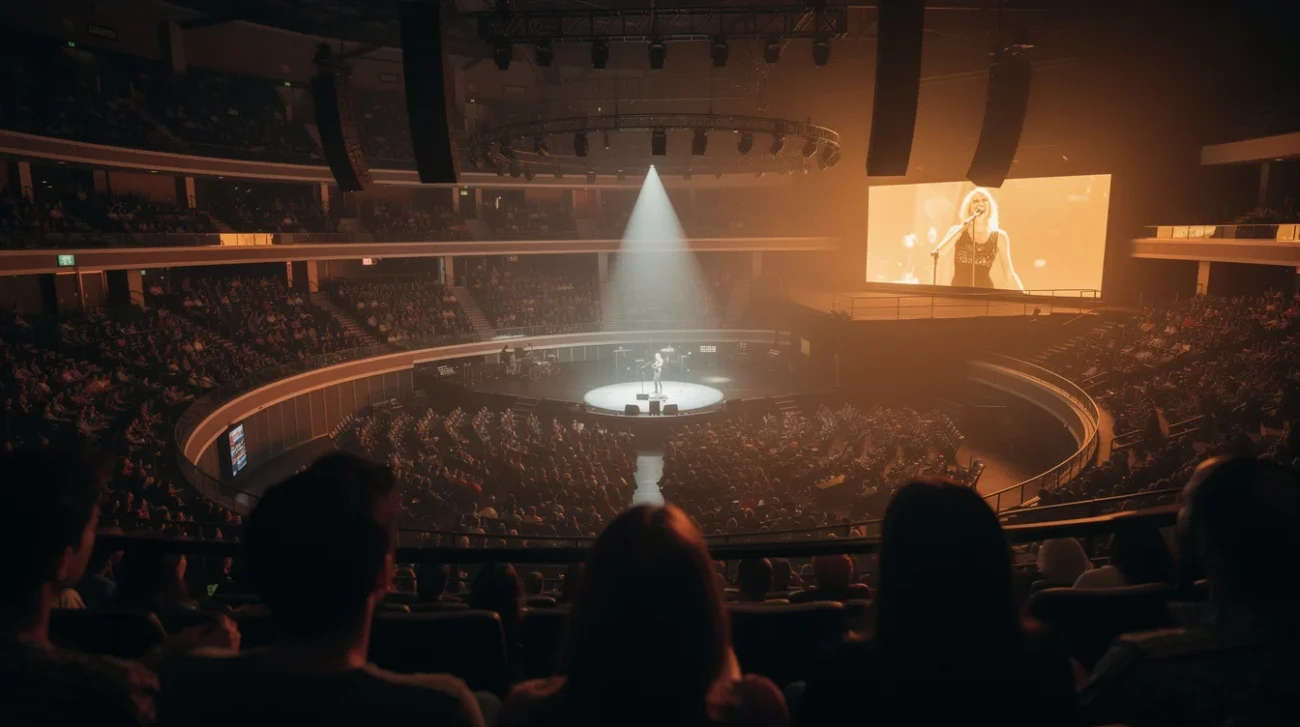
An arena can sell thousands of people the same performance while giving them profoundly different experiences. One spectator sees a singer’s expression; another sees a distant figure beneath a screen. Lighting enters this unequal architecture with an extraordinary promise: you may not be physically close, but you can feel close.
In Wallpaper’s interview with Tobias Rylander and Michael Straun, the lighting designers discuss making an arena feel small for Hayley Williams. Their credits, collectively spanning Beyoncé, Chappell Roan and The 1975, place that ambition within contemporary pop’s machinery of scale. But the ambition deserves scrutiny. Does stadium lighting design distribute connection, or simply produce convincing pictures of it? The distinction is not between spectacular and restrained lighting. It is between a room designed for its occupants and a room designed for its image.
PRO: Atmosphere Can Travel Where Proximity Cannot
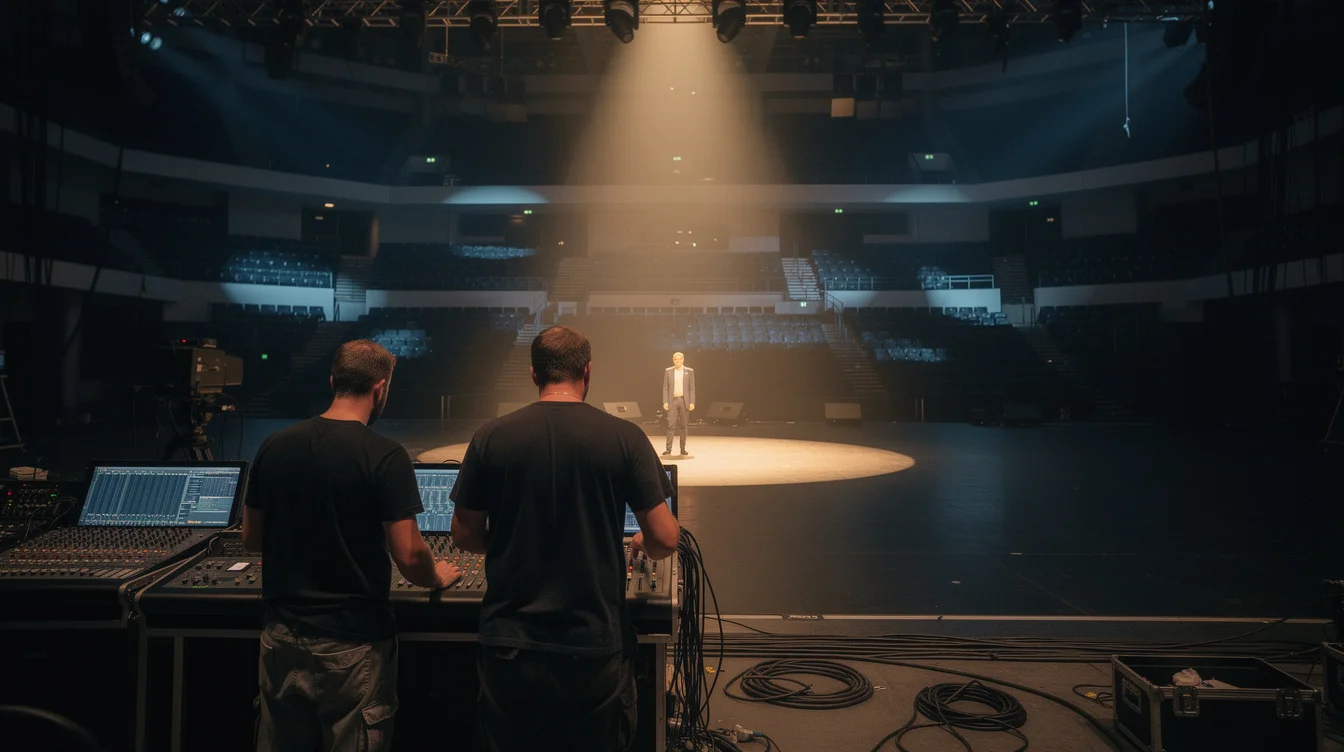
The strongest argument for lighting is that intimacy does not require everyone to see the same thing. It requires people to feel that they inhabit the same event. A close-up offers access to a face; a change in the light across an entire arena offers access to a collective moment. These are different forms of connection, and neither should be dismissed as counterfeit.
Consider a possible lighting sequence rather than a documented cue from Williams’ production: a vast room holds a low, warm atmosphere through a quiet verse, then opens into broader illumination as the audience joins the chorus. From the upper tier, the performer remains small. Yet the spectator can suddenly perceive thousands of other people participating. The emotional subject has expanded from the singer to the gathering.
Olafur Eliasson’s The weather project at Tate Modern in 2003 offers a useful precedent outside concert production. Its artificial sun, mist and mirrored ceiling turned the Turbine Hall into a shared atmospheric interior. Visitors did not need privileged proximity to the installation’s centre to participate in its social effect. The lesson for concerts is not to imitate an orange sun. It is that light can make a monumental space feel collectively occupied rather than merely filled. That concern also runs through public art that invites people to play: participation depends on how the experience is structured.
PRO: The Whole Arena Can Become the Design Brief
Rylander and Straun’s stated ambition for Williams matters because it challenges the assumption that larger audiences inevitably require more visual aggression. The useful question is not how many fixtures a production can deploy, but where attention lands, how it moves and whether distant spectators receive a coherent experience.
The 1975’s At Their Very Best tour, with its recognisable domestic stage environment, provides an instructive reference. A house-like setting supplies familiar scales: a doorway, a lamp, a room. Such elements can make a performer’s actions legible within a narrative rather than leave them floating in an anonymous black volume. Lighting can reveal those relationships, although their effectiveness still depends on viewing distance.
James Turrell’s work provides another useful design reference: light can alter the apparent boundaries and depth of a space, not just illuminate objects inside it. In an arena, that suggests treating the ceiling, side tiers and audience volume as part of the composition rather than as visual waste beyond the stage.
Genuine inclusion therefore does not mean identical views. It means multiple views that have been deliberately composed. A strong production would review cues from the rear tier and side seats, give screens a supporting role where necessary, and avoid leaving cheaper sections outside the visual rhythm. Lighting becomes inclusive when the worst seat is a design responsibility, not a commercial afterthought.
CONTRA: A Shared Mood Does Not Cancel Unequal Access
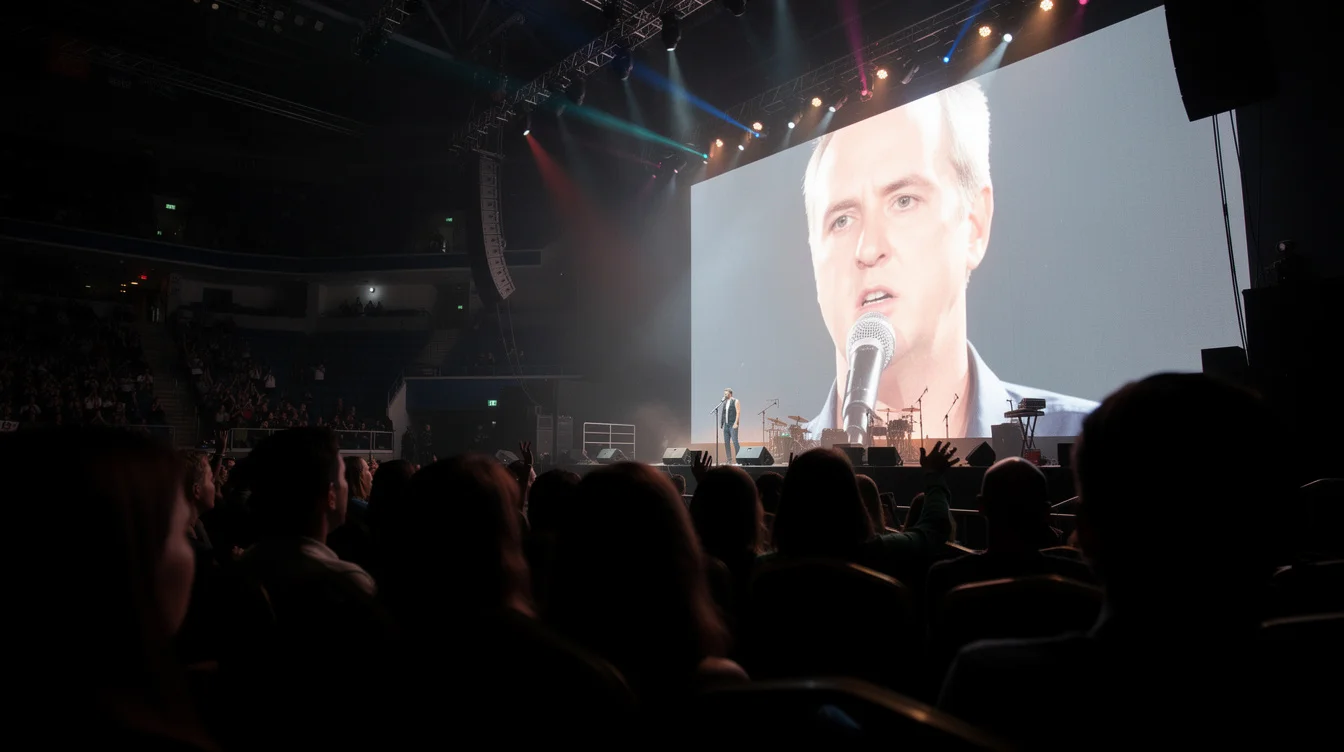
The counterargument begins with geometry. Light cannot remove an obstructing column, shorten a hundred-metre viewing distance or turn a severe side angle into a frontal one. A performer’s small gesture may anchor the emotional meaning of a song while remaining invisible to much of the audience. Calling the resulting atmosphere intimate risks flattering the production while ignoring the spectator.
The domestic scale of a stage such as The 1975’s illustrates the problem as effectively as the opportunity. A lamp can establish a compelling interior for someone who can read the room. From far away, its significance may depend on a screen showing the detail. What feels like architectural intimacy nearby becomes mediated storytelling elsewhere.
This is not an argument against screens. Image magnification can be a major instrument of access. But it changes the terms of participation: an audience member watches an edited account of the performer while occupying the same building. The director selects the expression, the duration and the moment of revelation.
Nor is darkness automatically democratic. It can suppress distracting commercial surfaces and concentrate attention, but it can also erase the audience from its own experience. Someone in the upper bowl may feel not embraced by shadow but marooned inside it. Atmosphere is shared only when its effects remain meaningful from different positions.
CONTRA: The Camera Can Become the Real VIP
Concert lighting serves more than the people holding tickets. It must often coexist with live video, photography and the circulating fragments through which a show acquires its public identity. Those requirements can align with audience experience, but they are not interchangeable.
A narrow pool of light around a singer can look confessional in a close-up. From the back row, the same scene may register as a bright speck surrounded by inaccessible darkness. Haze can render beams magnificently for a well-positioned camera while producing a less distinct view from elsewhere. Neither technique is inherently exclusionary; the problem is treating the flattering image as proof that everyone felt its effect.
The visual cultures surrounding Beyoncé, Chappell Roan and The 1975 make this distinction especially consequential. Their performances are encountered both as live events and as images moving through public life. That does not establish that any particular production sacrifices its audience. It establishes why a designer’s success cannot be judged from selected photographs alone. A related question arises when museums turn critique into another attraction: does the spectacle support the work’s purpose, or displace it?
An honest assessment would compare representative cues from front, rear and lateral positions, alongside the camera feed. It would ask whether screen brightness overwhelms quieter stage lighting and whether audience illumination reaches the upper tiers rather than stopping at the photogenic floor. The camera deserves a considered view. It does not deserve to be the only spectator whose experience is consistently resolved.
The Verdict: Intimacy Must Be Tested From the Back
Rylander and Straun’s ambition is worth defending, but not as a magical escape from arena economics. Lighting can distribute attention, establish a shared emotional tempo and give distant spectators something richer than a diminished version of the front row. It cannot make every ticket equivalent.
The editorial test should therefore be uncompromising: judge intimacy from the least advantaged legitimate view, not the promotional still. Ask what the person there can perceive, follow and share. If the answer is only that the room looked beautiful on someone else’s screen, the design has produced an image of inclusion rather than inclusion itself.
FAQ: Lighting, Distance and Audience Inclusion
Can concert lighting make every seat feel equally intimate?
No. Lighting can create shared atmosphere and direct attention across a venue, but it cannot equalise distance, sightlines or access to facial expressions. The credible goal is a meaningful experience from every section, not identical experiences.
What is the difference between audience intimacy and camera intimacy?
Audience intimacy depends on what people can perceive and feel from their actual seats. Camera intimacy is constructed through framing, exposure and editing. They can reinforce one another, but a compelling close-up does not demonstrate that the surrounding room feels connected.
Do large video screens undermine live connection?
Not necessarily. Screens make gestures and expressions accessible to distant spectators. They become limiting when the stage and room receive so little consideration that watching the feed is the only coherent way to follow the performance.
How could designers evaluate whether lighting is inclusive?
Review representative sequences from rear, side and upper-tier seats, not just the control position. Assess sightlines, glare, screen balance and sensitivity to flashing effects, then gather feedback from spectators across ticket categories and access requirements.
If an arena sells radically unequal views, should lighting be expected to soften that inequality—or make the production answer for it?
Get the Mainifesto weekly — curated design debates, speculative ideas and the week's best articles every Saturday.
Editorial Perspectives
Questions and counterpoints developed by the Mainifesto editorial desk to extend the discussion.
Perspective 1
Lighting should soften the distance, even when it cannot change the seat. In ceramics, the surface someone actually touches deserves as much care as the profile in the photograph; the upper tier deserves that same attention, not just a share of the spectacle.
Perspective 2
I don’t think lighting should be asked to compensate for a seating plan that sells disconnection. We can model sightlines, viewing angles and distance before production begins—why not make the worst-view seat a design constraint rather than a lighting problem?
Perspective 3
The opera house settled this arrangement centuries ago: everyone hears the same work, but proximity remains a badge of rank. Lighting may make that hierarchy feel briefly communal; calling the result intimacy is rather convenient for whoever prices the seats.
Perspective 4
Take the production team to the cheapest seats during rehearsal and ask whether the show still feels worth buying. Lighting should help, but if those guests spend the night watching a distant screen, the fix needs a production budget—not another promise of immersion.