AI Interior Design: The Image Is Not the Brief
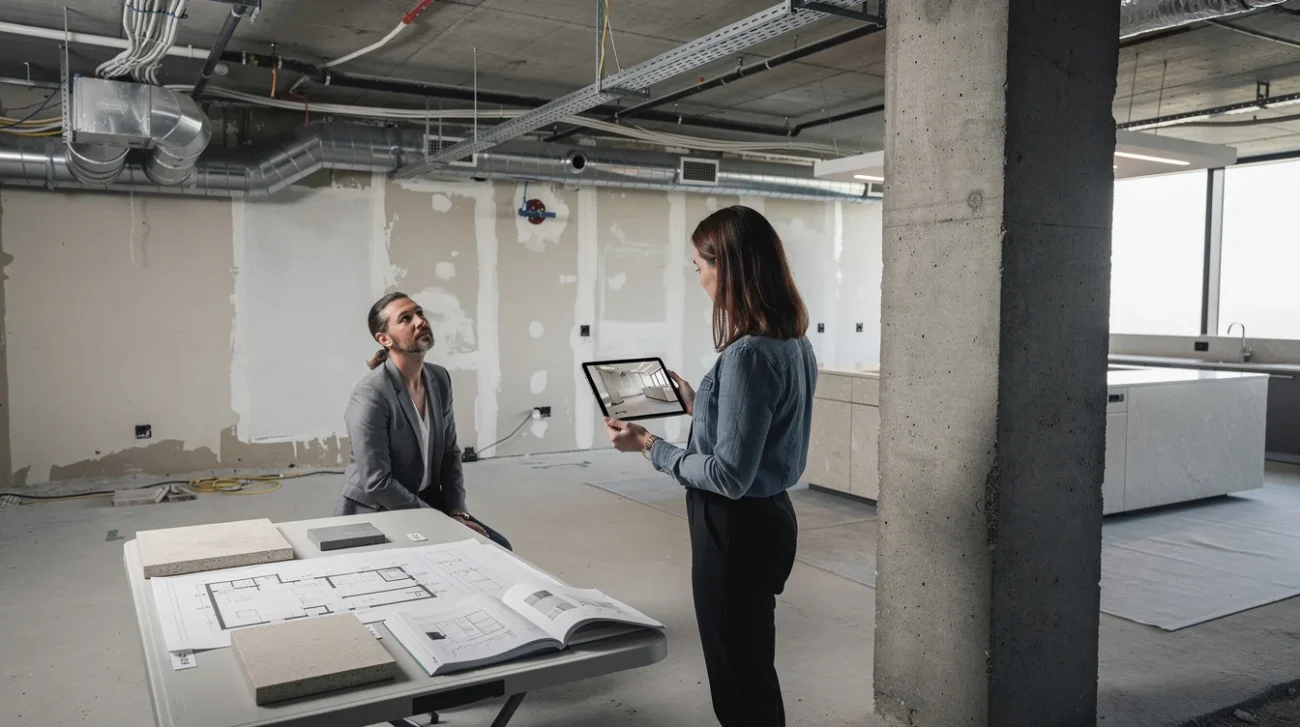
The Dream Interior Is Instant. Making It Buildable Is Not.
The client arrives with a room that does not exist and already feels disappointed by the one that could. In the image, a limestone island floats without visible support. A glazed wall has replaced the awkward corner of the house. The ceiling is luminous, seamless and apparently free of ventilation. Everything looks expensive. Nothing has a price.
This is an illustrative scenario, not a documented project. But the tension is real. Architectural Digest’s reporting on AI design visualisers identifies a growing problem between designers and clients: generated fantasies can become expectations without passing through the realities of the built environment. The image enters the conversation as inspiration and quietly acquires the authority of a proposal.
That shift matters more than whether the picture qualifies as “slop”. A beautiful image can be profoundly irresponsible; an ugly sketch can contain an excellent, buildable idea. The urgent distinction is not between human and machine creativity. It is between visual persuasion and accountable design. When those categories collapse, someone must do the work of separating them again. Usually, that someone is the designer—and the invoice is already contested.
A Render Is Not a Room, However Convincing the Light
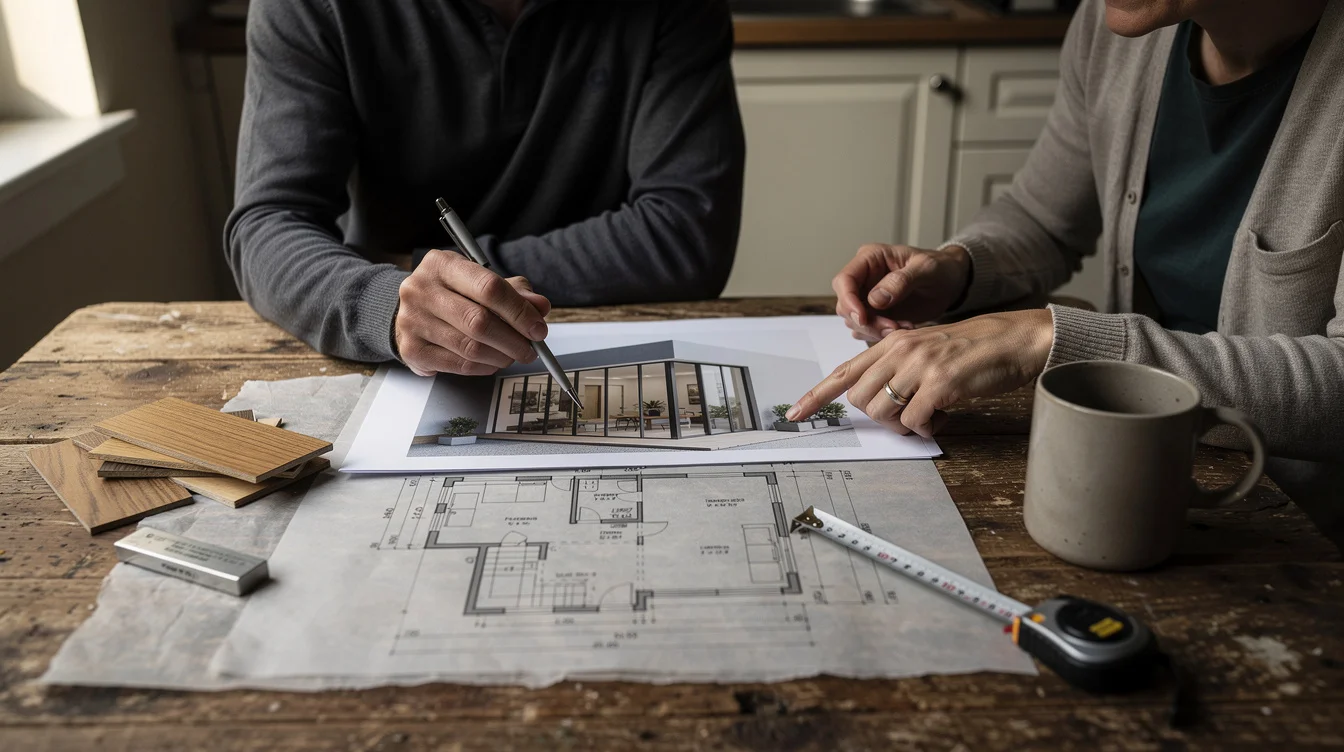
Architecture has always sold futures through images. Perspective drawings, magazine photographs and polished CGI all edit reality. AI did not invent the absent socket or the suspiciously immaculate kitchen. What it changes is the speed, volume and accessibility of images that appear resolved before anyone has resolved anything.
A homeowner can now generate dozens of plausible interiors before a designer measures the property. That is genuine creative access. Someone who struggles to describe a preference can show a room with low seating, diffuse daylight and warm timber. The problem begins when the same image is treated as evidence that a particular intervention is possible.
Consider a generated sunken living room in an existing apartment. As an atmosphere, it might communicate intimacy. As a construction proposal, it raises questions about slab depth, services, structure, access and ownership boundaries. A picture alone cannot answer them, even if its shadows are impeccable.
Mies van der Rohe’s Farnsworth House offers a useful historical counterpoint. Its apparently effortless transparency depends on a precise structural and material arrangement. The visual simplicity is the outcome of decisions, not permission to skip them. AI often delivers the appearance of that outcome without the underlying argument. Photorealism is a presentation quality, not a feasibility credential.
Clients Are Allowed to Dream. Designers Must Identify the Dream
Scolding clients for bringing AI images is both patronising and strategically foolish. People have always arrived with references detached from their circumstances: a hotel bathroom for a compact flat, a Californian courtyard for a rainy northern terrace, a museum staircase for a family home. The designer’s job includes interpretation. It does not include pretending every reference is a specification.
The first useful question is therefore not “Can we build this?” but “What do you want from this?” A generated wall of uninterrupted glazing may express a desire for daylight rather than a literal demand to remove a load-bearing corner. A monolithic stone kitchen may signal calm and continuity rather than insistence on solid stone construction.
Charles and Ray Eames’s Case Study House No. 8 demonstrates why this distinction is productive. Its domestic richness comes from a relationship between an industrial structural system, objects, planting and patterns of occupation. Replicating a photograph’s surfaces would not reproduce that intelligence.
Designers should extract a short hierarchy of intentions from each reference: the essential experience, the preferred material character and the dispensable visual effects. Then test those intentions against the actual property. That is not diluting ambition. It is replacing a brittle demand for resemblance with a brief capable of surviving contact with a building.
Every Image Needs a Status, Not Just a Disclaimer
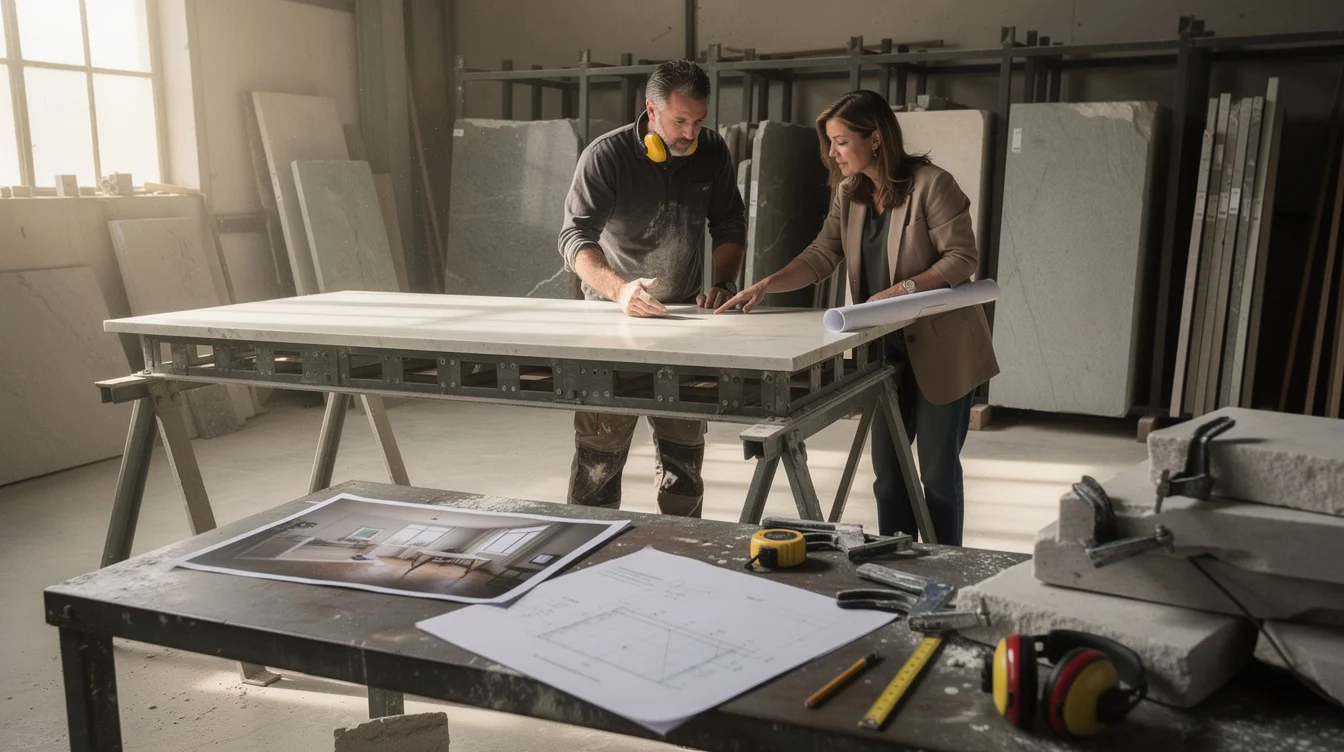
The profession needs clearer image governance. A tiny “concept only” note cannot carry the entire burden while a presentation, sales pitch or client meeting implies certainty. Status must be visible, specific and explained.
Visual inspiration should mean an image communicates atmosphere or preferences without confirming geometry, products, cost or compliance. Tested concept should mean the proposal has been checked against stated information, such as a measured survey and an initial budget, while outstanding questions remain explicit. Coordinated proposal should identify the drawings, specifications, consultant input and cost information that support it. These are suggested working categories, not universal industry standards.
Take the apparently floating limestone island. At inspiration stage, the image can establish a desire for visual lightness. At concept stage, the designer might investigate a recessed plinth, stone-clad lightweight construction or an engineered support arrangement. At coordination stage, the selected approach needs dimensions, fabrication details, service routes and appropriate specialist review. The seductive silhouette has become a chain of accountable decisions.
Even coordinated imagery is not a substitute for construction information. The controlling documents and their contractual status must remain clear. Nor should a generated image be allowed to silently change agreed dimensions or finishes between presentations. If the picture evolves, someone must identify whether the design actually changed.
The Hidden Product Is Expectation Repair
Here is the commercial trap: generating another image can feel nearly frictionless, while investigating it requires expensive attention. A designer may need to inspect existing construction, consult an engineer, obtain fabrication advice and ask a contractor to price alternatives before explaining why the client’s favourite ceiling cannot fit beneath the available floor-to-floor height.
Call this expectation repair. It is neither clerical work nor an embarrassing failure of imagination. It is skilled translation between desire, evidence and consequence. When practices absorb it without limits, the economics favour producing more untested fantasies and penalise the people who make decisions responsibly.
A defensible appointment should distinguish ordinary reference review from substantial feasibility investigation. An initial consultation might include discussing a small set of images; testing structural alterations or developing multiple material systems should have an agreed scope and fee. If a new image changes the brief after concept approval, its consequences for programme, fees and construction cost should be discussed before redesign begins.
Responsibility is not always the client’s. If a designer presents an unchecked AI image as deliverable, the practice has created the expectation it must address; contractual and legal consequences will depend on the circumstances. If a platform markets room generation as effortless renovation, it should disclose the gap between visualisation and technical design. The party making the promise should not disappear when verification becomes inconvenient.
Use AI to Multiply Questions, Not Fake Answers
The strongest use of generative imagery is exploratory. Compare a kitchen organised around communal cooking with one organised around concealed storage. Test whether a client responds to enclosure or openness, contrast or continuity. Use the resulting discussion to sharpen priorities before investing in detailed development.
But establish an exit from the image loop. Once a direction is chosen, move into surveyed plans, sections, material samples, lighting studies and cost checks. Lighting, in particular, needs scrutiny beyond its appearance in a render: brighter is not always better. Some decisions need a physical mock-up, not another rendering. The junction between a cupboard door and a textured wall is a tolerance problem. The comfort of a bench is a bodily question. Neither is settled by attractive pixels.
Carlo Scarpa’s work at the Castelvecchio Museum is a useful reminder that spatial character can reside in the precise meeting of materials and the choreography of movement. These qualities are not merely a style to prompt. They are developed through relationships between components, bodies and construction.
The provocation, then, is not to ban the dream interior. It is to stop awarding it professional authority for looking finished. An image earns proposal status through evidence, not seduction. Designers who make that boundary explicit are not defending an obsolete gatekeeping role. They are defending the difference between buying a picture and commissioning a place to live.
FAQ
Can an AI-generated interior be used as a design brief?
Yes, as a starting reference rather than a complete instruction. Identify what matters in the image—daylight, layout, colour, material character or atmosphere—then translate those preferences into requirements checked against the site, budget and project scope.
How can clients tell whether a visualisation is buildable?
Ask what supports it: measured information, plans and sections, identified materials, structural or services advice where needed, and cost checks. A realistic image alone does not demonstrate feasibility, regulatory compliance or affordability. Ask which decisions remain unverified.
Who should pay to investigate an unrealistic AI reference?
The scope and fee agreement should distinguish routine reference discussion from additional feasibility work. Client-requested investigations or changes should be agreed before work starts. When a designer has presented an unchecked image as deliverable, responsibility cannot simply be shifted to the client.
Should designers label AI-generated images?
Yes, but disclosure of the tool is not enough. Every visualisation, including conventional CGI, should communicate its purpose, verification status and unresolved assumptions. Clients need to understand what the image promises, not merely how it was produced.
If anyone can generate the dream in seconds, who should pay for the expertise that tells us which parts deserve to become real?
Get the Mainifesto weekly — curated design debates, speculative ideas and the week's best articles every Saturday.
Editorial Perspectives
Questions and counterpoints developed by the Mainifesto editorial desk to extend the discussion.
Perspective 1
I'd rather see a visualiser flag an uncertain span than invent another perfect ceiling. If these tools can generate geometry, why aren't we asking them to expose constraints—and paying designers to help set those constraints before the image becomes a promise?
Perspective 2
The exciting version isn't an app that sells you a whole new room; it's one that shows what your existing furniture could become. Pay designers for finding what's worth keeping and adapting, not just specifying replacements—the dream should include less waste.
Perspective 3
A render doesn't tell you whether that stone can clear customs or whether a local workshop can make the joint. The client should budget for feasibility, and the platform should stop presenting untested images as ready-to-build designs; otherwise contractors and tradespeople get stuck doing unpaid translation.
Perspective 4
That seamless cabinet might need custom tooling, oversized sheet stock and a delivery route the building doesn't have. The client should pay for a feasibility pass before approving the look, with material quantities, tolerances and supplier quotes—not ask a fabricator to somehow match the image within whatever budget is left.