
Can a Design Festival Succeed by Arguing for Fewer Products?
Can a Design Festival Succeed by Arguing for Fewer Products?
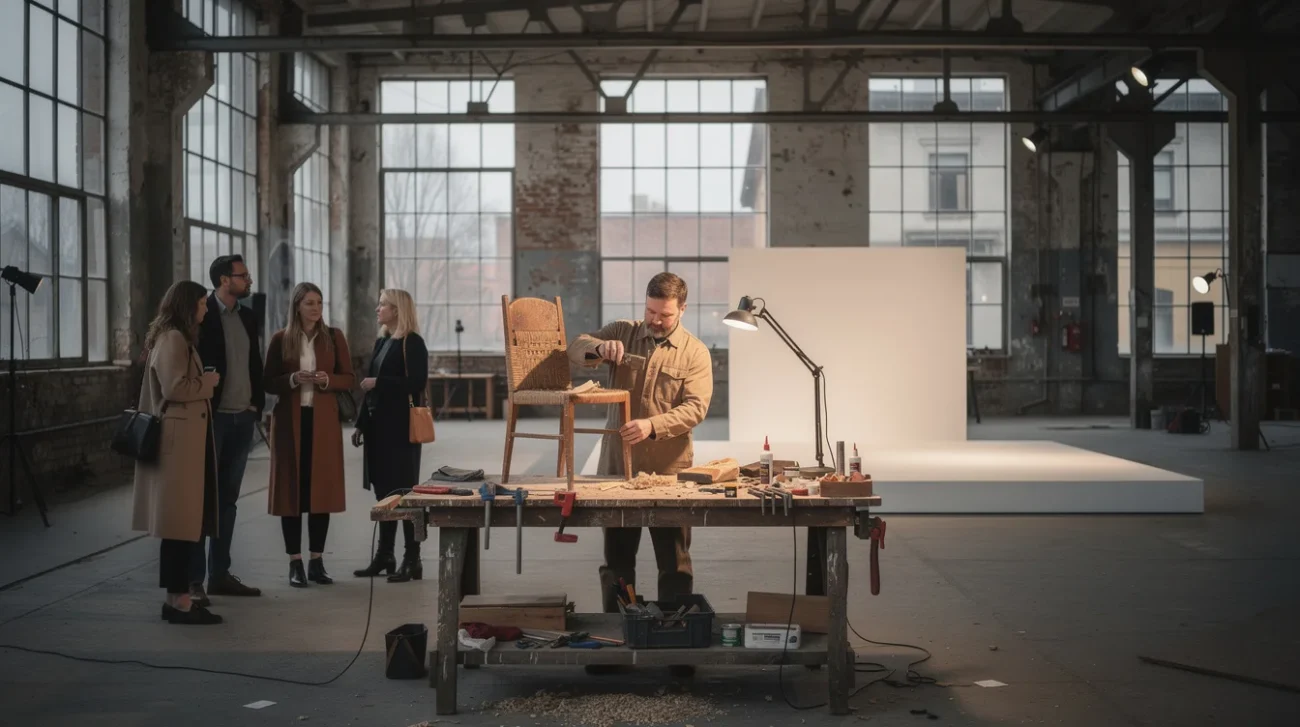
A design festival usually makes a familiar promise: come here to see what is next. The commercial machinery follows almost automatically. Designers need exposure, manufacturers need orders, sponsors need attention, and publications need something that has not already been photographed. An old chair with a repaired joint rarely satisfies that arrangement. Which is precisely why it deserves the best position in the room.
Tallinn Design Festival / Disainiöö returns from 28 September to 4 October 2026 for its 21st edition, taking place primarily at a former industrial complex in northern Tallinn. Its theme, “Future of Product Design,” asks what designers should create in a world already filled with products. The programme brings together contemporary Estonian design and international participants through exhibitions, talks, installations, workshops and city-wide events, with circularity, technology, material innovation and longevity among its concerns.
That question is stronger than another invitation to invent responsibly. Taken seriously, it could undermine the festival’s own operating system. Perhaps the next achievement worth exhibiting is not a product at all, but an existing object kept useful, a spare part made available, or a redundant product line finally discontinued.
The Launch Is Not a Neutral Exhibition Format
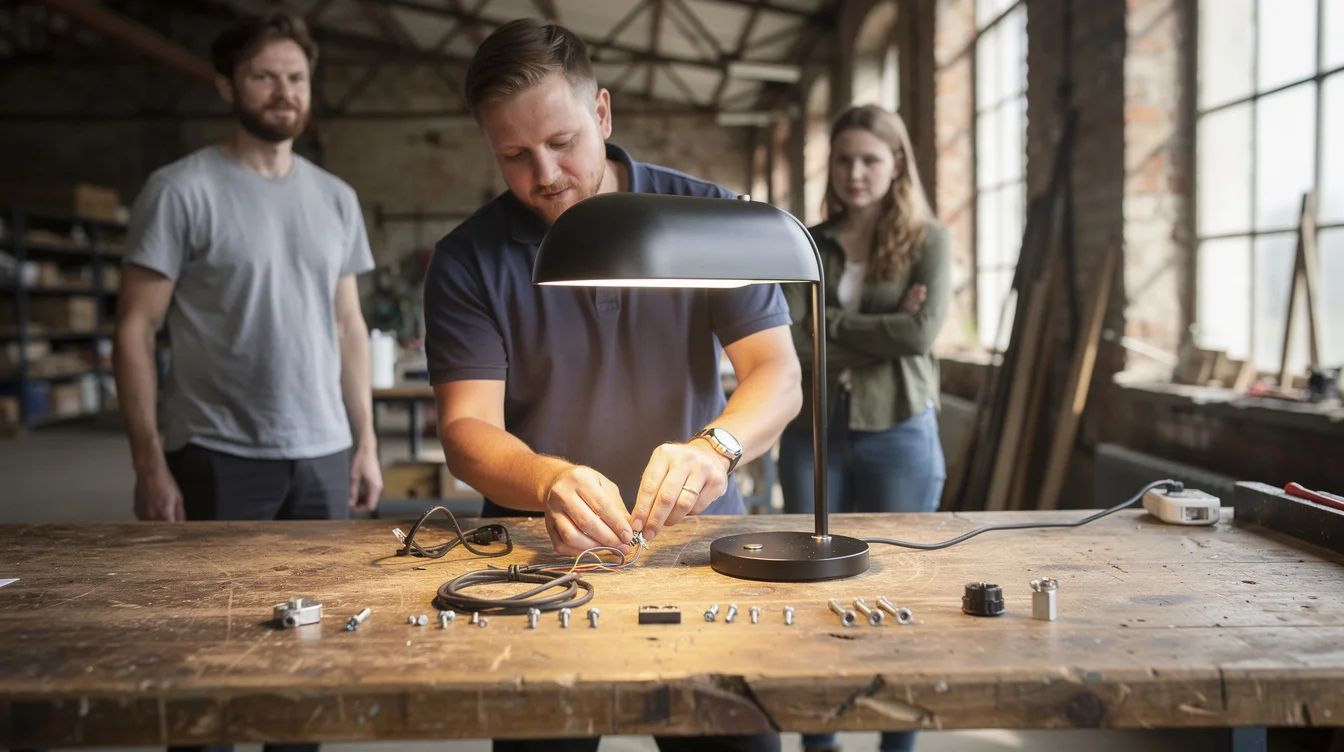
Launch culture does more than showcase design. It defines which kinds of design become legible as achievements. A finished object has a clear author, a release date and a photograph. Maintenance has schedules, invoices, accumulated knowledge and people whose names seldom appear on wall labels. The first is easy to package as news. The second is what prevents the first from becoming rubbish.
Mierle Laderman Ukeles identified this hierarchy in her 1969 Manifesto for Maintenance Art. Her later work with New York sanitation workers made the labour sustaining everyday life visible as cultural material. Design festivals should treat that precedent as a curatorial challenge, not merely an art-historical reference. Who cleans the upholstered seating? Who diagnoses the broken switch? Who still stocks the hinge after the collection disappears?
For Tallinn, a meaningful response would be to give these questions the spatial privileges normally reserved for premieres. Put a frequently repaired object on the central plinth. Display its service history, replacement components and cumulative repair cost beside it. Credit its owner and technician alongside its designer. These are proposals for what the festival’s theme could enable, not claims about its announced installations.
If repair remains a workshop on the edge of the exhibition, the hierarchy has not changed. It has simply acquired a more conscientious side programme.
Make the Repair Bench the Main Stage
Repair already has institutions and design languages. Repair Café, initiated by Martine Postma in Amsterdam in 2009, makes shared fixing a social practice. iFixit turns disassembly, documentation and access to parts into public arguments about ownership. Fairphone and Framework demonstrate different approaches to making electronic components replaceable. None offers a universal solution, but each shifts attention from the sealed object to the conditions of its continued use.
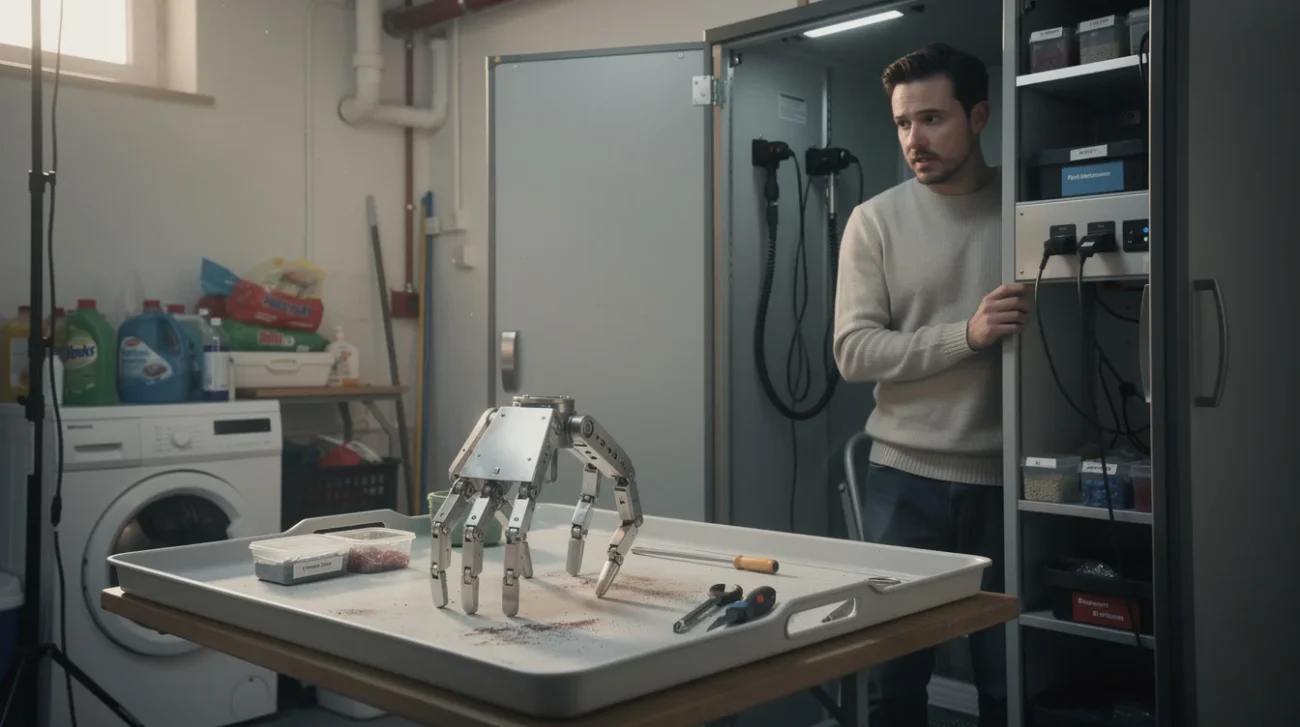
A festival could translate these precedents into a compelling exhibition without turning repair into decorative theatre. Invite residents to bring malfunctioning lamps or damaged chairs. Pay qualified repairers to diagnose them. Show successful repairs, but also the failures: an unavailable driver, a glued enclosure, a proprietary fitting. Publish why each object could or could not return to service. Electrical work would require appropriate safety procedures; repair is skilled labour, not an audience participation gimmick.
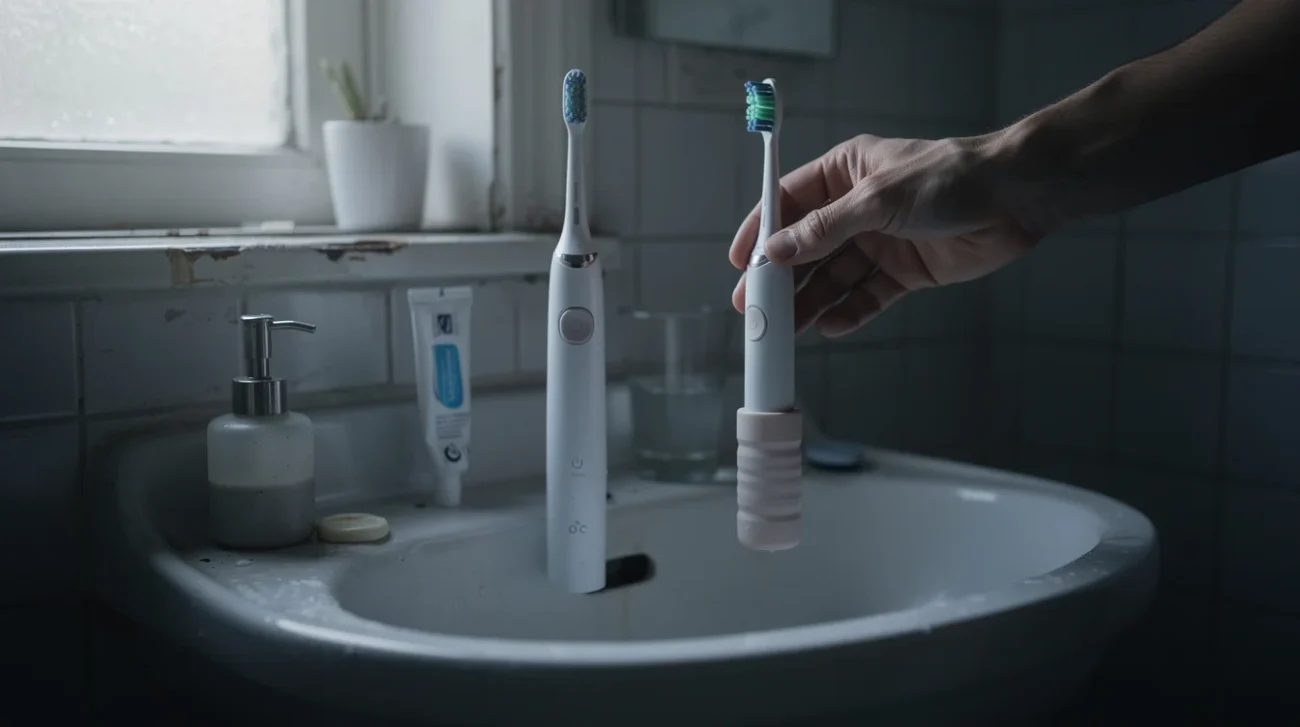
The strongest display might pair two similar products with radically different futures. One opens with standard tools and has a replaceable cable. The other must be damaged to reach a minor fault. Visitors would encounter design quality as a consequence unfolding over years, rather than as a silhouette encountered for seconds.
Crucially, modularity must face scrutiny too. A replaceable component is of little use if it is unaffordable, unavailable locally or abandoned when the manufacturer changes strategy. Repairability is a continuing commitment, not a photogenic screw head.
Retirement Deserves a Design Brief
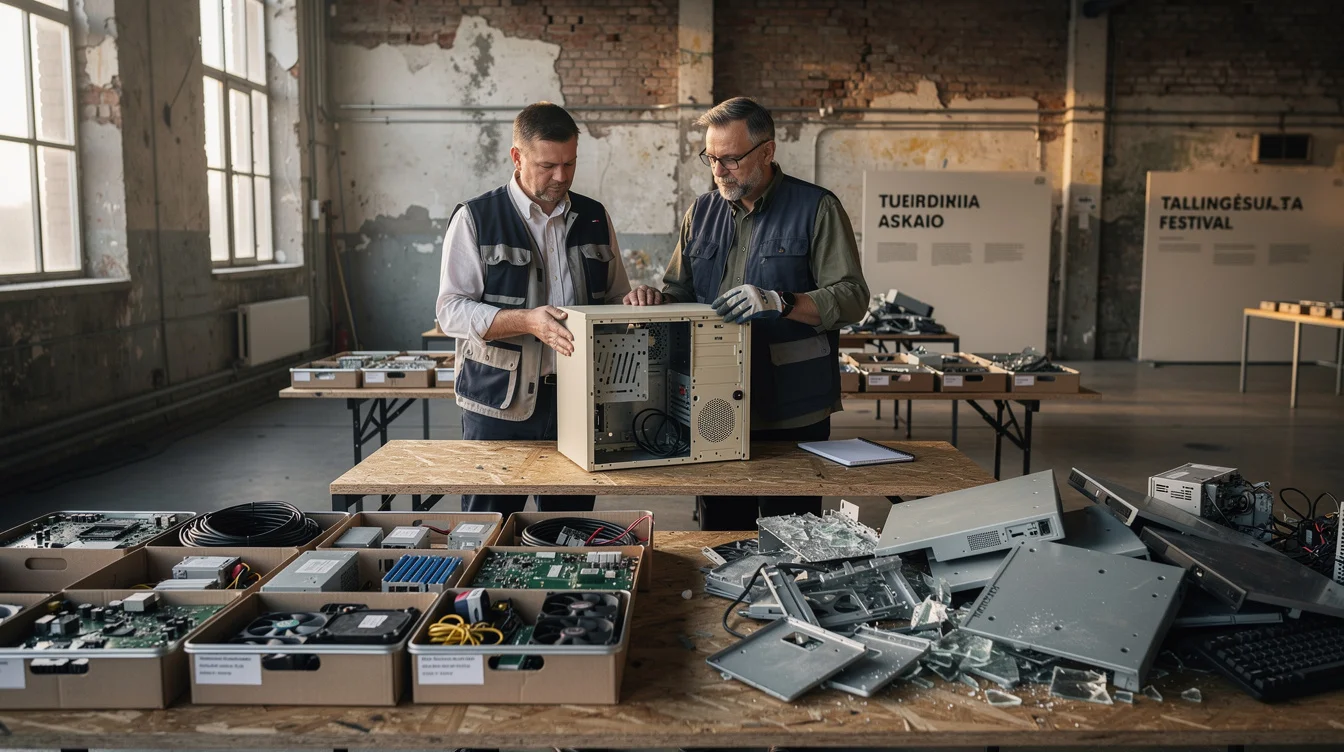
Arguing for fewer products does not mean preserving every object indefinitely. An unsafe appliance should not become a longevity mascot. An inefficient machine may justify replacement, although that judgment requires comparing operating impacts with the impacts of making its successor. A chair, a refrigerator and a networked device cannot share a single retirement rule.
This is where festivals could become more intellectually useful than sales fairs. Formafantasma’s Ore Streams, an investigation into electronic waste developed between 2017 and 2019, offers a relevant precedent: discarded electronics become a route into questions of extraction, production and material recovery. The lesson is not that waste makes an attractive palette. It is that the end of a product exposes decisions made much earlier.
A Tallinn exhibition could follow one object through diagnosis, reuse, parts harvesting and eventual material recovery. It should identify what is lost at each stage. Recycling a casing does not recover the energy, manufacturing precision or labour embedded in a functioning device. “Recyclable” is not permission to accelerate replacement.
Product retirement also has a less comfortable meaning: deciding not to manufacture the next version. A company withdrawing a redundant accessory, consolidating incompatible chargers or supporting an existing range rather than refreshing it annually could present that decision as design work. The exhibit would need evidence of what production was actually avoided—not simply an elegant absence.
Who Pays for a Festival That Sells Less?
The commercial conflict cannot be resolved with better exhibition graphics. Manufacturers often support design culture because cultural prestige helps sell products. Exhibitors seek commissions and distribution. Emerging designers need paid work, not instructions to become poorer for the planet. A festival that challenges product proliferation must therefore explain how value and income could move elsewhere.
There are plausible alternatives: repair contracts, refurbishment commissions, component production, upgrades and long-term service agreements. Public and institutional buyers could commission the renewal of existing furniture inventories rather than entirely new collections. A festival could host those negotiations and celebrate the resulting work. But recurring service models deserve scrutiny: a subscription can fund maintenance, or it can make ownership more expensive and lock users into a supplier.
For sponsors, the sharper test would be disclosure. What proportion of revenue comes from repair or refurbishment? How long are spare parts supported? What happens when a product’s software support ends? A company should not purchase the cultural authority of longevity while withholding the information needed to assess it.
These are proposed standards, not allegations about Tallinn’s partners. Their difficulty is the point. A festival cannot seriously question consumption while guaranteeing every commercial participant protection from uncomfortable questions. Some sponsors might leave. Replacing their funding would require committed public support, different commercial partners or a smaller event—not wishful accounting.
Success Needs a Different Scoreboard
Visitor numbers, media reach and exhibitor sales tell organisers something useful. They do not establish whether a festival has changed product culture. If Tallinn’s question is to have consequences, success should also include what happens after the exhibition closes: repair partnerships established, service manuals released, procurement briefs rewritten and products returned to use.
Such measures need boundaries. Counting repaired objects is easier than proving purchases were avoided. A repaired lamp might replace a planned purchase, become an additional possession or fail again a month later. Follow-up matters. Claims about reduced material demand should distinguish measured outcomes from estimates, rather than dressing attendance statistics in environmental language.
The festival’s former-industrial setting gives this discussion particular resonance. A place shaped by production can host an argument about what production should now serve. Yet industrial atmosphere is not evidence of circular practice. The exhibition infrastructure itself—plinths, partitions, lighting and transport—should face the same questions as the displayed objects.
The answer is not to ban new work. It is to stop granting newness an automatic claim on attention. Designers can create tools, components and systems that reduce the need for replacement. A genuinely provocative festival would make those achievements desirable while admitting that some responsible decisions will produce less spectacle, fewer transactions and no launch photograph at all.
FAQ
What is the theme of Tallinn Design Festival 2026?
The 21st edition of Tallinn Design Festival / Disainiöö focuses on “Future of Product Design.” Running from 28 September to 4 October 2026, it asks what designers should create in a world already filled with objects, with longevity, circularity, technology and changing consumption habits among its concerns.
How could a design festival give repair greater visibility?
It could place working repair benches in prominent exhibition spaces, commission diagnostic demonstrations and display service histories alongside objects. Paying technicians, crediting maintenance labour and documenting unsuccessful repairs would make the programme more meaningful than a symbolic fixing workshop.
Does advocating fewer products mean opposing designers?
No. It means challenging business models that equate design value exclusively with new unit sales. Designers can earn income through refurbishment, replacement components, upgrades and maintenance systems, but festivals and clients must actively commission and pay for that work.
When should an existing product be retired rather than repaired?
Retirement can be appropriate when an object is unsafe, cannot be responsibly supported or has operating impacts that justify replacement after a product-specific assessment. Reuse and parts recovery should be considered before recycling; age alone is not a sufficient reason to discard something.
If a design festival helped its audience buy less, would its sponsors call that success—and would the festival dare to?
Get the Mainifesto weekly — curated design debates, speculative ideas and the week's best articles every Saturday.
Editorial Perspectives
Questions and counterpoints developed by the Mainifesto editorial desk to extend the discussion.
Perspective 1
Repair was ordinary long before festivals discovered it; the question is whether the people doing that work get paid or merely exhibited. In restoration, keeping a building can still mean pushing out everyone who used it, so I’d ask Tallinn whose livelihoods its version of ‘less’ protects.
Perspective 2
Sponsors might accept fewer sales if they earn money from maintenance, but that needs a budget, not a panel discussion. I’d call the festival successful if visitors kept products longer and could find affordable repairs afterward; attendance figures won’t tell us that.
Perspective 3
Buying less is a useful goal, but keeping something longer isn’t automatically the lowest-impact choice; energy use, repair materials and disposal all matter. I’d want sponsors to fund repair trials and publish the results, including the cases where selling a replacement makes no ecological sense.