A Smarter Toothbrush—or One More People Can Hold?
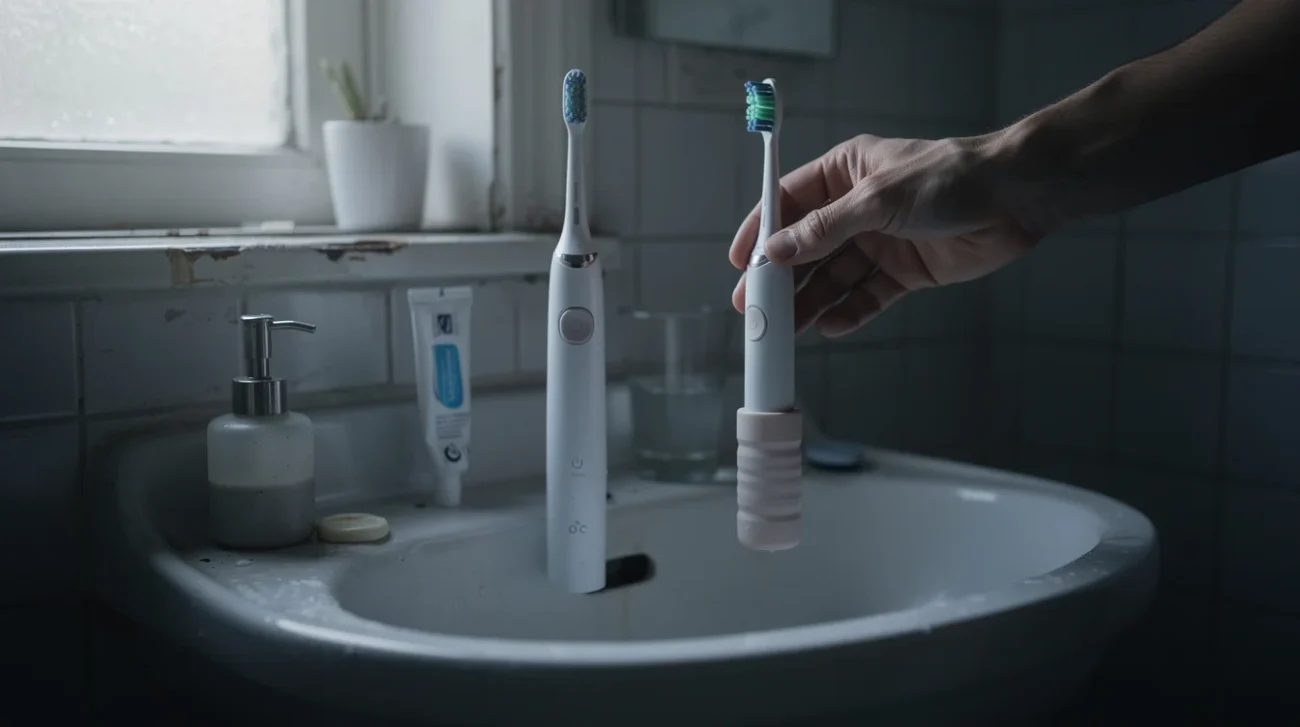
A toothbrush can become more sophisticated without becoming usable by more people. That distinction should unsettle a design industry so comfortable treating technical escalation as progress. Dezeen’s September 2026 toothbrush roundup supplies a revealing juxtaposition: a headline-making, technology-driven launch from Dyson alongside adaptations that change how an everyday dental tool can be held. One promises innovation through additional capability; the other locates it in access. The tension echoes a broader question about electric luxury and its appetite for excess: when does greater capability become an end in itself?
The sharpest counterpoint is Accessories by Landor & Fitch, a collection of more than 142 toothbrush add-on designs intended for people with dexterity challenges, including chunky grips. These are not rival products tested against identical criteria. They are evidence of competing priorities. The question is which priority design culture knows how to celebrate.
PRO: Technical Capability Can Deliver Real Independence
The case for the smarter toothbrush deserves better than a caricature about unnecessary gadgets. Brushing is a repetitive physical task requiring coordination, reach and sustained movement. Motorised action can reduce some of that work. Pressure feedback can flag excessive force; timers can help structure a routine. These are established categories of electric-toothbrush functionality, not specifications attributed here to Dyson’s launch. Each represents a plausible intervention in a real interaction problem.
Consider Oral-B’s oscillating-rotating brushes and Philips Sonicare’s sonic models. Their mechanisms offer different ways of moving bristles without asking the user to generate every cleaning movement manually. That does not make every model accessible, nor does it establish that more features always improve outcomes. It does demonstrate why technical development cannot simply be dismissed as luxury theatre.
For someone who tires quickly, reducing repeated wrist movement may matter as much as enlarging a handle. For someone who struggles to judge brushing pressure, a clearly perceptible warning may be useful. A mechanical improvement and an accessibility improvement can be the same intervention.
The defensible claim is not that smarter means better. It is that technical capability deserves acclaim when it removes a demonstrable burden. The mechanism should earn its prominence through the task it makes easier, rather than through its component count or the drama of its launch. The same test applies to the prospect of home robots arriving one body part at a time: judge the assistance delivered, not just the machinery introduced.
PRO: Sophisticated Engineering Is Not the Enemy
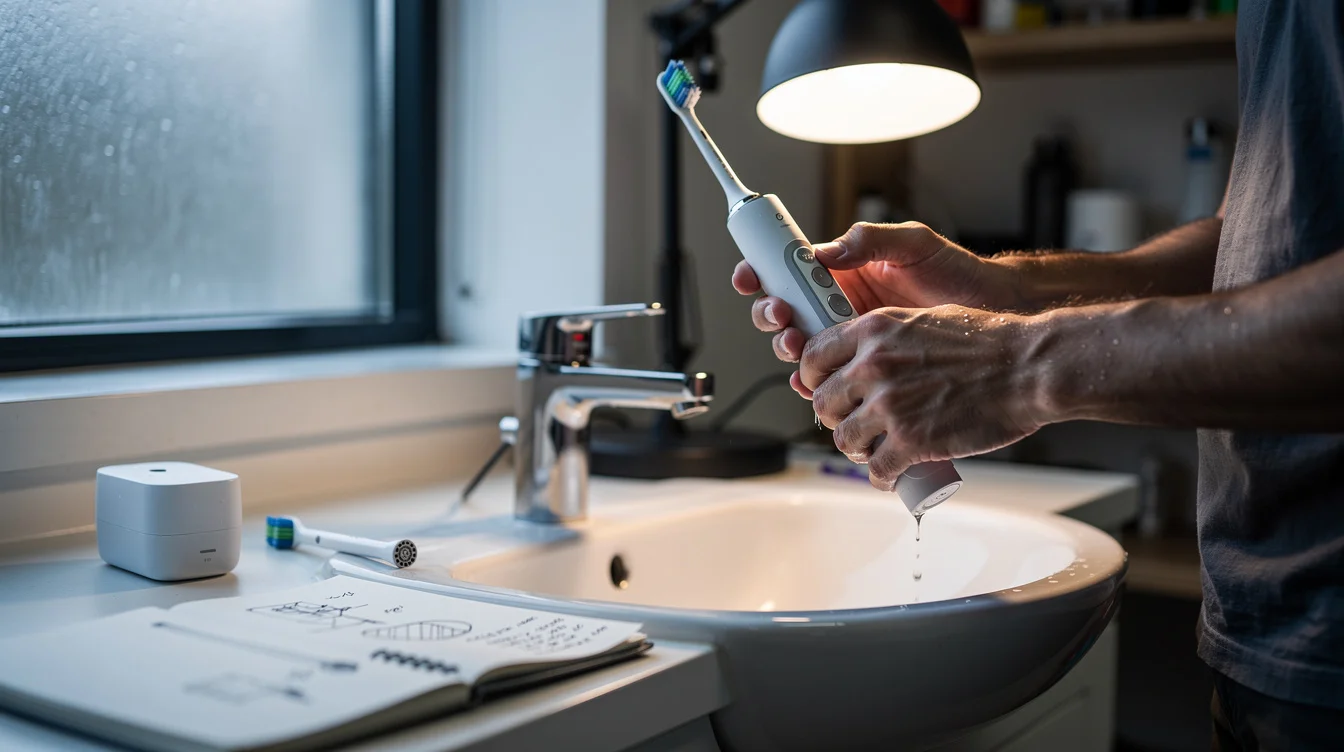
There is also a serious design challenge hidden inside the electric toothbrush’s apparently simple silhouette. A powered object used around water must reconcile sealing, charging, weight, vibration, cleaning and replacement parts. Improving one variable can undermine another: a larger battery may extend runtime while making the handle heavier; a more secure seal can complicate repair. This is consequential product design, not merely electronics dressed in bathroom-friendly plastic.
Dieter Rams’s work for Braun offers a useful reference point, though not a verdict on any contemporary toothbrush. His principle that good design makes a product useful provides a stricter defence of technology than the familiar demand for novelty. Under that standard, engineering succeeds when it supports use and remains comprehensible. An interface that requires repeated troubleshooting would struggle to qualify, however advanced its internals.
A fair assessment of a smart toothbrush should therefore examine whether users can recognise its controls, understand feedback and maintain it without disproportionate effort. Connectivity, where present, should justify itself rather than become an admission ticket to basic functions. Accessible instructions and straightforward charging belong in the evaluation alongside brushing modes.
The strongest pro-technology position is ambitious: demand better engineering, not less engineering. A well-balanced powered handle with tactile controls and a stable charging base could serve independence exceptionally well. Rejecting it simply because a passive grip looks more modest would substitute reverse snobbery for judgement.
CONTRA: The Hand Is Not a Peripheral Specification
Now reverse the hierarchy. Before a toothbrush can optimise brushing, somebody must pick it up, orient it, hold it and put it down. A product that fails at these stages cannot redeem itself with sophisticated performance later. Physical access is not an optional feature competing with technical capability. For many users, it is the condition that makes capability available at all.
Landor & Fitch’s Accessories makes that argument tangible. The collection’s more than 142 designs, including chunky grips, treats the interface between hand and toothbrush as a substantial design territory. Its breadth should not be mistaken for proof that every adaptation works for every person. Instead, it points towards a reality that sleek, standardised handles can obscure: dexterity challenges are not one uniform condition.
Someone with painful finger joints may need to avoid a tight pinch. Someone with limited movement may need a different orientation. Someone using one hand may find setup as consequential as brushing itself. These are design questions requiring observation and testing, not assumptions attached to a diagnostic label.
The OXO Good Grips kitchen-tool range, developed with Smart Design, is a relevant precedent. It helped make substantial, comfortable handles desirable mainstream products. Its lesson is not that everything should become rubbery and oversized. It is that attention to physical difficulty can generate a compelling product proposition rather than a specialist afterthought.
CONTRA: Design Acclaim Needs a Different Test
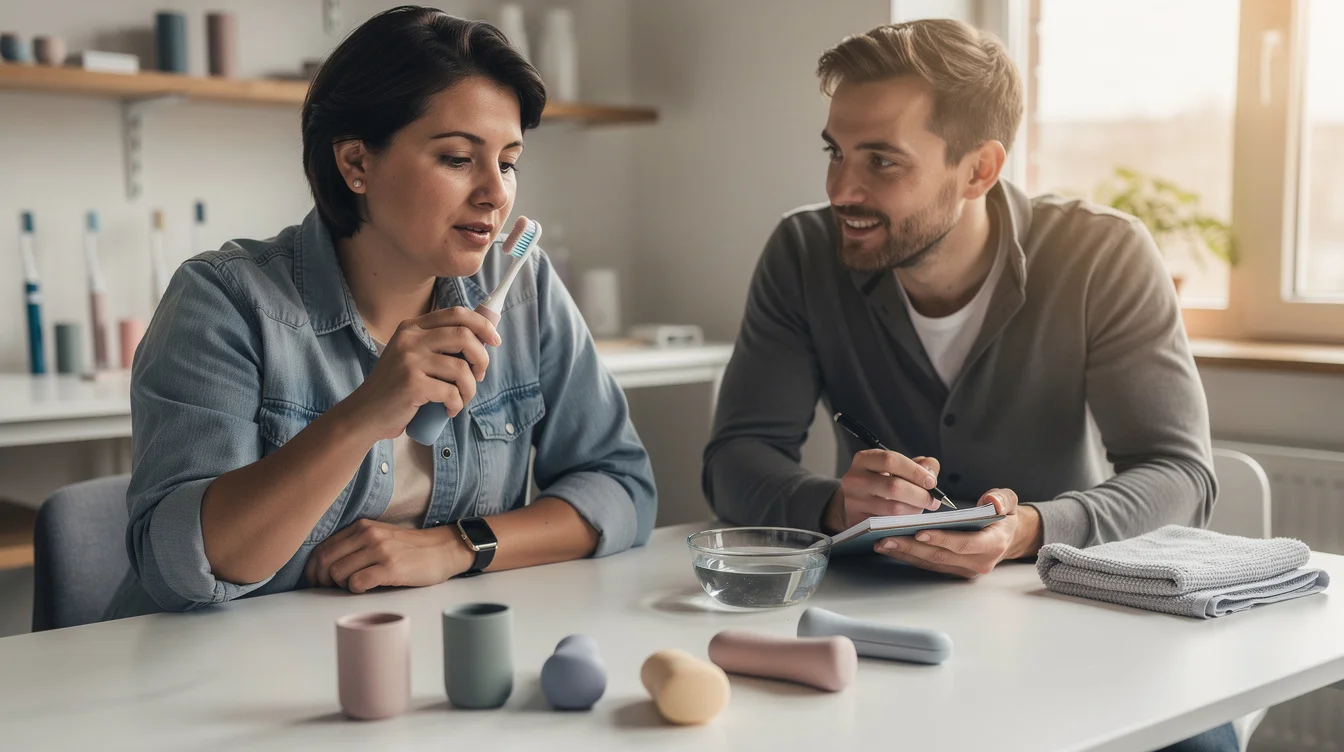
Technical novelty has an editorial advantage: it arrives with a mechanism to explain, a specification to quote and a launch story ready to circulate. An adapted grip asks for a less spectacular account. The central event might be a person completing an ordinary routine without assistance. That is harder to compress into a glamorous product image, but it is hardly a lesser achievement.
Dezeen’s juxtaposition does not prove that juries systematically favour sophisticated mechanisms over access. Establishing that would require examining awards, coverage and selection criteria. It does, however, expose the inadequacy of judging innovation principally through what has been added to an object. Who has gained usable access should carry at least equal weight.
Accessible toothbrush design must also survive scrutiny. Can an add-on be fitted without the assistance it is intended to reduce? Does it stay secure when wet? Can toothpaste residue be cleaned from the connection? Does it obstruct charging or require an unusually expensive replacement brush? An adaptation is not successful merely because its intentions are admirable.
Ronald Mace’s universal-design framework offers a better direction than separating prestigious innovation from worthy accommodation: make products usable by the widest practicable range of people. For manufacturers, editors and juries, that means evaluating the whole routine with varied users. The boldest toothbrush may contain an ingenious motor, an adaptable grip, or both. What matters is whether its ingenuity reaches the person holding it.
FAQ: What Should Count as Toothbrush Innovation?
Are electric toothbrushes inherently more accessible?
No. Powered brushing may reduce repetitive movement, but weight, vibration, slippery surfaces or difficult controls can introduce other barriers. Accessibility depends on the fit between a particular product, its user and the complete brushing routine.
What distinguishes Landor & Fitch’s Accessories?
The collection focuses on toothbrush add-ons for people with dexterity challenges. With more than 142 designs, including chunky grips, it positions adaptation of the existing tool as a substantial area of product innovation.
Does a larger grip solve every dexterity challenge?
No. Grip size is only one variable. Shape, angle, weight, surface, attachment security and cleaning requirements also matter. A useful adaptation should be selected and tested around the individual rather than presumed universally suitable.
How should design awards assess accessible toothbrushes?
They should seek evidence from varied users completing everyday tasks: fitting adaptations, brushing, rinsing, storing and maintaining the product. Technical performance still matters, but independent use, affordability and compatibility should be explicit criteria rather than supplementary virtues.
If design acclaim followed the independence a product enables rather than the sophistication it displays, which toothbrush would deserve the spotlight?
Get the Mainifesto weekly — curated design debates, speculative ideas and the week's best articles every Saturday.
Editorial Perspectives
Questions and counterpoints developed by the Mainifesto editorial desk to extend the discussion.
Perspective 1
The accessible grip deserves the spotlight: a handle that lets someone brush without help is no small achievement. In ceramics, the hand tells you things a photograph cannot; design juries should spend more time listening to it.
Perspective 2
I wouldn’t make independence the deciding measure of design acclaim. A smart toothbrush can make an invisible habit understandable through clear feedback; that deserves recognition too, provided the interface reduces effort rather than demanding attention.
Perspective 3
Why are we treating a usable grip and useful technology as competing futures? Give me a toothbrush people can hold, afford and repair, then add smart features where they genuinely help. That’s a tougher design brief than either a sculpted handle or an app alone.