
When the Garbage Truck Becomes a Building Inspector
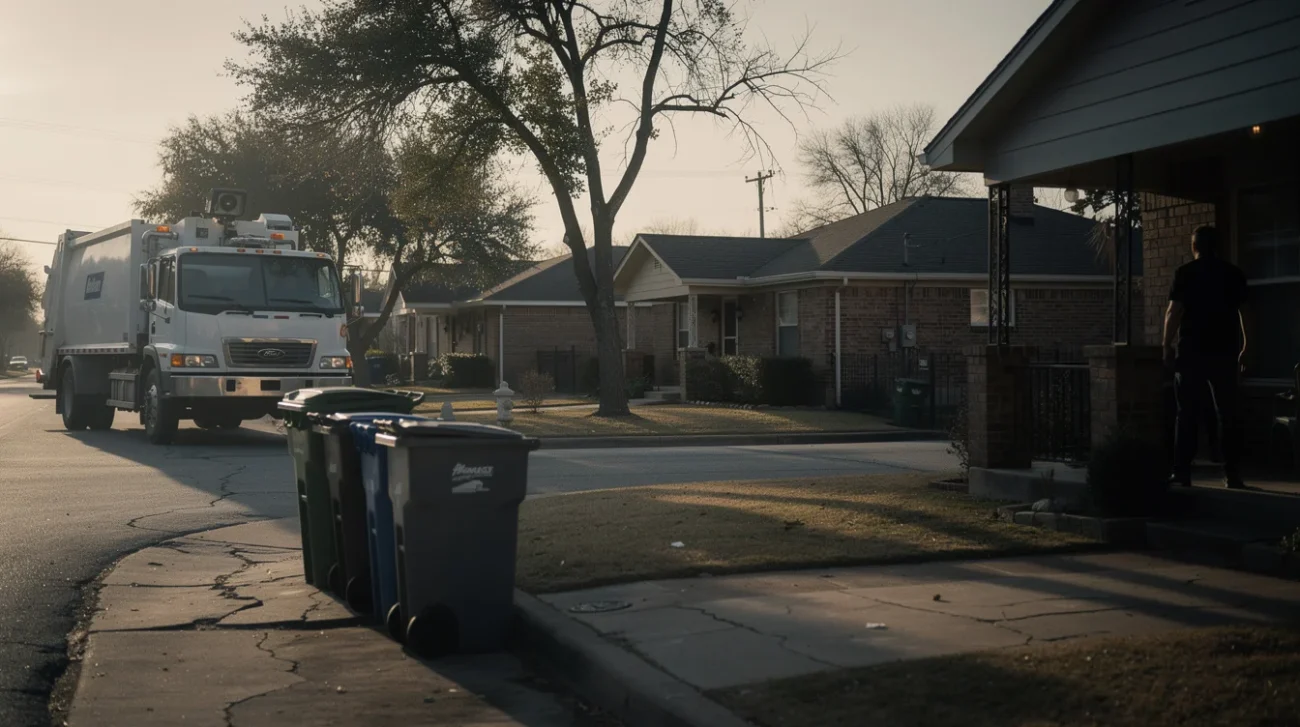
The garbage truck has an unusually intimate relationship with the city. It visits the ordinary streets that architectural photography ignores: rear lanes, modest front yards, apartment service entrances. Now that familiar route is becoming a potential inspection circuit. Dwell reports that AI-equipped garbage truck cameras are policing home violations in Dallas. The provocative shift is not simply that a camera can spot something. It is that a service residents depend on can become an enforcement platform they never knowingly chose.
The source summary does not establish the system’s complete operating rules, accuracy, retention periods, or appeal process. Those gaps matter. Nor does exterior imagery turn a sanitation vehicle into a qualified building inspector. What the report exposes is a design choice: should the municipal fleet merely collect waste, or also collect reasons to investigate the people putting it out?
PRO: Inspect the street, not just the complaints inbox
The strongest argument for AI garbage trucks is not technological novelty. It is the possibility of making enforcement less dependent on who complains loudest. Complaint-driven systems can reward residents with time, confidence, and institutional fluency. A blocked sidewalk may receive repeated attention on one block while an equivalent obstruction elsewhere remains effectively invisible. Regular observation could give public agencies a more consistent starting point.
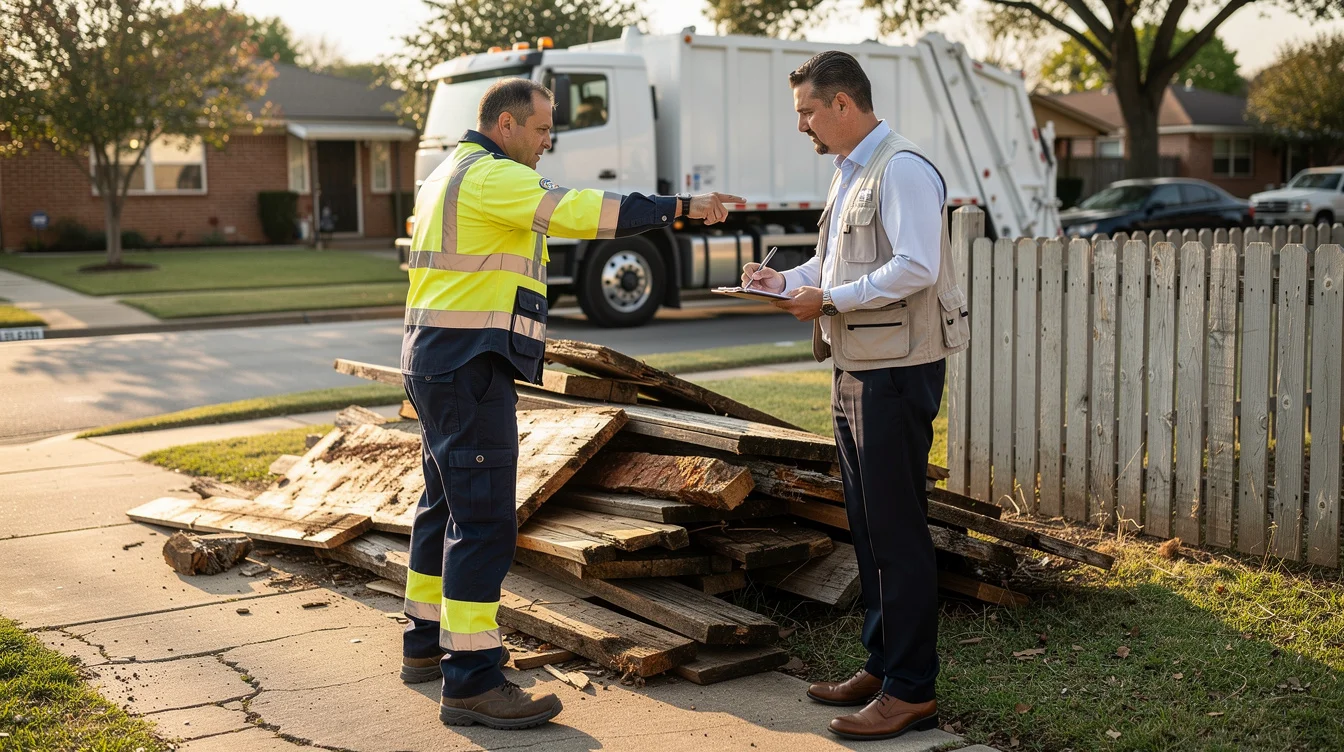
Consider a hypothetical Dallas collection route where cameras flag dumped construction debris obstructing a pedestrian crossing. A human reviewer checks the image, confirms its location, and sends a cleanup request rather than immediately issuing a fine. That is a defensible use of municipal vision: identify an observable condition, verify it, and resolve a public problem. It becomes particularly valuable where an obstruction forces a wheelchair user into traffic. As with AI systems that listen for danger, detecting a signal and deciding how to act on it are separate responsibilities.
Boston’s Street Bump project offers a useful precedent, although it used smartphone motion data rather than cameras to help identify road defects. Its underlying proposition was simple: movement through the city can reveal maintenance needs without a separate inspection journey. Reusing a garbage truck’s existing route could similarly reduce duplicated travel and help inspectors prioritize visits. The objective should be fewer unresolved hazards, not more violations discovered per hour.
That distinction is architectural as much as administrative. A clear sidewalk is usable civic space. A dashboard overflowing with unverified alerts is not.
PRO: Make efficiency buy better public service
Efficiency becomes persuasive only when residents receive some of its benefits. If automated screening saves staff time, the city could spend that capacity on site visits, explanations, translation, and repair assistance. A notice about an overgrown frontage could offer a correction period and information about available help. An image of scattered waste could trigger investigation of missed collection before the household is blamed.
These are proposed safeguards, not established features of the reported Dallas arrangement. They illustrate how the same detection technology could support two very different municipal cultures: one organized around resolving conditions, another around producing penalties.
Barcelona’s Decidim participation platform provides a relevant governance reference, not a model for street surveillance. It demonstrates that digital public infrastructure can include visible processes for proposing and debating decisions. A camera program deserves comparable public legibility: a published purpose, accessible operating rules, and a record of consequential changes. Buying software should not quietly settle a political argument.
A credible deployment would begin with narrowly defined categories, such as obstructions affecting public access, and a time-limited evaluation. Officials should publish verified detection rates, overturned findings, geographic distribution, and costs per resolved case. They should also compare the system with alternatives, including additional inspectors and maintenance crews. If a camera-equipped fleet cannot outperform those options on service quality without imposing disproportionate harm, its technological sophistication is irrelevant. Public procurement is not a talent show for computer vision.
CONTRA: A visible frontage is not an open database
The case against this arrangement begins with a distinction that smart-city marketing routinely erases: being visible in public is not the same as being persistently recorded, classified, and made searchable. This is also at the heart of the bystander problem with smart glasses: the person being observed is not necessarily the person choosing the technology. A passerby might notice a pile of timber beside a driveway. A municipal system can potentially attach that observation to an address, preserve it, and compare it with later images. Whether the reported Dallas system does all those things requires disclosure, not assumption.
Jane Jacobs’s celebrated “eyes upon the street” depended on situated human relationships. A shopkeeper notices a child in trouble because the child belongs to a recognizable social world. Machine vision strips observation toward categories. Timber becomes possible debris; a temporarily displaced bin becomes a possible violation. Context must then be reconstructed by someone who may already have received an official notice.
Collection rounds are not necessarily continuous recording of every property. The deeper concern is continuous inspectability: the expectation that each routine municipal visit might generate an enforceable record. Residents cannot meaningfully avoid waste collection simply because they object to a secondary data use.
And a camera does not establish responsibility. Dumped material may come from a stranger. A tenant may lack authority to repair a fence. Temporary construction staging may be permitted. Detecting an unusual arrangement of objects is not equivalent to proving a code violation, identifying the responsible party, or establishing that punishment is proportionate.
CONTRA: An appeal cannot be an afterthought
Even technically accurate observation can produce unjust enforcement. A city may document visible exterior conditions rigorously while dangerous interior housing problems remain underreported. The result is a distorted inspection agenda: what photographs well receives attention; what requires access, trust, and specialist judgment waits. Calling the truck a building inspector risks disguising that limitation.
San Francisco’s 2019 surveillance technology ordinance offers a relevant oversight precedent: surveillance acquisitions and uses can be subjected to public policy review rather than treated as ordinary equipment purchases. Dallas residents deserve similarly explicit answers about permitted uses, access, retention, vendor rights, and any sharing with other agencies. The system’s boundaries should be enforceable, not buried in reassuring language about innovation.
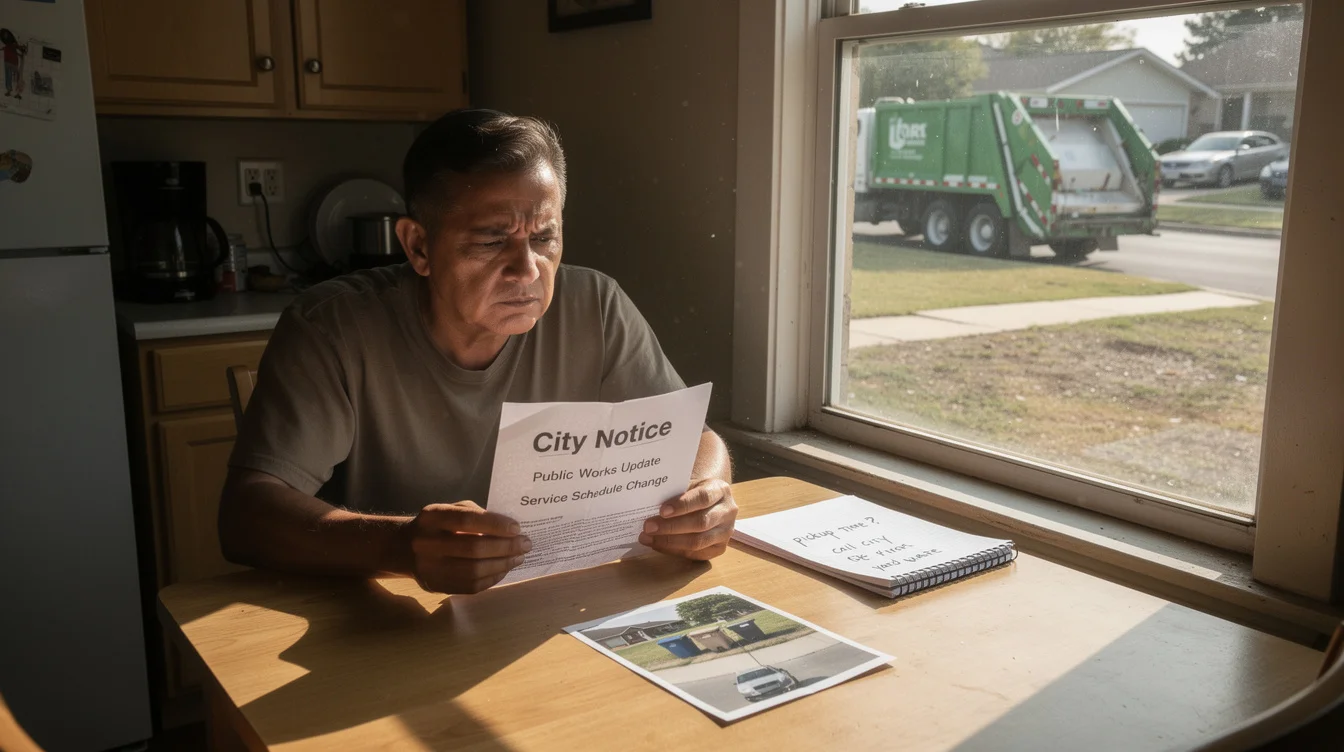
Every adverse notice should identify the applicable rule, disclose the relevant evidence and capture time, explain the role of automated screening, and name a responsible human decision-maker. Residents should be able to challenge a wrong address, outdated image, mistaken classification, or incorrect attribution without needing an expensive expert. An accessible appeal should pause escalating penalties while a timely review occurs.
Unrelated people and identifying details should be minimized or redacted wherever possible. Data should expire on a defined schedule consistent with appeal rights, and new uses should require fresh authorization. Most importantly, an independent review must be able to suspend the program. Transparency without the power to correct or stop a system is merely surveillance with better graphic design.
FAQ: What residents should ask before the next collection
Are Dallas garbage trucks replacing building inspectors?
The supplied report describes AI-equipped cameras policing home violations. It does not establish that trucks replace qualified inspectors. Street imagery can flag visible exterior conditions; it cannot verify structural safety, inspect interiors, or reliably establish responsibility without further investigation.
Could AI make enforcement fairer?
Potentially, if systematic observation reduces dependence on complaints. But collection coverage, detection categories, and enforcement choices can introduce different inequalities. Fairness requires published outcome measures, geographic analysis, human review, and comparison with non-surveillance alternatives.
What information should the city publish?
Publish the authorized purposes, detection categories, vendor arrangements, access rules, retention schedule, and data-sharing restrictions. Residents also need understandable performance reporting, including erroneous findings, successful appeals, and whether identified problems were actually resolved.
What should a meaningful appeal include?
Access to the evidence and relevant rule, an explanation of automation’s role, accessible ways to submit context, and independent human review. Escalating penalties should pause during timely review, and correcting one decision should also correct associated records.
If every necessary public service can double as an inspection network, where should a city draw the line between caring for a neighborhood and keeping it under watch?
Watch the Mainifesto Short
Get the Mainifesto weekly — curated design debates, speculative ideas and the week's best articles every Saturday.
Editorial Perspectives
Questions and counterpoints developed by the Mainifesto editorial desk to extend the discussion.
Perspective 1
I’m for using garbage-truck cameras to flag maintenance problems: a route the city already runs could help it spot neglected infrastructure sooner. But the system should flag conditions, not declare guilt—can residents see the evidence, challenge the classification, and get a repair response before a penalty?
Perspective 2
I’m against turning waste collection into an inspection network; people shouldn’t have to accept surveillance to get their bins emptied. Put that ingenuity into spotting missed pickups and recovering materials, not building a cheaper way to fine the neighborhood.
Perspective 3
A camera on a moving truck is not a calibrated inspection station: glare, parked cars, and viewing angle all affect what it can reliably identify. Before Dallas scales this, I’d want false-positive rates by violation type and neighborhood, a firm footage-deletion schedule, and an appeal process that doesn’t cost residents a day’s wages.