
Scarcity in Design: Resourcefulness or Precarity?
Scarcity on Display: Does Design Celebrate Resourcefulness or Romanticise Precarity?
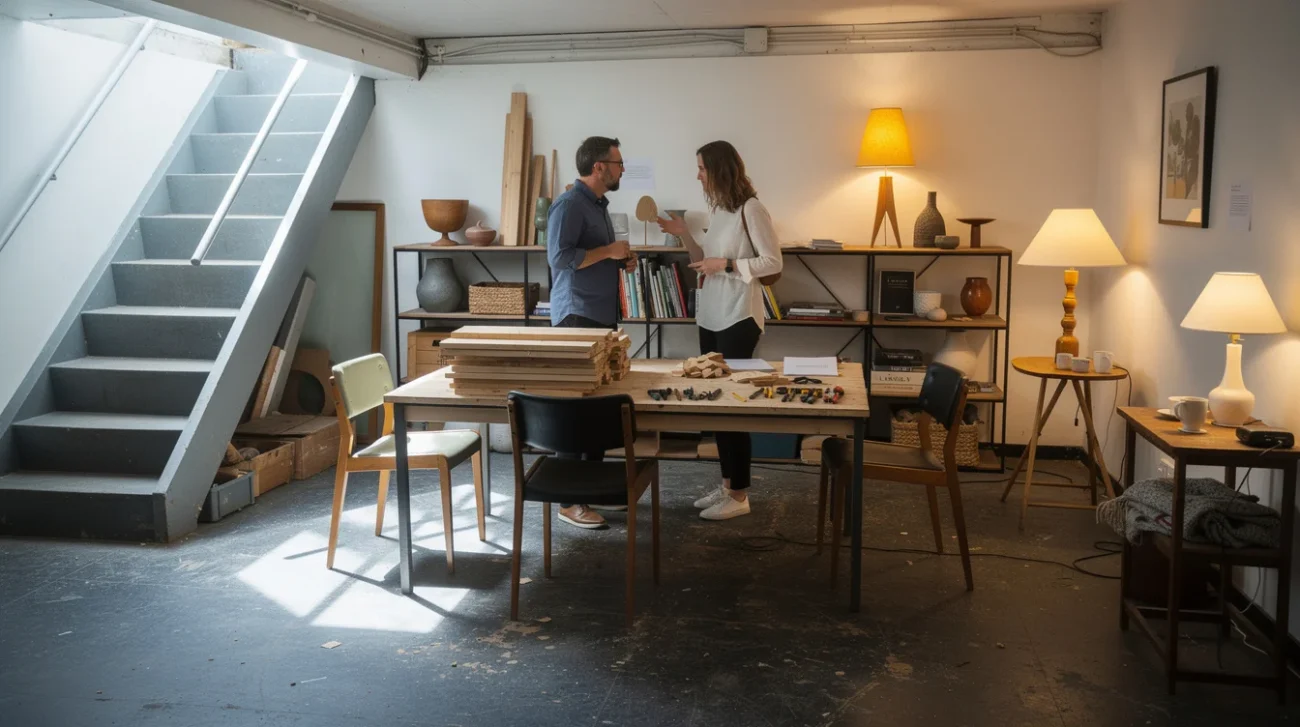
Design likes to show the finished object and crop out the conditions that produced it. The photograph rarely includes the overdraft, the borrowed equipment or the hours that never reach an invoice. With Limitations, an exhibition by guerrilla design collective Design Everything, brings those conditions into the frame. Presented in the basement of London design retailer Aram and debuting during the London Design Festival, it takes the form of an imagined designer’s apartment. According to Dezeen’s account, shortages of money, materials or equipment shaped every object.
The apartment is imagined; the economic question is not. What happens when an industry turns its own inadequate working conditions into something worth visiting? There are two defensible readings. This is a necessary corrective to design’s polished public image, making ingenuity and its circumstances visible. Or it risks supplying the perfect cultural alibi for underfunding: if scarcity produces such interesting work, why pay to remove it? The dividing line is not whether an object looks resourceful. It is whether its method can travel without requiring its maker’s hardship to travel with it.
PRO: Resourcefulness Is Knowledge, Not a Consolation Prize
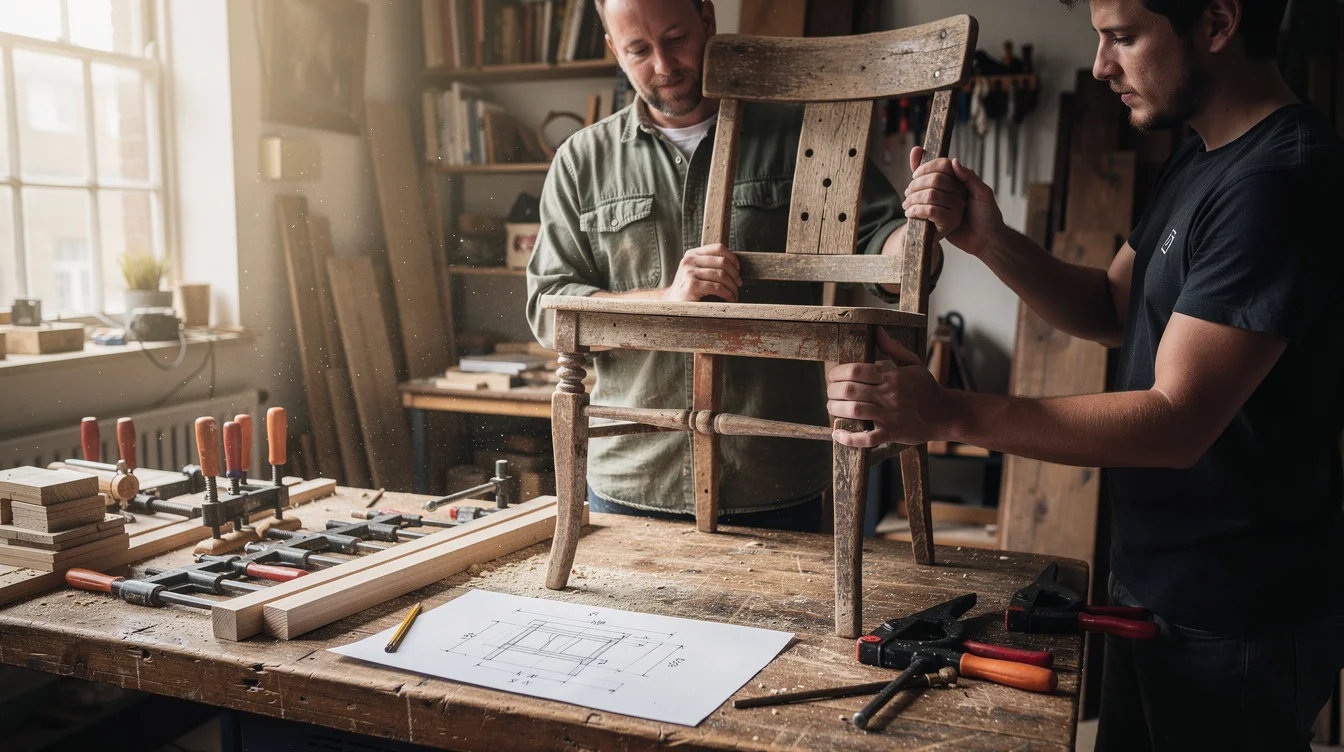
The strongest case for With Limitations is that it makes design legible as a process of negotiation rather than effortless authorship. An imagined apartment gives that argument an everyday scale. Instead of treating design solely as a procession of exceptional objects, it asks visitors to consider the accumulated decisions through which someone constructs a usable environment with what is available.
There is a serious design history behind that position. Enzo Mari’s Autoprogettazione, first presented in 1974, offered instructions for making furniture from standard timber and nails. Its importance was not simply that the furniture could be inexpensive. Building it could teach users how structure works, challenging the distance between consuming an object and understanding it. The transferable lesson is construction literacy, not an obligation to live without professionally made furniture.
Gerrit Rietveld’s crate furniture, developed in 1934, likewise made economical construction central to its formal language. Standard boards and straightforward assembly were not hidden beneath an illusion of luxury. These precedents are comparisons, not claims about objects included at Aram. They demonstrate why limited means deserve critical attention: a restricted material palette can expose principles that expensive finishes obscure. Resourcefulness becomes valuable when it generates knowledge someone else can use. A repairable joint, an adaptable dimension or an accessible assembly sequence has significance beyond the financial circumstances of its first maker.
PRO: Reuse Can Challenge Design’s Obsession with the New
Scarcity can also force a productive question that abundance allows designers to evade: does this object need new material at all? Martino Gamper’s 100 Chairs in 100 Days, completed in 2007, recombined discarded chairs into a sequence of experimental seats. Existing components became constraints, prompts and structural opportunities. The project showed that authorship can consist of editing and rearranging what already exists, rather than commissioning another pristine production run.
That distinction matters environmentally, although reuse is not automatically sustainable. Transport, cleaning, hazardous coatings, durability and the energy required for reworking all affect the balance. Nevertheless, designing around available stock can interrupt the habit of specifying first and considering material consequences later. It can produce methods for surveying components, testing their limits and making future disassembly easier.
Assemble’s work with Granby Four Streets and the establishment of Granby Workshop in Liverpool offer a different reference: material experimentation connected to a place, skills and production. The useful ambition is not to copy a surface associated with regeneration, but to connect inventive making to an infrastructure that can support its continuation.
Read generously, With Limitations can make that distinction visible. A domestic setting allows audiences to ask how resourceful decisions operate together rather than admiring one isolated trophy. The exhibition’s potential achievement is educational: turning constraints into discussable choices. But the celebration remains credible only if designers are free to retain the useful method and reject the deprivation that first made it necessary.
CONTRA: An Aesthetic of Scarcity Can Launder Underfunding
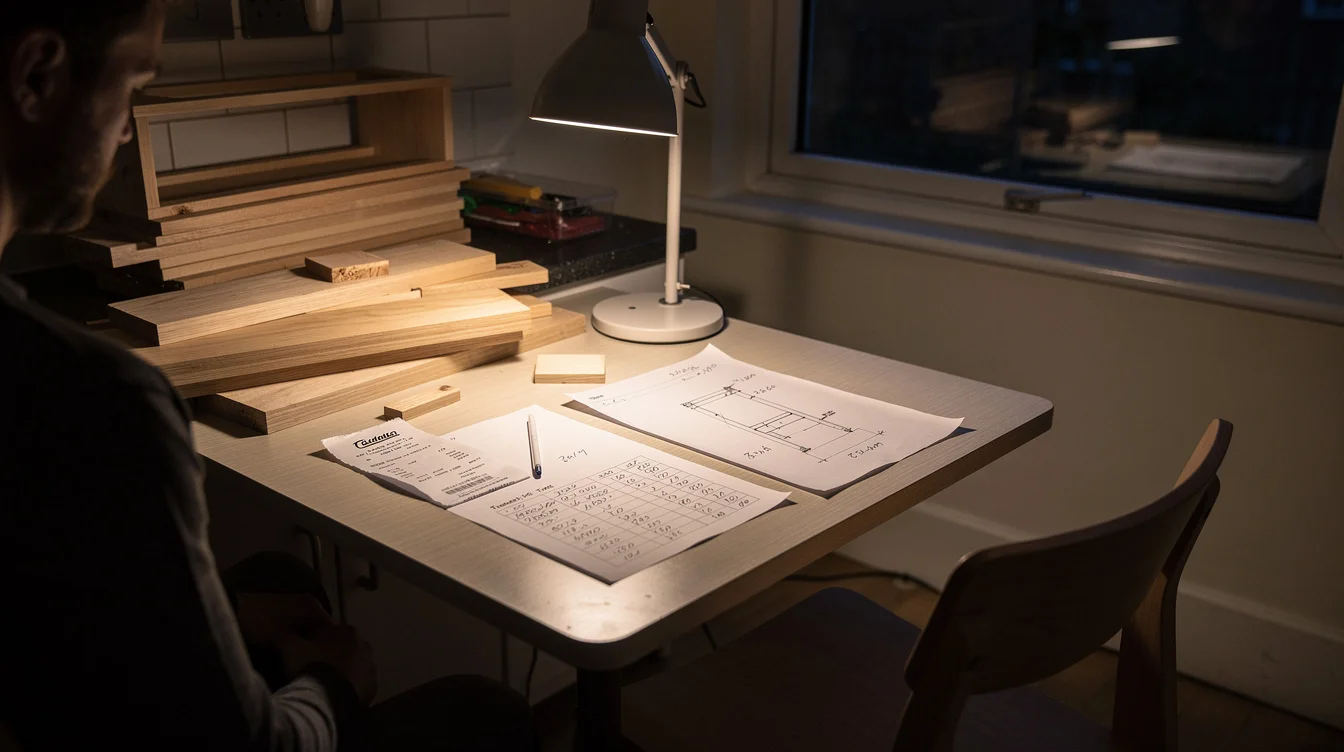
The opposing argument begins where celebration becomes prescription. A designer makes something compelling without adequate resources; an institution concludes that adequate resources were unnecessary. Exceptional effort becomes the next commission’s baseline. What appeared to expose a problem starts functioning as evidence that the problem can be tolerated.
A design festival is a particularly charged setting for this reversal. It presents work to an audience that can include commissioners, retailers, journalists and potential collaborators. Within that economy of attention, a difficult working condition can acquire a second life as a marketable story. The imagined apartment risks being read not as an indictment of restricted options, but as a desirable identity: the ingenious designer who needs almost nothing.
This is a risk of reception, not an allegation about Design Everything’s intentions or Aram’s payment practices. The supplied account does not establish exhibition budgets, fees or individual makers’ circumstances. Those unknowns matter. A deliberately constrained experiment with paid labour and adequate support is fundamentally different from work made under financial pressure with no realistic alternative.
Material economy and labour economy are not interchangeable. A chair assembled from discarded components may save purchased material while demanding extensive collection, sorting, cleaning and testing. If those hours disappear from the price, its apparent affordability is partly a subsidy supplied by the maker. Celebrating the result without accounting for that subsidy teaches clients the wrong lesson.
CONTRA: Nobody Should Have to Perform Hardship for Recognition
Mierle Laderman Ukeles’s Manifesto for Maintenance Art 1969! provides a useful corrective to the romance of creative breakthrough. It insisted on attention to the repetitive work through which life and institutions continue. Applied here, its challenge is straightforward: who does the unphotogenic work that makes resourcefulness possible, and who is paid for doing it?
The distinction also exposes an access problem. Two designers can appear equally inventive while possessing radically different safety nets. One can borrow workshop space, store salvaged materials and absorb a delayed payment. Another cannot. When the profession treats surviving on little as evidence of commitment, it rewards access to invisible support rather than talent alone. The visual language of improvisation conceals that inequality particularly well because different circumstances can produce similar-looking objects.
A responsible exhibition need not become an accountancy seminar. But it can distinguish material costs from labour hours, identify borrowed equipment and explain whether an awkward compromise was chosen or unavoidable. It can show what the designer would change with proper funding. That counterfactual is crucial: it refuses to make deprivation part of the object’s permanent artistic identity.
The practical test is whether a method remains attractive once labour, safe facilities and reasonable schedules are funded. Standardised parts, reversible connections and careful salvage may pass. Unpaid overtime, unsafe improvisation and the assumption that someone’s home must double as a workshop do not. Those are not transferable design innovations. They are costs displaced onto people. An exhibition about limitations should expand the argument for supporting designers, not make their lack of support look culturally sufficient.
FAQ: Resourcefulness, Reuse and Creative Labour
What is With Limitations at Aram?
It is an exhibition by Design Everything, presented as an imagined designer’s apartment in the basement of London retailer Aram. Debuting during the London Design Festival, it brings together objects shaped by shortages of money, materials or equipment.
When does resourceful design romanticise precarity?
When hardship becomes a desirable identity rather than a condition designers should be able to escape. Warning signs include praising low material costs while ignoring labour, presenting overwork as dedication, or using inventive results to justify inadequate future budgets.
Which lessons from constrained design are transferable?
Designing around available stock, using standard components, documenting assembly and enabling repair can all transfer to adequately funded projects. Their value lies in reducing waste or increasing agency, not in requiring designers to remain underpaid or poorly equipped.
How can exhibitions celebrate reuse without endorsing underfunding?
They can pay contributors fairly, make production support visible and separate material savings from labour costs. Explaining what additional resources would improve also helps audiences distinguish an intentional design method from a compromise imposed by necessity.
If design can turn scarcity into cultural value, who should receive that value—and what would it take for the maker to stop needing scarcity in the first place?
Watch the Mainifesto Short
Get the Mainifesto weekly — curated design debates, speculative ideas and the week's best articles every Saturday.
Editorial Perspectives
Questions and counterpoints developed by the Mainifesto editorial desk to extend the discussion.
Perspective 1
I’m for resourceful reuse: in restoration, keeping and adapting what exists preserves histories that a clean slate erases. But when that ingenuity raises a neighbourhood’s cachet, the makers and residents should gain income and security—not become the next things priced out.
Perspective 2
I don’t buy scarcity as a design virtue; a clever solution can conceal a badly resourced process. We could model material savings alongside fabrication hours and pay, then ask whether the design still works when nobody has to subsidise it with unpaid labour.
Perspective 3
Under exhibition lighting, a patched surface can look quietly luxurious; you don’t see the hours spent making it safe, stable and ready to install. I’d like the budget to acknowledge that care as clearly as the display invites us to admire it.
Perspective 4
If a reused interior gives guests a reason to choose our hotel, that’s commercial value, and the maker’s fee should reflect it. Pay for development, pay separately for rollouts, and budget for maintenance—otherwise the business is asking someone else’s thin margins to fund its identity.