
Saved from Demolition—but Public on Whose Terms?
A building can escape demolition and still lose its public life. That is the uncomfortable possibility behind Google’s redevelopment of Chicago’s James R. Thompson Center: architectural survival without civic continuity. Saving Helmut Jahn’s landmark matters enormously. It does not settle what Chicago gets back.
According to ArchDaily’s account of Google’s September 16, 2026 announcement, the company is working with Architecture Plus Information, or A+I, to remake the building as a place for work, culture and community. Those are attractive categories. They are not access guarantees. The decisive questions concern opening hours, permission to linger, the location of security boundaries and whether the architecture remains understandable from the spaces ordinary visitors can actually enter.
The Thompson Center redevelopment deserves neither automatic applause nor reflexive condemnation. Its strongest defense is that private investment can make an extraordinary building viable. Its strongest criticism is that viability for an employer can displace the obligations of a former seat of government.
PRO: Preservation Needs a Working Future
Completed in 1985 and commissioned by Illinois Governor James R. Thompson, Jahn’s building was never an easy inheritance. Its climate-control problems, maintenance costs, leaks and reported structural issues made the argument for keeping it harder than a photograph of its spectacular interior suggests. Preservation that refuses to confront operating performance risks becoming a demand that someone else subsidize discomfort indefinitely.
A large corporate occupier can supply what endangered architecture often lacks: a durable use and the resources to pursue substantial repair. That does not prove every proposed intervention is right. It does make rehabilitation a credible alternative to demolition rather than an indefinitely postponed aspiration. Retaining the building also preserves existing materials and structural investment, although any claim about net carbon savings would require a project-specific assessment.
Useful precedents resist the fantasy that preservation means freezing a building. At Berlin’s Neues Museum, David Chipperfield Architects and Julian Harrap repaired a damaged institution while making new interventions legible. At Paris’s Bourse de Commerce, Tadao Ando inserted a contemporary exhibition space into a historic structure. Neither project supplies a direct governance model for Chicago, but both demonstrate that architectural continuity can accommodate a radically renewed operational life.
The fair pro-development position is therefore forceful: an occupied, repaired Thompson Center is a more promising civic asset than a demolished one. Condemning corporate involvement in itself would confuse the identity of the investor with the quality of the outcome.
PRO: A Workplace Could Support a Better Public Interior
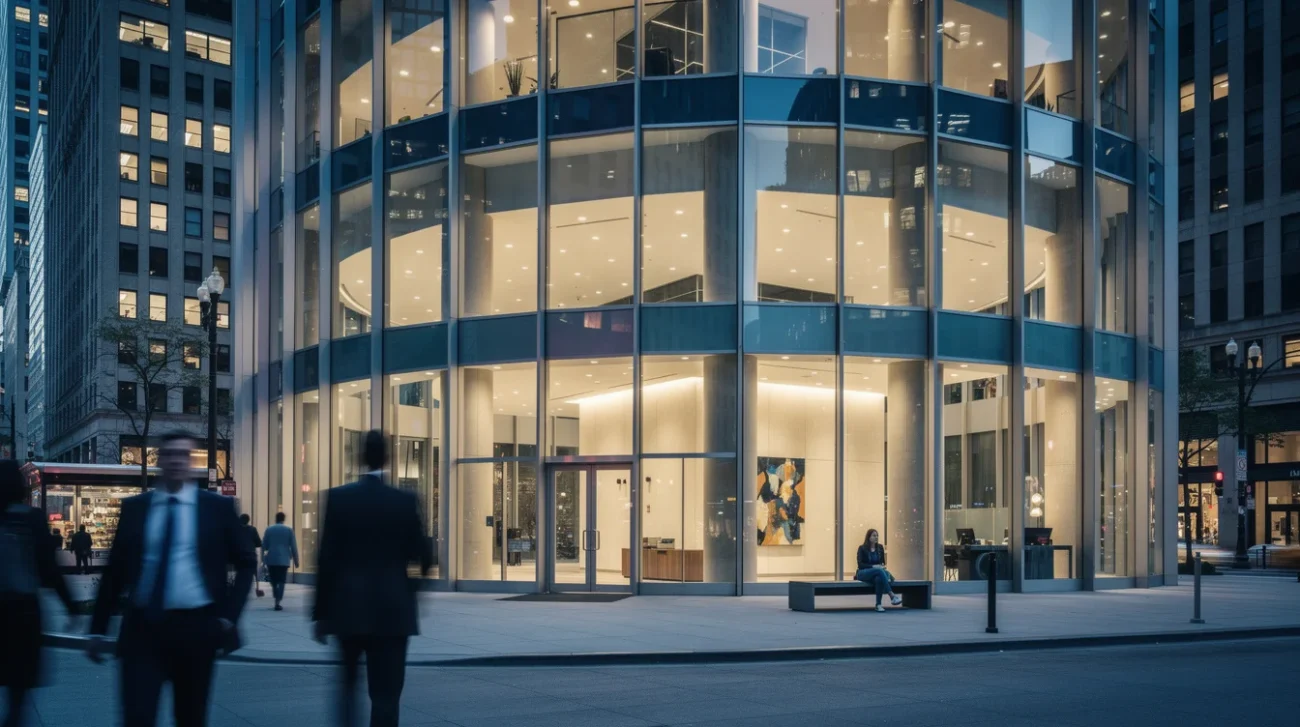
The building’s civic proposition was spatial before it was promotional. Occupying an entire Loop block, the Thompson Center turned the state capitol’s dome-and-plaza idea inside out. Its multicolored, curved glass enclosure, immense atrium and sloping, transparent corner entry made government look unusually exposed. The public room was not simply a forecourt outside institutional power; it occupied the building’s heart.
That arrangement could support a productive hybrid. Offices need not consume every valuable space, and employees can help sustain amenities that also serve downtown residents and visitors. If the redevelopment offers comfortable seating, accessible toilets, clear street entrances and places to spend time without buying anything, private occupation could improve the everyday usefulness of the interior. These are conditions for success, not confirmed features of the announced scheme.
New York’s Ford Foundation Center for Social Justice offers a relevant comparison. Kevin Roche and John Dinkeloo’s headquarters combines institutional offices with an indoor garden accessible to visitors under stated arrangements. The lesson is not that a corporate atrium becomes a public park by declaration. It is that a working institution can accommodate a meaningful visitor realm when its boundaries and operations support that purpose.
A+I’s challenge is to translate the language of community into spatial independence. A visitor should be able to understand where to go without approaching an employee reception desk. The strongest version of Google’s rescue would make the public interior a destination in its own right, not a courtesy extended to people passing through a headquarters.
CONTRA: Public Access Is Not a Brand Attribute
The counterargument begins with a distinction redevelopment publicity often blurs: a publicly accessible building is not necessarily a public institution. Government buildings have security procedures and opening hours too; the Thompson Center’s earlier life should not be romanticized as unrestricted access. But changing its primary purpose from government to corporate employment changes whose needs organize the building and whose authority shapes its everyday rules.
Nothing in the supplied announcement establishes the final visitor policy. That uncertainty is precisely why scrutiny belongs now, before welcoming renderings harden into an accepted account of public benefit. Can someone enter without an appointment? Is identification required? Are photography, leafleting or quiet political expression permitted? Can management close the principal public room for private events? Does using it involve registration or acceptance of data-collection terms?
New York’s privately owned public spaces reveal why such details matter. William H. Whyte’s studies of plazas showed that seating, food, sunlight and social permission determine whether nominally accessible space is actually inhabited. Zuccotti Park later exposed the tensions between public access, private management and political assembly. Chicago should borrow the scrutiny, not assume the same legal framework applies.
Community programming cannot substitute for dependable access. An invitation to an exhibition is different from the ability to sit indoors on an ordinary afternoon. A convincing public commitment would publish hours and rules, identify which areas carry lasting access protections, and provide a route for complaints. Hospitality depends on goodwill; civic infrastructure needs arrangements that survive a change of management.
CONTRA: Saving the Shape Can Still Erase the Idea
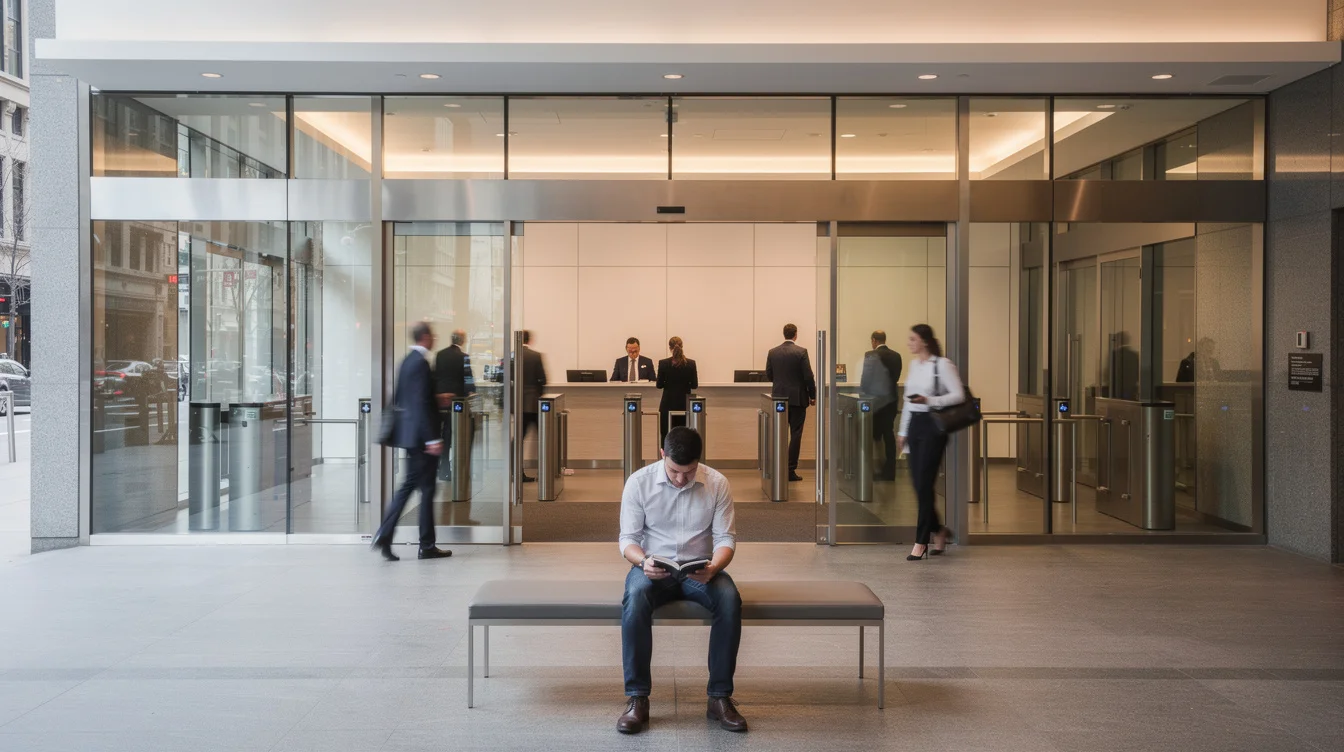
Preservation can fail even when the exterior remains recognizable. Jahn’s architectural argument depends on the relationship between street, threshold and atrium. If visitors can see the great room but cannot meaningfully occupy it, or if partitions and checkpoints make its organization difficult to understand, the building risks becoming an image of openness rather than an experience of it.
This is architectural legibility: the ability to perceive how a building works and where one belongs within it. At the Thompson Center, it means more than retaining curved glass or reproducing a familiar palette. It requires protecting significant views, the sense of shared interior volume and a comprehensible transition from the Loop’s sidewalks into the building. Necessary technical upgrades should be evaluated against those relationships, not only against a checklist of surviving components.
London’s Granary Square, part of the privately managed King’s Cross redevelopment, offers a useful warning against simple judgments. Its fountains and generous outdoor spaces demonstrate real everyday value. Yet the wider debate around privately managed urban districts persists because attractive design does not answer every question about accountability. A successful place can still leave unresolved who sets its terms.
Google should not be expected to operate a state government. It should, however, be judged against the civic value invoked to justify this celebrated rescue. Publish the public-space plan alongside the architectural renderings. Distinguish employee areas from visitor areas and protected access from discretionary programming. Without that clarity, Chicago may preserve the monument while surrendering the public room that made it matter.
FAQ: What Would Make This a Civic Rescue?
Why is the Thompson Center architecturally significant?
Helmut Jahn’s 1985 building reinterpreted the state capitol through a monumental interior atrium, curved glass enclosure and conspicuous street entrance. Its importance lies in that relationship between governmental identity and shared space, not simply its postmodern appearance.
Does Google’s redevelopment guarantee public access?
The supplied announcement describes work, culture and community uses but does not establish detailed access guarantees. Opening hours, entry requirements, closure policies and the extent of publicly usable areas should not be inferred from renderings.
Can private ownership support genuinely useful public space?
Yes. Funding, maintenance and daily occupation can sustain excellent shared spaces. Their public value depends on predictable access, inclusive rules, comfortable facilities and oversight—not merely cultural events or an inviting visual identity.
How should the redevelopment’s preservation success be judged?
Assess physical repair, usable public space and architectural legibility together. Saving the structure is essential, but so are protecting the atrium’s spatial relationships and ensuring that visitors can experience more than a controlled glimpse of the landmark.
If Chicago keeps Jahn’s great public room but its use depends on corporate permission, has the city saved its civic inheritance—or negotiated a revocable invitation?
Get the Mainifesto weekly — curated design debates, speculative ideas and the week's best articles every Saturday.
Editorial Perspectives
Questions and counterpoints developed by the Mainifesto editorial desk to extend the discussion.
Perspective 1
I’m for the rescue: keeping Jahn’s vast public room gives Chicago a spatial possibility that demolition would erase for good. But can the retrofit make public circulation as fundamental as the structural grid, backed by access rights rather than a visitor policy?
Perspective 2
I don’t buy this as a civic rescue if Chicago keeps the atrium but loses the right to occupy it without permission. Adaptive reuse should preserve the messy overlap of ordinary lives, not turn a public interior into a corporate address where everyone else is a guest.
Perspective 3
Someone has to pay to repair, heat and maintain that enormous room, so corporate ownership isn’t automatically a bad outcome. The deal should spell out public hours, permitted uses and who pays for what; otherwise Chicago is valuing a promise as though it were an asset.
Perspective 4
The test is whether I can walk in, find a seat and wait for someone without buying anything or explaining myself to security. If Google wants civic goodwill from this investment, a welcoming entrance and reliable access will earn more of it than another launch event.
Perspective 5
Saving the building and saving its public role are two different outcomes. Before calling this a civic success, I’d want to see enforceable access terms, closure records and evidence that people actually use the atrium—not just pass through it.