
When the Concert Hall Becomes a Content Machine
When the Concert Hall Becomes a Content Machine
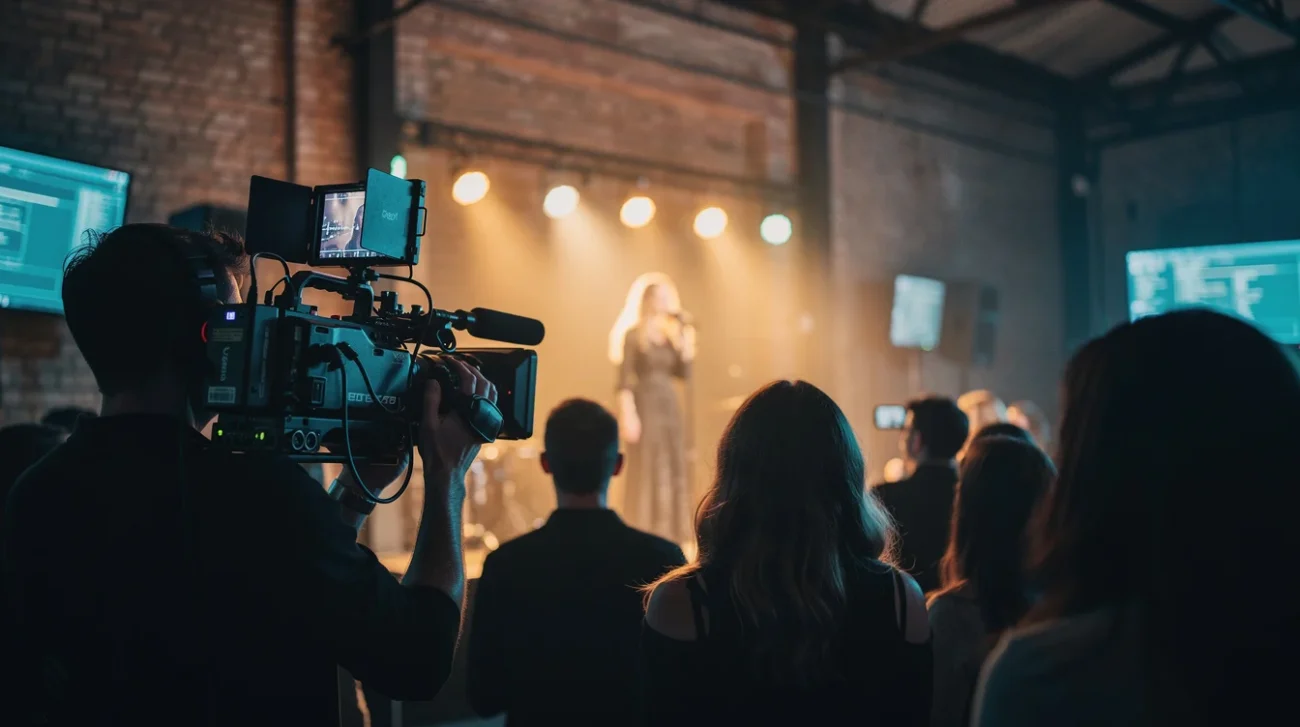
A concert hall once had an apparently straightforward client: the people listening inside it. Broadcasting complicates that arrangement. Platform ownership makes it political. Apple’s 600-capacity music venue at London’s Battersea Power Station brings live performance, recording, mixing and global broadcasting into one building, according to designboom’s report. The room is intimate; its potential distribution is not.
This is more than a convenient production package. It establishes two audiences with potentially conflicting claims on the architecture: the bodies gathered around a performance and the viewers receiving its mediated version. The available source context does not establish precisely how Apple resolves that conflict in its floor plan. But the programme itself poses a sharp question: is the building an instrument for musicians, or are musicians and their audience inputs for a distribution system?
PRO: One Building Can Remove Several Barriers
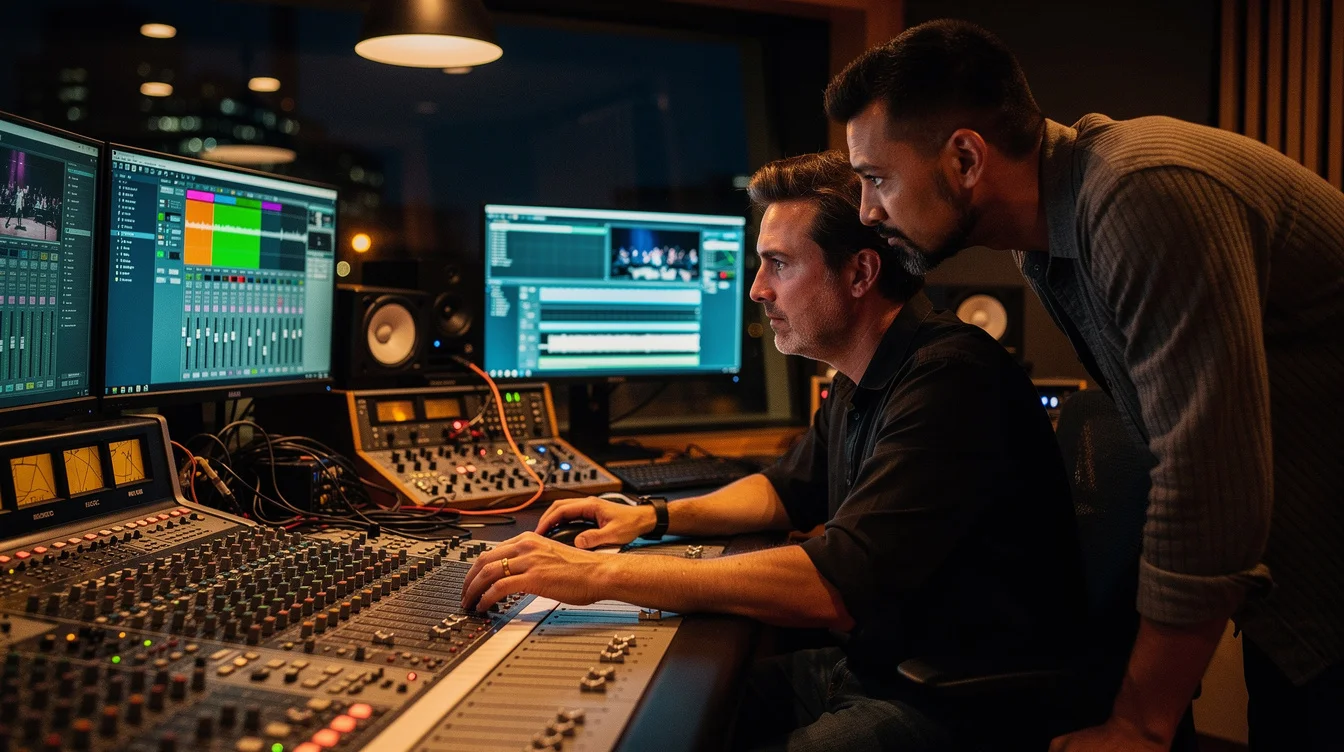
The strongest argument for Apple’s model is practical. Making a concert travel usually requires a chain of separate resources: a venue, recording equipment, engineers, post-production time and a distribution route. Bringing those functions together can reduce handovers and duplicated setup. For an artist offered meaningful access to the whole system, the building becomes more than a stage. It becomes production infrastructure.
Architecture matters because that integration is not merely digital. Quiet technical rooms, acoustically separated workspaces, robust cable routes and sensible equipment circulation can make the difference between a performance documented gracefully and one repeatedly interrupted by its documentation. These are spatial requirements of the hybrid model, not verified descriptions of Apple’s interior. Done well, they allow production to recede rather than colonise the room.
There is a useful precedent in Berlin. Hans Scharoun’s Philharmonie, opened in 1963, gathered listeners around the orchestra through its influential vineyard arrangement. The Berlin Philharmonic’s later Digital Concert Hall added a worldwide audience without making physical attendance obsolete. Its lesson is not that every institution should become a streaming service. It is that transmission can extend the reach of an already distinctive musical space.
At Battersea’s smaller scale, the opportunity is different: a close encounter that can also become a durable recording. An artist could develop an unusual arrangement, perform it before a responsive crowd and release a carefully mixed version. Integration expands creative access when it gives performers capabilities they could not otherwise afford—not simply when it produces more footage.
PRO: The Camera Can Become an Artistic Instrument
Purists often treat the camera as a contaminant, as though the unmediated concert were outside technology. It never was. Amplification, stage lighting and acoustic design already shape what audiences experience. A broadcast system can become another compositional tool, provided artists can decide how to use it.
A 600-person setting offers possibilities that an arena cannot reproduce. A close-up can reveal a percussionist changing mallets or a singer coordinating silently with an accompanist. A director can make musical relationships legible without demanding the exaggerated gestures needed to reach a distant upper tier. The remote experience need not imitate the room; it can disclose another aspect of the performance.
Frank Gehry’s New World Center in Miami Beach offers a relevant comparison. Its outdoor WALLCAST presentations turn filmed performances into a shared public experience in the adjacent park. Transmission there does not only deliver music to isolated screens. It helps assemble another audience in another space. The architectural ambition extends beyond the auditorium’s boundary.
Apple’s integrated programme could likewise support works conceived across live presence and recorded perspective: an ensemble distributed around a stage, an intimate electronic set, or a performance whose visual language is developed alongside its sound. But possibility requires permission. Artists need rehearsal time with the production team and authority over the resulting work. The progressive version of this venue is not a conventional concert with better cameras. It is a place where musicians can experiment with what a concert might become.
CONTRA: The Best Seat May Belong to the Lens
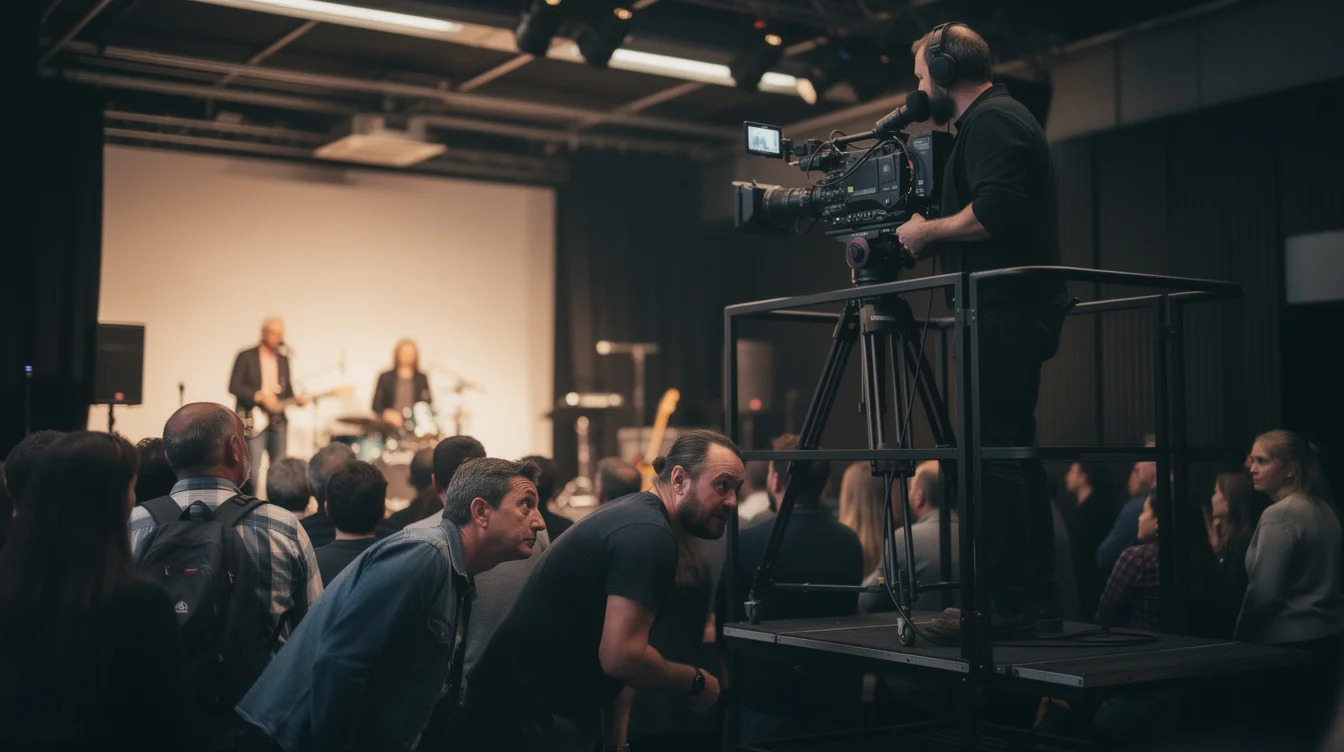
The counterargument begins with a scarce resource: space. A room serving 600 people cannot absorb unlimited production requirements without consequences. Camera positions, operator access, lighting equipment and safe cable routes compete with audience sightlines and circulation. None automatically ruins intimacy. Together, however, they create a hierarchy that a seductive capacity figure can conceal. The trade-offs differ from those of pop-up cities built around live music, but the underlying issue is similar: an event’s production demands reshape the space its audience inhabits.
Consider a hypothetical design review. A central camera needs an uninterrupted view; a standing audience wants to move. A close-up needs consistent facial illumination; the artist wants near-darkness. A microphone arrangement captures a cleaner mix when crowd sound is controlled; the room comes alive through shouting and spontaneous response. These are not abstract cultural anxieties. They are decisions about where bodies go and whose experience governs the technical brief.
Herzog & de Meuron’s Elbphilharmonie in Hamburg makes an instructive contrast. Its terraced auditorium visibly organises listeners around musical performance. No concert hall distributes proximity perfectly, but its spatial arrangement declares that the audience belongs within the central event. A hybrid venue must make an equally convincing declaration while accommodating a second, invisible constituency.
The danger at Battersea is therefore not broadcasting itself. It is optimisation for the version that survives on-screen. If shots matter more than sightlines, and production continuity matters more than collective unpredictability, the paying or invited crowd becomes atmosphere: applause, silhouettes, evidence that something live occurred. A 600-person room is not meaningfully intimate if its occupants are treated as extras.
CONTRA: Access to a Platform Is Not Cultural Openness
There is another uncomfortable distinction: wider distribution does not necessarily mean wider access to the means of production. A performance may reach viewers around the world while the opportunity to use the venue remains tightly controlled. The relevant questions are contractual and curatorial as much as architectural. Who gets booked? Who owns the recording? Can artists distribute it elsewhere? What support reaches musicians without established commercial leverage?
The source summary does not answer those questions, so neither celebration nor condemnation should pretend that it does. Yet platform-backed infrastructure deserves scrutiny precisely because its polished convenience can make governance disappear from view. A studio, stage and broadcast system under one roof can empower an artist. The same integration can strengthen dependence on a single gatekeeper.
London’s Barbican, designed by Chamberlin, Powell and Bon, offers a useful institutional comparison rather than an innocent alternative. Its combination of concert halls, theatres, galleries and public interior spaces shows that cultural infrastructure is also an arrangement of encounters beyond the booked event. Foyers, routes and places to linger matter. So do public obligations and the ability to challenge programming priorities. The question of who gets to programme a city’s future, raised in the context of Benghazi, also plays out at the scale of a single cultural institution.
For Apple’s venue, the demanding test is not whether a small room can generate a large audience. It plainly can. The test is whether its spatial and operating rules protect artistic risk, generous physical attendance and access beyond a commercially convenient circle. A cultural building earns its significance through the freedoms it sustains, not the volume of material it exports.
FAQ
What distinguishes Apple’s Battersea venue from a conventional concert hall?
According to designboom’s report, the 600-capacity London venue combines live performance, recording, mixing and global broadcasting within one building. That integrated programme allows the same performance to serve an audience in the room and become a produced work for remote listeners.
How does broadcasting affect concert venue design?
It introduces requirements for camera sightlines, lighting, technical circulation, recording isolation and production workspaces. These can complement live performance when integrated carefully, but they can also compete with audience views, freedom of movement and the atmosphere artists want to create.
Can platform-backed venues improve access for musicians?
Yes, if musicians receive affordable production support, useful rehearsal time, editorial agency and fair recording terms. Global reach alone is insufficient: genuine access also depends on who can enter the programme and what control they retain over their work.
Does streaming inevitably make the physical audience secondary?
No. That outcome depends on design and operating priorities. Protecting audience sightlines, accommodating spontaneous responses and giving artists authority over filming can keep the live encounter central while creating a distinct, valuable broadcast experience.
If the most commercially valuable audience is watching elsewhere, what would make the people inside the concert hall genuinely come first?
Watch the Mainifesto Short
Get the Mainifesto weekly — curated design debates, speculative ideas and the week's best articles every Saturday.
Editorial Perspectives
Questions and counterpoints developed by the Mainifesto editorial desk to extend the discussion.
Perspective 1
I’m in favour: a 600-seat room that also earns its keep through recording and broadcasting has a better business case than a single-use hall. Put some of that value into acoustics, comfortable seats and proper staffing, and the people buying tickets benefit too.
Perspective 2
The concert hall once borrowed its authority from the civic assembly; here, it risks becoming a television studio with paying extras. Debord would hardly be surprised. I’m against this model: a beautifully designed room cannot compensate for treating those present as scenery for those elsewhere.
Perspective 3
Follow the control system: who gets the best slot, who owns the recording, and who can refuse a camera? London gets another cultural asset, but a global platform can still funnel attention towards an already dominant centre. Give artists enforceable rights and local audiences a protected share of affordable tickets, or stop calling reach the same thing as access.
Perspective 4
If I’ve paid to be there, don’t hold the show for a stream cue or block my view with a camera. Track repeat bookings and audience complaints alongside viewing figures, and give the house manager authority to protect the live experience. Otherwise, you’re selling studio attendance at concert prices.
Perspective 5
I’d want to see the occupied-room acoustic tests, sightlines with cameras in position, and audience feedback before accepting that everyone wins. The useful test is what happens when broadcast requirements conflict with the room: does the camera move, or does the ticket holder lose their view?