
When AI Listens for Danger, Who Defines Safe Enough?
When AI Listens for Danger, Who Defines Safe Enough?
A knock at the door and a fire alarm are both sounds. They are not equivalent design problems. Missing one might mean a parcel goes back to the depot. Missing the other could mean losing the time needed to escape. When an artificial intelligence system promises to translate both into accessible alerts, it enters territory where a persuasive demonstration is nowhere near enough.
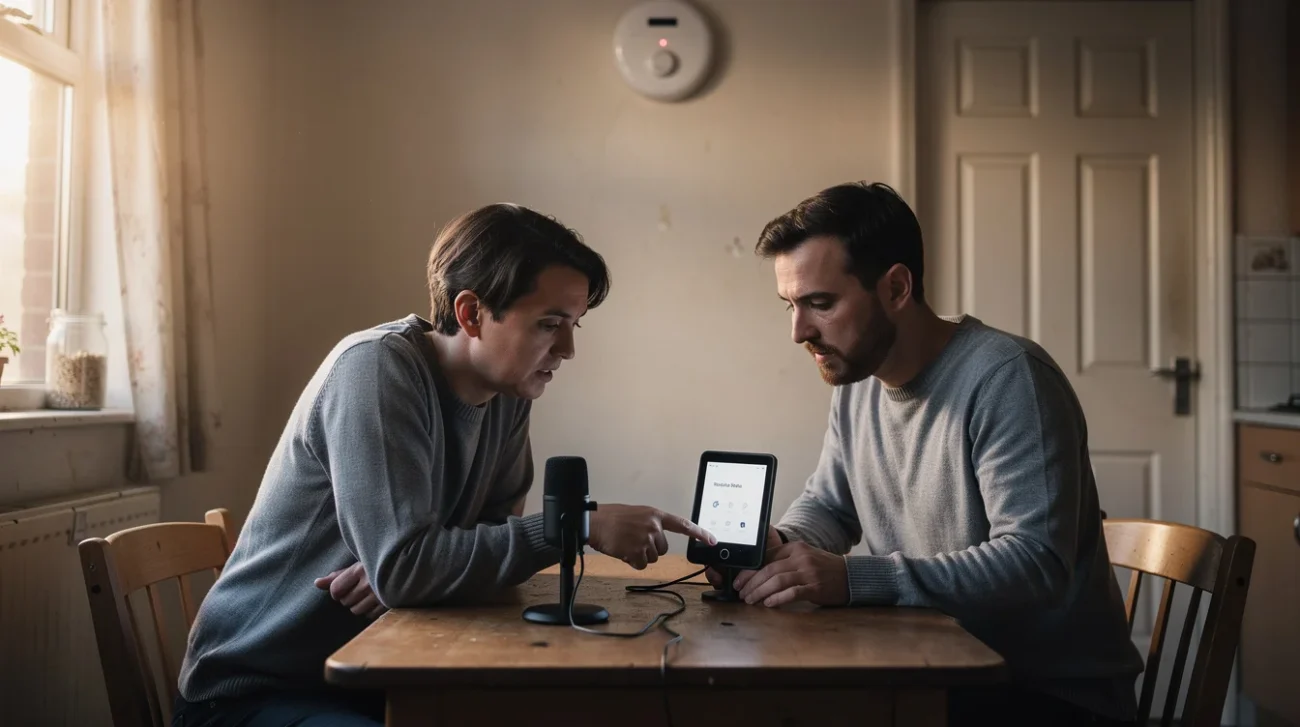
That is the productive tension behind SIVO.GO. According to Dezeen’s report of 16 September 2026, design student Gargi Agrawalla has won this year’s UK James Dyson Award with an AI-powered device intended to alert deaf and hard-of-hearing users to important sounds, including knocks and fire alarms. The report states that more than 500 samples were used to train the system to recognise these noises.
The award makes an important accessibility proposition visible. It does not, by itself, establish reliability across homes, workplaces or emergencies. The trigger for debate is not whether this invention deserves recognition. It is whether design culture can distinguish recognition from readiness. Once sound recognition becomes a safety interface, the people depending on it must help define what counts as safe enough.
A Training Set Is Not a Safety Case
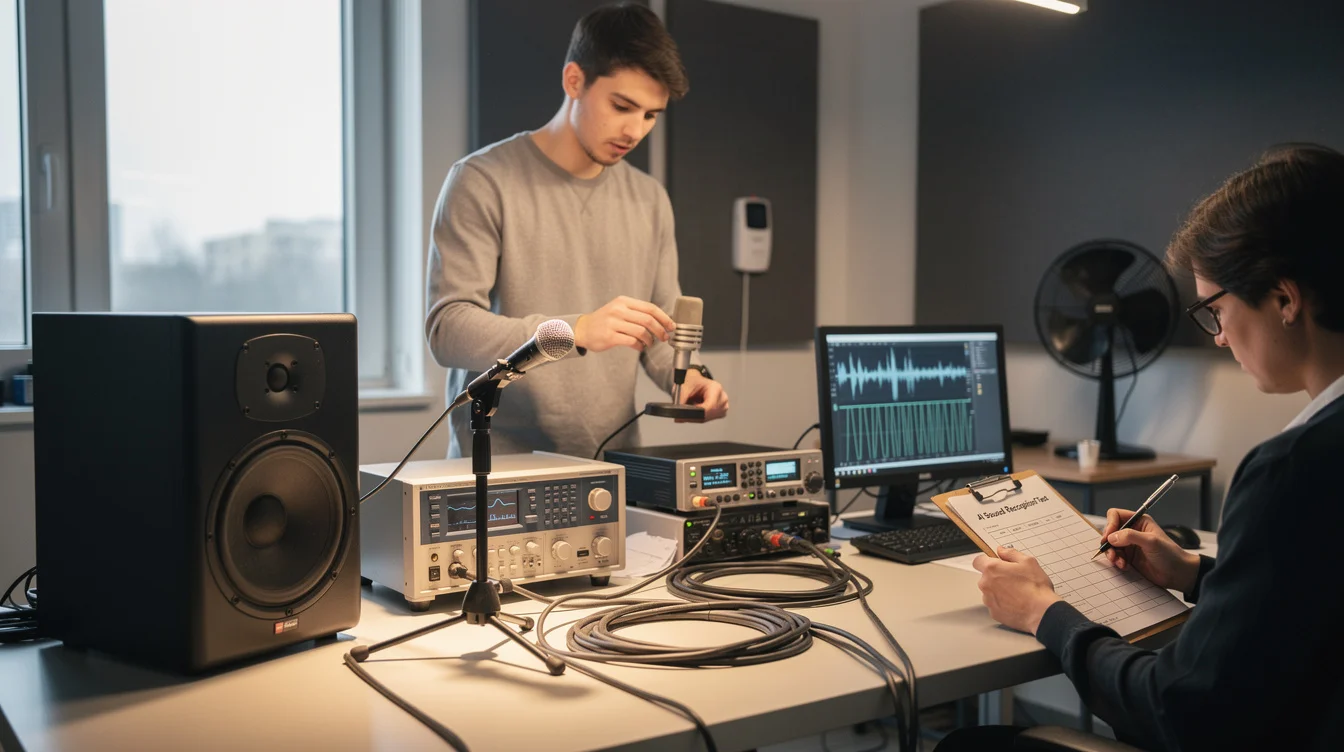
More than 500 training samples is a concrete development detail, not a performance verdict. Without knowing their distribution, recording conditions or relationship to separate test data, that number cannot tell us how often the system misses an alarm. Five hundred variations recorded in a quiet room would pose a different challenge from recordings spanning reverberant corridors, traffic noise and several sound sources at once. The source summary does not resolve those questions.
Consider an extractor fan running while an alarm sounds behind a closed kitchen door. Add a television playing an emergency scene, or two neighbours using different doorbells. A classifier must do more than match an isolated acoustic signature: its output has to remain useful when everyday life contaminates the signal.
Apple’s Sound Recognition feature provides a relevant comparison. Apple cautions against relying on it in circumstances where someone could be harmed, including high-risk and emergency situations. That boundary matters precisely because recognising sounds can be useful without qualifying as a dependable emergency system.
For SIVO.GO, meaningful evidence would include missed detections, false alerts and detection delays, broken down by sound and environment. An impressive overall accuracy figure could conceal an unacceptable failure rate for the sound that matters most.
Deaf Users Must Set the Priorities
Accessibility testing cannot consist of hearing designers deciding which noises matter, then asking deaf participants whether the resulting notification is noticeable. Deaf and hard-of-hearing people have different sensory preferences, living arrangements and relationships to sound. Some use hearing aids or cochlear implants; others do not. A useful daytime visual cue might be irrelevant to someone sleeping, while a vibration pattern may be difficult to distinguish during a busy commute.
The DeafSpace work developed at Gallaudet University offers a more ambitious reference. Its attention to sightlines, spatial relationships and sensory awareness treats deaf experience as a generator of architecture, not a deficit to patch after the floor plan is finished. Sound-alert design needs that same reversal of authority. It is a case for designing against the algorithm, rather than letting automated recognition set human priorities.
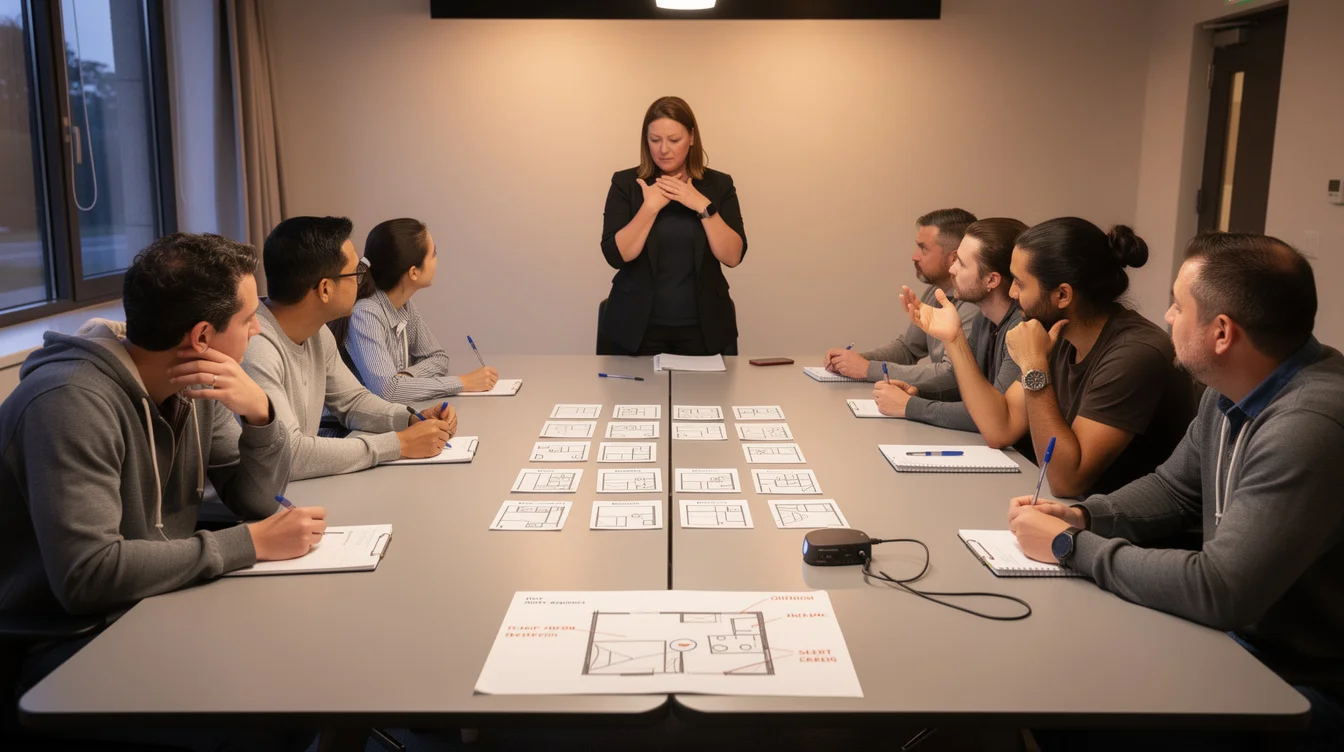
Participants should help decide which events deserve interruption, how urgent alerts differ from routine ones, and what information makes an alert actionable. A parent might prioritise a baby’s cry; someone living alone might care more about a visitor at the door. Neither preference settles how a fire warning should behave.
Paying participants, including them early and giving their findings power to block release would turn consultation into governance. Co-design without the authority to reject unsafe behaviour is user research dressed as consent.
False Alarms Are an Accessibility Cost
A missed signal is the obvious failure. Repeated false alarms are the slower one. If a device repeatedly labels television audio as a real emergency, users may stop checking it, mute it or stop carrying it. The system can lose practical credibility even while continuing to operate exactly as programmed.
Google’s Sound Notifications for Android is another useful reference point: consumer devices already translate selected environmental sounds into visual or vibrating notifications. Familiarity with that interaction, however, must not blur the difference between an everyday assistive feature and a safety-critical warning. A notification is not automatically an intervention that reaches someone, is understood and prompts appropriate action.
Testing should therefore follow the whole sequence. Was the sound detected? Did the alert arrive? Could the person distinguish its urgency? Did it provide enough context to act? A screen saying only that something happened may transfer the investigative burden back to the user.
Alert priorities should be negotiated, not flattened into one generic buzz. Routine events could be grouped or quietened; potential emergencies need a distinct treatment. Whether users can customise those distinctions, and within what limits, should be tested explicitly. The source account does not establish SIVO.GO’s notification behaviour. These are questions its evaluation should answer, not features we should assume it already has.
Failure Must Be Legible Before It Is Dangerous
The most consequential interface may be the one that appears when recognition is unavailable. A depleted battery, blocked microphone or software fault can create a dangerous ambiguity: does silence mean nothing happened, or that nothing is being monitored? If any functions depend on a network connection, loss of connectivity adds another state that must be made clear.
A trustworthy design should distinguish between active listening, degraded operation and an unavailable service. Those states need accessible communication, not merely a tiny status light. Users should be able to check the device’s condition without having to create a dangerous event to find out whether it works.
Fallback also means recognising the surrounding infrastructure. Established accessible alarm arrangements can use strobes and bed shakers connected to appropriate alarm systems. An experimental sound recogniser should not be treated as a substitute for required fire detection or suitable accessible warning equipment. It may add a valuable layer, but an extra layer is not the same as a replacement.
Ron Mace’s universal design principles provide a useful test here, especially perceptible information and tolerance for error. A system is not inclusive if it makes its users responsible for detecting its invisible failures. Maintenance and recovery are design work, not technical footnotes.
Give the Award a More Demanding Afterlife
The next milestone should not simply be a smaller enclosure or a more polished launch film. It should be a published evaluation framework developed with deaf and hard-of-hearing participants. That framework should separate everyday convenience from emergency assistance and explain which claims the evidence supports.
Testing needs conditions that resist the prototype’s preferred performance: unfamiliar rooms, competing sounds, different device placements and extended use. Dangerous scenarios should be simulated under controlled conditions, with independent safety provision, rather than making participants depend on an unproven device. Results should disclose the weakest categories, not just the average. Changes to the recognition model should trigger checks that earlier capabilities have not deteriorated.
Privacy belongs in the same evaluation. A listening interface enters bedrooms, shared flats and workplaces. Where audio is processed, whether recordings are retained and who can access them should be explicit. Similar questions of access and consent arise when family health becomes a shared data stream. The available source context does not specify SIVO.GO’s arrangements; an editorial celebration should not fill that gap with reassuring assumptions.
Agrawalla’s award-winning project makes AI’s accessibility promise tangible. The responsible response is to demand the support that could make that promise durable: funded trials, honest limits and user authority. Celebrate the invention. Refuse to let the trophy stand in for evidence.
FAQ
What is SIVO.GO?
SIVO.GO is an AI-powered sound-alert device developed by design student Gargi Agrawalla for deaf and hard-of-hearing users. Dezeen reports that it won the 2026 UK James Dyson Award and was trained using more than 500 samples to recognise important sounds, including knocks and fire alarms.
Does its James Dyson Award establish emergency reliability?
No. An award recognises a design achievement; it does not independently demonstrate emergency performance. That requires evidence about missed signals, false alerts, delays and behaviour under realistic operating conditions.
How should deaf and hard-of-hearing users shape testing?
They should be paid to help define priority sounds, accessible alert patterns, acceptable interruption levels and clear failure states. Their involvement should begin before key decisions are fixed and carry meaningful influence over release criteria.
Can AI sound alerts replace accessible fire-warning equipment?
An award or sound-recognition capability is not sufficient grounds for replacement. Required fire detection and appropriate accessible warning equipment should remain in place. Any replacement claim would need relevant evidence and compliance with applicable requirements.
If an AI device is going to listen for danger on someone’s behalf, who should have the final authority to say its remaining failures are acceptable?
Get the Mainifesto weekly — curated design debates, speculative ideas and the week's best articles every Saturday.
Editorial Perspectives
Questions and counterpoints developed by the Mainifesto editorial desk to extend the discussion.
Perspective 1
Safe enough in a quiet test room is not safe enough on a Beirut street, where generators and traffic compete with warnings. Deaf users need authority over deployment priorities, but manufacturers and regulators cannot hand them the liability for a system that fails outside its preferred conditions.
Perspective 2
I’d want to see missed-alert rates broken down by sound, distance and background noise, not folded into one accuracy score. Could Deaf-led testing set the acceptance thresholds—and identify situations where the device must say it cannot reliably listen?
Perspective 3
The exciting move is making sound alerts another tool people can choose, not selling them as a replacement for accessible infrastructure. But who keeps that tool dependable when the battery ages or software support ends? Deaf users should shape the acceptable trade-offs, with manufacturers responsible for repairable hardware and a credible support lifespan.
Perspective 4
An award-winning prototype still has to survive microphone variation, blocked openings and thousands of units coming off a production line. I’d want Deaf-led trials repeated on production hardware, with missed alerts and nuisance alerts reported separately. User approval matters, but it cannot substitute for enforceable product standards.
Perspective 5
A listening device doesn’t just detect danger; its training labels decide which sounds deserve attention. Deaf people should have real power to contest those priorities, not merely appear in the launch story. And choosing not to use it must remain legitimate, rather than becoming an excuse to deny other accommodations.