
Who Designed Manchester City’s AI Kit?
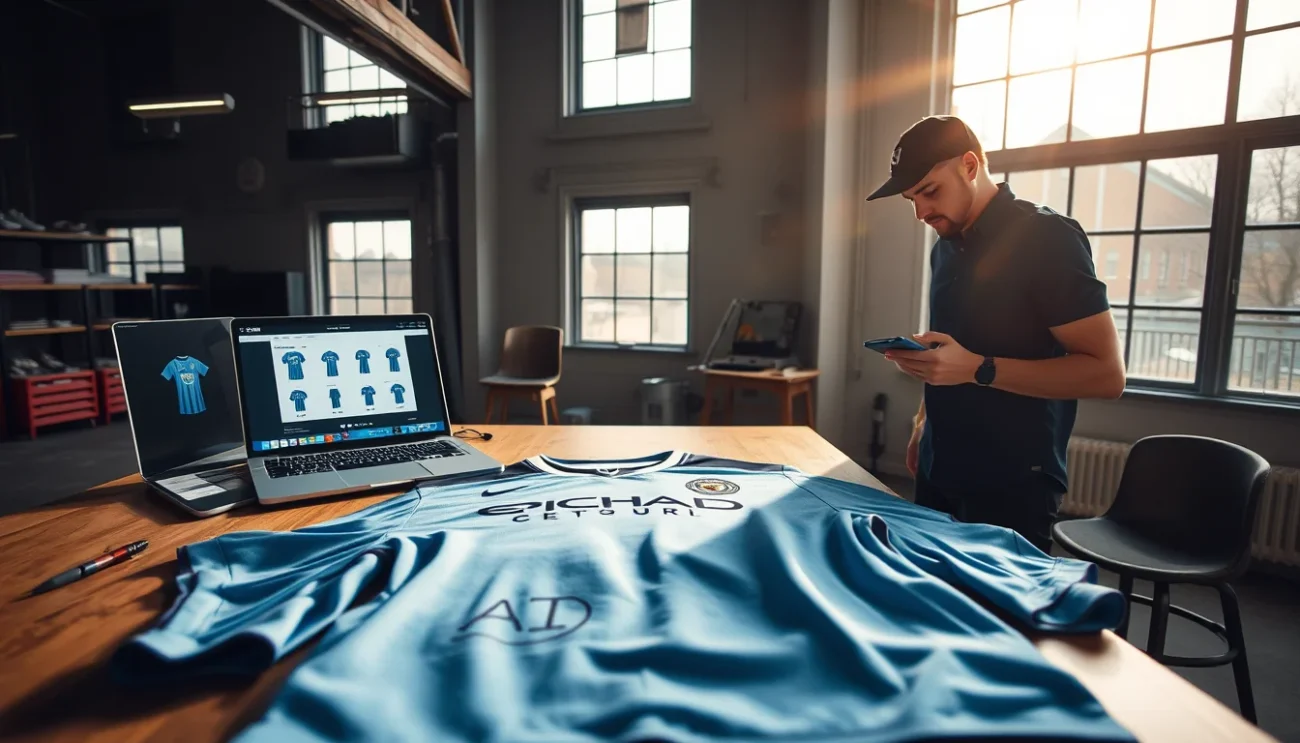
Manchester City’s new shirt arrives with an authorship problem sewn into every panel. Puma says the kit was designed by a fan using its AI Creator, a custom generative AI tool that turns written prompts into kit designs within seconds. The shirt will be worn by the English club, placing a supposedly participatory act directly inside one of football’s most tightly managed commercial systems.
That description contains three possible designers: the supporter who supplied the idea, the algorithm that translated language into graphics, and Puma, which built the tool, selected the result and controls the garment’s production. The question is not whether the shirt is attractive. Football has always survived questionable collars, overworked gradients and sponsor arrangements that would make a graphic designer blanch. The sharper question is whether fan participation still means anything when a brand automates the creative middle.
This is a useful test case because a football shirt is never merely apparel. It is an identity surface, a commercial asset and a portable piece of collective memory. A supporter can buy it, wear it and reinterpret it, but rarely gets to shape it. Puma’s Manchester City experiment promises to redraw that relationship. It may also reveal that the fan’s invitation is less a transfer of authorship than a sophisticated new form of brand capture.
PRO: The fan becomes more than a market segment
There is a genuine democratic charge in giving supporters access to a kit-making tool. Traditional sportswear design is conducted behind closed doors by brand teams, club executives, licensing departments and commercial partners. Fans encounter the finished product at the end of the process, usually through a carefully staged reveal. Puma’s AI Creator changes the entry point: a supporter can write a prompt and see an idea become a visual proposal in seconds.
That speed matters. In conventional design, participation often means a survey, a vote between preselected options or an invitation to submit concepts that disappear into a corporate inbox. A generative interface appears to offer a more direct form of agency. The fan is not simply choosing between navy and sky blue; they are describing an atmosphere, a memory or a vision of the club and watching the system materialise it.
There is precedent for treating sport as a laboratory for collective design. Football clubs have long drawn on local symbols, historic colours and supporter rituals. Manchester City’s identity is especially legible through its sky-blue palette and the civic geography of Manchester. A fan-generated prompt can bring forward associations that a global apparel company might miss: streets after rain, floodlights over the Etihad, terrace typography, local industry or the emotional contradiction of belonging to a club that is both community institution and international entertainment business.
Generative tools also lower the technical threshold. A supporter does not need Illustrator, pattern-cutting skills or access to a professional design studio. This resembles the broader promise of platforms such as Canva, image generators and no-code software: authorship can begin with intention rather than expertise. The result may be uneven, but participation becomes less exclusive. That shift is part of the wider argument explored in writing about when AI becomes the craft in design.
There is a further advantage in making the process visible. The shirt can be understood not only as a final image but as evidence of a negotiation between language, machine interpretation and club identity. That transparency is more culturally interesting than the usual fiction that a product emerges from a single genius designer. The fan’s prompt, however modest, becomes part of the object’s story.
On this reading, Puma is not erasing the designer; it is distributing design. The company supplies infrastructure, the AI supplies translation and the supporter supplies cultural direction. That model reflects how many people already create: through prompts, references, iterations and software that performs parts of the process. To reject it simply because the tool is automated would romanticise an older design system that was hardly open or neutral.
CONTRA: Participation can become branded theatre
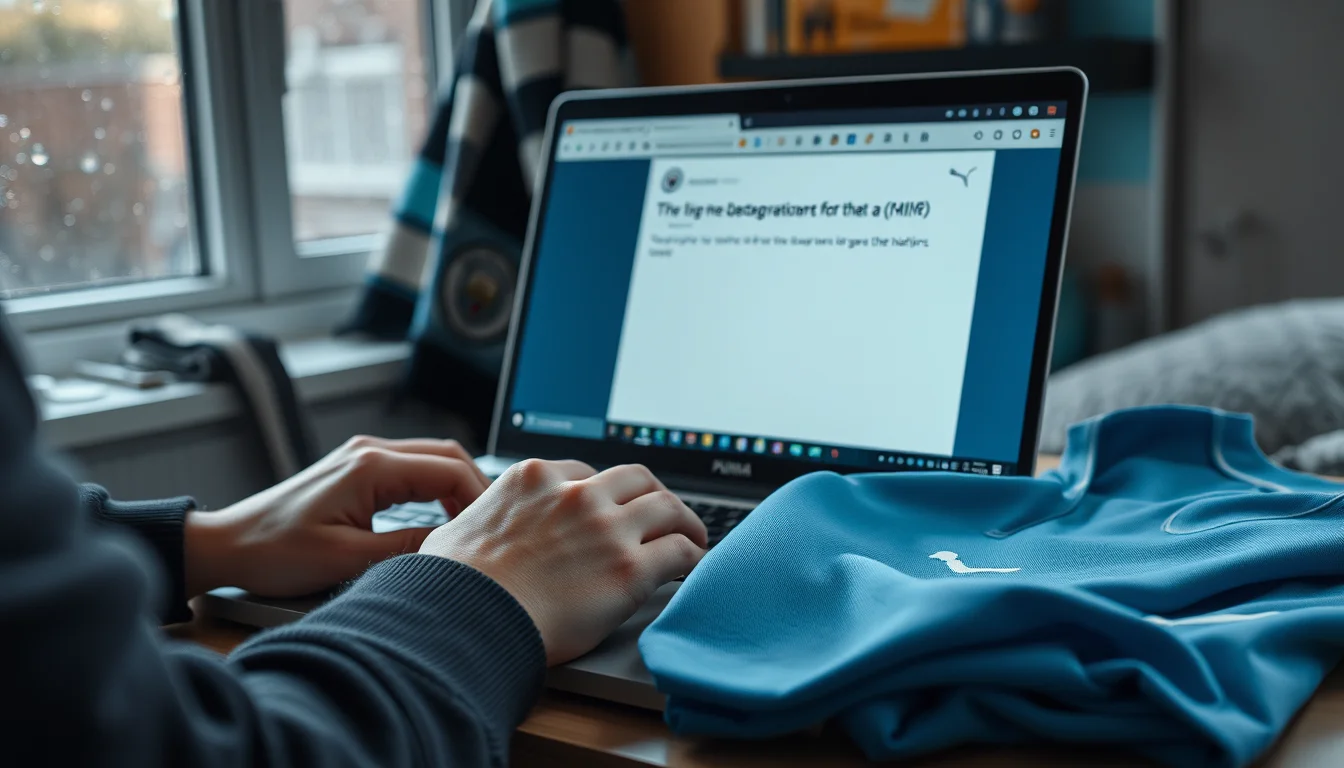
The problem is that a prompt is not the same thing as creative control. The fan may initiate the process, but Puma owns the interface, the model, the training decisions, the material production and the commercial relationship. Somewhere between the supporter’s words and the shirt on sale, the brand decides what is feasible, legible, profitable and compatible with Manchester City’s visual identity.
That distinction is central. A designer’s authorship is not only the ability to generate an image. It includes framing the problem, researching context, making formal decisions, rejecting possibilities, negotiating constraints and taking responsibility for the final object. AI Creator compresses much of that process into a branded act of instant output. The speed is impressive, but it can also disguise the invisible editorial decisions made by Puma’s product and marketing teams.
The language of “designed by a fan” therefore deserves scrutiny. Which fan? What did they write? How many generations were produced? Were alternative designs rejected because they were difficult to manufacture or because they failed brand guidelines? Did the supporter approve the final pattern, colours and placement? Without those details, fan authorship risks becoming a promotional label rather than a meaningful transfer of power.
Generative systems are not neutral collaborators. Their outputs depend on model architecture, curated training data, interface defaults and prompt interpretation. If the tool has been designed to produce commercially viable football shirts, it is already steering the imagination toward a narrow range of acceptable novelty. It may offer thousands of variations while quietly enforcing the same silhouette, sponsor zone, colour logic and Puma signatures. Abundance can be a particularly effective disguise for control.
This is where the shirt’s status as a collective object becomes uncomfortable. A club kit belongs emotionally to millions of people, yet a single automated interaction can be elevated into the origin story for everyone. The fan becomes an emblem of participation while the wider supporter base remains an audience. That tension echoes the question of what a shirt is allowed to communicate: identity can be made visible, but it can also be carefully managed.
There are also labour questions. When brands present generative AI as a shortcut to creativity, they risk making the work of professional designers appear ornamental. The software may not replace an entire design department, but it changes the perceived value of research, sketching and iteration. The danger is not that every designer disappears overnight. It is that design becomes understood as prompt fluency, while the less visible labour of judgement is treated as overhead.
The most provocative reading is that Puma has not handed design to the fan at all; it has turned authorship into an engagement metric. The supporter’s contribution creates a compelling narrative, social content and a sense of intimacy around a mass-produced garment. The brand retains the decisive powers: it defines the tool, owns the output pathway and converts belonging into sales. Participation is real, but it is participation inside a commercial enclosure.
Authorship is the product now
Both interpretations expose something important about contemporary design. The old model of authorship—a named designer producing a finished artefact—was already incomplete. Football shirts emerge from teams, suppliers, club histories, licensing contracts, technical specifications and market research. AI does not invent distributed authorship; it makes the distribution harder to ignore.
That visibility should force Puma and other brands to be more precise. If the supporter is an author, they should receive credit, royalties or a meaningful say in revisions. If the supporter is a prompt contributor, the campaign should say so. If the AI is a tool rather than a designer, the company should explain what its human teams changed and why. Transparency would not make the shirt less exciting. It would make the claim more credible.
Manchester City’s kit is therefore a small object carrying a large institutional question. The future of fan-designed merchandise will not be decided by whether algorithms can make attractive patterns. They plainly can. It will be decided by whether brands are willing to share decision-making, not merely outsource ideation to a crowd and automate the visible result.
FAQ
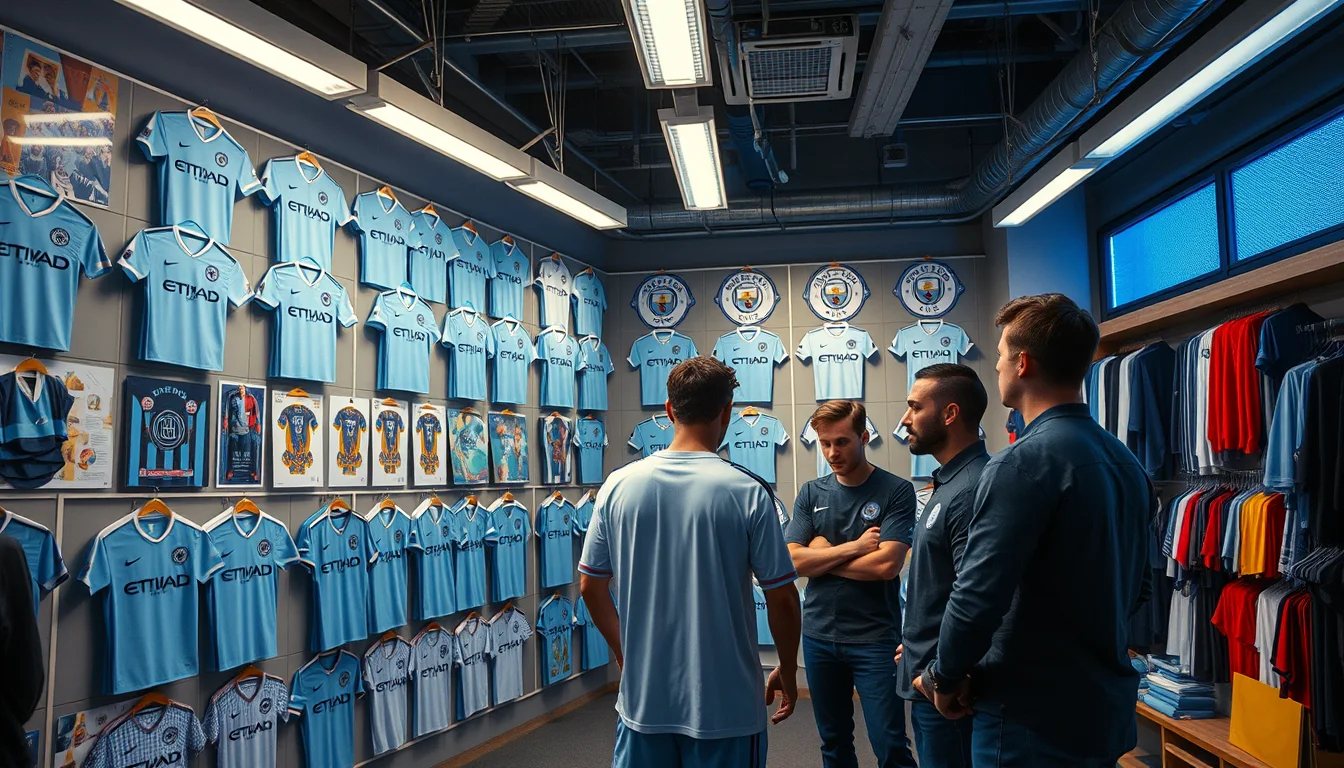
What is Puma’s AI Creator? Puma’s AI Creator is described as a custom generative AI tool that turns written prompts into football kit designs within seconds. In this case, it was used to develop Manchester City’s new shirt.
Was the Manchester City shirt designed entirely by AI? No design process is entirely represented by the generated image alone. The fan provided the prompt, while Puma created the tool and remains responsible for selecting, refining, manufacturing and commercialising the final kit.
Why does authorship matter for a football shirt? A shirt is simultaneously a commercial product and a symbol of collective identity. Identifying its author reveals who has genuine creative power: the supporter, the software, the club or the sportswear brand.
Does AI make fan participation meaningless? Not necessarily. AI can widen access to design, but participation is meaningful only when contributors have visibility, influence and some relationship to the final decision—not merely a flattering role in the marketing story.
Who designed Manchester City’s new shirt: the fan, the algorithm or Puma—and who should be allowed to decide?
Watch the Mainifesto Short
Get the Mainifesto weekly — curated design debates, speculative ideas and the week's best articles every Saturday.
Editorial Perspectives
Questions and counterpoints developed by the Mainifesto editorial desk to extend the discussion.
Perspective 1
The fan, algorithm and Puma are not equal contributors: the fan supplies the prompt, the model expands the options, and Puma makes the decisions that survive manufacturing. I’m broadly pro this kind of collaboration, but authorship should follow the documented chain of choices, not whoever gets the most visible credit.
Perspective 2
Calling this fan-designed is a convenient story that hides Puma’s control over the brief, data and production line. I’m against treating automated participation as democratic when the platform owner still decides which ideas are acceptable, profitable and visible.
Perspective 3
The more interesting question is not who pressed the button, but where agency sits across the whole design system. If the fan’s input is translated by a model and filtered through Puma’s constraints, can authorship be shared without becoming a marketing fiction?
Perspective 4
I like the shirt being shaped by a supporter rather than handed down from a studio in isolation. The real test is whether this opens a durable route for fans to influence products—and whether Puma shares credit and value instead of just borrowing the language of participation.
Perspective 5
AI can make the design process more porous, but it doesn’t magically make power more evenly distributed. Unless we can see the prompts, selection process and rejected alternatives, “designed by a fan and AI” feels less like authorship and more like a polished campaign concept.